
I have been wanting to go to the mountains in western North Carolina for months, not to sightsee but to try to support some small businesses. My sister and I were in the mountains for three days last week. We were on a mission.
I tend to plan trips in detail. Sometimes things go as planned, but I have a poor track record when it comes to selecting restaurants in advance.
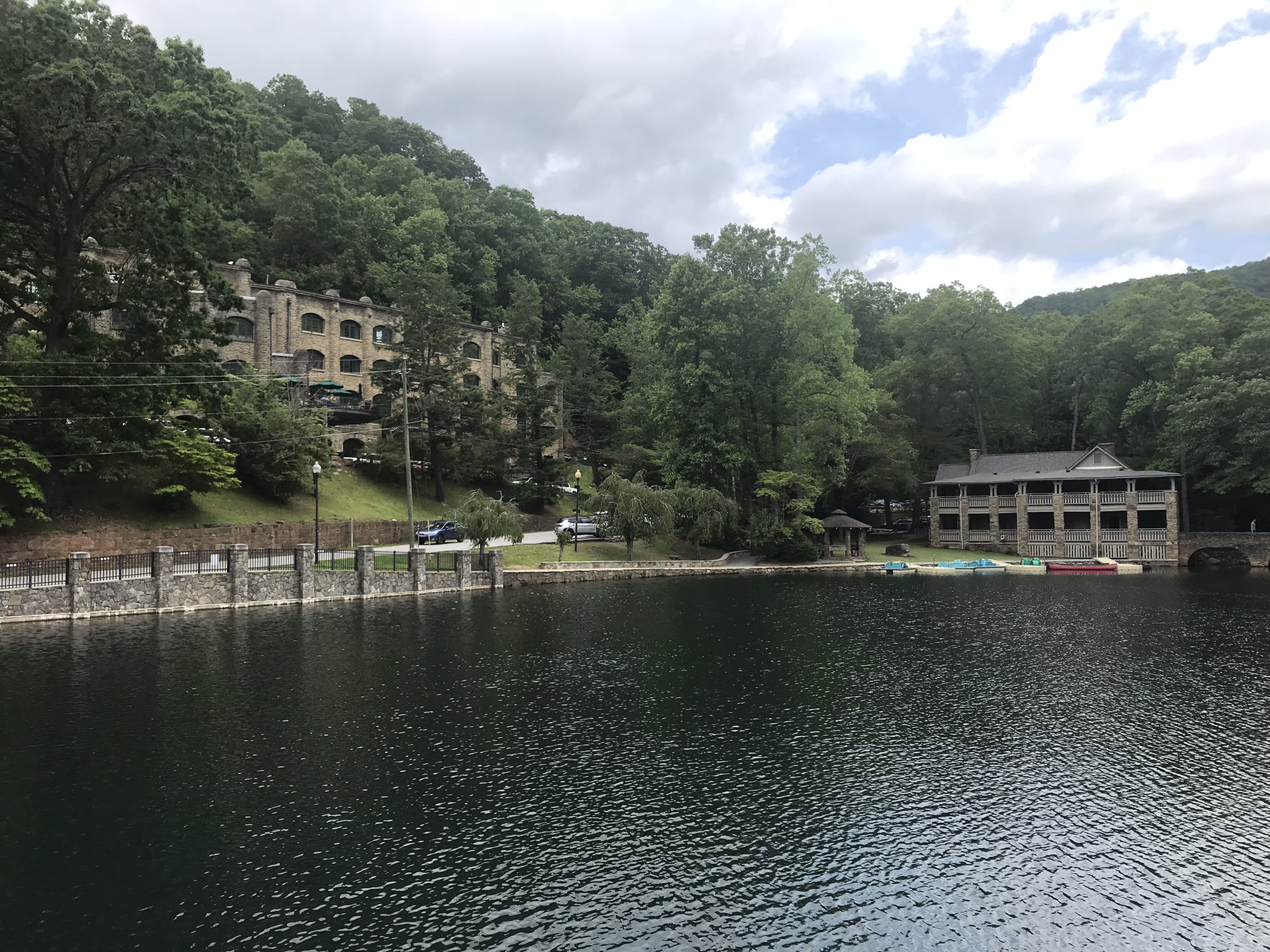
Our first stop on Tuesday was Montreat. The Presbyterian Church USA has its conference facilities there, and the place is near and dear to our hearts. The town suffered much landscape and street damage from the flood that accompanied Hurricane Helene last September. We knew from Facebook that Lake Susan had been completely cleaned out and restored. It was good to see people enjoying the lake again. Recovery work in Montreat continues.
We planned to eat lunch at a small diner in Swannanoa. I had read online that it had been owned and operated by the same family for 30 years. Unfortunately, when we got there, the sign on the door said they were closed for the week. Maybe The Breakfast Shop will be open the next time we’re in the area.
We drove back to Black Mountain and ate lunch at the Black Mountain Bistro, so we were still able to patronize a local business. Lunch there is always good.
We continued back through Swannanoa on US-70. The little town of Swannanoa had a lot of damage from the flood. Recovery will take a long time. One thing we noticed along US-70 for many miles is that there is still much dirt by the curb – a sign that street and highway crews have had much more pressing work to do than to get the dirt from the curb. The state of things indicates that every rain washes more dirt and debris into the highway. It wasn’t a major issue. It was just something we don’t normally notice.
US-70 become Tunnel Road in Asheville, and from Tunnel Road we were able to access a couple of miles of the Blue Ridge Parkway. At the entrance to the wonderful Folk Art Center on the parkway we were faced with this signage.
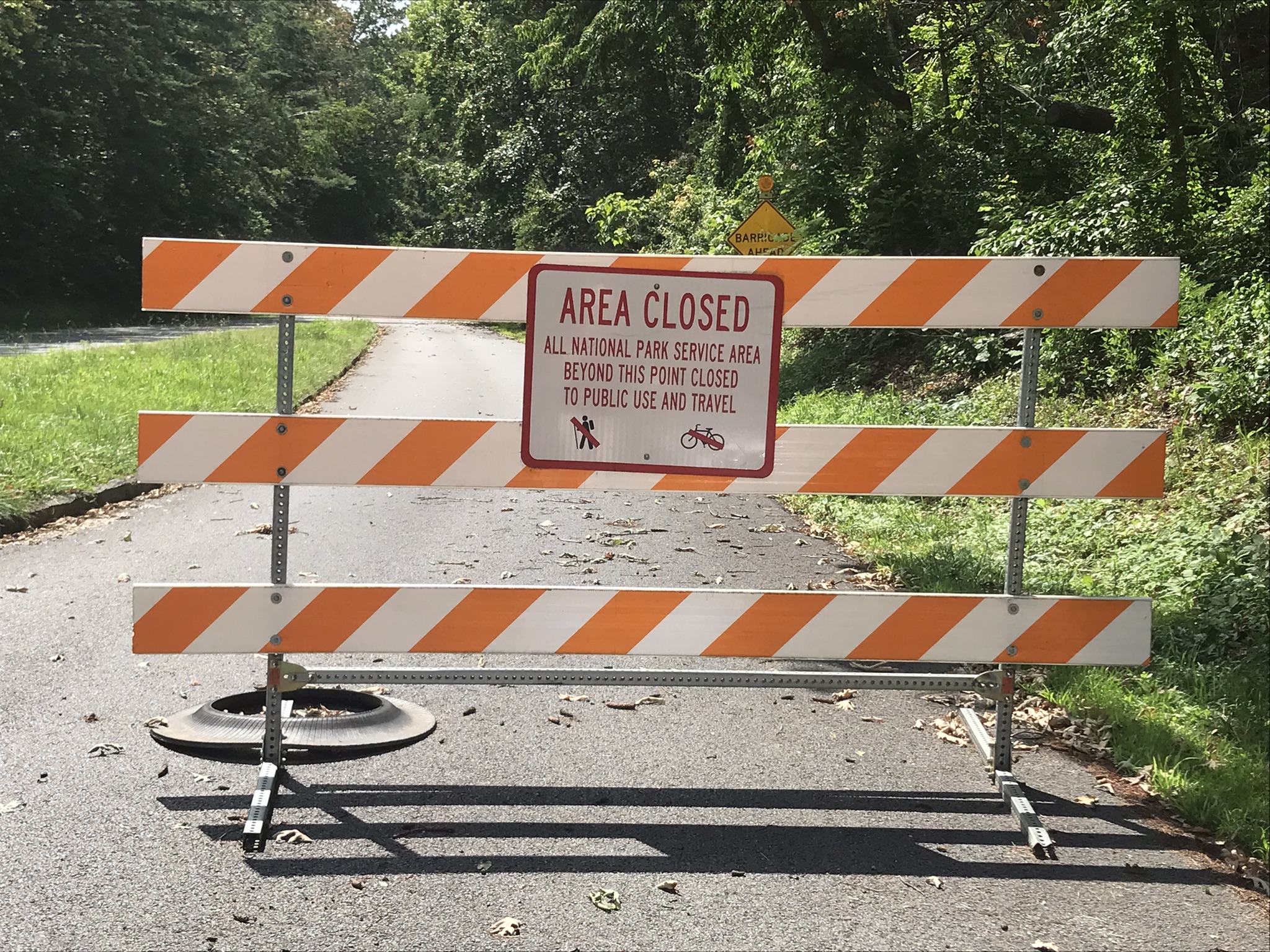
It was sad to see the parkway closed. In the distance, we could see work being done and we met a dump truck hauling away storm debris.
We bought a couple of items at the Folk Art Center. Artisans from the Southern Appalachian Mountains sell their handcrafted merchandise there. There are quilts, blown-glass, leatherwork, woodwork, pottery, Christmas ornaments, and pottery.

From Asheville, we took Interstate 26 west through Weaverville to Mars Hill, where we had reservations for the night. We had never been to Hot Springs in Madison County, so we set out to have dinner at a small restaurant there, Smoky Mountain Diner. My mouth was watering for local trout, but the restaurant was closed for a private party.
We returned to Mars Hill. By then, it was getting late and we’d had a long day. “Plan B” was Stackhouse Restaurant in downtown Mars Hill, but when the hostess told us it would be a 45-minute wait we reluctantly settled for sandwiches at Subway. Not a good substitute for local mountain trout or a burger at Stackhouse.
So, Day One was more than a little disappointing. We were beginning to wonder if our trip was going to help the local economy at all.
On Wednesday we took US-19E through Burnsville to NC-226A to Little Switzerland. We went into downtown Burnsville. Recovery work was still being done on at least one street, and tree damage was obvious. Some roads that turned off US-19E were still closed, and we could only imagine the extent of tree and infrastructure damage.
There was lots of storm damage visible along NC-226-A and many asphalt patches in the highway. As was true on our entire trip, damage wasn’t constant, but was especially noticeable where there had been landslides or near creeks where there was obvious flood damage.
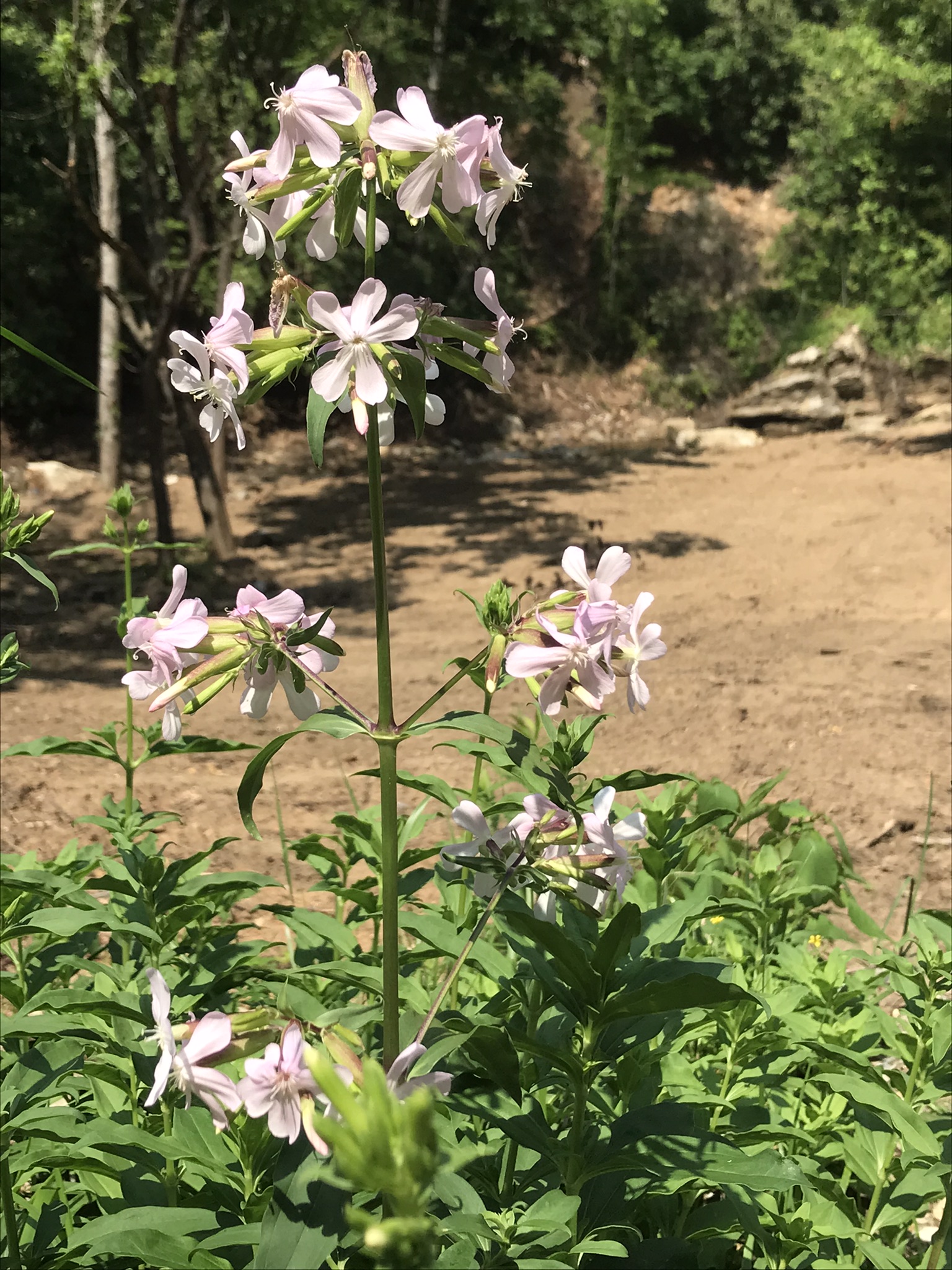
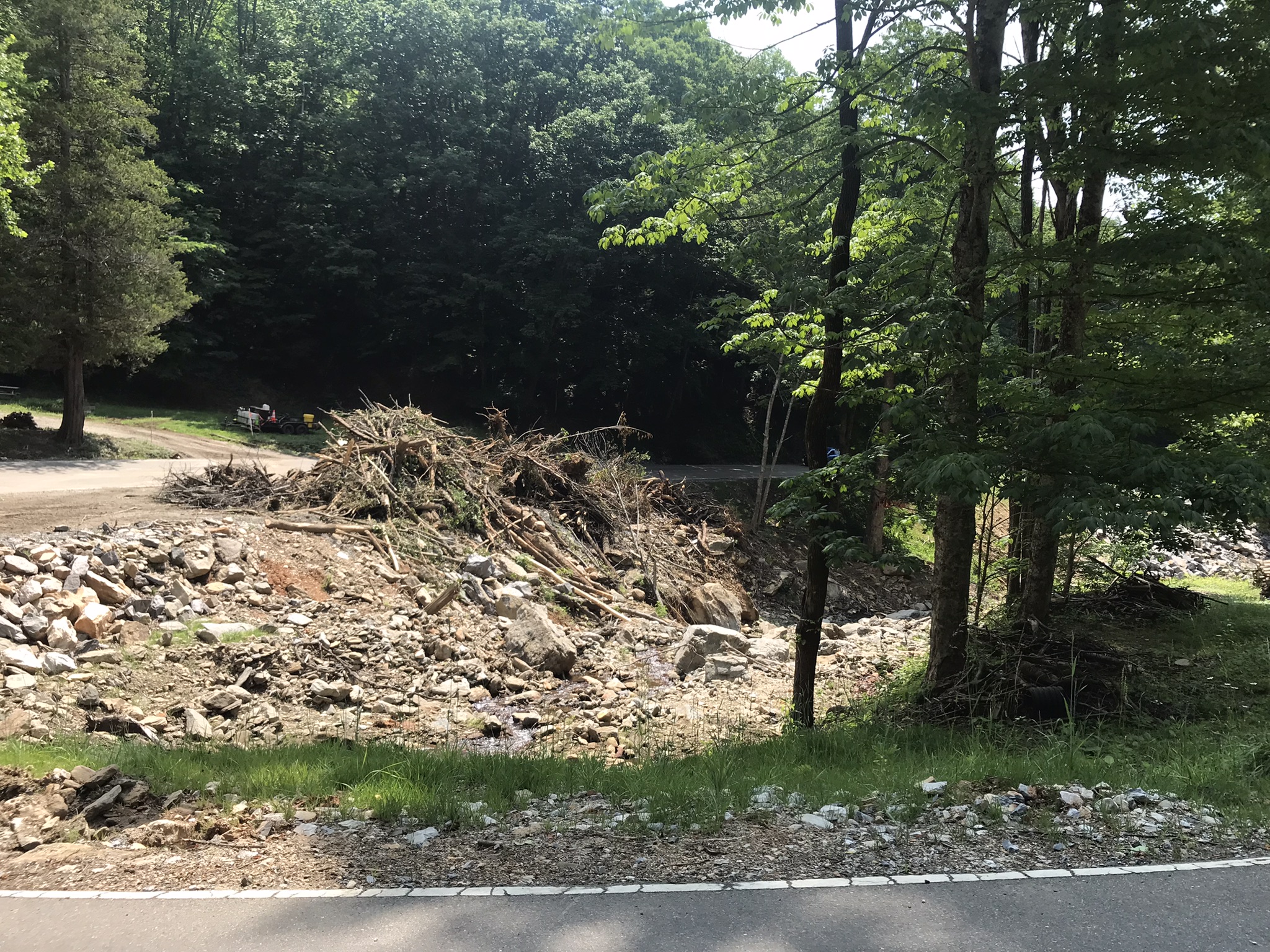
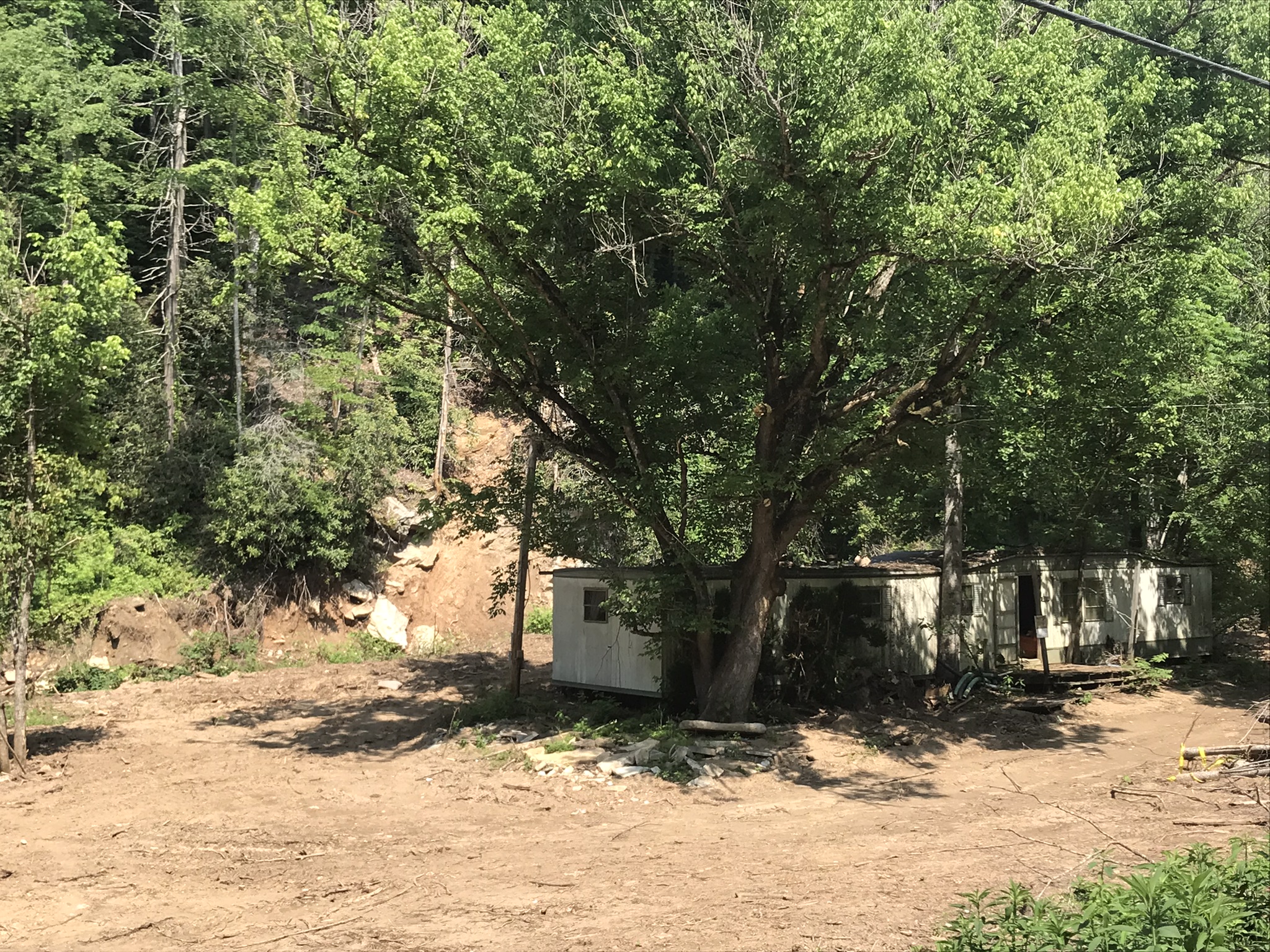
Here are a series of random photos I took on June 11, 2025, where we could safely pull off the highway as we drove from Mars Hill, NC to Little Switzerland, NC.

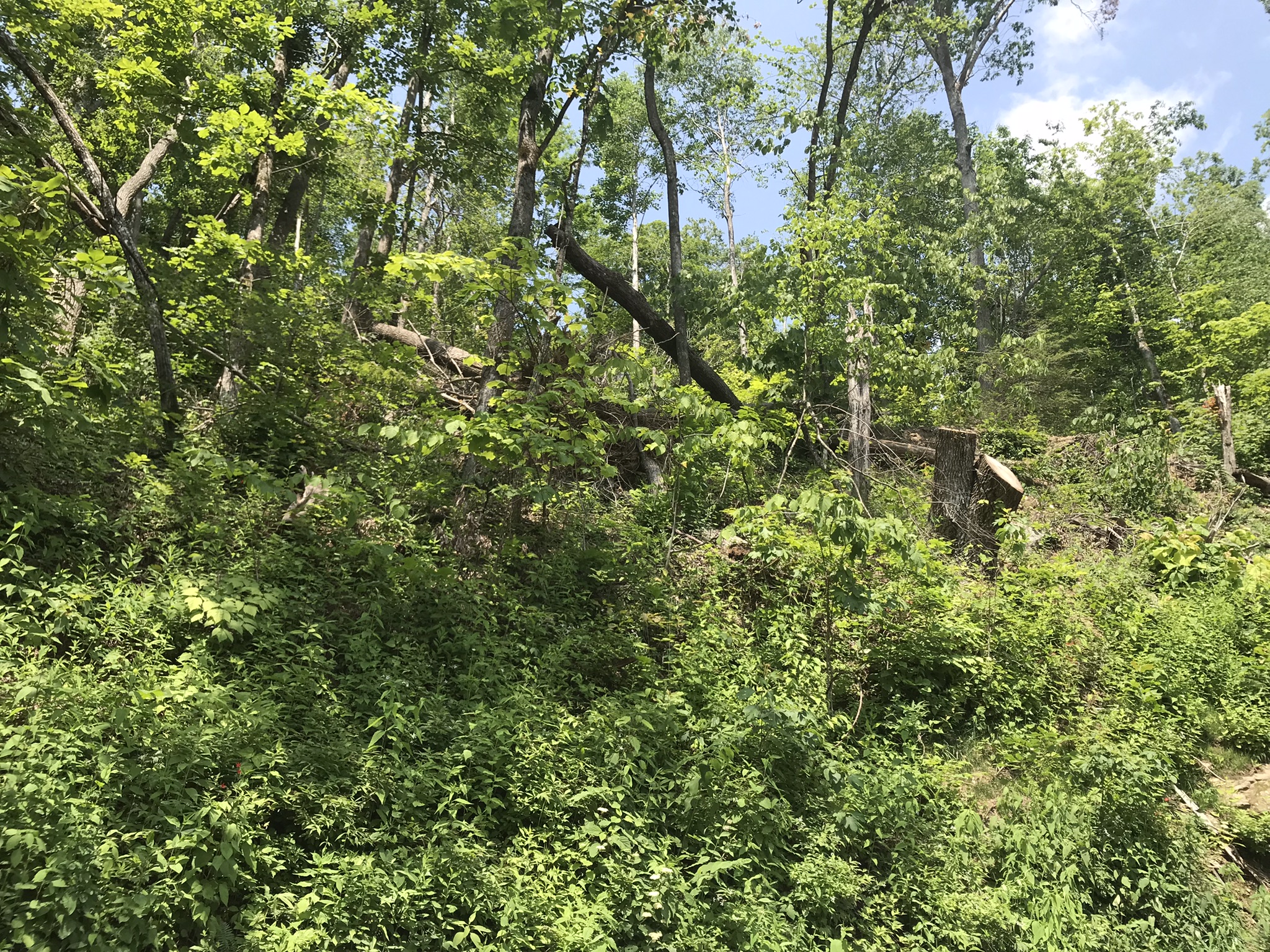


Throughout the three days we were amazed at the massive water damage still visible along what were once again tiny creeks and branches. It is amazing what 30 inches of rain in a couple of days can do to little mountain streams!

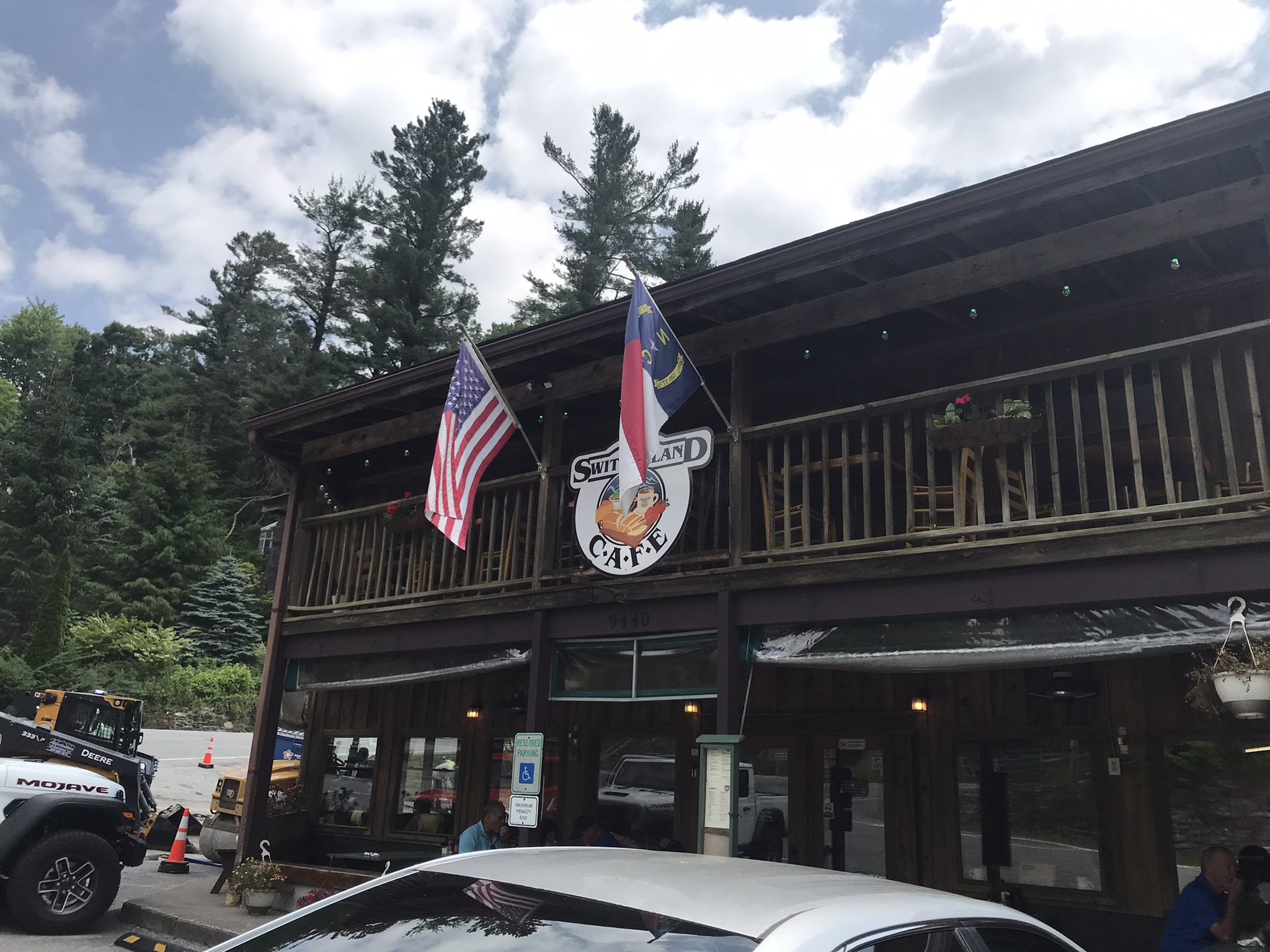
We ate lunch, as planned (success at last!) at Little Switzerland Café. We had eaten there before. It is a good place to get soup, a sandwich, or homemade quiche. It is a short distance off the Blue Ridge Parkway near the Orchard at Altapass. The address of the orchard is Spruce Pine, but it is out in the country, right on the parkway.
After lunch we had planned to visit the orchard. There is a general store there and walking trails, but the Blue Ridge Parkway was unexpectedly closed there. When I checked online a few days before our trip, the National Park Service website hade indicated that a couple of miles of the parkway were open there and the orchard was accessible. Apparently, more damage occurred or was discovered and the website couldn’t keep up. That’s understandable.
As is stated on https://altapassorchard.org/, “The mission of the Altapass Foundation, Inc. is to preserve the history, heritage, and culture of the Blue Ridge Mountains; protect the underlying orchard land with its apples, wetlands, butterflies, and other natural features; and educate the public about the Appalachian experience.”
Please take eight minutes to watch this 2023 PBS NC video clip, “How an apple orchard is preserving Appalachian views | State of Change: Seeds of Hope” about The Orchard at Altapass: https://www.youtube.com/watch?v=3bTKjLipjGI, so you can see why we wanted to visit it again and why you should include it on your itinerary the next time you’re in the area.
The orchard was planted by the Clinchfield Railroad at the lowest pass through the Blue Ridge Mountains for 100 miles. The railroad constructed 18 tunnels in 13 miles of track beside and below the present-day orchard and opened in 1908. Some of the trees in the orchard are still producing apples at nearly 100 years old. Hurricane Helene killed hundreds of the apple trees, but thousands survived.
From there, we made our way to Newland, Linville, Grandfather Mountain, and Boone, where we had reservations for the night. Along the way, especially where we crossed or drove beside mountain streams, the ravages of Hurricane Helene were visible.
We ate supper at Mike’s Inland Seafood in Boone. We discovered it on our last visit, which was exactly two weeks before the hurricane hit and Boone was flooded. We drove around the college town and were amazed at how the town and Appalachian State University campus have been almost completely cleaned up and restored since last September. From what we saw, someone who did not know there had been a flood would not be able to tell there was one less than a year ago unless they veer off the main streets.

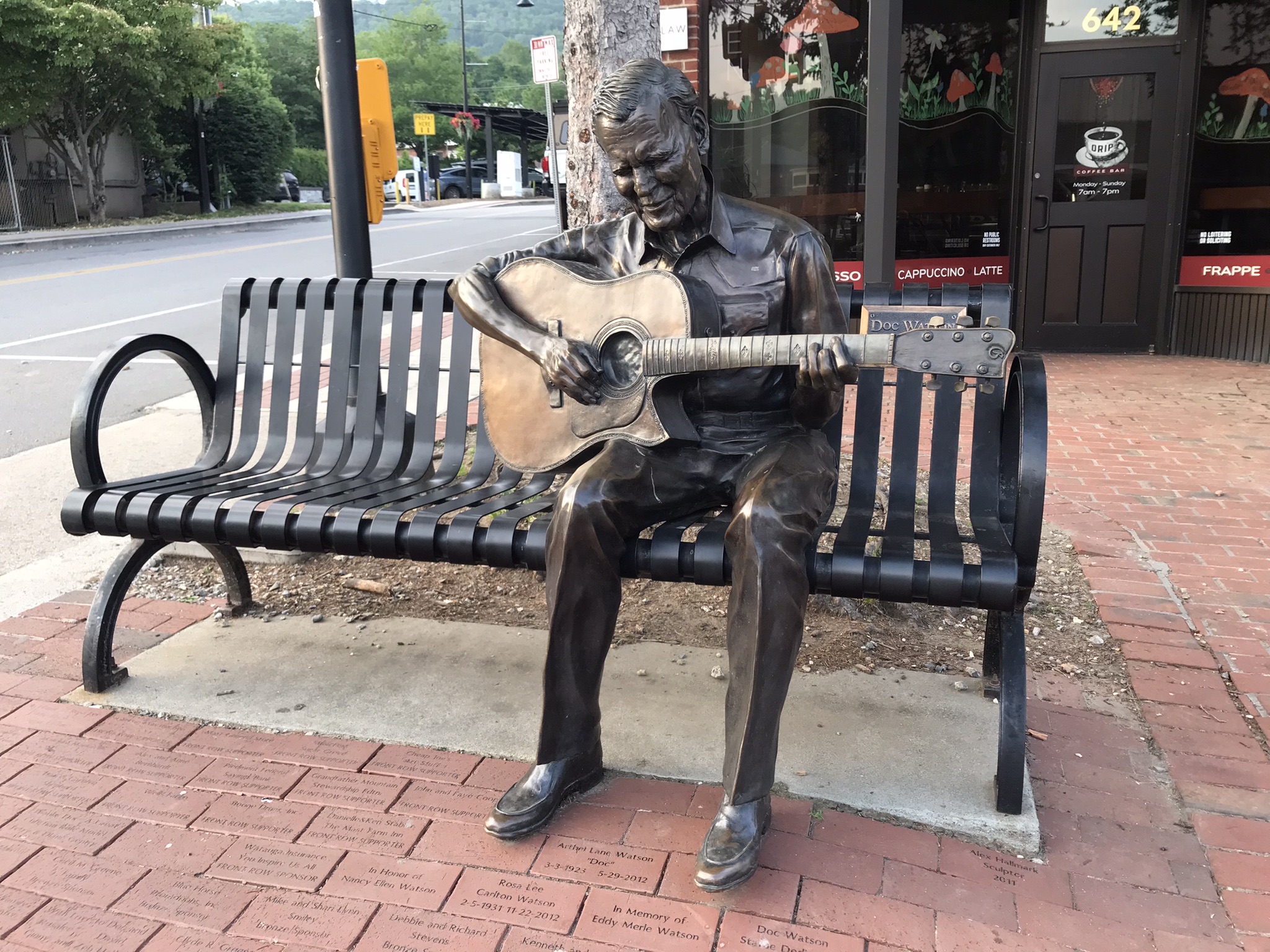
We enjoyed walking up and down King Street in Boone. We bought “Go Mountaineers! And Boone tee-shirts and postcards. My sister just happened to be reading a book about Watauga County musician, Doc Watson, so it was nice to stop and see his statue again at the corner of King and Depot Streets.
Alex Hallmark, a sculptor from nearby Blowing Rock, designed the statue of the blind musician seated and playing his guitar. A black steel bench was designed to fit the seated statue, so visitors can stop and sit awhile next to Doc. When we arrived, a mother and her little girl were sitting with Doc and enjoying ice cream cones. I wanted to take a picture, but I did not want to intrude.
We walked and shopped for a few minutes and I took this picture later.
Thursday was the day that really made our trip worthwhile. From Boone, we drove to West Jefferson. We can’t go to West Jefferson without stopping by the Ashe County Cheese store. We purchased some of the cheese made at the factory across the street from the store along with some jams and jellies made especially for Ashe County Cheese Company. We looked at the fudge counter but resisted temptation.
There were jars at the cash registers at the Ashe County Cheese Company store for monetary donations to the Ashe Food Pantry, Inc. The organization accepts online donations at https://ashefoodpantry.org/ or a check can be mailed to Ashe Food Pantry, Inc., P. O. Box 705, Jefferson, NC 28640.
From West Jefferson, we headed north on NC-194 toward Lansing. We passed through Warrensville where I had planned for us to stop at The Baker’s Addict Bakery on our way back from Lansing, but we made a spontaneous decision to come home another way. My apologies to The Baker’s Addict Bakery. We’ll be sure to stop by on our next trip to northwestern North Carolina.
The little community of Lansing was hit extremely hard by Hurricane Helene. The community was left isolated for weeks and weeks after the storm. The little creek that flows beside NC-194/Big Horse Creek Road appears to be just a nice little bubbling brook last Thursday morning. There is a lovely park there and we delighted in seeing a group of young girls skating on the sidewalk in the park. We assumed they were local girls and we were so glad to see them having fun again after the natural disaster they lived through. The way it flooded all of the little business district last September was hard to imagine.

There are just several businesses there, and we tried to support each of them. We had never been to Lansing before, so our knowledge of the businesses there came from the internet.

Our first stop was at The Squirrel and The Nut. It is a delightful shop that specializes in locally-made handcrafted items and vintage items. I had looked at the rope bowls and was trying to decide what to buy – those or a quilted item or a vintage pitcher or a hand-painted necklace. My sister had done the same thing. For some reason, those rope bowls kept calling my name.
I returned to the display and was contemplating which ones to buy. About that time, my sister stopped beside me and picked up one of the bowls. The shop owner noticed us and explained why there were several color variations on the insides and outsides of the bowls. I had noticed that on the price tags was handwritten: “Suggested donation” along with a dollar amount. What I did not notice on the tag was where it was printed: “Helene Bowl.”
As I studied two of the bowls, the shop owner said, “Those rope bowls survived the hurricane. They were in the mud. The woman who made them lost a lot of her supplies and finished products in the flood. It was five months before she could bring herself to try to wash the mud out of those bowls. The discolorations were caused by other rope bowls fading on the ropes bowls during the flood.” By then I was tearing up. I went to the cash register with two of the rope bowls and my sister followed with another rope bowl and the vintage pitcher we had both picked up and considered.

The larger of the two I purchased had been designed and made to be a dough proofing bowl, but the shop owner cautioned me that it probably shouldn’t be used for a food product considering its history. I was so emotional, I could scarcely say anything as the shop owner wrapped my bowls in tissue.
There was a hint of a strain in the shop owner’s voice as she told us about the items she lost in the flood and the bookcase that she knew she was going to need to discard. She said it just takes a while to come to grips with such losses.
She smiled and told us of the vintage cabinet radio she purchased the week before and laughed about how her partner struggled to carry it into the shop and place it exactly where she wanted it beside the front window.
Before we left, she recommended the dress shop two doors down and lunch at The Liar’s Bench at the end of the row of old businesses. We told her we had already planned to eat lunch there, so that worked out great.
We stopped in the little clothing store and I bought a pretty, soft, pastel yellow tee-shirt with various wildflowers on the front. I was tempted to buy a wristlet/crossbody purse, but I did not need it. It would have been perfect for our great-niece’s wedding last February.
We visited Old Orchard General Store, where Marie purchased a book to give to a friend and I bought a loaf of locally-made Country Multigrain Sourdough sliced bread made by Stick Boy Bread in nearby Boone. That bread is delicious! I should have bought more than one loaf!
We ate turkey BLT croissant sandwiches and drank the best sweet tea I’ve had in I don’t know when at The Liar’s Bench at 144 S. Big Horse Creek Road. It was a one-man operation and there were just four other customers the entire time we were there. The sign said they have live music every Friday night.
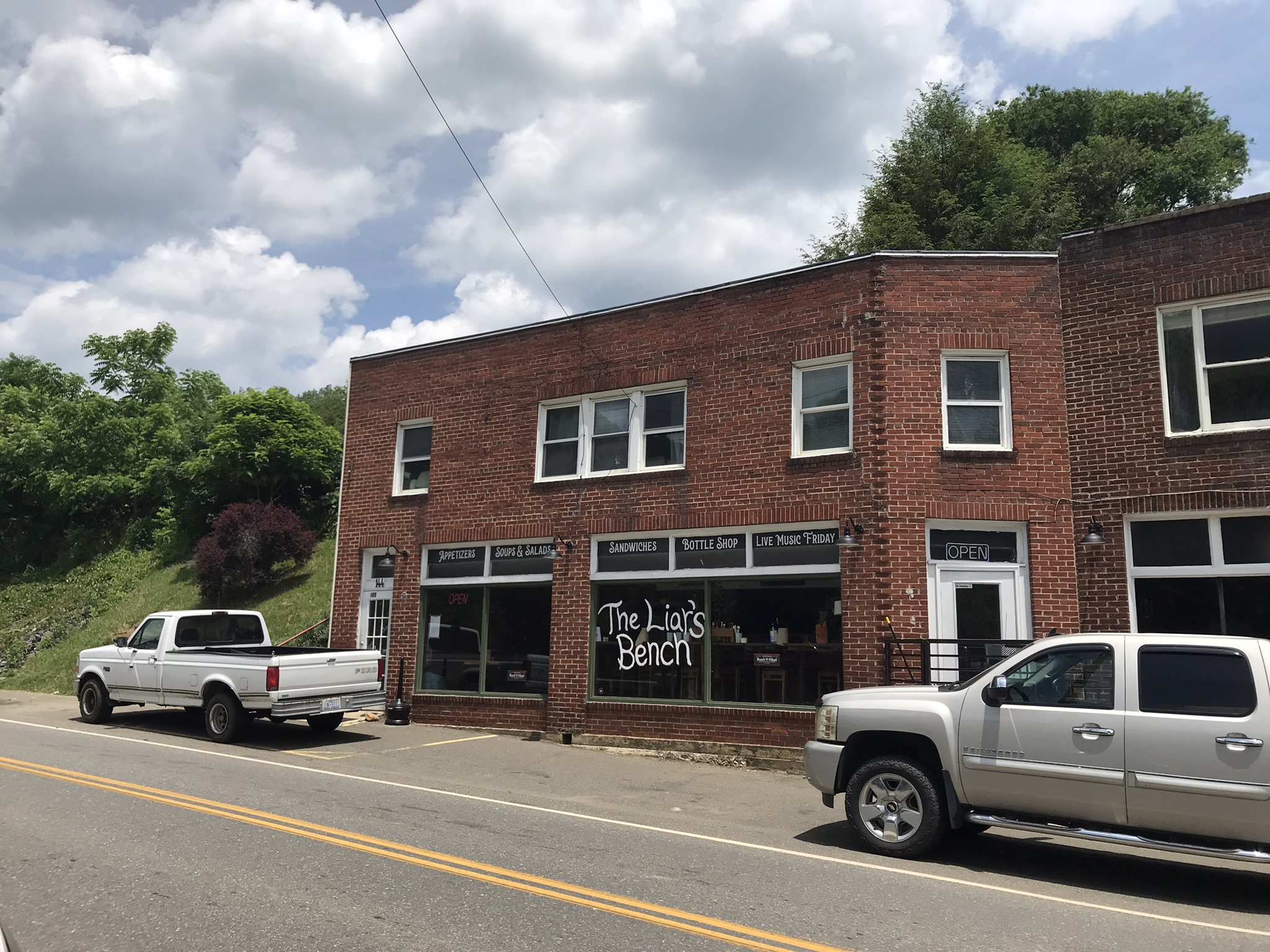
The sandwiches were delicious, but I felt compelled to tell the cook/cashier how good the tea was. He laughed and said, “I was afraid I’d ruined it. I put in four cups of sugar.” We were afraid to ask him how much tea he had sweetened with four cups of sugar! I told him it was perfect and my sister and I left with take-out cups of more iced tea for our trip home.
My sister asked him if the flood waters got in all the businesses along the road. He pointed out the window to a stop sign and said, “It got up to there. It was really bad.” His voice nearly broke. There was a sorrow in his voice and a sadness in his eyes. One couldn’t help but notice.

It was obvious that the people in the little community of Lansing, North Carolina, have had a traumatic experience and already a difficult nine-and-a-half-month recovery.
My sister overheard one of the other restaurant customers saying, “I have 1,100 tomato plants, and if he doesn’t open and take them to sell, I don’t know what I’m going to do. I don’t want to take them all the way to West Jefferson.” Apparently, she is hoping another local business will reopen in time for her to sell her tomato plants.
After lunch, we decided to take NC-194 north to US-58 in Virginia instead of heading back to the bakery in Warrensville. I hate we missed giving the little bakery some business, and we wished we had stopped on our way to Lansing; however our spontaneous change in routing turned out to be a very interesting decision.
First of all, we unknowingly missed that NC-194 makes a 90-degree turn, so we happily continued straight on S. Big Horse Creek Road. Since we had never been in that part of Ashe County before, we did not realize we had missed a turn.
Sometimes a missed turn can lead to trouble, but sometimes it takes you on a bit of an adventure. Looking back on the route we took from Lansing, we know that God was looking out for us. We could have easily come to a road closing or worse, but we did not.
After returning home, I pulled up the map online and figured out exactly where we went after leaving Lansing. We continued north on S. Big Horse Creek Road for many miles. It became Big Horse Creek Road. We then took Mud Creek Road which took us into Virginia and to US-58/Highlands Parkway a few miles east of Damascus, Virginia.
We stopped at Tuckerdale Baptist Church in the community of Tuckerdale, NC because it was such a beautiful, peaceful place. A calm little creek ran between the church and the road. There is a one-lane steel bridge over the creek to the church. A huge poplar tree between the creek and the sanctuary provides shade for much of the parking lot. That tree is well over 100 years old. What a story it would have if it could talk!


We saw storm damage all along the way on the above referenced roads. Damage to the landscape and to houses was sobering. There were some houses that had been completely gutted by the flood waters. Their remains stood guard beside and above the little stream of water that had destroyed them as if daring the creek to rise again.
Bridges had been replaced, and there were numerous cases where we saw new bridges across the streams and creeks giving the people who live on the other side of the water access to the highway. We saw that time after time after time. We saw where the flood waters had gouged out the sides of the mountains.
We saw some tree debris that has not yet been picked up. It brought back memories of Hurricane Hugo here in 1989 and six months of tree debris lining the streets of Charlotte until it could all eventually be picked up.
We saw dump trucks hauling tree debris all three days in the mountains. It is overwhelming to realize those trucks have been hauling away debris for more than 200 days… and the work remaining to be done is massive. We saw staging areas where tree debris is piled high. Some of it has been converted into mulch… mountains of mulch.
We saw more places than I can estimate where trees are down all up and down the mountainsides. We saw where there were landslides. I have seen photos of the tree damage along the Blue Ridge Parkway, but I now have a better idea of how hundreds of miles along the parkway must still look. And it would be impossible for all those trees to ever be sawed up and removed, even if the National Park Service budget and workforce had not been slashed. It is literally thousands and thousands of trees and huge rhododendrons that were destroyed or badly damaged by the storm.
We reached a point where the pavement ended and we wondered if we were still on the state highway. Little did we know… we weren’t! I guess we were on Mud Creek Road by then. In a couple of miles, we got to paved road again.
One of the sights we happened upon after crossing into Virginia was this historical marker about the Virginia Creeper Railroad at Whitetop. The Virginia Creek Recreational Trail is the path that’s visible in the photographs below. The trail’s southern terminus is at Whitetop.

It was a quiet, peaceful place. There were a couple of houses in sight, but we didn’t see anyone. There was a rabbit enjoying the trail, but I couldn’t get a picture of it. I didn’t want to disturb it.

Even after we got on US-58 between Damasus and Independence in Virginia, the damage continued. I knew the southwestern part of Virginia was heavily damaged by Hurricane Helene, but I didn’t know to what extent.
All along US-58, we saw trees down here and there and we could tell where what looked like a quiet little stream last Thursday had been a raging river last September. The first part of US-58 that we were on was a very winding mountain road – the kind I love to drive on! –with many switchbacks and 90-degree curves posted with “Speed Limit 15” signs.

A highlight on all three days of our trip was the profusion of old-timey orange daylilies here and there along roadsides and by highways. The largest patches of them were where I could not safely get a picture. We had never seen so many of them as we did on this trip!
At Independence, Virginia, we took US-21 by Sparta, North Carolina, and got on Interstate 77 to come home.
It was a trip we had anticipated for many months, and we really did not know what to expect. We put 500 miles on the car and visited some places in our own state that we’d never been to before. We are already hoping to return to that area and other parts of the mountains of North Carolina before the year is over. Those restaurants and shops will still need our support. Next time, we’ll look for a sign telling us that NC-194 hangs a right in Lansing!
In conclusion
After we returned home and had time to reflect on what we saw on our trip, we realized that in addition to the natural and physical damage we saw, we don’t know about the losses we did not see. We don’t know what we did not see because it was there no more. We don’t know about the houses and businesses we did not see because they were washed away in the flood.
We don’t know about the people we did not see at the restaurants and shops because they did not survive the hurricane.
We’ll never know who and what we did not see.
If our time in The Squirrel and The Nut in Lansing had been the only stop we made on our trip, it would have been worth it. My sister and I did not “need” those rope bowls or the vintage pitcher. We’re in that stage of life when we are getting rid of stuff instead of buying more stuff!
Those three rope bowls now have a place of honor in our family room. Knowing they literally survived the mud produced by Hurricane Helene makes them priceless works of art. Don’t you agree?
Hurricane Helene Update
As of Friday, 49 roads in North Carolina were still closed due to Hurricane Helene. That count included five US highways, three state highways, and 41 state roads.
Until my next blog post
Keep reading good books.
Hold your family and friends close.
Remember the people of Ukraine and western North Carolina.
Janet



 Janet's Writing Blog