I write southern historical fiction, local history, and I've written a devotional book. The two novels I'm writing are set in Virginia and the Carolinas in the 1760s. My weekly blog started out to follow my journey as a writer and a reader, but in 2025 it has been greatly expanded to include current events and politics in the United States as I see our democracy under attack from within. The political science major in me cannot sit idly by and remain silent.
If you are a writer or you are curious about what makes a writer want to write, please read yesterday’s post and visit Cathy Pickens’ website, https://cathypickens.com/.
For the little village of Mt. Pleasant to attract famous authors is a feat for which the festival’s organizers deserve great praise. It started a couple of years ago as an idea. It has grown beyond their wildest imaginations. I can’t wait to see what the third annual festival holds in store for us in 2027!
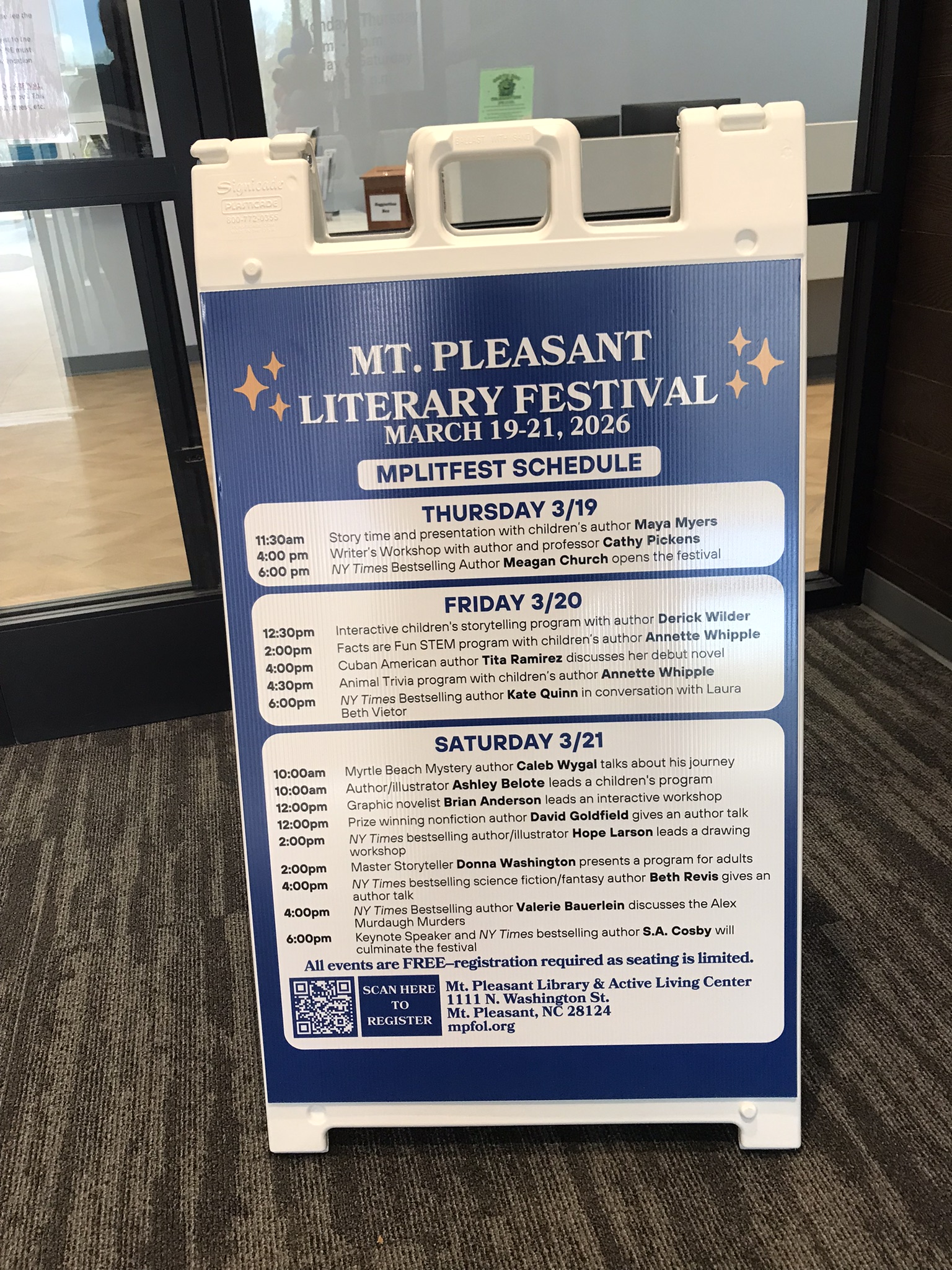
This year’s festival attracted 16 authors. I’m still kicking myself that I was too late to register for Kate Quinn’s presentation on Friday night.
Mt. Pleasant Literary Festival 2026
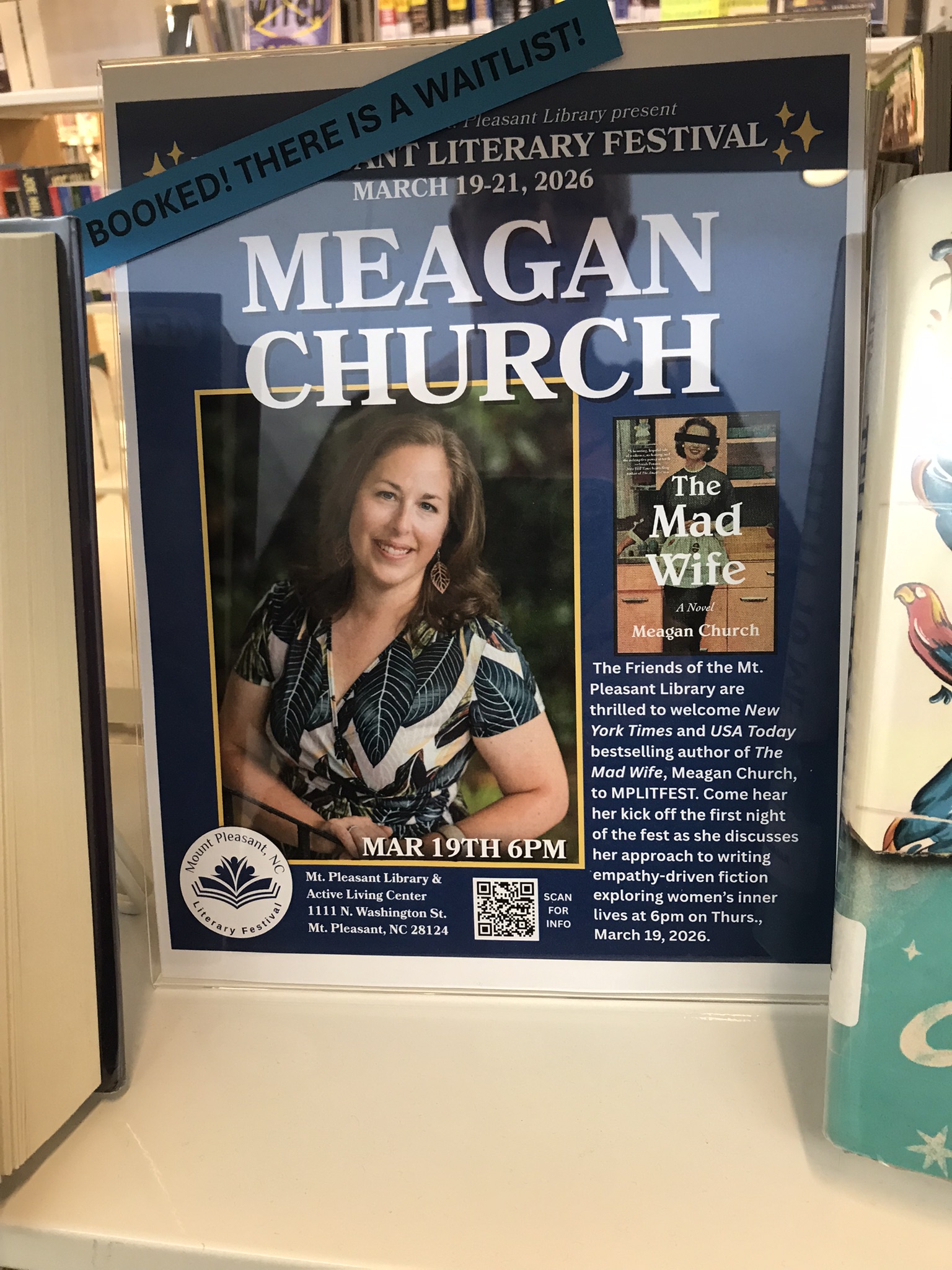
After Cathy Pickens’ Writer’s Workshop, I was excited to attend a presentation by New York Times Bestselling Author Meagan Church.
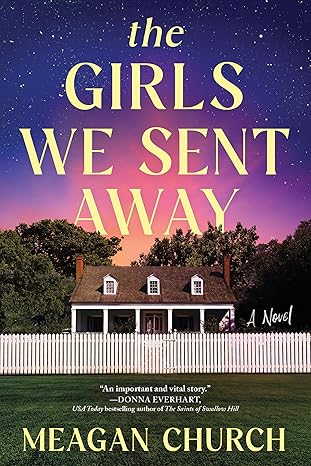
I thoroughly enjoyed hearing Meagan Church and seeing her in person on Thursday evening. I read her first two novels and blogged about them (The Girls We Sent Away in my September 2, 2024 blog post, Books I Read in August 2024 and The Last Carolina Girl in my May 1, 2023 post, Some of the Books I Read in April 2023.)
The Girls We Sent Away, by Meagan Church
The Last Carolina Girl, by Meagan Church
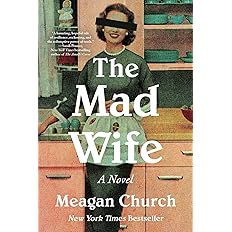
I have much less time to read now than I did several years ago. I unable to read much of Meagan’s Church New York Times Bestseller, The Mad Wife, before it had to go back to the public library. I’m on the waitlist again so I can finish it.
She mainly talked about The Mad Wife and what led her to do the research and write it. She talked about the history of the term “hysteria” and how it has always been relegated to women.
The Mad Wife, by Meagan Church
She talked about how nervous or excitable women and women with such ailments as multiple sclerosis were misdiagnosed through the years as “just being hysterical.”
The most gut-wrenching part of her talk was when she addressed how rampant lobotomies were in the first half of the 20th century and the gruesome ways one particular man used an ice pick through a woman’s eye socket to perform a lobotomy. This led many women in vegetative states which, unfortunately, was the objective.
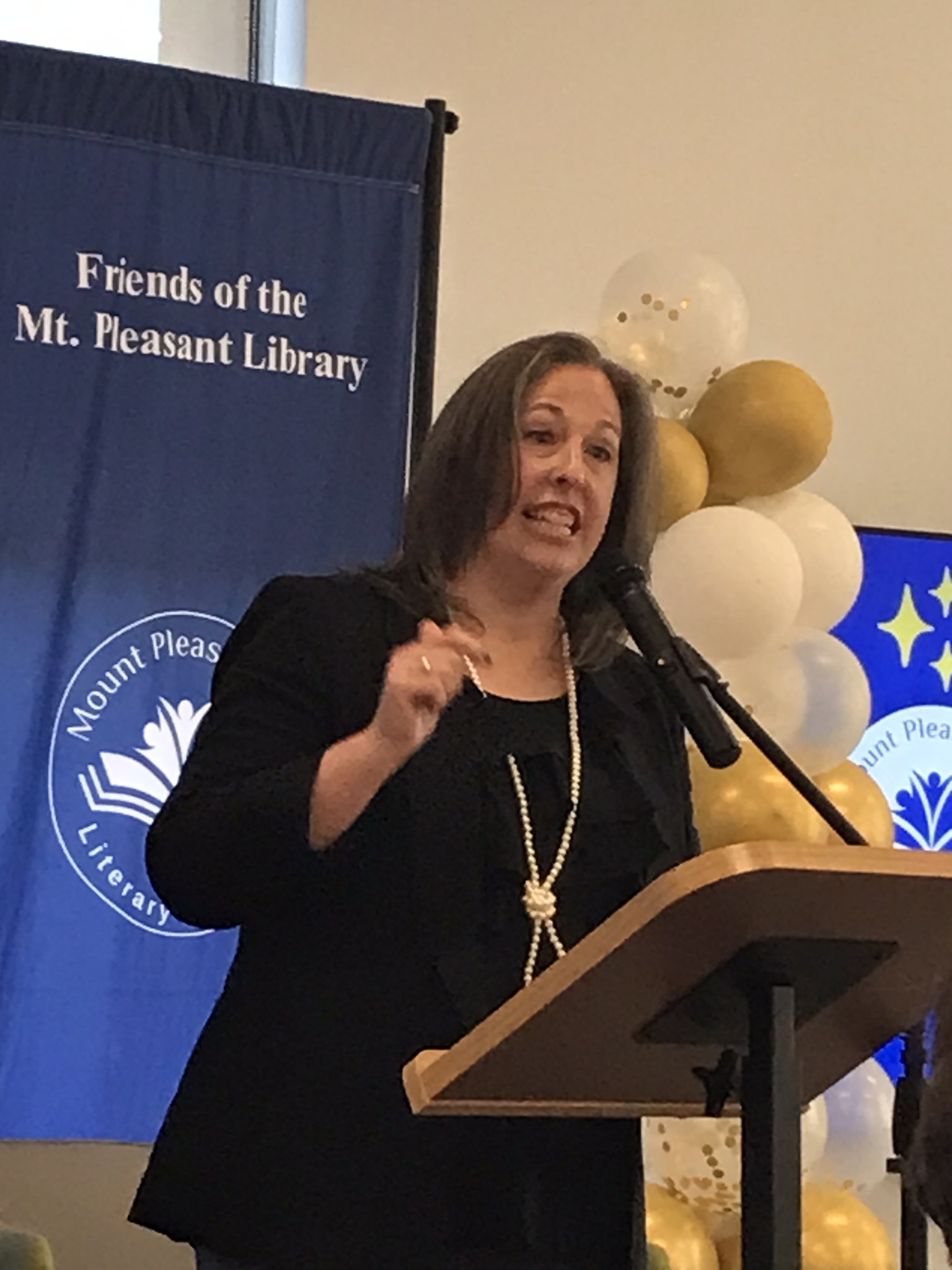
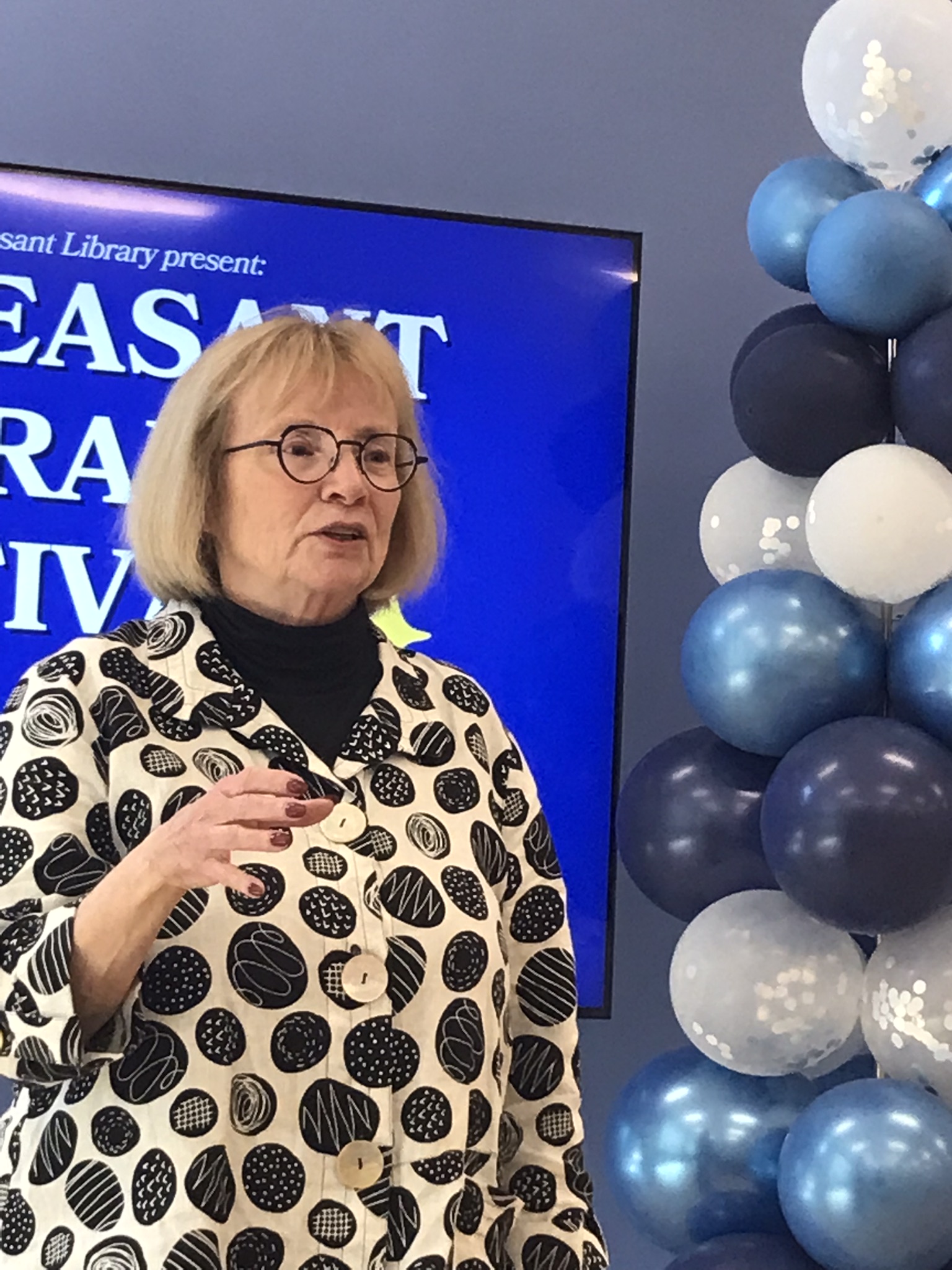
Meagan Church, during her presentation on March 19, 2026, at the Mt. Pleasant Literary Festival in Mt. Pleasant, North Carolina
She talked about how women have traditionally been omitted from medical studies – particularly drug studies – in spite of the fact that women tend to react differently biologically than men from certain drugs. She mentioned how women’s symptoms are often different from a man’s . It was only in the last 30 years that medical science began to acknowledge that and make a few exceptions in research.
It was a fascinating presentation, and the author and audience members were careful to avoid “spoilers” for those of us who have not read or finished reading the novel.
In a nutshell, Lulu is expected to be the perfect housewife in the 1950s in American suburbia. She collects Green Stamps (are you old enough to remember them? I am!) and tries to maintain her home just so for her husband, but cracks begin to appear in her life… and therein lies the story of The Mad Wife.
If you have not read any of Meagan Church’s books, I highly recommend them! Please visit her website, https://www.meaganchurch.com/.
Janet
The government should be afraid of its citizens, not the other way around.
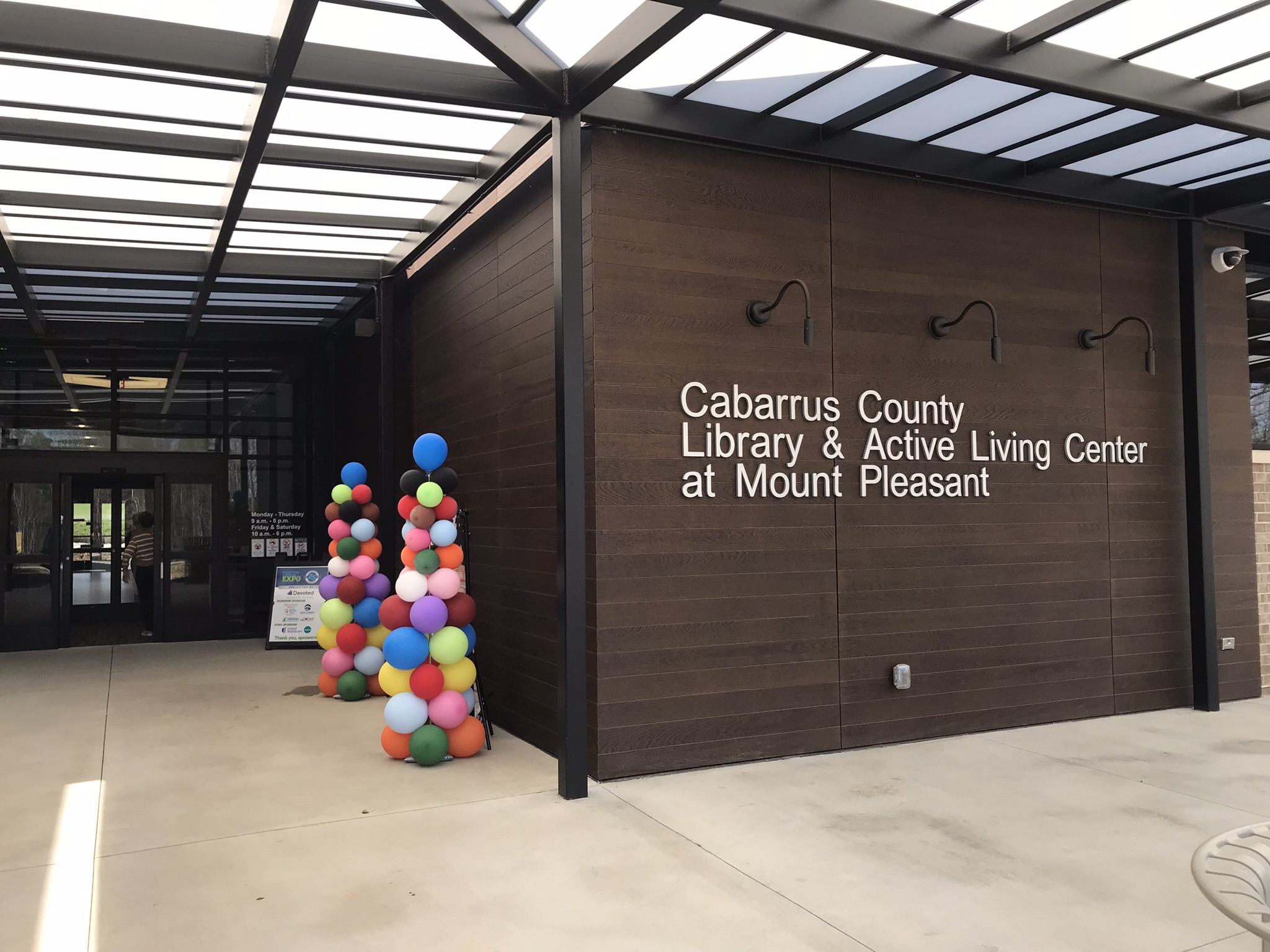
I had two delightful experiences last Thursday at the first day of the second annual Mt. Pleasant Literary Festival in Mt. Pleasant, North Carolina. The public library staff and The Friends of the Mt. Pleasant Library are real go-getters!
Mt. Pleasant is a quiet little town, more of a village than a town originally settled by German immigrants in the mid-1700s. It is in eastern Cabarrus County.
The Bernheim Literary Society (named for the literary society for the students of Mont Amoena Female Academy, located in Mt. Pleasant from 1859 until 1927), The Friends of the Mt. Pleasant Library, the Cabarrus Arts Council, and individual and commercial sponsors make this annual literary festival possible for the public – free of charge.
Schedule for the 3-Day event
This second annual event attracted such authors as Kate Quinn and Meagan Church! I understand some authors have already been signed on for next year’s festival. I can’t wait to find out who’s coming!
I was too late registering for Kate Quinn’s presentation. Lesson learned for future festivals!
The first event I attended on Thursday was a 90-minute Writer’s Workshop with author and professor Cathy Pickens. She has an impressive history as a lawyer, a professor, and a writer, so I was privileged to have the opportunity to finally attend one of her workshops.
Cathy Pickens, teaching a Writer’s Workshop at the Mt. Pleasant Literary Festival, March 19, 2026
She led us through a systematic series of writing prompts to help us clarify the roots of our creativity and why we want to write what we want to write.
Workshop attendees were in various stages along our writing journeys. The first thing she had us write about was our “pinprick.” What was the pinprick that set in motion my desire to write the story I want to write? I knew immediately what the pinprick was for the series of historical novels I’m writing. It was a banjo from Africa.
(That’s all I will tell you about that banjo for now. You will need to continue to read my blog posts and subscribe to my e-newsletter if you want to find out later just how that came about. It seemingly came “out of the blue,” but maybe it is deeply connected to the historical fiction I want to write.)
Back to the workshop… I was able to quickly write an entire page about that banjo as my inspiration or “pinprick” as she called it.
Ms. Pickens talked about how it was sometime between the ages of eight and eleven that something happened that influenced the paths our lives take. Whether or not we are aware of it at the time, something happened that set us on a path to writing. Our worldview begins to shift, and you start to try to figure out what you want to be when you grow up. She asked us to write down everything we could remember from those years of our life.
I was surprised at how many things I remember and in minute detail and how each of those incidents made me feel. As I wrote, it became clear to me that my lifelong interest in the colonial era of United States history and what unbeknownst to me put me on the path to majoring in political science and minoring in history in college started when I was in Miss Judy Ford’s fourth grade class at Harrisburg School in Harrisburg, North Carolina.
Miss Ford made Jamestown and Colonial Williamsburg come alive to us, although we lived a long way from those places and had no hopes of visiting them in the foreseeable future. I’ll never forget that Colby Cochran’s father, Dan, built a pillory for the class so we could in some small way experience what that public form of punishment and humiliation was like for our nation’s colonial ancestors.
As you can see, Ms. Pickens’ questions and writing prompts triggered a flood of memories for me and helped me piece together why in later life I want to write historical fiction.
She talked about how creative young children are, but usually when we are in our teens peer pressure kicks in and most of us begin to stifle our creativity. We’re told to pursue occupations or fields of study to lead us to a way to make a living.
Being a writer is not the occupation one should choose in order to make a living!
CREATE! by Cathy Pickens
Ms. Pickens talked about the writing process. Different participants in the workshop shared what their process is. She asked us what holds us back in our writing. (No one was pressured to voice their answers to any of her questions; it was a very relaxed and welcoming atmosphere.)
Ms. Pickens recommended that we set a goal to write a certain length of time or a certain number of words each day. Even if it’s only 15 minutes, slow and steady seemed to be her advice.
I recently revealed in my February 27, 2026 blog post (My new discovery: I’m a binge writer!) that I’d had the epiphany that I am a binge writer when it comes to my novel(s). I find it easy to work on a blog post or two each day, but when it comes to writing fiction I have not been able to discipline myself to write every day of the week.
Ms. Pickens advised us to be very specific in categorizing what we are writing. She pointed out that the Library of Congress categorizes books in more specific details than the Dewey Decimal System. She suggested that we look inside the front covers of books in the genre in which we write to familiarize ourselves with how the Library of Congress labels books.
She suggested that instead of asking a writer, “How long did it take you to get your book published?” a better question is, “How long did it take you to get your book publishable?”
The road to traditional publishing is typically years and years long.
Ms. Pickens ended by saying that the secret to success is discipline – time, place, and goal. To read more about Cathy Pickens, visit her website, https://cathypickens.com/. She has written a Blue Ridge Mountains series of cosy mysteries, a book of Charleston mysteries, nine true crime books, and CREATE! — a book for writers.
Tune in tomorrow for my blog post about author Meagan Church’s presentation.
Janet
The government should be afraid of its citizens, not the other way around.
After blogging about a heavy and complicated topic last week – the Wilmot Proviso – I decided to give my readers and myself a break this week. Let’s have some fun today with my brush with fame.
Do you remember a suspenseful television series from a decade ago that was filled with political intrigue? The name of the show was “Homeland.”
Before it was named. I had my brush of fame in it as an “extra.”
Most of the show’s early seasons were filmed in Charlotte. A segment was to be filmed at Avondale Presbyterian Church on Park Road because it resembled a New England church sanctuary.
Photo from Avondale Presbyterian Church website.
The production people wanted a full sanctuary for the filming of a funeral scene. An email went out to the churches in the Presbytery of Charlotte, part of the Presbyterian Church USA. The secretary at Rocky River Presbyterian Church sent out a notice to inform members of the congregation that extras were needed for the filming on August 12, 2011.
My sister and I had never considered doing anything like that, but it sounded interesting and exciting. We were advised to wear appropriate clothes for a funeral. We weren’t going to be paid, but lunch would be available.
We had nothing better to do that day, so off we went. It turned out to be a learning experience and one of those incidents that people who know me would probably be surprised to know.
Upon arrival, we were herded into the church’s fellowship hall. We sat with strangers around round tables. It was immediately time to “hurry up and wait.”
Photo by Ben White on Unsplash
After several hours, we were led into the sanctuary. Sound and lighting were tested. I can’t remember now if the stars of that episode of the show, Claire Danes and Damian Lewis, were involved in our first visit to the sanctuary.
We were told in no uncertain terms to memorize where we were sitting because later in the day we’d have to arrange ourselves exactly in the same place and in the same order. That was a bit stressful when you’re sitting on a church pew in a sanctuary you’ve never been in before and all the walls are covered in plastic to control the lighting.
It must have been at that point that we were served lunch. I can’t remember what it was, but I never turn down a free meal.
After that, we were left to just hang out in the fellowship hall. I’ve never had good timing. I took a minute to take a bathroom break. When I came back to the fellowship hall, my sister and a man we’d only met that morning were gone. The remaining extras at our table told me that someone came and asked them to go outside for the shooting of another scene.
This man had irritated us all morning, and now Marie was stuck being with him for filming outside. He was a loud know-it-all and we’d wished we could move to another table. Even so, I was a little envious because Marie was at least getting to do something, but I mostly pitied her for having to spend more time with this obnoxious man.
Marie and her new “husband” eventually returned to the fellowship hall. They’d had to walk together up the sidewalk leading to the church entrance over and over and over and over as if arriving for the funeral. Marie looked shell shocked and feared people would think they were an actual couple.
A little while later, we were instructed to return to the sanctuary. (All this time I’d been playing over in my head the clues I’d tried to detect that would help me sit exactly where I had earlier.)
As soon as everyone seated themselves where they’d sat that morning, members of the production crew started pointing and saying, “You. You, go sit over there. And you. You go sit over there.” This drill went on for a while until I’d completely lost sight of Marie and I was nowhere near where I’d started. I hoped she wasn’t being paired off with “obnoxious man.”
I liked where I ended up. I was near the aisle, and Claire Danes stood just feet away from me while she waited for her cue to walk forward. We even made eye contact while we waited. It was probably because I looked like a deer caught in headlights.
Photo by Avel Chuklanov on Unsplash
Filming finally started. Damian Lewis eulogized his deceased best friend from the Army. Over and over and over and over again. Claire Danes eventually got to walk up the aisle (over and over again) to her appointed seat.
In the middle of Damian Lewis’ eulogy, an actor portraying another of their Army buddies as noisily as possible dropped his crutches. The sound was quite startling to those of us in the audience who didn’t have a clue what was happening. That quite loud segment was filmed over and over again.
At one point, they were filming as if we were all sad and talking among ourselves about how sad it was that this Army veteran had died. It was hard to keep from laughing as we turned to the complete strangers sitting next to us and were instructed to quietly make specific comments about how tragic the whole thing was. By then it was late in the day and most of us were a bit sorry we’d volunteered for this unknown television show that probably would never even air.
“Homeland” did air. It was a successful series that lasted eight seasons. Marie and I watched almost every episode. It was fun to pick out local sights in the various episodes during the first several years when it was filmed in the Charlotte area. There was the staged explosion at Marshall Park in downtown Charlotte and even a scene at a small mom and pop motel in Mt. Pleasant here in Cabarrus County. And, of course, there was the episode that included the funeral at Avondale Presbyterian Church.
When the episode aired, we learned that Damian Lewis’ character had in fact murdered the man we heard him eulogizing.
It turned out that Marie and I were both seated so near the back of the sanctuary that we couldn’t even pick out ourselves in the crowd when the episode aired. Much to Marie’s relief, the entire segment of her and “obnoxious man” walking arm-in-arm to the church ended up on the cutting room floor.
Photo by GR Stocks on Unsplash
Nevertheless, we know we were in Season 1 Episode 6 (“Good Soldier”) of “Homeland” and in the process we learned that it can take eight hours to film a two-minute segment of a television show. I don’t know how actors stand it.
We came to like the part Mandy Patinkin played in the series and regretted that we didn’t get to see him during our day of hurry up and wait.
It was more than a bit out of character for Marie and me, but we were glad we did it. It wasn’t all it was cracked up to be, but parts of it were fun and it gave us a whole new appreciation for the tedium actors must endure.
Since my last blog post
I continue to work on the family cookbook, The Aunts in the Kitchen. It’s time to figure out the cover and write the bios for each of the aunts.
I also continue to work on my genealogy.
I hope you have a good book to read. I’m reading The Librarian Spy: A Novel of World War II, by Madeline Martin.
Until my next blog post
Find time for family, friends, and a hobby.
Don’t forget the people of Ukraine, Uvalde, and Highland Park, etc. and the people in Kentucky whose lives have been turned upside down by flooding.
I held my third author event to publicize The Blue Ridge Mountains of North Carolina at the public library in Concord, NC on Saturday. Speaking in a large auditorium and using a microphone was more than a little intimidating. The mic wouldn’t pick up my voice when clipped to my lapel, so I had to hold it in my hand. I couldn’t hear myself, so it was difficult to judge if those in the audience could hear me. That was stressful. I felt like I talked too fast and too softly. Seasonal allergies in my throat didn’t help matters.
I was honored that the Concord Friends of the Library hosted the event. They did a super job with publicity. The event was touted on the front page of the Cabarrus News section of the Charlotte Observer twice! Several people in the audience commented on my mountain photos slide show, so I think it definitely adds to my presentation.
My next scheduled event is on November 13 at the public library in Mt. Pleasant, NC. I hope my voice will be stronger for that engagement.
This afternoon I had the privilege of having another visit from Anna Morrison Jackson. Well, not exactly. And I wasn’t hallucinating. Nora Brooks has two alter-egos. One is Mildred Childe Lee, a daughter of Gen. Robert E. Lee. The other is Anna, the widow of Gen. Thomas “Stonewall” Jackson. The Eastern Cabarrus Historical Museum in Mt. Pleasant, NC, hosted Nora Brooks this afternoon as she did her famous portrayal of Anna Morrison Jackson. One minute she is Nora, but in the blink of an eye she takes on the persona of Anna Jackson. As usual, the audience members were spellbound by Nora’s superb performance. I’ve seen it several times, but I never tire of it. Anna shares different facts and memories each time she comes for a visit.
It was a relaxing way to spend a hot summer Sunday afternoon.
I found the mountain dulcimer tablature for “Ashokan Farewell” online a couple of days ago, so I am happy as a clam. I love that haunting melody, but couldn’t remember the name of it. So many songs to learn… so little time.











 Janet's Writing Blog