#OnThisDay: Battle of Great Bridge, Virginia, 1775 & a Hurricane Helene Update

There are so many battles and skirmishes that were fought during the American Revolution that most of us have never heard of!

The blowing up of the King’s shipment of munitions in present-day Cabarrus County, North Carolina in May 1771 comes to mind. But that event has been blogged about here in Mays of the past and will, no doubt, show up on my blog in future May posts.

The little-known battle I blog about today is the Battle of Great Bridge which took place 249 years ago today in Virginia.

I’d never heard of it until I happened upon it in The American Book of Days, Fourth Edition, by Stephen G. Christianson. The day that reference book was weeded from the public library’s collection and sold for almost nothing was a profitable day for me. I have relied on this book for many of my #OnThisDay blog post ideas. I still question the wisdom of the library staff deciding this was not a useful book, but the public’s loss was my gain. But I digress.

Let’s move on now to the importance of the Battle of Great Bridge and some information about the free black man who displayed heroics in the battle.

A little backstory
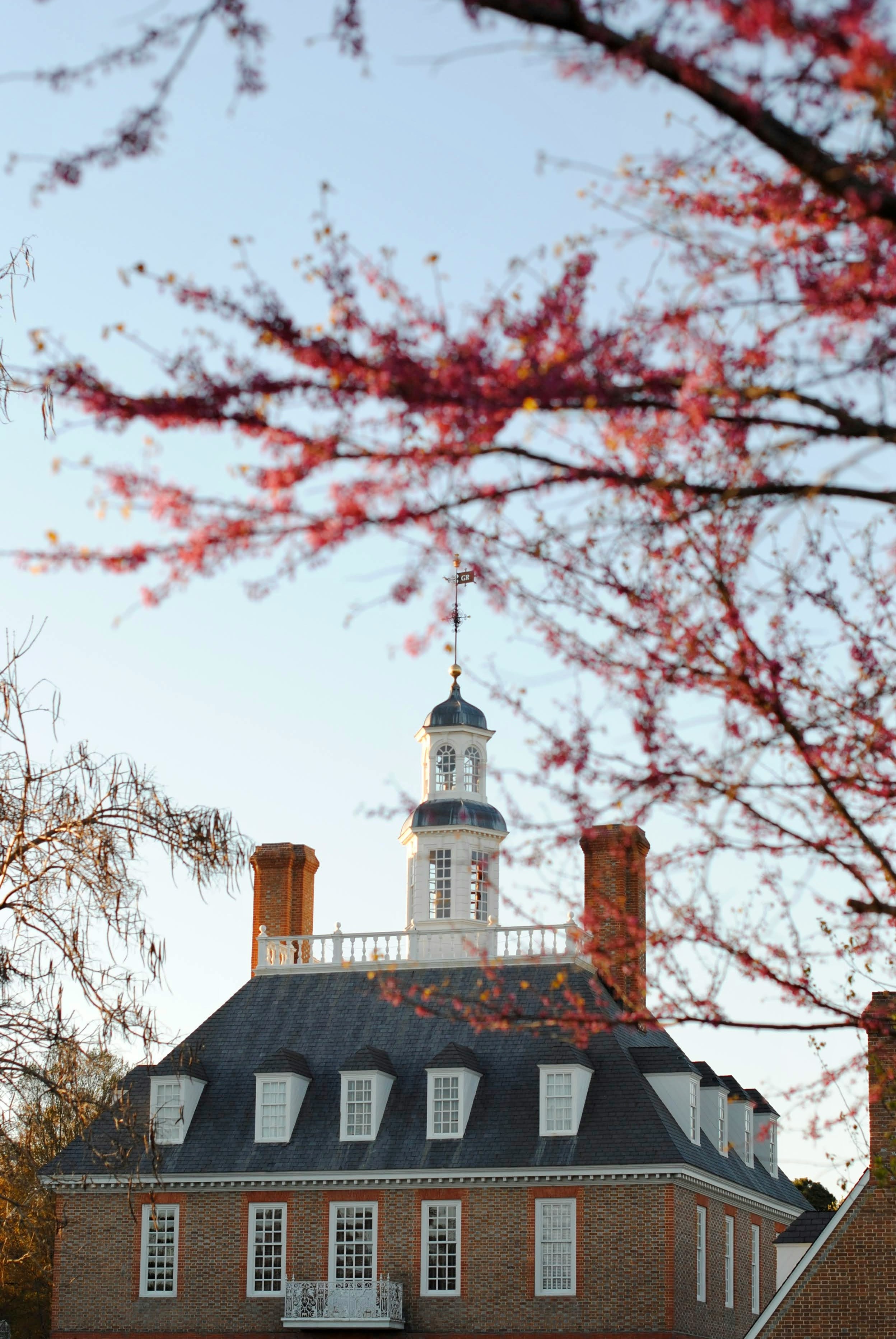
Governor’s Palace in Williamsburg, Virginia Photo by Michaela Murphy on Unsplash

Fearing a rebellion, Virginia’s Royal Governor, John Murray, the Earl of Dunmore, ordered the seizure of the gunpowder stored in Williamsburg. Word spread quickly and militias converged on the town. Lord Dunmore fled to Norfolk.

Great Bridge spanned the Elizabeth River, was the primary approach to Norfolk, and was surrounded by the Great Dismal Swamp. The swamp greatly limited accessibility to Norfolk.

Lord Dunmore ordered the construction of a stockade on the north side of the Great Bridge. Patriots grouped on the south side. Skirmishes ensued for days leading up to the battle.

Battle of Great Bridge

Although the Battle of Great Bridge lasted only a half hour on December 9, 1775, it was the first Patriot victory in the Revolutionary War.

It is said that this battle forced Lord Dunmore to leave Virginia along with his soldiers.

Four days after the battle, the Virginia Convention adopted a statement of independence.

Photo from a reenactment (obviously!) by British soldiers

Waves of British soldiers bore down on the Patriots. According to the website of the battle’s museum, https://gbbattlefield.org/learn-the-history, the patriots were joined by reinforcements and ordered to hold their fire until the British were within 50 yards.

Billy Flora

The website states, “It is historically significant to note that the last among the Patriots to retreat was Billy Flora, a free black man. Before retreating into the Patriot breastwork, he ran back to take up a plank of the bridge amid a shower of musket balls to slow the British advance.”

The significance of the Battle of Great Bridge

The museum’s website also states, “In winning the battle of Great Bridge on December 9, 1775, the Patriots effectively denied the British Norfolk, the finest seaport between New York and Charleston.”

How different the war might have unfolded if the British had captured the port at Norfolk!

Hurricane Helene Update on Western North Carolina

Just to give you an idea about the recovery situation 74 days after the storm hit western NC…

Roads: Interstate 40 is still closed near the TN line. As of Friday, of the 1,329 roads that were closed in September due to Hurricane Helene, 270 remain closed. In fact, that’s four more than indicated in last week’s NC Department of Transportation report. (Perhaps I miscalculated the total last week.)

Blue Ridge Parkway: There is still no estimated date for all the parkway in NC to be reopened.

A fresh fir Christmas Wreath from Avery County, NC: I was going to repeat the information I shared last week about a Christmas tree farm in western North Carolina, in case you missed my last blog post. I wanted you to have a chance to order a wreath or a tabletop Christmas tree from the Avery Family’s Trinity Tree Company in Newland, NC. HOWEVER… I have some great news! They have received so many orders they’ve had to shut down their online store! I’m so glad to get to end this week’s Hurricane Helene update on a good note!

The wreath my sister and I ordered was delivered nine days ago. It’s beautiful and smells great!

Here’s our wreath…

Our fir Christmas wreath from the Avery Family’s Trinity Tree Company, Newland, NC

(If you wish to still support the Avery Family as they are just two months into their years of recovering the family farm and business since they lost 60,000 trees to the hurricane, you can “order” a virtual tree or make a recovery gift on their website: https://www.averychristmastrees.com/. It takes about 15 years to grow a Christmas tree, so it will be long time before this family farm is back on its feet.

Since my last blog post

I continue to work on the devotional book and the historical novel I’m writing. I’m still adjusting to trying to post something on Instagram every day but Sundays. The world of social media is challenging and consumes more of my time than I’d like.

Photo of the Instagram icon image
Photo by Alexander Shatov on Unsplash

Until my next blog post

Read something uplighting or enlightening every chance you get. Support your local public library and your local independent bookstore, if you’re fortunate enough to have either one.

Subscribe to my weekly email newsletter at https://www.janetmorrisonbooks.com.

Treasure your time with friends and family.

Remember the people of Ukraine and western North Carolina.

Janet

#OnThisDay: The Chesapeake-Leopard Affair off Virginia leads to War of 1812

Although the War of 1812 didn’t officially start until the United States declared war on Great Britain on June 18, 1812, a number of incidents over a nine-year period led up to America’s second war against her Mother Country.  Those incidents centered around Great Britain’s maritime violations against United States ships and their crews.

Today is the 213th anniversary of a skirmish between the USS Chesapeake and the HMS Leopard off the coast of Norfolk, Virginia on June 22, 1807. (Sorry, if you were hoping for another kind of affair.)

The War of 1812 wasn’t emphasized much when I was taking history in school. Or perhaps I just didn’t retain the details. I couldn’t have told you what led to the United States going to war with Great Britain again so soon after the American Revolutionary War.

In case you’re like me in that respect, in today’s blog I’ll give you some insight. I promise, today’s blog post won’t be as long as my previous two #OnThisDay posts. No one needs or wants to know that much about the War of 1812.


How all this started

There was trouble on the high seas between the American and British navies as early as 1803. Things escalated and resulted in The Chesapeake-Leopard Affair in 1807.

Jenkin Ratford and four other crewmen on a British vessel patrolling off the coast of Virginia decided to steal a boat and desert their ship. They came ashore at Norfolk and bragged about what they’d done. Ratford joined the crew of the USS Chesapeake, a frigate of the US Navy. Great Britain was embarrassed.

The Chesapeake sailed out of Norfolk in June of 1807, heading for the Mediterranean Sea. The HMS Leopard intercepted it and was set to take revenge for what Ratford had done. When the commander of the Leopard requested to go aboard the Chesapeake to search for deserters, James Barron, the American commodore refused to muster his crew.

The response from the Leopard was swift and decisive. Three Americans were killed and 18 were wounded as the frigate attacked the Chesapeake with a barrage from its artillery. The crew of the Leopard seized the opportunity, boarded the crippled vessel, and captured Jenkin Ratford and other British Navy deserters.

Americans were humiliated by the incident and called for war. This was something that people agreed on, in spite of their political differences. US President Thomas Jefferson’s navy had already largely been dispatched to the Mediterranean in an effort to quell the activity of the Barbary pirates. Furthermore, budget cuts had reduced the fighting power of the US Army. He could ill afford to call for a war with Great Britain.

Jefferson decided to take revenge against Great Britain economically. The Embargo Act was passed by Congress a few months later and signed into law in December of 1807.


The Embargo Act of 1807

The Embargo Act of 1807 forbade all international trade in or out of all US ports. The objective was to get Great Britain and France (who were at war at the time) to stop harassing US ships and to recognize the autonomy of the United States as a nation.

One can imagine how unhappy the US port cities were. They depended upon the international trade for their survival. The embargo failed due to loopholes in the law. For instance, Great Britain continued to export goods to the US via Canada. Goods were smuggled in from Canada and whaling ships. Enforcement was a problem.

In the end, Americans suffered far more than the British or the French. Sailors lost their jobs, farmers couldn’t sell their crops, and merchants went bankrupt.


The end results

Tensions continued. The US declared war against the United Kingdom and Ireland and all its territories on June 18, 1812. By then, James Madison was the US president. The war continued until it officially ended with the Treaty of Ghent on February 17, 1815.


What happened to James Barron and Jenkin Ratford?

James Barron was court-martialed and found guilty of “neglecting on the probability of an engagement, to clear his ship for action.” He was suspended, without pay, from the US Navy for five years.

Jenkin Ratford was court-martialed for mutiny and desertion. His punishment came on August 31, 1807, when he was hanged from the fore yardarm of the HMS Halifax, a ship on which he had previously served.


Until my next blog post

I apologize for not including any photographs in today’s blog post. I usually get my blog photos from unsplash.com; however, I was unable to download any images from that website to use today. One of the cardinal rules of blogging is to always include images, so I’m embarrassed to send today’s post out into the blogosphere without illustration.

I hope you have a good book to read. I’m blessed with more library books than I can possibly read before they’re due. I’m giving them my best effort, though. Too many books! What a wonderful dilemma to have!

If you’re a writer or other artist, I hope you have lots of creative time during this pandemic.

Be safe. Be well. Wear a mask in respect for other people.

Don’t be shy. Share my blog!

Janet