#OnThisDay: Plessy v. Ferguson, 1896 & Lessons for Us

Plessy v. Ferguson is one of those landmark U.S. Supreme Court cases we would like to forget. Put it behind us. Consider it ancient history from the 19th century.

Not so fast.

We have something to learn from Plessy v. Ferguson today, 130 years after the ruling.

Background

To refresh your memory from history or political science class, Homer Plessy was a man of mixed race. That meant, under the law in the United States, he was considered Black. Though reportedly seven-eighths white, he was not permitted to ride in a “whites-only” railroad car in New Orleans. The Louisiana State Legislature had passed a Separate Car Act in 1890. That law required separation train cars for white and Black passengers.

In 1891, a group of Black men in New Orleans formed “Citizens’ Committee to Test the Constitutionality of the Separate Car Law.” Bolstered by a May 15, 1892 ruling by the Louisiana State Supreme Court in favor of the Pullman Company, the Committee decided to test the law in interstate travel. On June 7, 1892, Mr. Plessy purposely took a seat in a whites-only rail car on the East Louisiana Railroad to test the law.

What happened to Mr. Plessy

Mr. Plessy was arrested for boarding a “whites-only” train car. His defenders in court argued that the Separate Car Act of 1890 violated the 13th and 14th Amendments to the U.S. Constitution.
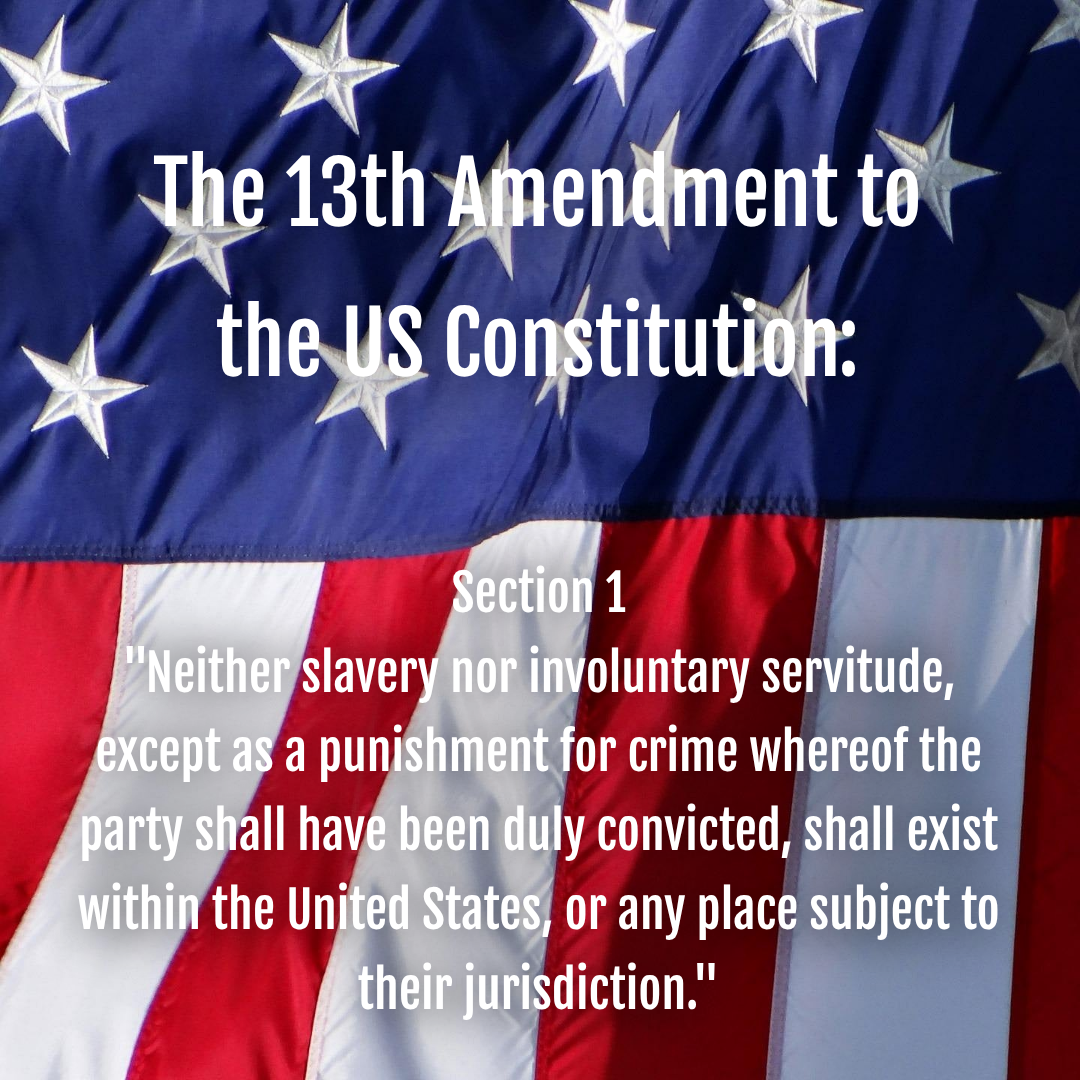
Section 1, 13th Amendment
to the U.S. Constitution

When Mr. Plessy’s case went to District Court, the judge was John H. Ferguson. Judge Ferguson denied a request to dismiss the case and then ruled that the Louisiana Separate Car Act of 1890 was constitutional because the State had the authority to regular public accommodations.

The Louisiana Supreme Court upheld the lower court’s decision, and Mr. Plessy took his case to the U.S. Supreme Court. Surely, that august body would see that the Louisiana law was unjust, discriminatory, and unconstitutional.

After all, the 13th Amendment had abolished slavery in the United States in 1865, and Section 1 of the 14th Amendment, which was ratified in 1866, not only extended citizenship to former slaves but also state, “No State shall make or enforce any law which shall abridge the privileges or immunities of citizens of the United States; nor shall any State deprive any person of life, liberty, or property, without due process of law; nor deny to any person within its jurisdiction the equal protection of the laws.”

Mr. Plessy and his lawyers maintained that the Separate Car Act on 1890 was unconstitutional under the last phrase in Section 1 of the 14th Amendment.
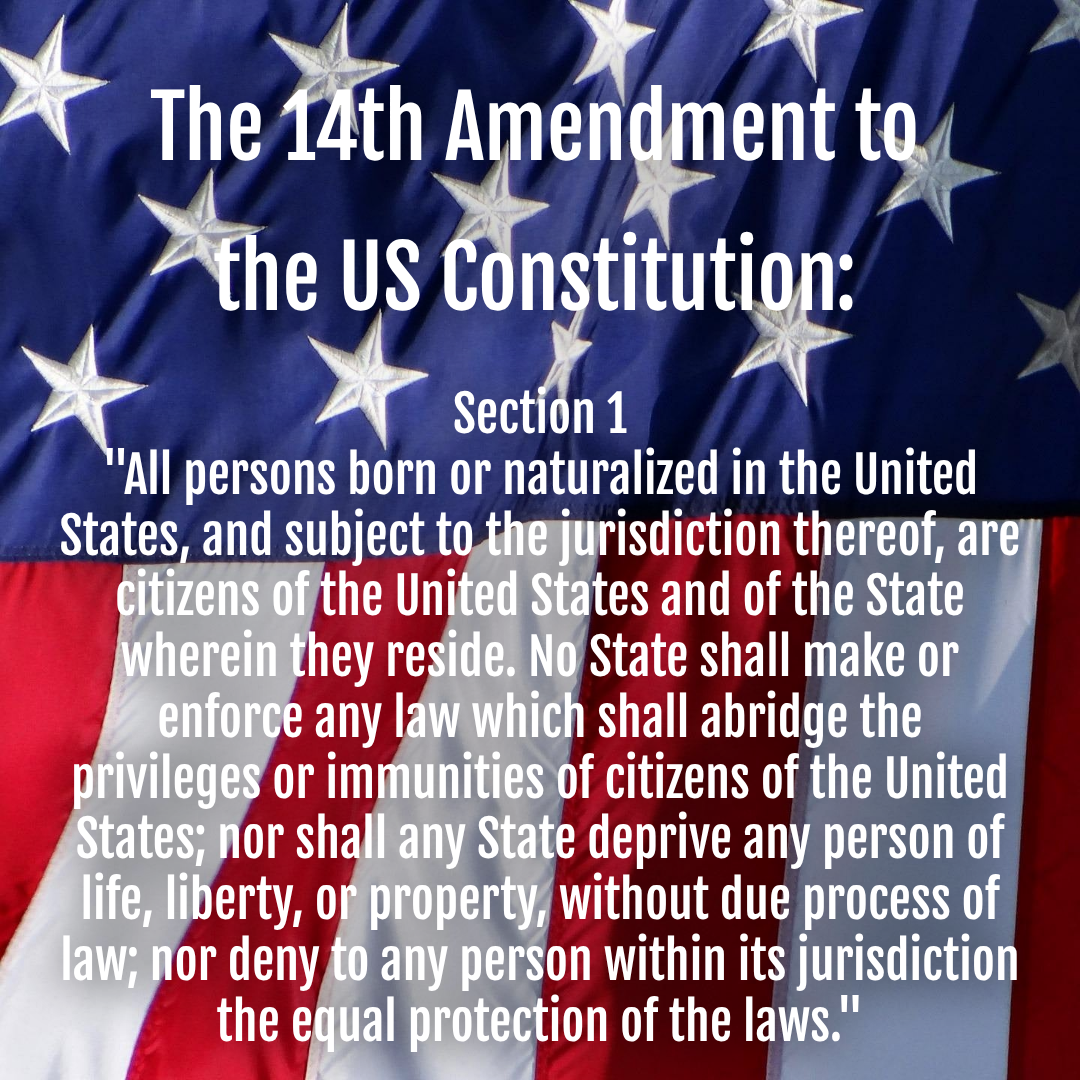
Section 1, 14th Amendment
to the U.S. Constitution

The ruling

In a 7-1 decision, the U.S. Supreme Court ruled on May 18, 1896, that the State law in Louisiana was constitutional because it provided “separation but equal” accommodations for white and Black passengers.

That famous “separate but equal” wording is what took the United States down a terrible road of discrimination for the next 70 years.

It paved the way for “Jim Crow” laws. It made racial segregation in public education, in public conveyances, restaurants, lodging, etc. lawful.

The “separate but equal” doctrine stood until the Brown v. Board of Education U.S. Supreme Court case in 1954 and the Civil Rights Acts in the 1960s. (The Brown v. Board of Education ruling, ironically, was handed done in a 9-0 decision on May 17, 1954, just one day shy of the anniversary of the Plessy v. Ferguson decision.)

We all know now that “separate but equal” was never equal; it was just separate. That doctrine became the umbrella and shield for untold acts of discrimination and violence until the late 1960s.

Who cast the dissenting vote?

Associate Justice John Marshall Harlan was the lone dissenter in the Plessy v. Ferguson ruling. Although he came from a slave-holding family in Kentucky, Justice Harlan often cast the dissenting vote in civil rights cases that went before the U.S. Supreme Court. He sat on the Court from 1877 until 1911.

Lessons to be learned from Plessy v. Ferguson in 2026

If I had penned this blog post a couple of years ago, it probably would have ended there. Just a nice little history lesson. Just the facts of the case and the final ruling.

But I’m writing this in mid-May 2026, and that 1896 U.S. Supreme Court case has taken on a whole new significance.

As in 1896, in 2026 we have a U.S. Supreme Court majority who tend to be constitutional textualists or literalists, meaning they usually view the Constitution and laws as the people at the time of a law’s enactment would have interpreted it and not necessarily taking into account the spirit of the law.

In my six years of studying political science in college, I was taught to study the time and letter of the law but to look for the spirit of the law.

I offer a current example of how some people now want to interpret the 14th Amendment as applying only to the people who had been slaves prior to and during the American Civil War. They argue that the 14th Amendment does not grant citizenship to everyone who just happens to be born in the United States. They don’t want the 14th Amendment to apply to the children of undocumented immigrants. Trust me. We have not heard the last of that argument.

Just a couple of weeks ago, the U.S. Supreme Court essentially dismantled the Voting Rights Act of 1965. As a result, state legislators are falling all over each other to redraw Congressional District boundaries. They feel emboldened to eliminate majority Black or Democrat districts before this November’s mid-term elections.

This is history repeating itself. The hurried gerrymandering and shifting of Congression District lines in 2026 is in many ways a mirror image of the Jim Crow laws of the late 1800s.

Why is it that we don’t learn from history? Or perhaps a more accurate question is “Why do we only learn how to repeat the harmful things from our history?”

The Roberts court is taking us down a road of easier corruption in politics (Citizens United v. Federal Election Commission, 2010), less accountability for the U.S. President (Trump v. United States, 2024), and an attempted erasure of all the progress our country made in racial relations and equality in the 60 years following the Voting Rights Act of 1965 (Louisiana v. Callais, April 29, 2026).

The racial discrimination the U.S. Supreme Court is fomenting by its Louisiana v. Callais decision a couple of weeks ago is far-reaching and should send chills done the spine of every American.

The lesson for us to learn from the last 16 years of U.S. Supreme court decisions, un-checked Presidential powers, and a U.S. Congress that acts more like a lap dog than a co-equal branch of the federal government is that our rights and the “guarantees” we have in our laws and U.S. Constitution are no more secure than the paper they are written on.

Every week I learn that more protected federal lands set aside generations ago for wildlife and the preservation of the natural world are being trashed by our own elected officials. It’s being done quietly, of course, because they don’t want us to know. If they were proud of what they’re doing, they’d be making grand announcements.

I assumed the East Wing of the White House would be there forever. I assumed national parks and wildlife refuges were permanently protected.

The U.S. Constitution is a living and breathing document. It will always be up for discussion, debate, and amending. That’s the beauty of it, but it also makes it fragile and vulnerable to the whims of Presidents and others who wish to test it.

The Preamble to the U.S. Constitution

Democracy is more fragile than I realized.

Janet

The government should be afraid of its citizens, not the other way around.

#OnThisDay: Plessy v Ferguson, 1896

I had originally considered writing about the 40th anniversary of the eruption of Mount Saint Helens today, but then I was reminded that it was on this day in 1896 that the United States Supreme Court handed down a decision that changed the course of American history. The case was Plessy v. Ferguson.

Plessy v. Ferguson was one of the cases we studied in the constitutional law class I took in college. The decision in this landmark case sanctioned segregation in the United States.

What happened after the American Civil War?

The Thirteenth, Fourteenth, and Fifteenth Amendments to the United State Constitution were intended to guarantee the civil rights of African Americans in the years after the Civil War and forevermore. Some states found ways around the intent of those amendments by instituting such things as a poll tax that many former slaves could not afford to pay and literacy tests that former slaves who had been denied an opportunity to learn to read or write couldn’t possibly pass.

The result of the poll taxes and literacy tests was the disenfranchisement of black men. (This just applied to men because women didn’t gain the right to vote until 1920.)

Racially-segregated public schools were the legal norm in some states in the post-Civil War years and into the 1960s. Narrow interpretation of the U.S. Constitution made these state laws possible.

The Louisiana Separate Car Act

The Separate Car Act took effect in Louisiana in 1890. It dictated that railway companies had to provide separate cars for blacks and whites and made it against the law for anyone of either race to enter a car designated for the other race.

Photo by Gemma Evans on Unsplash

Creole professionals in New Orleans organized the Citizens’ Committee to test the constitutionality of the Separate Car Act. They hired Albion Tourgée as legal counsel. Mr. Tourgée had a record as a reformer. They wanted to find a person of mixed race to serve as plaintiff in a test case. They maintained that the act could not be applied on a consistent basis because it did not define the “white” and “colored” races.

Who was Plessy in Plessy v Ferguson?

Homer Adolph Plessy was seven-eighths white and one-eighth African American. He bought a ticket to take the East Louisiana Railroad from New Orleans to Covington, Louisiana. He boarded a passenger car for whites. When he refused to move to a car for African Americans, he was arrested.

Mr. Plessy was found guilty and appealed the decision.

Who was Ferguson in Plessy v Ferguson?

John H. Ferguson was the judge when Mr. Plessy was tried in U.S. District Court.

Counsel for Mr. Plessy argued that the Louisiana Separate Car Act violated the Thirteenth Amendment to the U.S. Constitution – the amendment that prohibited slavery.

The Fourteenth Amendment of the U.S. Constitution states the following in section 1: “All persons born or naturalized in the United States… are citizens of the United States and of the State wherein they reside. No State shall make or enforce any law which shall abridge the privileges or immunities of citizens of the United States; nor shall any State deprive any person of life, liberty, or property, without due process of laws; nor deny to any person within its jurisdiction the equal protection of the laws.”

Counsel for Mr. Plessy argued that the Act violated this amendment because it did not provide African Americans “equal protection of the laws.” Judge Ferguson dismissed that claim, too.

The case was appealed to the Louisiana State Supreme Court where Judge Ferguson’s ruling was upheld.

Plessy v Ferguson

The U.S. Supreme Court agreed to consider the case, which was titled Plessy v Ferguson and oral arguments were heard April 13, 1896. The court’s 7 to 1 decision with one associate justice not voting, was rendered 124 years ago today on May 18, 1896.

U.S. Supreme Court Building
Photo by Bill Mason on Unsplash

The majority opinion in the case

Associate Justice Henry Billings Brown wrote for the majority. He wrote that the Louisiana Separate Car Act didn’t violate the Thirteenth Amendment because it did not reestablish slavery or servitude. He wrote that the act wasn’t in violation of the Fourteenth Amendment because the amendment only addressed the legal equality of whites and blacks and did not address social equality. Justice Brown maintained that the law in question in Louisiana provided equal cars for the two races. He backed up his statement for the court’s majority by citing various states’ courts that allowed for racially-segregated public schools. He wrote: “If one race be inferior to the other socially, the Constitution of the United States cannot put them upon the same plane.” Furthermore, he wrote that the intention of the Louisiana law in question was to preserve “public peace and good order” and was “reasonable.”

The minority opinion in the case

Associate Justice John Marshall Harlan of Kentucky, as the only dissenter, wrote in the minority statement that the majority of the Supreme Court had ignored the purpose of the Separate Car Act. To Justice Harlan, it was obvious that the purpose of the act was “under the guise of giving equal accommodation for whites and blacks, to compel the latter to keep to themselves while traveling in railroad passenger coaches.” He argued that “Our Constitution is color-blind” and does not see or tolerate citizens being divided by class. He said the act affected the free movement of both races and, therefore, violated the equal protection clause of the Fourteenth Amendment.

Stating his dissent to the decision in the strongest possible terms, Justice Harlan wrote, “in my opinion, the judgment this day rendered will, in time, prove to be quite as pernicious as the decision made by this tribunal in the Dred Scott Case.” (In the Dred Scott case in 1857, Chief Justice Roger B. Taney wrote that African Americans were not entitled to the rights guaranteed by U.S. citizenship.)

By the way, Associate Justice John Marshall Harlan came to be called “The Great Dissenter” because in the 34 years he sat on the U.S. Supreme Court (1877 until his death in 1911) he was often the dissenting voice, particularly in cases involving civil rights.

The separate but equal doctrine

Although the words, “separate but equal” do not appear in the majority or minority opinions in Plessy v Ferguson, that doctrine was a result of the case. The “separate but equal” doctrine made possible the continuation of racially-segregated public schools for decades.

The Brown v Board of Education of Topeka landmark U.S. Supreme Court case in 1954 ruled that separate but equal public schools were unconstitutional; however, in the county in which I lived in North Carolina, voluntary school integration was not instituted until 1965, and integration wasn’t mandatory until the following school year. Brown v. Board of Education of Topeka essentially overturned Plessy v Ferguson.


Since my last blog post

I’ve continued to work on a short story around the May 20, 1775 Mecklenburg Declaration of Independence.

Until my next blog post

Be safe. Be well. Be positive. Be creative and productive.

I hope you have a good book to read. I’m listening to Commonwealth, by Ann Patchett.

Let’s continue the conversation

I attended an all-white school until the seventh grade. That year, integration was optional. Only three black students attended the school of first through eighth grades. The year I was in the eighth grade, the public schools in our county were fully-integrated. Looking back on it now, I don’t know what all the fuss was about.

How about you? Did you attend a racially-segregated school? Please feel free to share your experience in the comments below and on my Facebook pages where I post my blog.

Thanks for dropping by!

Janet