I write southern historical fiction, local history, and I've written a devotional book. The two novels I'm writing are set in Virginia and the Carolinas in the 1760s. My weekly blog started out to follow my journey as a writer and a reader, but in 2025 it has been greatly expanded to include current events and politics in the United States as I see our democracy under attack from within. The political science major in me cannot sit idly by and remain silent.
The eleventh story in my new book, Traveling Through History: A Collection of Historical Short Stories, is about a fourteen-year-old foster child who is a veteran at changing homes and foster families.
Some foster children only have a trash bad to put their belongings in. Photo by Sven Brandsma on Unsplash
In “Secrets of a Foster Child,” Lorraine finally found a family she felt a part of in 1948, just three years after World War II ended.
Things did not go as hoped, but she just might find dignity in a simple suitcase.
The dignity of a simple suitcase. Photo by Shamblen Studios on Unsplash
In 2001, the congregation of the church I am a member of contacted the county’s Department of Social Services in search of a hands-on project. When we were told that many foster children have nothing but a garbage bag to carry their belongings in to a foster home, we knew we had found a project we could get excited about.
We collected enough new and like-new suitcases to make sure every foster child in the county had a suitcase. We hoped that would help them no longer think of themselves as “throwaway children.”
As you can see, if you have been reading my book or reading this series of blog posts about the stories in my book, I get my inspiration from many sources.
In case you have missed any of the previous blog posts about the stories in the book, here are the links:
Thank you for reading my blog and supporting my writing. Look for Traveling Through History: A Collection of Historical Short Stories on Amazon or at your favorite independent bookstore.
Where to find my book of historical short stories
If you cannot find it locally, you can visit my website, https://www.janetmorrisonbooks.com, click on the book, then click on the Bookshop.org button. Through Bookshop.org you can order books from any independent bookstore in the United States. As an affiliate, I will make a commission from the sale of any book purchased through my website. Thank you!
Janet
The government should be afraid of its citizens, not the other way around.
Once-a-week, since November 25, I have blogged about a different story from my new book, Traveling Through History: A Collection of Historical Short Stories.
The sixth story in the book is “Whom Can We Trust? A Mecklenburg Declaration of Independence Short Story.”
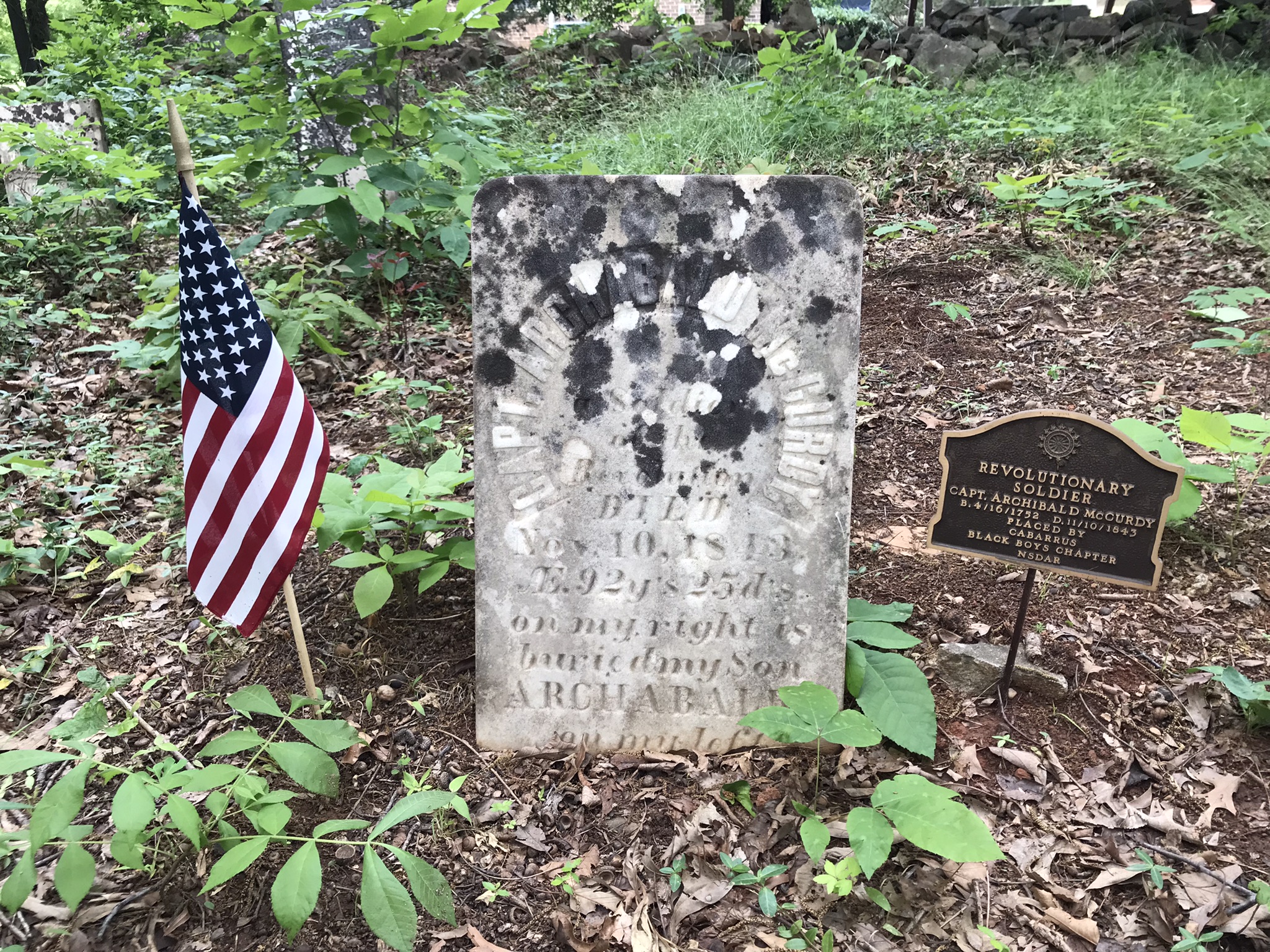
Tradition tells us that Archibald and Maggie Sellers McCurdy built their log cabin in what is now Cabarrus County, North Carolina, in 1773. At that time, Cabarrus had not yet been formed out of the eastern part of old Mecklenburg County. Their house was on the National Register of Historic Places until vandals burned it down a few years ago. Sadly, I never did see the house, but I have seen photographs of it and detailed floor plans and exterior drawings have been preserved.
Archibald McCurdy’s gravestone at Spears Graveyard of Rocky Ri er Presbyterian Church, Cabarrus County, North Carolina
Those drawings and photographs made it easy for me to imagine the McCurdys’ lives. Theirs are names I’ve heard all my life. Archibald was a foot solider in the militia during the Revolutionary War. Maggie was a patriot in her own right, as she earned the name “She-Devil” by the British and Tories. I explain a couple of her feats in the Author’s Note at the end of “Whom Can We Trust?”
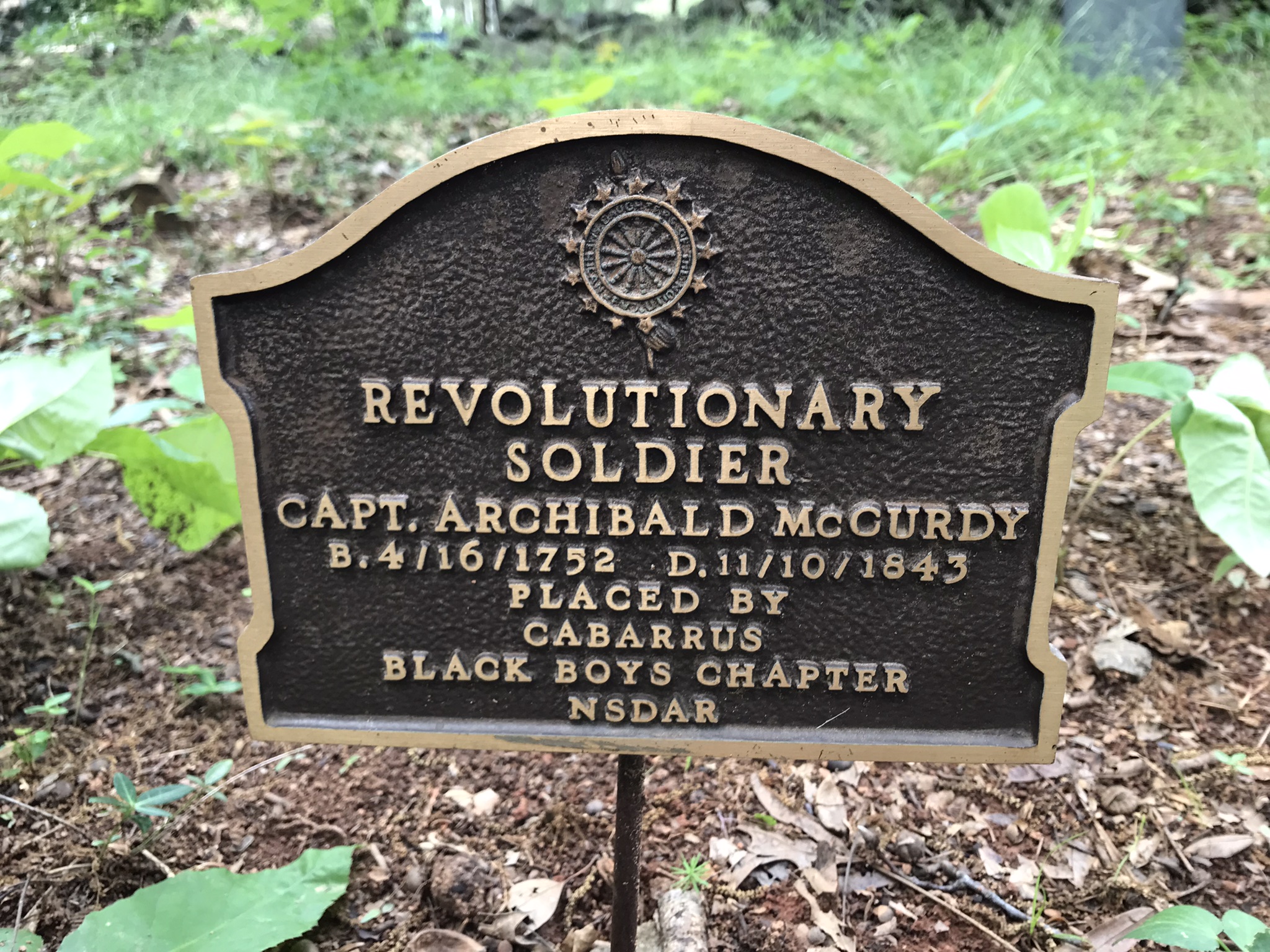
Marker placed at Archibald McCurdy’s grave by the Daughters of the American Revolution
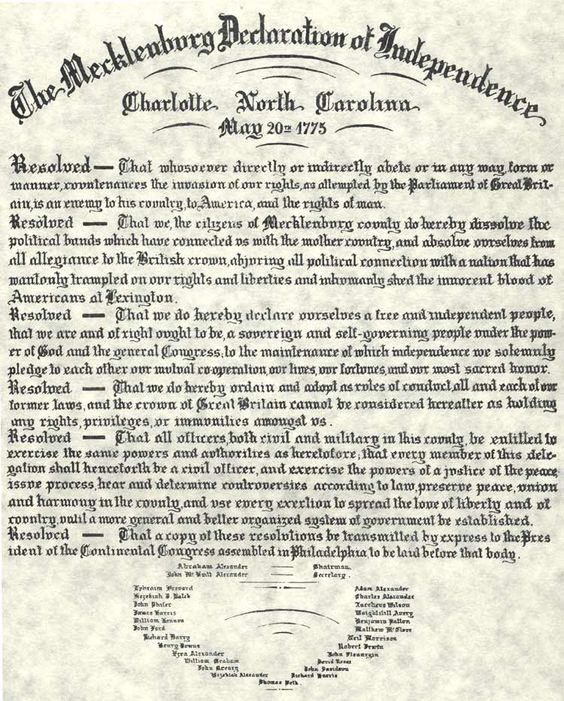
The story is set in May 1775 at the time of the signing of the Mecklenburg Declaration of Independence. I was inspired by a story I’ve heard all my life about what Archibald McCurdy did on the day that document was signed.
You can find the paperback at Second Look Books in Harrisburg, NC, or ask for it at your local independent bookstore. Bookstores can order it from IngramSpark.
I am excited to tell you that my new book, Traveling Through History: A Collection of Historical Short Stories, will be released today as an e-book on Amazon! I thought the paperback would be released today, but there have been some bumps in the road over the last several days. I hope the paperback will be available in a few days.
Traveling Through History: A Collection of Historical Short Stories, by Janet Morrison
In a week or two, look for it at your favorite independent bookstore, such as Second Look Books in Harrisburg, NC. I will give shout-outs to other bookstores as they let me know they’ve ordered the book.
Here’s a list of the stories in Traveling Through History:
The Tailor’s Shears – A 1600s Scottish Story;
You Couldn’t Help But Like Bob – A Colonial Virginia Short Story;
To Run or Not to Run – George’s Story;
Making the Best of a Tragedy – Elizabeth Steele’s Story;
From Scotland to America – A 1762 Immigration Story;
Whom Can We Trust? – A Mecklenburg Declaration of Independence Short Story;
Go fight, Johnny! – A Story of a Battle of King’s Mountain Veteran;
A Letter from Sharpsburg – An American Civil War Letter;
Slip Sliding Away – A Southern Appalachian Short Story;
A Plott Hound Called Buddy – A Great Depression Era Southern Appalachian Short Story;
Secrets of a Foster Child – Dignity in a Simple Suitcase;
Ghost of the Battle of Guilford Courthouse – An American Revolutionary War Ghost Story; and
If This House Could Talk – Recollections of an Old Farmhouse.
Do some of these story titles pique your interest? I certainly hope they do!
Each story is followed by Author’s Notes that give you such information as background information, what inspired the story, and what’s truth and what’s fiction.
Traveling Through History: A Collection of Historical Short Stories is available for your Kindle from Amazon.
Since I have published very little historical fiction, you probably haven’t read anything yet that was influenced or inspired by my genealogy; however, I hope to remedy that with the publication of a collection of my short stories in 2024.
I’ll give you an example. People often ask fiction writers where they get their ideas. The answers run the gamut, but I have drawn on research into my family history for at least one historical short story.
Many people like to brag about their Scottish ancestors living in castles. Folks, why would someone leave a castle in Scotland in the 1700s and come to America to start life over as a farmer? Just sayin.’
Eilean Donan Castle in Scotland (Photo credit: Nicholas Beel on Unsplash.com
I brag on most of my ancestors because they were farmers. They were farmers in Scotland and Ireland, and they bought land to farm when they got to America.
Photo Credit: Steven Weeks on Unsplash.com
After having grown up out in the country and worked a vegetable garden, I have immense respect and admiration for anyone who is able to support a family and make a living by farming – especially back in the days before tractors and other mass-produced farm equipment.
Today I’m blogging about one of my immigrant ancestors who inspired me to write a short story.
He left Ireland (we think) and came to Virginia in the early 1700s. He had obviously not lived in a castle. Doing research on him in coastal Virginia was an eye-opening adventure. By following all the government records I could find about him, I learned a great deal of early Virginia history.
His court records made the fact that in colonial Virginia there was no separation of church and state very real to me. When said ancestor found himself on the wrong side of the law, he was fined a certain poundage of tobacco (or “tobo”) to be paid to the Anglican church.
Photo Credit: Rusty Watson on Unsplash.com
I learned that tobacco was as good as money in colonial Virginia. My g-g-g-g-g-grandfather was on the wrong side of the law more than once, and he was always fined a certain number of pounds of tobacco.
Just so you’ll know, he wasn’t a terrible or dangerous person. He was fined for such offenses as playing cards on the Sabbath. You can read what I think will be an entertaining story about him in my (hopefully) upcoming book in 2024, Traveling through History: A Collection of Historical Short Stories.
You might want to subscribe to my every-other-month e-Newsletter so you can learn more about the research I do. One thing I love about writing historical fiction is the research it requires.
Visit my website, https://www.janetmorrisonbooks.com and click on the “Subscribe” button. You’ll immediately receive a free downloaded copy of my short story, “Slip Sliding Away” – a Southern historical short story set in the Appalachian Mountains in the 1870s.
Since my last blog post
Drumroll! Main Street Books in Davidson, North Carolina has accepted The Aunts in the Kitchen: Southern Family Recipes on consignment for the next six months. Marie and I are excited about this new opportunity.
I appreciate the comments some of you let after reading my blog last Monday about book banning – specifically, Sold, by Patricia McCormick. I’m glad I introduced the book to some of you.
In last Monday’s blog, I indicated that I had submitted a request to the Cabarrus County Public Library for Sold to be ordered. One of the librarians thanked me for bringing it to her attention. It seems that the system used to have a copy. After it was lost, they failed to order a replacement copy. That is now being rectified.
See? Sometimes all you need to do is ask your local library system to consider adding a book to the collection. In a time when too many people do nothing but criticize “the government” and express their disrespect for government employees, I’m giving a shout-out for the Cabarrus County Public Library System and its dedicated employees
Until my next blog post
I wish my fellow Americans a wonderful Thanksgiving holiday this week. It’s good that we set aside a day every year to stop and think about all we have to be thankful for.
I hope you have a good book and time to read it. If there’s a book you wish you can check out of your local public library but it’s not in the system, request that it be purchased. Your request might be turned down due to monetary restraints or another reason, but you won’t know until you try.
Remember the people of Ukraine and other parts of the world where innocent citizens are suffering due to the actions of dictators and terrorists.
Do you like having Author’s Notes at the end of an historical novel so you’ll know what was true, what was fiction, and what actually happened but was adjusted time-wise or by location to fit the flow of the story?
The Author’s Notes are almost always found at the back of an historical novel. I used to wait and read the Author’s Notes after I had finished reading an historical novel, but now I always read those notes first. The notes not only give insight about the story, but also make clear which parts of the book are based on fact and which parts are fictional.
Do you read the Author’s Notes before or after you read an historical novel?
An example from my ghost story
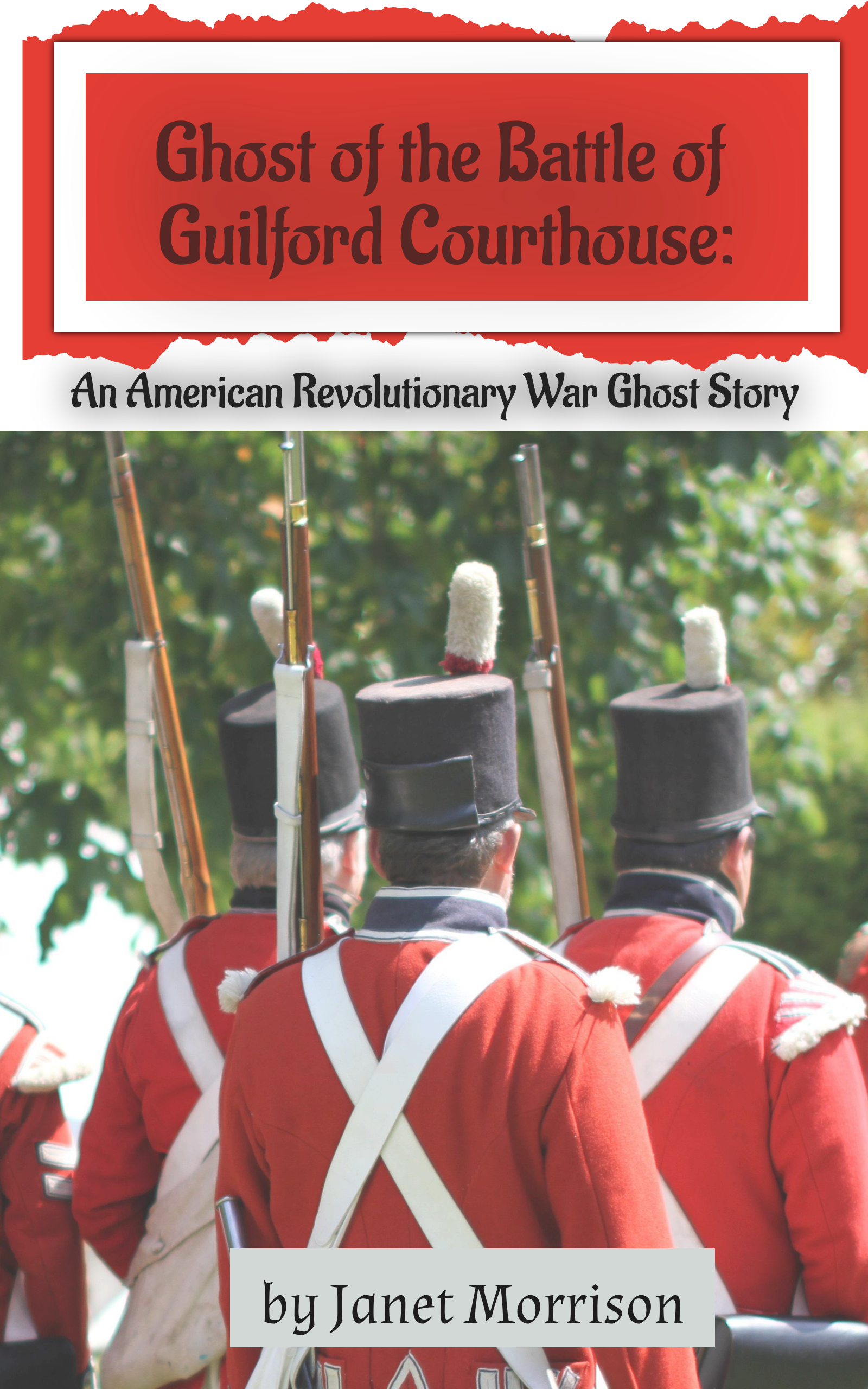
I thought it only fitting to include Author’s Notes at the end of my short story: Ghost of the Battle of Guilford Courthouse: An American Revolutionary War Ghost Story. In case you haven’t purchased the short story yet, here is my Author’s Note from the ghost story:
“I’ve never believed in ghosts, but this story is based on the events my sister and her housemate experienced in their condominium in Greensboro, North Carolina in the 1980s. The upstairs commode would flush when no one was upstairs. Cans occasionally fell off the pantry shelf. A house guest was frightened by the sensation that someone had walked into her bedroom and stood at the foot of the bed. In fact, she thought this person had called her by name – Mary. She had no knowledge of the unexplained incidents the residents had experienced.
“Peter Francisco was an actual American soldier in the Battle of Guilford Courthouse. At six-feet-six-inches tall and 260 pounds, he was much larger than the average American man during that era. He was credited with being ruthless with his broadsword. There is a visitors’ center on the grounds of the Battle of Guilford Courthouse; however, the rest of the story is fiction.”
After reading my Author’s Note, are you more interested or less interested in reading my ghost story?
Since my last blog post
I’ve edited three of the historical short stories I drafted a few months ago. I took inventory of my historical short stories. I want to write five more from scratch before I publish the collection. Something to look forward to in 2024!
I’ve done more research about the colonial settlement of Bethabara, North Carolina and read more resources about Shallowford on the Yadkin River. This is needed research for my first historical novel. Something else to look forward to!
Until my next blog post
If you haven’t subscribed to my newsletter through my website, https://www.janetmorrisonbooks.com, please do so before you miss any more newsletters. The next one will go out around November 1. For subscribing, you’ll receive a free downloadable copy of “Slip Sliding Away: A Southern Historical Short Story,” so you can get a feel for my historical fiction writing. I have a “field trip” planned before October is over, but you’ll have to subscribe to my newsletter to hear about it.
Have you ordered my American Revolution e-ghost story? “Ghost of the Battle of Guilford Courthouse: An American Revolutionary War Ghost Story” is available from Amazon, along with my other books: https://www.amazon.com/dp/B0CH7JCP11/. October is the perfect time to read a ghost story!
Anytime is the perfect time to purchase a cookbook! Have you ordered your copy of The Aunts I the Kitchen: Southern Family Recipes? Order one for yourself and one for each of your aunts at https://www.amazon.com/dp/B0CJLKFDPR/. (It’s not too early to start your Christmas shopping.)
Make time for your friends and family.
Remember the people of Ukraine and Israel. Terrorism has no place in our world.
Although September gave me 30 days in which to read, I had more books on my list to read than time allowed. Nevertheless, I enjoyed the three novels and the one nonfiction book I managed to squeeze into my schedule.
You Can Run, by Karen Cleveland
You Can Run, by Karen Cleveland
Karen Cleveland is a former CIA analyst. She writes spy thrillers now. You Can Run, like the other books of hers I have read, Need to Know (see my April 2, 2018 blog post: More March 2018 Reading) and The New Neighbor (see my October 10, 2022 blog post: Spy Thriller, WWI Novel, Nonfiction, and Historical Mystery Read Last Month are real page turners. When you read one of her books in bed at night, don’t plan on getting any sleep. You’ll have to read “just one more chapter.”
In You Can Run, the protagonist, Jill, works for the CIA. She is being blackmailed. To save the life of her young son, she does something illegal. She spends the rest of the novel looking over her shoulder. Saying she spends the rest of the novel “looking over her shoulder” hardly does the plot justice. One bad thing after another happens, as she and her family and others get pulled deeper into the spiral and they can’t get out. No matter what you do, do not under any circumstances read the “Epilogue” until you have finished reading the entire book, including the last chapter. The “Epilogue” will ruin the story for you. I didn’t see it coming!
The Wind Knows My Name, by Isabel Allende
The Wind Knows My Name, by Isabel Allende
I usually don’t enjoy novels that flip back and forth between protagonists, and when I got to page 67 in the large print edition of The Wind Knows My Name, I was so invested in Samuel Adler that I was quite jolted when a turned the page and found myself reading about a new protagonist.
But… Isabel Allende is a masterful writer, and I was soon just as invested in the little girl who illegally crossed the Rio Grande and into the United States on her father’s tired back. The story of that little girl took me directly to the Mexican-US border of today and the desperation the “illegal aliens” experience in their home countries. How desperate must they be to risk their lives to try to get themselves – or even only their children – into the United States?
And how desperate did Samuel Adler’s mother feel when she put her young son on a train to get him away from the clutches of the Nazis and to relative safety in England?
In The Wind Knows My Name, Isabel Allende weaves compelling stories about these individuals and then makes a connection between the characters. I recommend everything that Isabel Allende writes.
And on top of that, she is a very nice person. She donated an autographed copy of one of her novels to the Friends of the Harrisburg Library for our autographed book sale a decade or so ago.
Falling, by T.J. Newman
Falling, by T.J. Newman
Falling is T.J. Newman’s debut novel, and it’s a good one! My sister read it and recommended it to me and our book club.
I recently read that one of the keys to writing good fiction is to give the protagonist an impossible choice. Falling fits that perfectly. In a nutshell, a commercial airline pilot is forced to decide whether to crash the plane and save his wife and children, or not crash the plane and let his wife and children be murdered.
This novel takes you minute-by-minute through the scenario. There are red herrings and there is a surprise twist. The author is a former flight attendant, so she knows the inside of a commercial jet and protocols well.
What will the pilot decide to do?
According to her “About the Author” page on Goodreads.com, Universal Pictures is making a movie based on the novel.
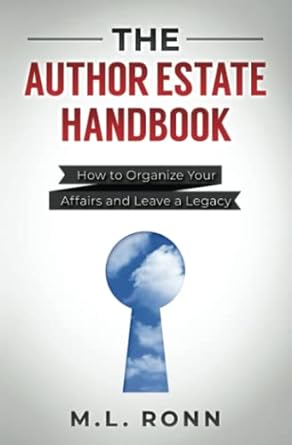
The Author Estate Handbook: How to Organize Your Affairs and Leave a Legacy, by M.L. Ronn
The Author Estate Handbook: How to Organize Your Affairs and Leave a Legacy, by M.L. Ronn
I mention this book in case other writers out there are interested in its topic. By reading the book, I discovered that I have done some things right but I’ve overlooked other things I need to take care of before I die.
The author explains how an author’s estate is different from everyone else’s estate. As an author, you own “intellectual property.” You own copyrights that will live on for 70 years after your death. If those things are not properly addressed in your will, you are leaving a mess for your heirs.
I’m not just talking about published books here. If you blog, your blog posts are “intellectual property,” so you need to tell your heirs what you want done with your blog when you die.
Each chapter lists specific tasks you need to take care of, if you’re a writer. I highly recommend this book to writers.
Since my last blog post
Our first shipment of author copies of The Aunts in the Kitchen: Southern Family Recipes arrived and the book is now available at Second Look Books in Harrisburg, NC as well as on Amazon! Plans are being made to have a book event on November 4 at the bookstore! Stay tuned.
I got the new Covid vaccine and am happy to report I had no ill effects. Those people who insist on belittling Covid 19 have obviously not known someone who has died from the virus or been severely sickened by it. I’m growing weary of Covid jokes by the fortunate few who have escaped it or have not known someone who has or is suffering through it. I thought we had gotten beyond the jokes, but I learned differently last week.
Until my next blog post
Have you ordered my American Revolution e-ghost story? “Ghost of the Battle of Guilford Courthouse: An American Revolutionary War Ghost Story” is available from Amazon, along with my other books: https://www.amazon.com/dp/B0CH7JCP11/. Don’t let October slip past you without reading my ghost story!
“Ghost of the Battle of Guilford Courthouse: An American Revolutionary War Ghost Story,” by Janet Morrison
Have you ordered The Aunts in the Kitchen: Southern Family Recipes? I think it would be a wonderful present for a friend’s birthday or other special occasion, but it’s impossible for me to be objective. If you’re in the Charlotte area, it’s available at Second Look Books, 4519 School House Commons in Harrisburg. If not, you can find it at https://www.amazon.com/dp/B0CJLKFDPR/.
The Aunts in the Kitchen: Southern Family Recipes, by Janet Morrison and Marie Morrison
Don’t forget to subscribe to my e-newsletter at https://www.janetmorrisonbooks.com and receive a free downloadable copy of my southern historical short story, “Slip Sliding Away.”
Make time for your friends and family.
Remember the people of Ukraine and Israel. Terrorism cannot be tolerated.
Calling all historical fiction fans: I need your help with something!
I mentioned in May 1, 2023 blog post, Some of the Books I Read in April 2023 that I was toying with the idea of writing some historical short stories related to the historical novel I’m working on. I’d read that suggestion in Writing Short Stories to Promote Your Novels, by Rayne Hall as a way to create interest in the characters in one’s novel before that book’s publication.
Since I need to grow my mailing list greatly before I publish the novel, it appears I’ll have plenty of time to write a few short stories. The process should produce various benefits to me and my potential readers.
Photo by Aaron Burden on Unsplash
In addition to my novel readers getting a head start in learning about some of the book’s characters and the 18th century world in which they live, such writing will help me flesh out the characters and get better acquainted with them. You and I can both get a good grasp on what makes them tick.
I’ve been brainstorming ideas for the stories. If it all works out like I envision, I will self-publish the stories in an ebook collection. My timeline is written in pencil with a big eraser nearby. If nothing else in the last year of self-publishing two local history books and trying to self-publish a family cookbook, I’ve learned that flexibility is a necessity.
Readers, what do you think? If you’re a fan of historical fiction, let me know what you think of this project. Would you enjoy getting acquainted with some of the characters in my novel(s) and the world in which they live in the 1760s and 1770s before getting to read the novel(s)?
Characters such as Elizabeth Steele who had tavern in Salisbury, North Carolina? George, who was a slave in The Waxhaws in South Carolina? Oliver McNair, who was educated at the College of William and Mary in Williamsburg, Virginia, and ended up in The Waxhaws? Betty Jackson’s story of family obligations in The Waxhaws?
Would you be interested in reading such short stories while I continue to work on my novels?
In the meantime… if you haven’t subscribed to my newsletter yet, please visit my website at https://www.janetmorrisonbooks.com and click on the “subscribe” button. In return, you’ll receive a free downloadable copy of my first historical short story, “Slip Sliding Away” and you’ll receive my e-newsletter every other month. Do it right now!
Since my last blog post
My research last week for my historical fiction writing focused on how food was cooked in the southern colonies in the 1760s and 1770s. I have a growing appreciation for how time consuming it was to prepare a meal then.
A funny thing happened to me at the public library the other day. I had been given some soft mountain mint and was eager to find a book with good information about how to root it. I typed, “how to grow mint” in the library system’s search engine. The response I received was, “Nothing found for how to grow mint. Did you mean ‘how to grow marijuana’? View 13 results.” It’s sort of a sad commentary that the system has no books about how to grow mint, but 13 books on how to grow marijuana. a sign of the times, I suppose. (Before you try to enlighten me, yes, the library had plenty of books about growing herbs. I just started by looking for one specifically about mint.)
Until my next blog post
Take time on this Memorial Day in the United States to remember and give thanks for those who gave their lives in the military service of our country.
I hope you have a great book to read.
Take time to enjoy friends and family.
Remember the people of Ukraine.
Don’t forget to give me some feedback about my short story plan!
In celebration of the unveiling of my newly-redesigned website, I’m announcing a giveaway! Who can pass up free stuff?
Today’s blog post will be short because I want you to spend some time exploring my website.
The home page of my redesigned website!
What’s free?
Just for visiting my website and clicking on the “Subscribe” button, I’ll send you a FREE E-Copy of one of my short stories: “Slip Sliding Away: A Southern Historical Short Story.” It’s set in the southern Appalachian Mountains in 1875. I hope you’ll enjoy it.
This is the cover of the short story if you prefer to purchase it on Amazon.
Please rate or review the short story
If you like the story, please consider going on Amazon.com and rating it or even leaving a brief review. That would be great and I would truly appreciate it!
History in Photographs
History in Photographs page on my redesigned website!
One particular page on my website that I want to draw your attention to is “History in Photographs.” On that page you’ll find pictures of various historical sites and items that are representative of the 1700-1900 era of American history I’m most drawn to and prompted to write about.
Since my last blog post
In addition to my newly-designed website going “live,” I finally received a refund for the damaged copies of Harrisburg, Did You Know? Cabarrus History, Book 1 that I received in December. I emailed the company again and my request finally landed with the right person!
It was a great week!
Until my next blog post
Please visit https://www.janetmorrisonbooks.com and subscribe to my newsletter! I anticipate sending out the first newsletter in March and follow a schedule of every other month.
I hope you have a good book (or short story!) to read.
Thank you for reading my blog and for visiting my website. Don’t forget to SUBSCRIBE to my newsletter to get my free short story!
And as always, remember the suffering people in Ukraine, Turkey, and Syria.
As usual, I enjoyed reading a variety of books in October. By reading my blog post today, I hope you’ll discover a new book or new author to add to your TBR (To Be Read list.) There’s something here for almost everyone.
Under the Southern Sky, by Kristy Woodson Harvey
Under the Southern Sky, by Kristy Woodson Harvey
Right off the bat, this novel got into the hot button topic of frozen embryos. Parker’s wife, Greer, with whom he’d frozen those embryos has died of cancer.
Their marriage appeared to be a match made in heaven. Amelia, the proverbial girl next door during their childhoods, is a reporter researching frozen embryos for a story.
Will Amelia and Parker get together? Can Amelia overcome the idea in her head that Greer was perfect? Surely, she can’t compete with Parker’s memory of his perfect deceased wife. Or can she?
When Amelia approaches Parker with her idea of being the surrogate to give birth to one or more of those frozen embryos how will he respond? How will their families react? How will Greer’s father react?
I enjoyed the frozen embryos aspect of the novel. The on again, off again friendship and romance of Amelia and Parker was sappier than what I like to read, but that’s just me. The dynamics of their relationship are complex and they have to grapple with a lot of emotional baggage.
If you’re looking for a southern beachy story with a hefty dose of what happens to forgotten or abandoned frozen embryos, I think you’ll love this novel by Salisbury, North Carolina native Kristy Woodson Harvey.
I read this novel for the October 24th meeting of Rocky River Readers Book Club at Rocky River Presbyterian Church. We had a good discussion. Everyone read the entire book, which is a good sign. We were in agreement that the ending was predictable, but it was a good book club selection.
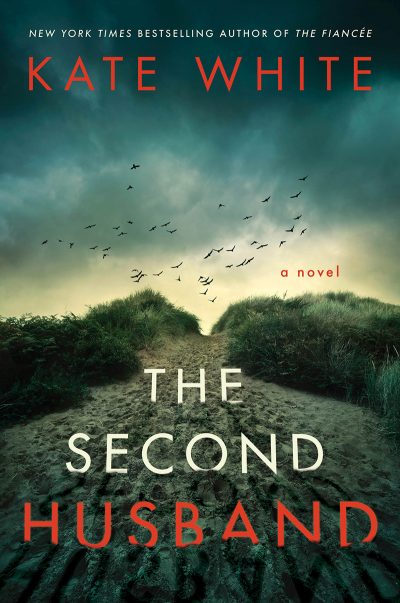
The Second Husband, by Kate White
The Second Husband, by Kate White
This is a murder mystery with a chilling twist. Did Emma’s second husband kill her first husband?
Emma’s 37-year-old husband is killed in an alley in the Soho section of New York City. The crime is not solved.
A few months later, Emma meets Tom through a work connection. They marry. Life is good. In fact, it’s perfect until the day a police detective shows up to ask some leading questions.
Suddenly, Emma feels like she’s Suspect #1 in Derrick’s murder. But she knows she’s innocent. She didn’t kill him and she didn’t hire a hitman.
I think this novel would be a good choice for a book club.
Your First 1,000 Copies, by Tim Grahl
Your First 1000 Copies, by Tim Grahl
I give this nonfiction book about marketing for writers 10 stars on a scale of 1 to 5. I took copious notes. There are so many pointers in this book for someone in my position as I’m anticipating releasing several books in the coming 12 months.
Mr. Grahl has helped many authors launch their books. He’s been through the process enough times and recently enough that he knows what works and what doesn’t work. If you’re a writer hoping to publish a book – whether via the traditional publisher route or by self-publishing – you can benefit from reading this book.
Distant Flickers: Stories of Identity and Loss
Distant Flickers: Stories of Identity & Loss
Eight writers contributed short stories for this special anthology about identity and loss.
The book includes two short stories by Elizabeth Gauffreau, whose website and blog I wrote about in my September 26, 2022 blog post, Do you know about these 5 book bloggers?
Other authors featured in Distant Flickers are Donna Koros-Stramella, Keith Madsen, Carol LaHines, Jim Metzner, Joyce Yarrow, Rita Baker, and Amy E. Wallen.
Distant Flickers grew out of a spark of inspiration provided by a group of writers known as Telltale Authors. Each story ties into the subtitle. The topics are varied. There are secrets, loss, and identity issues. Each author writes in a way to pull you into the story. Soon you find yourself empathizing with the main character.
The name of that group gives me a perfect segway into the name of the other book of short stories I read in October….
Tell Tale, by Jeffrey Archer
Tell Tale: Stories, by Jeffrey Archer
Since I’m putting together a book of historical short stories, I’ve wanted to get back to reading more short stories. I need to get a handle on just what makes a good short story, right?
Although Jeffrey Archer is better known for his novels, I wanted to read some of his short stories. I found his stories in Tell Tale to be very entertaining.
My favorite stories in the collection were “The Road to Damascus,” “Who Killed the Mayor?” and “The Holiday of a Lifetime.”
Mr. Archer used a clever literary device in “The Holiday of a Lifetime.” He wrote three different endings for the story and encouraged the readers to select the one they preferred. What fun!
Until my next blog post
Thank you for taking the time to read my blog post today!
I hope you have a good book to read and will find time to read it. If you have nieces, nephews, children, or grandchildren, it’s important for them to know you enjoy reading. They want to be like you.
If you live in the USA, vote tomorrow, unless you voted early. Our very democracy is on the ballot.
My reading was sporadic again in June. Perhaps it’s the nice
summer weather that’s pulling me outside and into other activities. I listened
to one complete book, finished reading a book I’d started reading in May, and I
read a short story by Ron Rash. I started several other books, but you’ll have
to wait and hear about them in August (if I finish reading them in July.)
Here are my impressions of what I did read.
Iron House, by John Hart
Iron House, by John Hart
In my June 17, 2019 blog post, https://janetswritingblog.com/2019/06/17/delving-deeper-into-dialects-and-accents-in-fiction/, I wrote about listening to Iron House, by John Hart and being distracted by the exaggerated Southern accent used by the professional reader on the audio edition of the novel. Since then, I looked at a print edition of the book to see how the dialogue was written. As I expected, it was written properly – not like it was portrayed on the audio. I should have read the book and skipped the audio edition.
I reread much of the book in printed form and got a lot more
out of it than I did when trying to listen to it. The story is set in North
Carolina. Iron House is the name of a reformatory school for boys. The story is
primarily about the lives of two boys who were sent to Iron House.
Enough background is included for the reader to get a feel
for the dreadful place, but then follows the one who got away, how his years at
Iron House damaged him and turned him into a killer. He wants to turn his life
around, but he soon finds out how difficult it will be to rid himself of the
lowlifes he has associated with.
It is not a pleasant read. So far, it is my least favorite
of John Hart’s novels. I will continue to give everything he writes a try,
though. This hasn’t turned me against his writing. I just won’t listen to any of his future books.
The
First Conspiracy: The Secret Plot to Kill George Washington, by Brad Meltzer and Josh
Mensch
The First Conspiracy: The Secret Plot to Kill George Washington, by Brad Meltzer and Josh Mensch
I read 70% of this nonfiction book in May, then had to get
on the waitlist at the public library in order to finish reading it in June. I
have a habit of trying to read too many books, so this happens more often than
I’d like.
If you missed my comments about this book in my June 3, 2019 blog post, https://janetswritingblog.com/2019/06/03/4-or-5-books-i-read-in-may-2019/ , I invite you to click on this link and read it if this true story interests you. I really liked this book. It filled in some gaps in my American history education.
Until I read this book, I had no idea there was a conspiracy within the ranks of the Continental Army to kill General Washington in the early summer of 1776! To tell you how far that conspiracy reached within the ranks of the army would give too much away. You’ll have to read it for yourself.
“My Father Like a River,” a short story by Ron
Rash
This short story by Ron Rash grabbed my attention from the
opening line and held it to the end. In this story, Mr. Rash recalls a
frightful day of fishing in the New River in Watauga County, North Carolina in
1962 with his father and brother.
Ron’s brother got caught up in the river’s currents. It is
the story of how his father reacted and the example his father gave to his
family in this horrifying event and throughout his life as he lost a
good-paying management job and rebuilt a life for his family on a much lower
income.
Since my last blog
I submitted two true stories for possible publication in
future Chicken Soup for the Soul books. Writing fiction and writing real life
are quite different. The writing I did last week proved to me that I prefer
writing fiction. It will be months before I know if either of my submissions
will be published, but you know I will announce the verdicts in my blog.
Until my next blog
I hope you have a good book to read. In addition to other
books, I’m still reading Montauk,
by Nicola Harrison.
If you’re a writer, I hope you have quality writing time.
Thank you for reading my blog. You
could have spent the last few minutes doing something else, but you chose to read
my blog.
Let’s continue the
conversation
What are you reading? Would you recommend it?
While I still have your attention, please tell one other
person about my blog either in person or via social media. Thank you!


















 Janet's Writing Blog