Books I read (or attempted to read) in July 2026

I guess I was in worse shape in June and early July than I realized. I have stated in at least one blog that I enjoyed the novels I read in June because I hadn’t read a novel since January. I was surprised a couple of weeks ago to find a list of the books I read in May: The Creek, The Crone, and The Crow, by Leah Weiss; The Immigrant and the Outlaw, by Joy Neal Kidney; and The Astral Library, by Kate Quinn. It had slipped my mind that I enjoyed all three of those books in May, so I apologize to the three authors for my memory failure.

After having a very good month of reading in June, I had high hopes for July, but sometimes our reading experiences don’t meet our expectations on all counts. July turned out to be a mixed bag.

The River Knows My Name, by Kelly Mustian

Photo of a front book cover for The River Knows My Name, by Kelly Mustian. a blue river flowing between walls of bright green trees.
The River Knows My Name,
by Kelly Mustian

After reading The Girls in the Stilt House, Kelly Mustian’s debut novel in 2021, I kept hoping she would write another historical novel. She came through for us last year with The River Knows My Name. I finally got around to reading it in July.

As the blurb on Amazon states, it is “a haunting Southern story about memory, family secrets, and fierce and fragile love.” Set in the early 1930s in Mississippi and 1971 in North Carolina and Mississippi, Mustian has woven a story of intrigue, family loss and love, and how one decision can affect generations to come.

Why did Evie appear at Nell’s house when they were young children and Evie never left? What did Evie’s hidden birth certificate reveal?

This is a dual timeline novel, which you know is not my favorite format, but I stayed with it because the characters and the plot drew me in from the beginning. Mustian did a masterful job of telling a complicated story of secrets, the passage of time, “where there’s a will there’s a way” perseverance, the love a mother has for her child, and how family isn’t necessarily based on biology.

I highly recommend The River Knows My Name, and I hope Kelly Mustian will gift historical novel fans with many more novels.

John of John, by Douglas Stuart

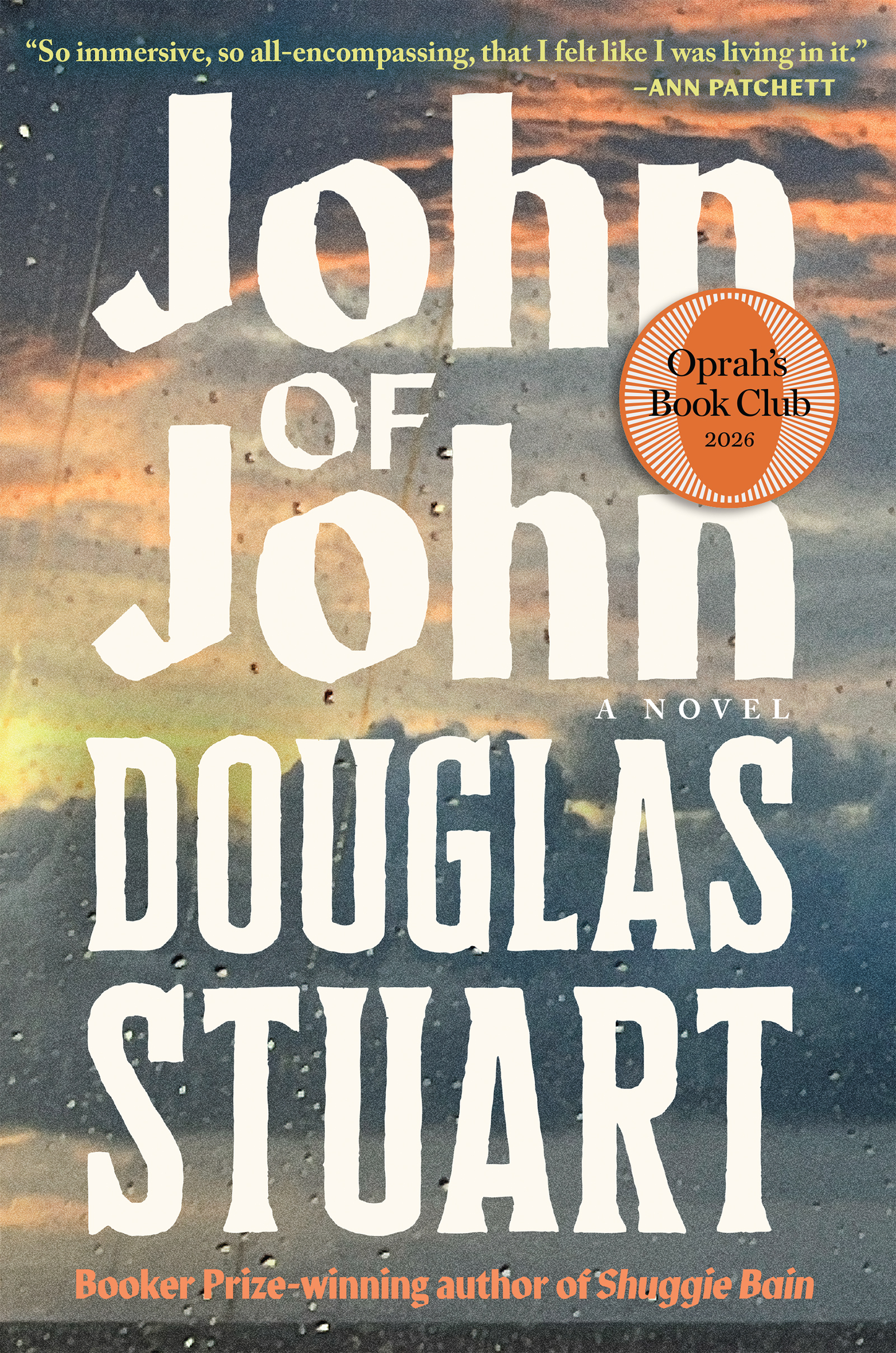
Photo of the front cover of John of John, by Douglas Stuart. Title and author name are in large print in front of a sunset background.
John of John, by Douglas Stuart

After watching an online interview of Douglas Stuart, I eagerly awaited my name reaching the top of the waitlist for John of John at the public library.

I have had the privilege of visiting the Outer Hebrides of Scotland. I have spent some time on the Isle of Lewis and visited the Isle of Harris. They are wild and stark and incredibly beautiful!

John of John, by Douglas Stuart is set on Harris. The author does a great job of giving you the setting. The moon-like starkness, the incessant wind coming off the Atlantic, the sometimes-rough ferry crossing of The Minch – the body of water between the mainland and the Outer Hebrides. The houses, the crofts, the weavers of Harris Tweed (which is also made in cottages on Lewis), the single-track roads, the sheep, the Gaelic native language, and the conservatism of the Free Presbyterian denomination (which is quite different from the Church of Scotland) are all brought to light in this novel.

The setting is almost a character in the book because to give the landscape and climate justice, one has to be immersed in it to truly appreciate the story.

The protagonist is John MacLeod, son of John MacLeod, son of Iain (John in Gaelic), son of Iain MacLeod. Young John has left the island to go to art school. He has gotten caught up in the fast life (life everywhere is “fast” compared to life in the Outer Hebrides) in Edinburgh. His father calls him home to care for his ailing maternal grandmother.

The younger John is not keen on the idea. The life he has lived on the mainland as a gay young man will surely upset his devout Free Presbyterian father to the point that he expects his father will disown him. How long can he keep his homosexuality a secret from his father.

But his father also has a secret.

If you are sensitive to “F-bombs,” you might not enjoy this book. I accepted them as apparently being part of the homosexual scene in which the younger John lived. Not that all homosexuals casually use this language, but it was part of the make up of the younger John – probably as part of his rebellion against the strict religious home in which he had been raised.

I tired of the story after 150 pages. There were other books I wanted to read, so I returned John of John to the public library. Kudos to the author for transporting me to the Outer Hebrides for a few hours.

Roses and Radicals: The Epic Story of How American Women Won the Right to Vote, by Susan Zimet

Photo of front cover of Roses and Radicals with the head of the Statue of Liberty under the title.

This book caught my eye when I was at the public library the week of July 4th. It was part of a display the librarians had assembled of books pertaining to the 250th birthday of the United States Declaration of Independence and related patriotic books and history books.

The book prompted me to pause and contemplate the incredible sacrifices the women (and a few men) made throughout the first fourteen decades of our country’s history to work toward the passage of a Constitutional Amendment that would make it unlawful for any state in the union to prohibit anyone from voting based on their sex.

I will write more about the 19th Amendment to the United States Constitution in my blog post on August 26 – the 126th anniversary of the ratification of that amendment.

Roses and Radicals is a relatively small book of barely 150 pages, including the bibliography and index. I thought it would be a quick read.

Sprinkled throughout the book are sidebar-like sections within chapters that tell the stories of individual including Susan B. Anthony, Elizabeth Cady Stanton, Anne Marbury Hutchinson, Lucretia Mott, Mary Wollstonecraft, Sisters Sarah and Angelina Grimké, Sojourner Truth, Lucy Stone, Victoria Woodhull, Matilda Joslyn Gage, Ida B. Wells, and Edith Wilson. A book could be written about each on of them.

Roses and Radicals begins with the World Anti-Slavery Convention in London in 1840. Elizabeth Cady Stanton accompanied her husband, who was a convention delegate. But her story began when she was five years old and her last brother died. Her father said to her, “Oh my daughter, I wish you were a boy.”

In response to that remark, she was determined to be the son her father had lost. That path served to show her how difficult it would be for a woman to fulfill the burden her father had placed on her because women were so restricted by law and society norms. Fathers held legal rights over daughters and husbands held legal rights over their wives and children.

But, getting back to the anti-slavery convention in 1840… The wives of delegates and the women delegates were not allowed on the main floor. They were relegated to a balcony. The women were so incensed that they began laying plans during the convention. If people from around the world could meet to work for the abolition of the slavery of Africans, the women concluded that they could organize themselves and fight for the rights of women.

The book tells how each of the women I named in an above paragraph worked for the equality of women, women’s rights in the eyes of the law in the United States, and ultimately for women to have the right to vote. It gives little-known details of how women worked behind-the-scenes as well as marching in the streets to secure women the right to vote.

Janet

Too many books. Not enough time. Not enough bookcases. Never take your right to read – or your right to vote — for granted.

#OnThisDay: 15th Amendment Ratified, 1870

It was on this date 156 years ago that African American men were given the right to vote when the 15th Amendment to the U.S. Constitution was ratified.

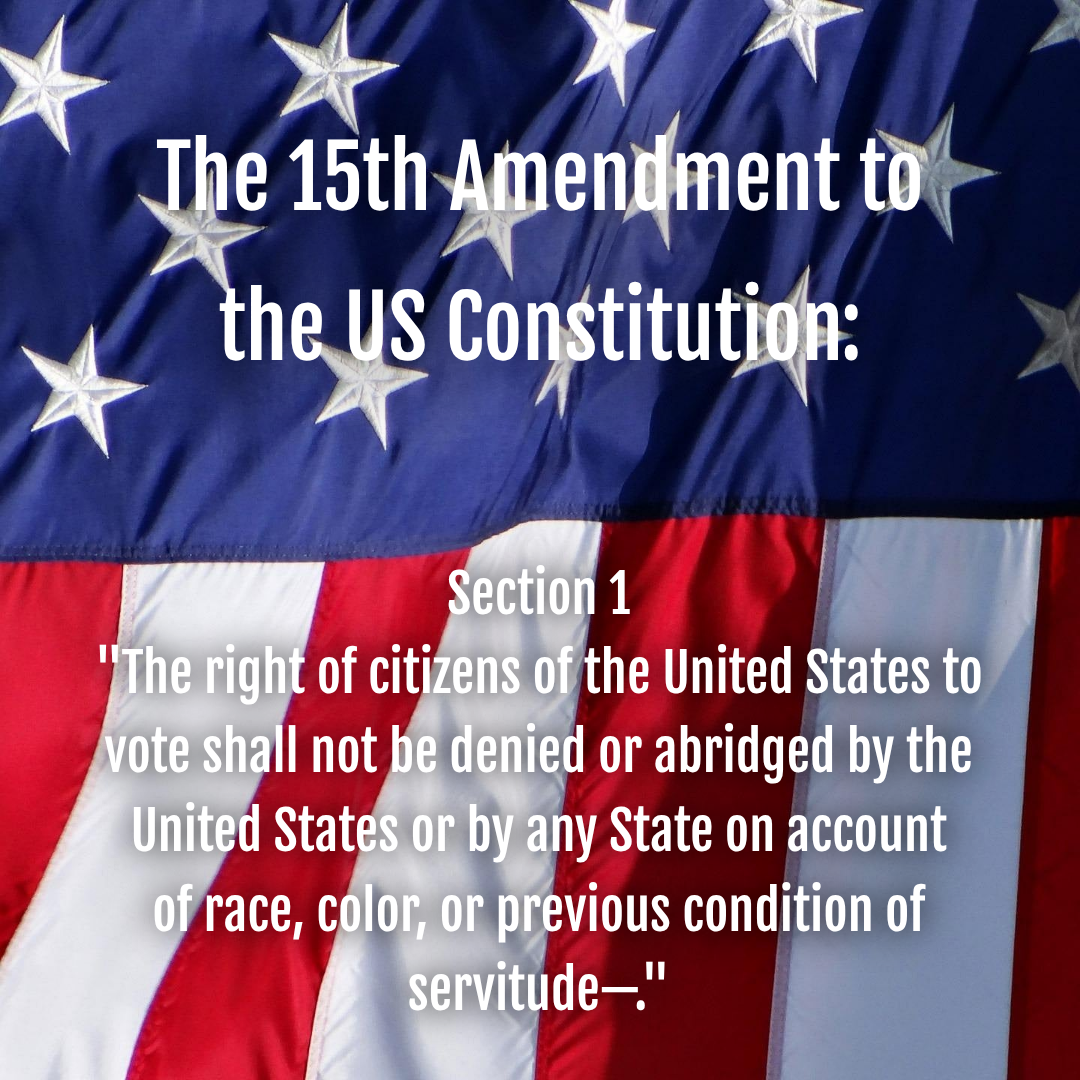
Against a background of the American flag, the words of Section 1 of the 15th Amendment to the U.S. Constitution: "The right of citizens of the United States to vote shall not be denied or abridged by the United States or by any State on account of race, color, or previous condition of servitude—"
Section 1 of the 15th Amendment to the U.S. Constitution

You might be surprised to know that it was the Republicans who pushed for this amendment. Yes, the same party which today turns itself into a pretzel dreaming up ways to make it more difficult for citizens to vote is the party that fought to give black American men the right to vote in 1870. The irony!

The 15th Amendment did not address the fact that women of any skin color did not have the right to vote.

Section 1 of the 15th Amendment states: “The right of citizens of the United States to vote shall not be denied or abridged by the United States or by any State on account of race, color, or previous condition of servitude–.”

Although ratified in 1870, it would take the Voting Rights Act of 1965 before many black people were registered to vote. Laws varied by state and state legislatures – much like today – resorted to creative ways and wording in laws to restrict voting rights.

Popular opinion is that it was only southern states that restricted voting to white people, so I decided to do a little research into state laws prior to 1870. (Keep in mind that women were not given the right to vote by the U.S. Constitution until the 19th Amendment was ratified in 1920.)  

I wanted to know if black men were allowed to vote in states outside the South before passage of the 15th Amendment in 1870. Out of curiosity, I randomly looked at New York, Ohio, Pennsylvania, and New Jersey.

In the State of New York, there was a mish-mash of voting rights for black men. In the 1820’s it was unlawful for a black person who did not own property valued at $250 or more to vote. Slave owners along the Hudson River (yes, even New Yorkers owned slaves!) did not let their slaves vote. Some black men in the state’s cities were able to vote.

Although the “Black Laws” in the state of Ohio were repealed in 1849, African Americans were still not allowed to vote. An informative article about the history of laws regarding African Americans in Ohio can be found here: https://eji.org/news/ohios-black-laws/.

What about Pennsylvania? Quoting from “The Disenfranchisement of Black Pennsylvanians in the 1838 State Constitution: Racism, Politics, or Economics? – A Statistical Analysis,” by David A. Latzko of Pennsylvania State University’s York campus, as found at https//:tupjournals.temple.edu: “In 1838, Pennsylvania’s voters approved a state constitution that restricted the right to vote to ‘white freemen.’ Blacks had voted for many years in some parts of the state, but under the new constitution Pennsylvania’s black males could no longer vote.”

I found the following information on https://libguides.njstatelib.org/votesforwomen/timeline: In 1807, a new law restricting voting was passed by the New Jersey General Assembly: “Whereas doubts have been raised, and Great diversities in practice obtained through-out the state in regard to the admission of aliens, females and persons of color, or negroes to vote in elections… Sec. 1. Be it enacted …That … no person shall vote in any state or county election… unless such person be a free, white, male … of the age of twenty-one years, worth fifty pounds proclamation money….”

New Jersey adopted a new State Constitution in 1844, and people of color were still not allowed to vote.

In the decades after the ratification of the 15th Amendment, racists in various states passed laws to make it hard for minorities to vote. Such things as poll taxes and literacy tests were codified.

This was still in the decades of Reconstruction following the Civil War. Most of the former slaves had not been allowed to learn how to read or write, so the passage of literacy laws was a not-so-subtle way to prevent many black people from voting.

My conclusion is that people of color have been discriminated against in every state in the United States of America. Our nation has a long and sorted history of dividing ourselves based on the color of our skin.

It is that 250-year history that has brought us to 2026 – a year in which the U.S. Constitution gives all citizens — regardless of skin color or gender – the right to vote. But women and people of color must remain vigilant in every State to guard our right to vote.

In 2026, various State legislatures and even the United States Congress are working behind the scenes as well as blatantly in public to make it more difficult for all citizens to exercise their right to vote. The so-called SAVE America Act is currently being batted back and forth between the U.S. House and U.S. Senate.

A segment of our society has been convinced by Conservatives that there is rampant voting by undocumented immigrants. Under the guise of putting an end to that problem — which has been proven not to exist — through passage of the SAVE America Act the Conservatives in Congress are working very hard to codify wording that will once again make it more difficult for many women and many people of color to vote.

The more things change, the more they stay the same. White men in America continue to be afraid of losing their power. It is a history much older and more widespread than the United States of America.

Janet

The government should be afraid of its citizens, not the other way around.

Questionable Influences on Pete Hegseth

Note: I had already prepared today’s blog post when President Trump announced yesterday his federal takeover of Washington, DC Metropolitan Police, in spite of the fact that crime is at a 30-year low there. Suffice it to say, this is a dangerous, unprecedented move by a U.S. President, and his threat to do the same in other cities such as New York City, Los Angeles, and Chicago bears watching. His level of glee in yesterday’s press conference signal a much larger threat to our democracy than the substance of the event which lasted more than an hour.

Now, let’s move on to what I had planned for today’s post.

Beware of U.S. Defense Secretary Pete Hegseth and his social media posts. He continues to associate himself with Christian Nationalist preacher Doug Wilson of Moscow, Idaho. Wilson cofounded the Communion of Reformed Evangelical Churches (CREC).

As a member of a Presbyterian Church (USA) congregation, I find everything about this cringe-worthy. If you go to https://crechurches.org/story/, it will bring up a photograph of 12 white men. Other photographs on the website seem to celebrate families with at least four children.

I gather from the website that the CREC doesn’t like a modification to the Westminster Confession early in the 20th century by Presbyterians, but the website is vague about the group’s conflict with those changes. Several changes were made to the Westminster Confession in 1903.

The CREC website states, “The CREC emerged in the late 20th century seeking to recover a Reformed Catholic vision, emphasizing the importance of creeds, confessions, and liturgies.” I’ve never seen the term “Reformed Catholic” before, so I don’t know what they are saying.

I get the idea from the website that women are to keep silent and just do what men tell them or let them do. No thanks!

Back to Doug Wilson, the CREC Founder

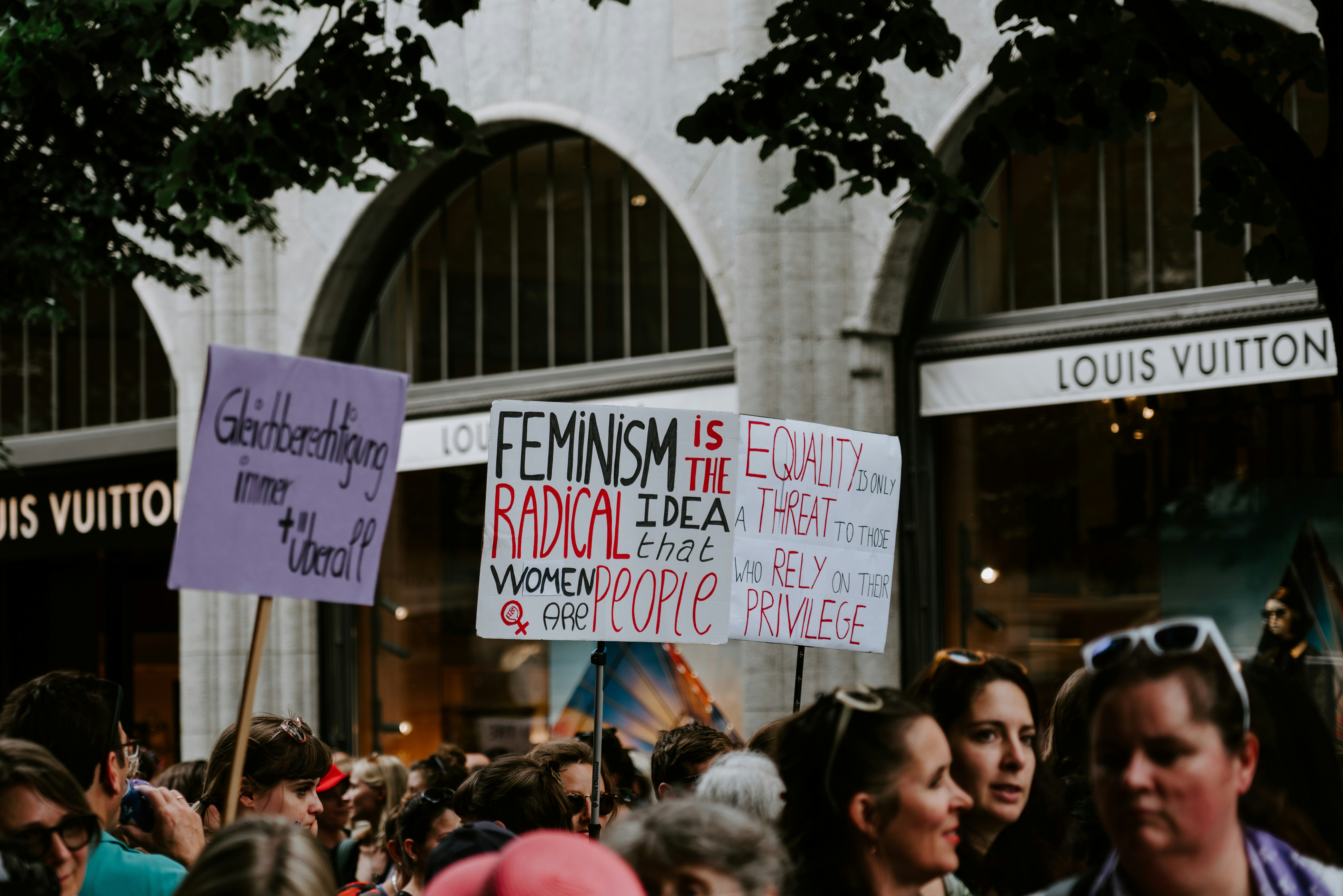
Doug Wilson does not think women should have the right to vote. That’s pretty much all I need to know about him.

Photo by Claudio Schwarz on Unsplash

My thoughts on that: Why should ignorant, misogynistic white men have the right to vote?

Wilson advocates for a “classical Christian education” for everyone (or maybe just for boyss – I’m not clear on that.) He urges parents to remove their children from the public school system. He advocates for education based on the medieval trivium philosophy of grammar, logic, and rhetoric.

Back to Pete Hegseth

I’ve seen talk online that Pete Hegseth aspires to be the Governor of Tennessee, so pay attention, America. After he removes all the transgender (and will females be next?) from the U.S. Armed Forces, perhaps he can move on to the State of Tennessee. And who know where he’ll go from there?

Just remember this: The women of Iran used to have an education and careers and freedom to move about as they wished. They don’t any more. It could happen in the United States of America. Don’t kid yourself into thinking it can’t.

Want to dive deeper?

Here are a couple of links, if you want to know more: https://thehill.com/homenews/administration/5444330-hegseth-church-women-voting/; and Pamela Brown’s CNN interview with Doug Wilson: https://edition.cnn.com/2025/08/07/politics/pastor-doug-wilson-christian-domination-trump.

Janet