
When we think about earthquakes in the United States, our thoughts usually jump to California, but 140 years ago today Charleston, South Carolina experienced a powerful one.
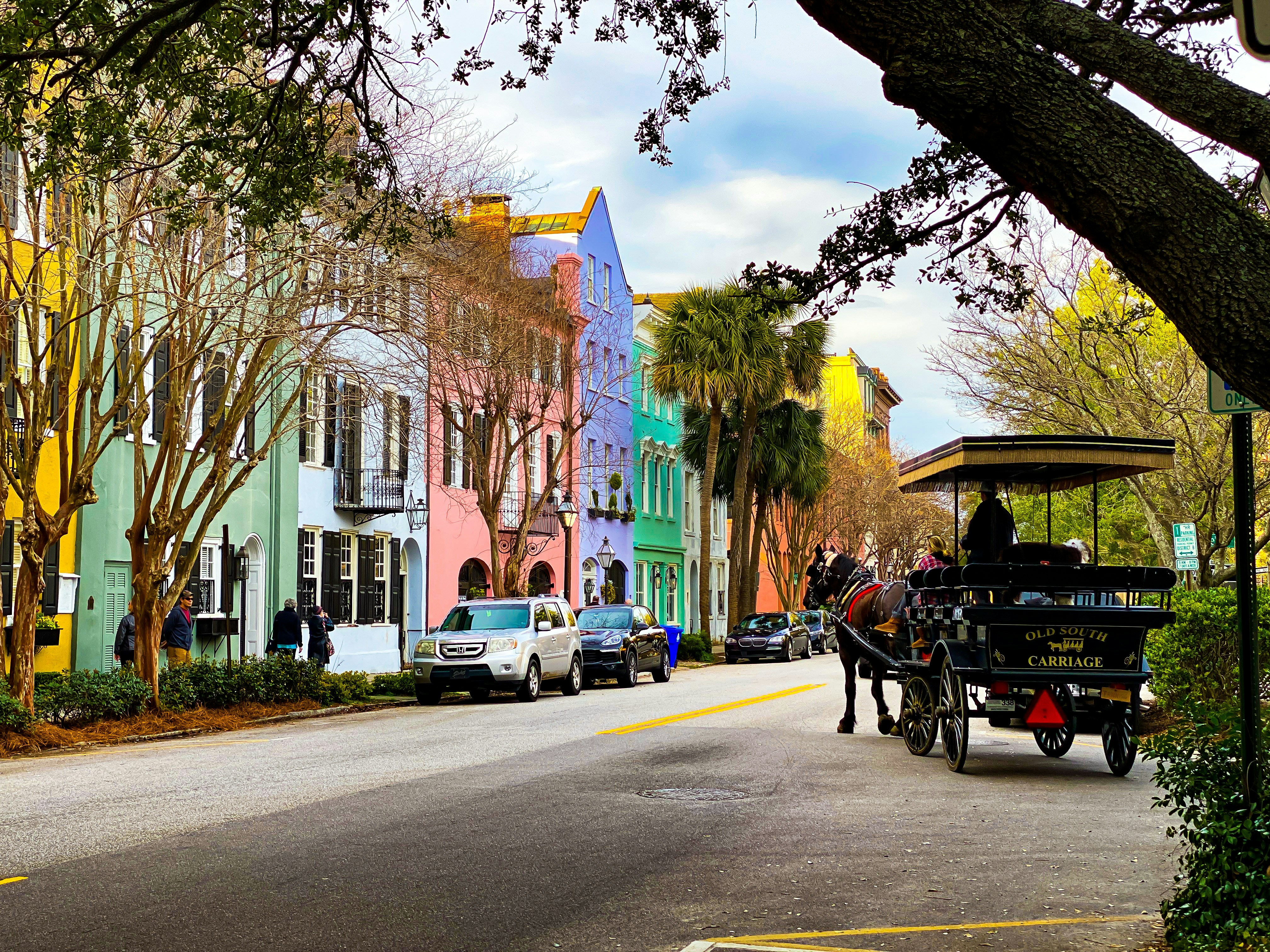
The Charleston Earthquake predated the Richter Scale, but it is estimated now that it was probably a magnitude 6.9 to 7.3. It was felt as far north as Boston, as far west as New Orleans, as far south as Cuba, and as far east as Bermuda.
It was felt here in the southern piedmont of North Carolina, so I wrote about it in 2010 when I was writing a local history column for a newspaper. Therefore, my two-part newspaper series about “Earthquakes Felt Here” is included in my book, Harrisburg, Did You Know? Cabarrus History, Book 2.
Sand and water spewed from fissures in the ground approximately 12 miles west of Charleston, and it is believed that the earthquake was most intense in that area. The sound was compared to that of steam escaping from a boiler. The term for that is soil liquefaction.
Reading that was the first time I remembered hearing about that possible result of an earthquake.
The Times, a newspaper in Concord, North Carolina, reported that the first shock at 9:52 pm toppled chimneys and kerosene lamps in homes. That three-and-a-half-minute shock caused houses to crack and sway.
A second shock came fifteen minutes later, and a third one came about fifteen minutes later. Aftershocks were felt here in Cabarrus County, North Carolina (200 miles northwest of Charleston) through at least September 5.
Other topics in Harrisburg, Did You Know? Cabarrus History, Book 2 include the following: an 1849 meteorite, the 22-mile ring dike Harrisburg sits in, the building of the Rocky River Presbyterian Church’s fourth sanctuary in 1861, baseball, the Piedmont Area Development Association, the incorporation of Harrisburg in 1973, the Sauline Players, bridges built over Rocky River in the 1870s, Rocky River Academy, an attempted train robbery in 1907, a tribute to George L. Govan, a year without a summer (1816), gristmills, early schools, the push to get electricity in 1928, the coming of the “high-speed” rail in 2012, and the Pioneer Mills goldmining community.
Harrisburg, Did You Know? Cabarrus History, Book 2 is available at Second Look Books in Harrisburg, NC and also on Amazon at https://www.amazon.com/Harrisburg-Did-You-Know-Cabarrus-ebook/dp/B0BXBQ1F79/ for the e-book and https://www.amazon.com/Harrisburg-Did-You-Know-Cabarrus/dp/B0BW2QMLHC/ for the paperback.

Janet
All history is local, but no history is just local
Note: I failed to include the following information in my original post: There were at least 60 deaths. Approximately 2,000 buildings were severely damaged and most of the chimneys in Charleston and the Summerville area were toppled. Damages were estimated at more than $5 million at the time of the earthquake, which would be around $200 million in today’s dollars.


Was there a lot of damage done by the earthquake? No injuries or loss of life, I hope.
What a surprise, Janet! An earthquake of that magnitude seems entirely at odds with my image of the South—so much for Southern charm and genteel tranquility! Yet another fascinating bit of history you’ve uncovered. Your Harrisburg, Did You Know? books must be quite a treasure trove—I suspect this post may sell a few copies!
I realize now that I failed to give those details. There were at least 60 deaths. Approximately 2,000 buildings were severely damaged and most of the chimneys in Charleston and the Summerville area were toppled. Damages were estimated at more than $5 million at the time of the earthquake, which would be around $200 million in today’s dollars. The fact that aftershocks continued here — 200 miles away — for nearly a week must have been very unsettling for residents (and animals!) who were not used to such events. One of my great-grandfathers recorded feeling an earthquake on May 31, 1897 in his daybook. I researched it and found that a 5.9 magnitude earthquake centered in Giles County, VA was the strongest earthquake ever recorded in VA. My mother and I felt one here on November 19, 1969. It was a 4.5 quake centered in Elgood, West Virginia. I was standing and felt the house shake and the kitchen table tablecloth swayed as if in the wind. My mother was sitting on the sofa. She said it felt like it was being twisted in all directions. The plaster wall in our living room suffered a crack.
How about that, Michael? Yes, we don’t experience earthquakes or tremors here very often, but thoughts of that one in Charleston serves as a reminder that we aren’t immune. Liz brought to my attention that I failed to include damage stats in my post, so I just a moment ago added the following to it: “There were at least 60 deaths. Approximately 2,000 buildings were severely damaged and most of the chimneys in Charleston and the Summerville area were toppled. Damages were estimated at more than $5 million at the time of the earthquake, which would be around $200 million in today’s dollars.” As I told Liz, “One of my great-grandfathers recorded feeling an earthquake on May 31, 1897 in his daybook. I researched it and found that a 5.9 magnitude earthquake centered in Giles County, VA was the strongest earthquake ever recorded in VA. My mother and I felt one here on November 19, 1969. It was a 4.5 quake centered in Elgood, West Virginia. I was standing and felt the house shake and the kitchen table tablecloth swayed as if in the wind. My mother was sitting on the sofa. She said it felt like it was being twisted in all directions. The plaster wall in our living room suffered a crack.” I can’t imagine how unsettling the Charleston Earthquake was even here — 200 miles away, especially since aftershocks continued her for nearly a week. And yes… so much for Southern charm and genteel tranquility! I hope you’re right about my post creating some book sales. I’m glad you enjoyed my post today!
I was afraid there might have been deaths and extensive property damage. Earthquakes are very scary. `My daughter and son-in-law live in the San Andreas Fault. I hope climate change doesn’t destabilize it.
I think if I lived out there, I would be nervous all the time; however, I guess you get used to whatever befalls your area. I’m sure people in the Dakotas wonder why anyone would want to live in North Carolina and dodge tornadoes and hurricanes. I heard speculation tonight that due to climate change, Nepal might have to get used to glaciers melting and causing more disasters like the one a few days ago.
I was very glad to leave the tornadoes and hurricanes behind when I moved back to New England. But we have to deal with ice storms, blizzards, and frigid temps. Wouldn’t it be better to address climate change than tell Nepal to get used to melting glaciers and catastrophic floods? (Rhetorical question, I know!)
Absolutely!
That was a whopper quake! 🖙 I was twenty then but didn’t live in your state. [guffaw]
Yes, not what one expects in the Carolinas!
Wow! That’s a scary piece of history Janet. Good for you for recording history into a book! I’ve shared around. 😘
Thanks so much for sharing it, Debby! Oh — I was about to forget to tell you… My blog tomorrow is the books I read in August. One of them was P.S. I Forgive You: A Broken Legacy. I hope you will approve of what I’ve written, and I hope it will inspire some people to purchase your book.
That is so kind of you Janet. I will be sure to pop over! .😘