“To Run or Not to Run” – historical short story

The fictional character I’m introducing to you today is George. He is a slave in South Carolina in the mid-1700s in the third story in Traveling Through History: A Collection of Historical Short Stories, “To Run of Not to Run.”

When you meet George, he is a young boy. He and his father, who was born in Senegal, have just been sold and are being taken from Camden to the Waxhaws.

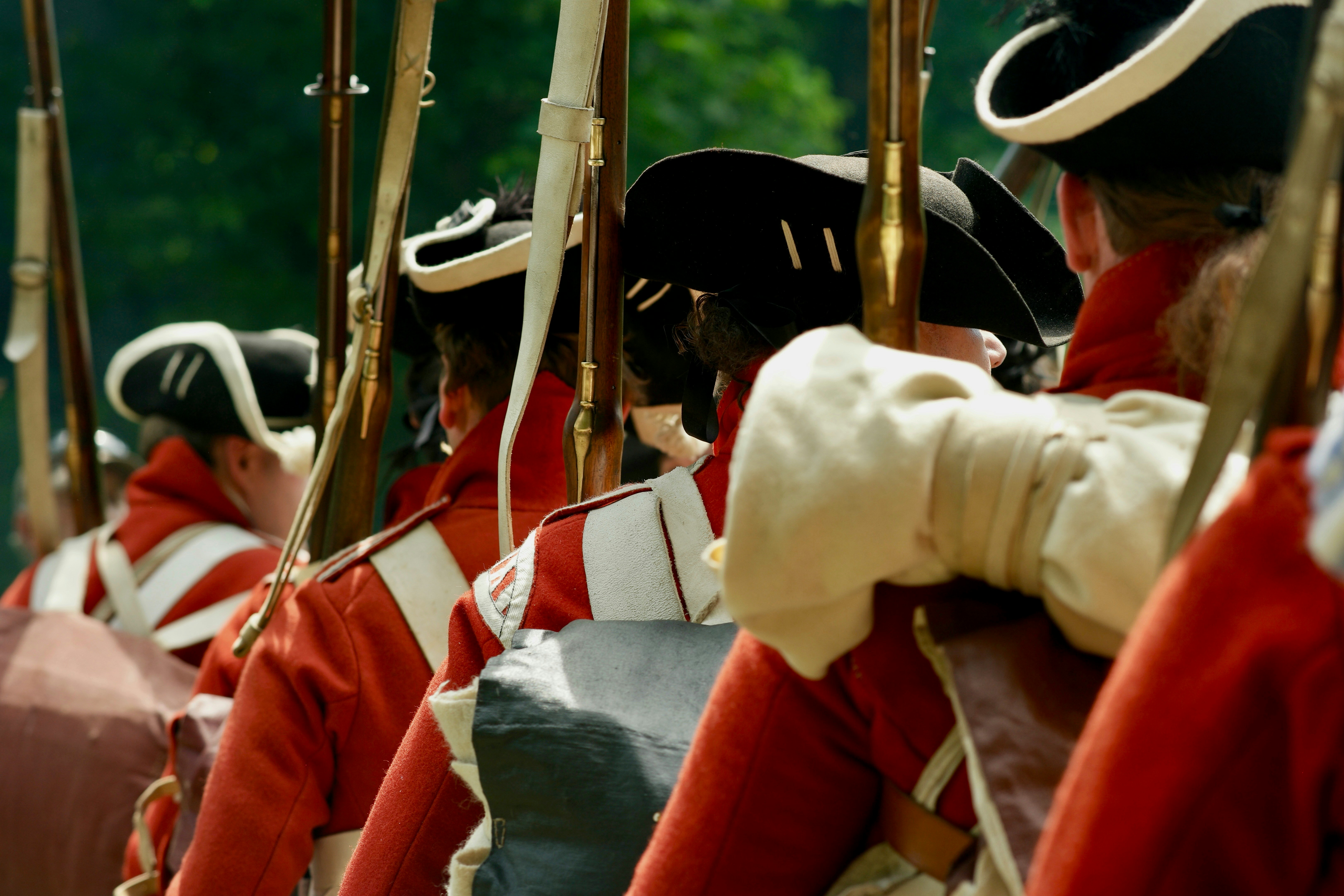
Photo by Asso Myron on Unsplash

Here’s an excerpt from when George and his father are in the back of a wagon being taken to their new living situation in the Waxhaws:

“George sensed his father was tiring of his questions, so he shut his eyes tight and tried to turn off his mind. But the harder he tried not to think, the more questions flooded his head. The ones that kept crowding out all the others were ones he knew not to ask because he was afraid his papa did not know the answers. When will we see Mama again? When are we going to be free?

You will follow George as he has a lot to learn and grows up fast. His new master’s son is about his age. Therein forms a dynamic that will ultimately be further developed in the historical novels I am planning and writing.

Remember George. He is a character who grew out of my imagination and has never let me go. I don’t think he will let you forget him either.

Getting into the skin, brain, and soul of a young boy with black skin who is living as a slave in America in the mid-1700s allowed me to stretch my imagination in ways that my other fictional characters did not.

In case you missed my November 24 and December 1 blog posts about the first two stories in Traveling Through History: A Collection of Historical Short Stories, here are the links: “The Tailor’s Shears” – Historical Short Story and “You Couldn’t Help But Like Bob” — historical short story.

Where to purchase Traveling Through History: A Collection of Historical Short Stories

You can find my new short story collection on Amazon in e-book and paperback. You can find the paperback at Second Look Books in Harrisburg, NC, or ask for it at your local independent bookstore.

Hurricane Helene Recovery Update

I haven’t offered a Hurricane Helene recovery update since my November 3 blog post.

As of Friday, December 5, 25 roads in North Carolina were still closed due to Hurricane Helene’s wind, flooding, and landslides on September 26, 2024. That is a decrease of six roads since a month ago. There are three U.S. highways, two State highways, and 20 state roads closed more than 14 months after the hurricane.

In Tennessee… as of Tuesday, December 2, U.S. 321in Elk Mills, in the Watauga Lake area, is officially reopened since being heavily damaged by the hurricane.

Sections of the Blue Ridge Parkway in North Carolina will remain closed until at least next fall, and I-40 at the Tennessee line will continue to be just two lanes at 35 miles-per-hour for a couple more years while five miles of the highway are being rebuilt in the Pigeon River Gorge.

The following success story was cut and pasted from a U.S. Forest Service – National Forests in North Carolina Facebook post on December 3, 2025:  “Two decades ago, after Hurricane Frances and Ivan, our ecosystems team saw how erosion could unravel an entire ecosystem. Brady Dodd, hydrologist for the National Forests in North Carolina, developed and executed a plan to reshape eroded riverbanks, plant riparian flood resistant species and add erosion prevention structures. After Helene arrived, the banks held, and the water ran clear due to the work that had been done years prior. This story serves as a model to our forests as we continue to build resilience into each of our Helene recovery projects.”

We’ve gone from fall leaf season to snow ski season in western North Carolina since my last update. Be aware that you might run into a detour, and you can’t drive the full length of the Blue Ridge Parkway.

If you visit, please drop by Blue Ridge Books in Waynesville and Highland Books in Brevard. Tell them I sent you. They sell my books!

Janet

“The Tailor’s Shears” – Historical Short Story

Today I’m introducing you to what prompted me to write “The Tailor’s Shears,” the first story in my new book, Traveling Through History: A Collection of Historical Short Stories.

Photo by Matt Artz on Unsplash

This was a story I wrote in 2001 soon after I completed a fiction writing course in the Continuing Education Department at Queens University of Charlotte. I had edited it over the years as I learned more about the craft of writing fiction. The fact that I took a fiction writing course is in itself an interesting story.

I had never read a lot of fiction. I’d always read history books and probably didn’t read any fiction in college other than what was required in English classes. Being a political science major with a history minor, fiction wasn’t on my radar. Imagine my sister’s surprise (or should I say shock?) when I told her I was taking a course in fiction writing! Needless to say, I had a lot to learn.

Those of us who completed the course were given the opportunity to join Queens Writers Group. It was a congenial group with a range of talents. When it was decided we would self-publish a collection of short stories, I jumped in. Self-publishing and print-on-demand were new to all of us and to the world. We felt like we were trailblazers!

It was decided that each of us would write a story based on an item found in the castle keep at a fictitious Lochar Castle in Scotland. Each of us had to choose an item we wanted to write about. No other instructions were given.

In doing family research and visiting Scotland, I had learned about the Covenanters. I knew I wanted to work that into my story, and then I had to figure out the item I would write about. In a nutshell, the Covenanters were a group of Presbyterians in Scotland who signed the National Covenant in 1638 to affirm their opposition to the Stuart kings’ interference with the Presbyterian Church of Scotland. The signers and the people who agreed with them were Covenanters. Many of them were executed by the government.

I was fascinated by the sacrifices the Covenanters made, especially after seeing the plaque that marks the spot in The Grassmarket in the Old Town section of Edinburgh where many Covenanters were hanged for their religious beliefs. (See a photo at http://www.covenanter.org.uk/grassmarket.html.) I also visited Greyfriars Churchyard where the National Covenant was signed. Some of them signed their names in blood. It was all an eye-opening experience to learn that part of my Presbyterian background!

Somehow, with that history in my head, I decided to write about a tailor who was a Covenanter and it was his shears that would be found later in the Lochar Castle keep. The story is written from the point-of-view of Sir Iain Douglas, the patriarch of the Douglas Clan who lived in the castle at the time of the tailor’s shears ended up in the castle. In the story, Sir Iain shares his recollections of his tailor, Alexander Montgomery, and how Mr. Montgomery was persecuted for being a Covenanter.


Here’s an excerpt from the story:

“‘Just why is it the Covenanters cannae compromise and make peace with the King? Back forty years ago in my military days, I thought I had a fairly good idea of what the Covenanters stood for, but with the passage of time I have grown somewhat weary of it all and wonder if the present-day Covenanters even know what they’re fighting for or against.’

“Montgomery’s face turned red as a beetroot and his blue eyes blazed.”


I hope you will be transported back to the 17th century in Scotland as you read “The Tailor’s Shears” in Traveling Through History: A Collection of Historical Short Stories, by Janet Morrison. You can find my book on Amazon, if it is not available at your favorite independent bookstore.

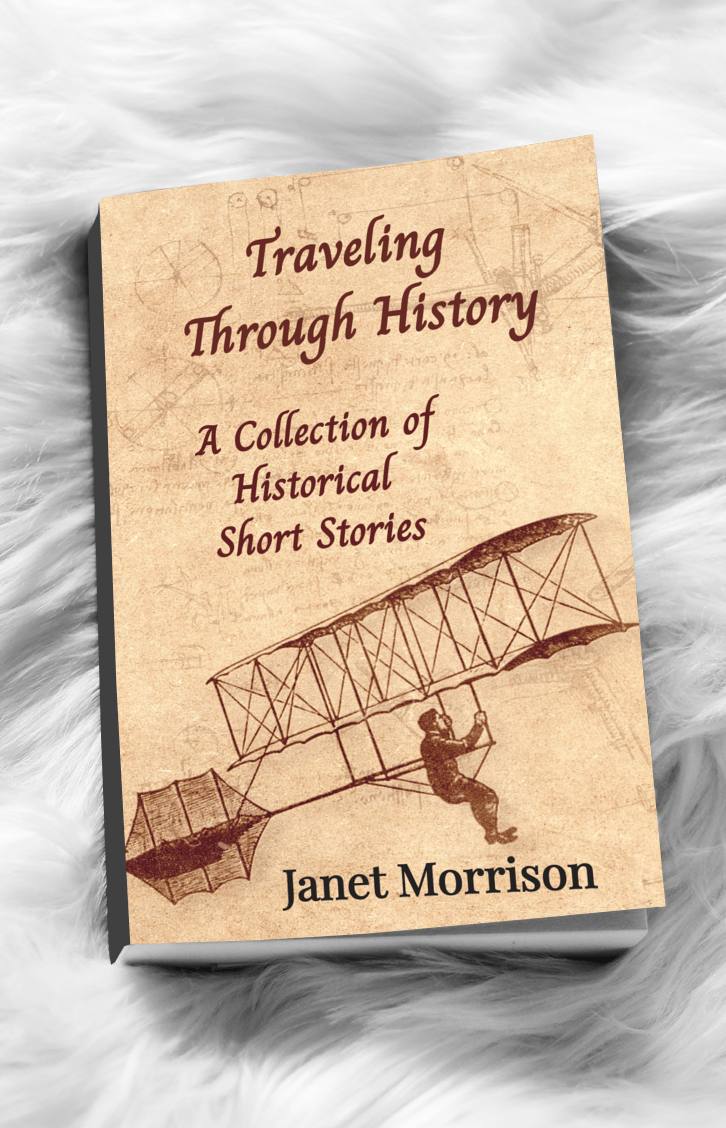
Photo of the cover of Traveling Through History: A Collection of Historical Short Stories, by Janet Morrison
Traveling Through History: A Collection of Historical Short Stories, by Janet Morrison

If you wish to learn more about the Covenanters, here are a couple of websites you may wish to visit: http://www.covenanter.org.uk/whowere.html and https://scottishhistorysociety.com/the-national-covenant-1637-60/. An excellent book about the Covenanters is The Blue Flag of the Covenant, by Robert Pollok Kerr, D.D.

Thank you for supporting my writing!

Janet

A rude awakening about what constitutes historical fiction

I was caught off-guard on June 14 when I read Sarah Johnson’s Reading the Past blog post and learned that the decade of the 1960s is now the hottest thing in historical fiction.

Yikes!

I remember the 1960s well. In fact, I remember some of the 1950s. I admit that I had not thought of the 1960s as fodder for historical fiction yet. Wasn’t it yesterday that I was still reading World War II fiction? Why did we leap right over the 1950s?

Photo of an astronaut standing on the moon
Photo by History in HD on Unsplash

Calling books set in the 1960s “historical fiction” just doesn’t seem right. I’m not ready to read it, and I’m certainly not ready to try to write it. I like to write about the 1760s and 1770s, so I must be in a 200-year-old time warp.

When I finish my novel-in-progress, I just hope I’m not the only person out there who likes to read about life in the 1760s.


My blog is all over the place!

The first 11 years or more that I wrote a blog, I concentrated on my life as a struggling writer and a reader. (Make that “struggling reader,” too, in light of my memory problems. Many times I get to the bottom of a page in a book and I have no idea what I just read, but I digress.)

I have also written history pieces, often on the anniversary date of an event. Some of them are well-known dates and events in history, while others were little-known events that I stumbled upon.

Over the years I toyed with how often to blog. I eventually settled on just once-a-week. That seemed to be all I could handle. I settled on posting my blog every Monday. That worked very well for me.

Then came Donald Trump’s reelection, and my comfortable blogging routine went out the window.

After blogging as many as six posts a week since January 20, I think I’m probably “preaching to the choir.” My readers are probably keeping up with politics as much as I am.

Since I don’t want to bore you with our new normal in the United States, I hope to add some variety to my blog posts. I certainly don’t want to write about politics every day! It’s not good for my mental health or yours. I miss writing fiction, and I desperately want to get back to a place emotionally where I can turn off the politics in my head and switch gears to colonial America.

I have written 90,000 words of an historical novel, but I put it on the back burner a couple of years ago when I realized the protagonist’s backstory deserved its own novel. I’ve done a ton of research and I wrote 35,000 words before I let myself get derailed. I think about my protagonist every day and I yearn to finish writing her story.

Her story lets me travel back to The Great Wagon Road in the 1760s to the backcountry of Virginia, North Carolina, and into The Waxhaws in South Carolina. I look forward to sharing her story with you, but first I must get my devotional book published.

I have had success in the past week in turning my attention back to the devotional book I’m writing. I have been doing what I hope will be my read aloud proofread. It is tedious. It is time-consuming. It is 186 pages.

I took a big step yesterday. I have published my other books and two short stories through Kindle Direct Publishing, but I would like for my devotional book to be available for bookstores to sell. I have researched IngramSpark and yesterday I set up an account with that company.

That decision had been weighing on my mind for several weeks. After reading the lengthy agreement and reviewing the company’s User Guide, I settled on IngramSpark and created my account last night.

I will explain in an upcoming blog what the book is about and the double importance of the title: I Need The Light. My goal is to publish it in August.


What happened to the historical short stories I mentioned last year?

Sadly, those stories are exactly where they were the last time I mentioned them in a blog post. They are on paper and in my computer. Some are complete. Some are almost complete. Some are just story titles on a list.

I want to get back to that project!

Here I am.

If you have wondered what happened to all my grandiose writing projects, now you know.

Please don’t give up on me. I have stories to share with you.


Hurricane Helene Update

As of last Friday, June 20, 2025, 59 roads in North Carolina were closed due to Hurricane Helene. That count included five US highways, nine state highways, and 45 state roads.

That is an increase of six state highways and four state roads since the report issued on Friday, June 17. I don’t know why the numbers went up. It could be a typographical error in the online table I check every week. It will be interesting to see what the next weekly NCDOT report will indicate.

The North Carolina General Assembly voted unanimously yesterday to allocated another $500 million for Hurricane Helene relief. That brings the state’s total to around $2 billion so far.

Due to a micro-burst rainstorm and flood on June 19, section of I-40 in Tennessee and North Carolina in the remote Pigeon River Gorge had to be closed again. The closure is approximately 50 miles long. It is the same portion of the interstate that was closed for five months after Hurricane Helene… and until Thursday of last week was finally open to one lane in each direction.

Tennessee Department of Transportation reports  on Wednesday sounded doubtful but said they are still working toward possibly getting the highway reopened by July 4. Detour information can be found at https://drivenc.gov/.

I’m beginning to think the Pigeon River Gorge does not want an interstate highway. It keeps revolting!


Until my next blog post

I hope you have a good book to read.

If you live in Europe or on the east coast of the United States, I hope you get some relief from the heatwave this weekend. After a week, I have gotten used to the triple-digit heat index numbers, although anything above 105 degrees F. is still a little extreme.

Remember the people of Ukraine and western North Carolina.

Janet

#ineedthelight

How Can Genealogy Influence Historical Fiction?

Since I have published very little historical fiction, you probably haven’t read anything yet that was influenced or inspired by my genealogy; however, I hope to remedy that with the publication of a collection of my short stories in 2024.

I’ll give you an example. People often ask fiction writers where they get their ideas. The answers run the gamut, but I have drawn on research into my family history for at least one historical short story.

Many people like to brag about their Scottish ancestors living in castles. Folks, why would someone leave a castle in Scotland in the 1700s and come to America to start life over as a farmer? Just sayin.’

Eilean Donan Castle in Scotland (Photo credit: Nicholad Beel on Unsplash.com
Eilean Donan Castle in Scotland (Photo credit: Nicholas Beel on Unsplash.com

I brag on most of my ancestors because they were farmers. They were farmers in Scotland and Ireland, and they bought land to farm when they got to America.

Cornfield. Photo Credit: Steven Weeks on Unsplash.com
Photo Credit: Steven Weeks on Unsplash.com

After having grown up out in the country and worked a vegetable garden, I have immense respect and admiration for anyone who is able to support a family and make a living by farming – especially back in the days before tractors and other mass-produced farm equipment.

Today I’m blogging about one of my immigrant ancestors who inspired me to write a short story.

He left Ireland (we think) and came to Virginia in the early 1700s. He had obviously not lived in a castle. Doing research on him in coastal Virginia was an eye-opening adventure. By following all the government records I could find about him, I learned a great deal of early Virginia history.

His court records made the fact that in colonial Virginia there was no separation of church and state very real to me. When said ancestor found himself on the wrong side of the law, he was fined a certain poundage of tobacco (or “tobo”) to be paid to the Anglican church.

Tobacco hanging in a barn to cure. Photo Credit: Rusty Watson on Unsplash.com
Photo Credit: Rusty Watson on Unsplash.com

I learned that tobacco was as good as money in colonial Virginia. My g-g-g-g-g-grandfather was on the wrong side of the law more than once, and he was always fined a certain number of pounds of tobacco.

Just so you’ll know, he wasn’t a terrible or dangerous person. He was fined for such offenses as playing cards on the Sabbath. You can read what I think will be an entertaining story about him in my (hopefully) upcoming book in 2024, Traveling through History: A Collection of Historical Short Stories.

You might want to subscribe to my every-other-month e-Newsletter so you can learn more about the research I do. One thing I love about writing historical fiction is the research it requires.

Visit my website, https://www.janetmorrisonbooks.com and click on the “Subscribe” button. You’ll immediately receive a free downloaded copy of my short story, “Slip Sliding Away” – a Southern historical short story set in the Appalachian Mountains in the 1870s.

Since my last blog post

Drumroll! Main Street Books in Davidson, North Carolina has accepted The Aunts in the Kitchen: Southern Family Recipes on consignment for the next six months. Marie and I are excited about this new opportunity.

I appreciate the comments some of you let after reading my blog last Monday about book banning – specifically, Sold, by Patricia McCormick. I’m glad I introduced the book to some of you.

In last Monday’s blog, I indicated that I had submitted a request to the Cabarrus County Public Library for Sold to be ordered. One of the librarians thanked me for bringing it to her attention. It seems that the system used to have a copy. After it was lost, they failed to order a replacement copy. That is now being rectified.

See? Sometimes all you need to do is ask your local library system to consider adding a book to the collection. In a time when too many people do nothing but criticize “the government” and express their disrespect for government employees, I’m giving a shout-out for the Cabarrus County Public Library System and its dedicated employees

Until my next blog post

I wish my fellow Americans a wonderful Thanksgiving holiday this week. It’s good that we set aside a day every year to stop and think about all we have to be thankful for.

I hope you have a good book and time to read it. If there’s a book you wish you can check out of your local public library but it’s not in the system, request that it be purchased. Your request might be turned down due to monetary restraints or another reason, but you won’t know until you try.

Remember the people of Ukraine and other parts of the world where innocent citizens are suffering due to the actions of dictators and terrorists.

Janet

As a Reader of Historical Novels, Do You Read the Author’s Notes Before or After you Read the Book?

Do you like having Author’s Notes at the end of an historical novel so you’ll know what was true, what was fiction, and what actually happened but was adjusted time-wise or by location to fit the flow of the story?

The Author’s Notes are almost always found at the back of an historical novel. I used to wait and read the Author’s Notes after I had finished reading an historical novel, but now I always read those notes first. The notes not only give insight about the story, but also make clear which parts of the book are based on fact and which parts are fictional.

Do you read the Author’s Notes before or after you read an historical novel?

An example from my ghost story

I thought it only fitting to include Author’s Notes at the end of my short story: Ghost of the Battle of Guilford Courthouse: An American Revolutionary War Ghost Story. In case you haven’t purchased the short story yet, here is my Author’s Note from the ghost story:

“I’ve never believed in ghosts, but this story is based on the events my sister and her housemate experienced in their condominium in Greensboro, North Carolina in the 1980s. The upstairs commode would flush when no one was upstairs. Cans occasionally fell off the pantry shelf. A house guest was frightened by the sensation that someone had walked into her bedroom and stood at the foot of the bed. In fact, she thought this person had called her by name – Mary. She had no knowledge of the unexplained incidents the residents had experienced.

“Peter Francisco was an actual American soldier in the Battle of Guilford Courthouse. At six-feet-six-inches tall and 260 pounds, he was much larger than the average American man during that era. He was credited with being ruthless with his broadsword. There is a visitors’ center on the grounds of the Battle of Guilford Courthouse; however, the rest of the story is fiction.”

After reading my Author’s Note, are you more interested or less interested in reading my ghost story?

Since my last blog post

I’ve edited three of the historical short stories I drafted a few months ago. I took inventory of my historical short stories. I want to write five more from scratch before I publish the collection. Something to look forward to in 2024!

I’ve done more research about the colonial settlement of Bethabara, North Carolina and read more resources about Shallowford on the Yadkin River. This is needed research for my first historical novel. Something else to look forward to!

Until my next blog post

If you haven’t subscribed to my newsletter through my website, https://www.janetmorrisonbooks.com, please do so before you miss any more newsletters. The next one will go out around November 1. For subscribing, you’ll receive a free downloadable copy of “Slip Sliding Away: A Southern Historical Short Story,” so you can get a feel for my historical fiction writing. I have a “field trip” planned before October is over, but you’ll have to subscribe to my newsletter to hear about it.

Have you ordered my American Revolution e-ghost story?  “Ghost of the Battle of Guilford Courthouse: An American Revolutionary War Ghost Story” is available from Amazon, along with my other books: https://www.amazon.com/dp/B0CH7JCP11/. October is the perfect time to read a ghost story!

Anytime is the perfect time to purchase a cookbook! Have you ordered your copy of The Aunts I the Kitchen: Southern Family Recipes? Order one for yourself and one for each of your aunts at https://www.amazon.com/dp/B0CJLKFDPR/. (It’s not too early to start your Christmas shopping.)

Make time for your friends and family.

Remember the people of Ukraine and Israel. Terrorism has no place in our world.

Janet

To Write or Not To Write Historical Short Stories? What do you think?

Calling all historical fiction fans: I need your help with something!

I mentioned in May 1, 2023 blog post, Some of the Books I Read in April 2023 that I was toying with the idea of writing some historical short stories related to the historical novel I’m working on. I’d read that suggestion in Writing Short Stories to Promote Your Novels, by Rayne Hall as a way to create interest in the characters in one’s novel before that book’s publication.

Since I need to grow my mailing list greatly before I publish the novel, it appears I’ll have plenty of time to write a few short stories. The process should produce various benefits to me and my potential readers.

Photo by Aaron Burden on Unsplash

In addition to my novel readers getting a head start in learning about some of the book’s characters and the 18th century world in which they live, such writing will help me flesh out the characters and get better acquainted with them. You and I can both get a good grasp on what makes them tick.

I’ve been brainstorming ideas for the stories. If it all works out like I envision, I will self-publish the stories in an ebook collection. My timeline is written in pencil with a big eraser nearby. If nothing else in the last year of self-publishing two local history books and trying to self-publish a family cookbook, I’ve learned that flexibility is a necessity.

Readers, what do you think? If you’re a fan of historical fiction, let me know what you think of this project. Would you enjoy getting acquainted with some of the characters in my novel(s) and the world in which they live in the 1760s and 1770s before getting to read the novel(s)?

Characters such as Elizabeth Steele who had tavern in Salisbury, North Carolina? George, who was a slave in The Waxhaws in South Carolina? Oliver McNair, who was educated at the College of William and Mary in Williamsburg, Virginia, and ended up in The Waxhaws? Betty Jackson’s story of family obligations in The Waxhaws?

Would you be interested in reading such short stories while I continue to work on my novels?

In the meantime… if you haven’t subscribed to my newsletter yet, please visit my website at https://www.janetmorrisonbooks.com and click on the “subscribe” button. In return, you’ll receive a free downloadable copy of my first historical short story, “Slip Sliding Away” and you’ll receive my e-newsletter every other month. Do it right now!

Since my last blog post

My research last week for my historical fiction writing focused on how food was cooked in the southern colonies in the 1760s and 1770s. I have a growing appreciation for how time consuming it was to prepare a meal then.

A funny thing happened to me at the public library the other day. I had been given some soft mountain mint and was eager to find a book with good information about how to root it. I typed, “how to grow mint” in the library system’s search engine. The response I received was, “Nothing found for how to grow mint. Did you mean ‘how to grow marijuana’? View 13 results.” It’s sort of a sad commentary that the system has no books about how to grow mint, but 13 books on how to grow marijuana. a sign of the times, I suppose. (Before you try to enlighten me, yes, the library had plenty of books about growing herbs. I just started by looking for one specifically about mint.)

Until my next blog post

Take time on this Memorial Day in the United States to remember and give thanks for those who gave their lives in the military service of our country.

I hope you have a great book to read.

Take time to enjoy friends and family.

Remember the people of Ukraine.

Don’t forget to give me some feedback about my short story plan!

Janet

Three Compelling Books I Read in February 2023

After a couple of months of not getting to read much for pleasure, February turned out to be just what I needed to get back in the habit of reading. My favorite genre, historical fiction, really came through for me last month.

The Diamond Eye, by Kate Quinn

The Diamond Eye, by Kate Quinn

I listened to this historical novel on CD. I was spellbound from disc one until the very end of disc 11. I yearn to write historical fiction so vividly. I long to captivate readers with fiction based in an era not their own. Kate Quinn has established herself as a master of the art and craft of writing historical fiction.

The Diamond Eye is based on a true story. Mila Pavlichenko lives in the part of the Soviet Union that is now Ukraine. She works at a library and adores her young son. When World War II transitions to the invasion of Russia by Nazi Germany, Mila does the unthinkable. She becomes a sniper for the Russian Army. And she excelled at it.

After her official kill count reaches 300, Mila becomes a national heroine and is sent on a tour of the United States to drum up support for the fight against Hitler. There, she meets President and Mrs. Roosevelt. Eleanor Roosevelt, seeing a bit of her own independent nature in the sniper, befriends Mila.

The book follows Mila through the war and how she constantly has to prove herself because she’s a woman and not automatically taken seriously. She’s called the usual names that men who are threatened by strong women call them.

It is a stunning novel and reminded me why I enjoy reading historical fiction. Yes, it’s fiction because conversations are imagined, but reading well-written historical novels is an enjoyable way to learn a lot of history.


The Home for Unwanted Girls, by Joanna Goodman

The Home for Unwanted Girls, by Joanna Goodman

This is another gripping historical novel. I was so impressed by Saskia Maarleveld’s reading of The Diamond Eye, that I looked for other books she had recorded. That’s how I found The Home for Unwanted Girls. I thought that was an interesting way to find another good book!

The Home for Unwanted Girls is about an unwed mother in Quebec in the 1950s who is forced by her parents to give up her baby girl. The book shines a light on the ugly history of the orphanage system in Quebec at that time. When the orphanage is turned into an insane asylum and the orphans are forced to take care of the patients, the outcome for the girls seems hopeless.

This novel follows the life of one of those orphans and the 15-year-old mother who wanted desperately to keep her. The mother never gives up on finding her child, even though she is told the girl died.


The Escape Artist: The Man Who Broke Out of Auschwitz to Warn the World, by Jonathan Freedland

The Escape Artist, by Jonathan Freedland

This book was spellbinding! It tells the stories of 19-year-old Rudolf Vrba and Fred Wetzler who did the impossible in April 1944. They escaped from Auschwitz! The book tells how Vrba studied the precision with which the Nazis conducted searches and exactly how long the guards searched when a prisoner was unaccounted for. He and Fred worked with two accomplices to plan the escape of Vrba ad Wetzler. Their two accomplices were to stay behind while Vrba and Wetzler escaped to take the truth of what was happening at Auschwitz out into the world.

It’s a fascinating read. It follows Vrba and Wetzler after their escape. The eye-opening part of the book was the aftermath of their escape. They testified and provided written descriptions of the horrors of Auschwitz. Their testimonies matched to the nth detail; however, their words and their physical conditions of malnutrition fell on deaf ears.

Winston Churchill didn’t want to bomb the rail lines going into Auschwitz because England bombed in the daytime. President Franklin D. Roosevelt didn’t want to bomb because it would be a diversion from plans. Jewish organizations in Europe refused to believe what was happening at Auschwitz because it was just too extreme. How can people do such things to their fellow human beings?

Along with the tragic murdering of Jews at Auschwitz, the fact that world leaders who had the power and where withal to do something about it in fact chose not to act is a gut punch.

My general takeaway from the book is that one’s life and future can be determined by someone else’s snap decision. Decisions were made on a whim by guards at Auschwitz every day that determined who lived, who died, and who escaped.

It’s a book that will haunt me.


Since my last blog post

I continue to try to get the word out about my second local history book, Harrisburg, Did You Know? Cabarrus History, Book 2.

I also continue to ask people to go to my website, https://www.janetmorrisonbooks.com and subscribe to my newsletter. Subscribers receive a free downloadable copy of my first historical short story, “Slip Sliding Away: A Southern Historical Short Story.”

“Slip Sliding Away: A Southern Historical Short Story,” by Janet Morrison

Until my next blog post

I hope you have a good book to read. I know where you can get a good historical short story to read!

Take care of one another.

Remember the people of Ukraine.

Janet

To Nitpick or Not to Nitpick? That is the Question.

Are you as surprised as I am to learn that the word “nitpicking” first came into use in 1956? That means I’m older than the word nitpicking!

          It also means I can’t use “nitpick” or any form of the word in my historical fiction writing.

Nitwit

          One of my characters wanted to call another character a nitwit. That’s what led me to my discovery about nitpicking. It turned out that I can’t use nitpick, nitpicking, or nitwit in my historical fiction writing, unless I move my stories from the 1760s to the 1960s. That’s just not possible, unless I plunge my characters into a time warp.

          In case you care, “nitwit” wasn’t in common usage until around 1922. I don’t propose that you or I call people hurtful names, but I can’t help what my fictional characters do or say.

Guidelines for historical fiction

          There are words we use in everyday life without giving (or needing to give) any thought to their origins. That would make life beyond tedious. That’s not what I’m talking about here.

Photo by Brett Jordan on Unsplash

          As a writer of historical fiction, I must be careful not to include a word not in common usage at the time of my short story or novel. If one of my 18th century characters used the word “nitwit,” you might not notice; however, if one of my 18th century characters said “telephone” it would yank you right out of the story and it would ruin my credibility. It is through that process of checking on certain words that I’ve happened upon many surprises.

          My surprises fall all along a spectrum. There are words such as nitpick that I would’ve guessed had been in use for centuries. On the other hand, I didn’t expect that the term “fast lane” was in common use before the year 1050. (That’s not a typo. The year 1050.) After seeing that while I was looking up a different word, I began to doubt myself and wondered if I needed to look up every word I wrote.

          Of course, that’s not practical. By writing about this today I’ve probably opened myself up to a great deal of scrutiny when my historical short stories and my first historical novel are eventually published. Knock yourself out! I’m doing the best I can.

Concerted effort

          Today’s blog post falls into the same quirky category as an earlier one. In the title of one of my 2018 blog posts I asked if an individual can make a concerted effort. The point of that post was that by its very definition it takes two or more people working together to make a concerted effort.

          One of my blog readers took me to task on that one. She insisted that she always made a concerted effort in everything she did. She seemed insulted by my blog post and missed my point.

          It wasn’t my intent to insult anyone or hurt anyone’s feelings. I was merely pointing out a nuance in the English language. I’m attempting to be a writer. It comes with the territory.

          Words are fascinating!

Until my next blog post

Keep reading books.

When you read a good book, be sure to tell the author by writing a review or even writing a letter to the author. You should be able to reach them through their website.

Remember the brave people of Ukraine. It saddens me that only 49% of registered voters in North Carolina voted in the mid-term election last Tuesday. Democracy is a fragile thing. We don’t have to share a border with Russia to know that.

Thank you for reading my blog today! I hope to see you here again next Monday.

Janet