#OnThisDay: 26th Amendment Ratified, 1971 – Part One

I can always remember the year the 26th Amendment to the United States Constitution was ratified. It lowered the legal voting age in the United States from 21 years old to the age of 18.

Photo by Element5 Digital on Unsplash

The argument that ultimately won the day and the ratification of the 26th Amendment was that if 18-year-olds were old enough to fight a war in Vietnam, they were old enough to vote.

I just happened to turn 18 years old in 1971. My high school male classmates were receiving draft notices (and at least two of the females in my senior class did, too, because their first names could also be the first names of males), so the argument made sense to me.

What puzzled me was the fact that 18-year-old males had been drafted and sent to war as early as 1778, so why did the voting age not get lowered to 18 before the last years of the Vietnam War?

To find the answer to that question, I went down a rabbit hole. When will I learn that nothing has a simple answer?

It turns out that the question of the draft and the question of at what age an American should be given the right to vote have been intertwined for a very long time and started coming to a head during World War II.

I found it impossible to address the voting age without addressing the age of conscription.

Keep in mind that until 1920 women could not vote in the United States, and black men were not drafted until 1943. And black men and women were not allowed to vote in various states until the 1960s despite the adoption of the 15th Amendment in 1870 which gave black men the right to vote.

Depending upon your age, this might seem like ancient history, but I assure you it is not.

I have divided today’s post by wars or eras up to but not including World War II, in case you aren’t interested in the total progression of this and how the 26th Amendment became part of the US Constitution in 1971.

Tomorrow’s post will pick up with World War II to the ratification of the 26th Amendment.


Revolutionary War

A regular army (the Continental Army) was raised from 1775 until 1783 by men who enlisted given cash bonuses and a promise of land “on the western waters) when the war was over.

My great-great-great-great-grandfather Morrison’s youngest brother took advantage of that offer. After 84 months of service, he was awarded 640 acres of land “on the western waters”, i.e. in Tennessee. Six of his 11 children pulled up stakes in piedmont North Carolina and moved to that land approximately 400 miles away in Tennessee.

War of 1812

The US Government recruited men to serve for 13 months. They were given a $16 sign-up bonus and were promised three months’ pay and 160 acres of land after their service. The US Congress authorized President James Madison to call up 100,000 militiamen from the states, but some of the states refused to cooperate.

Mexican War (1846-1848)

One-year enlistment times for many troops expired and military operations had to wait for replacements to arrive.

Civil War

In the North, Congress authorized President Abraham Lincoln to draft men from 20 to 45 years old. For $300, a rich man could hire another man to serve in his place. Draft riots occurred for four days in New York City on July 13, 1863, after Governor Horatio Seymour declared the conscription act unconstitutional. Government offices were burned, shops were looted, and black men and anyone else refusing to join the protest were tortured. Less than two weeks after the Battle of Gettysburg, New York soldiers there were called home to put down the riot. Approximately 1,000 people died! Governor Seymour finally gave in and the draft in New York started again.

In the South, the Congress of the Confederate States of America passed a conscription law in April 1862. All white men ages 18 to 35 were required to serve for three years in the military. As in the North, substitutes were allowed which contributed to low morale and low number. That eventually resulted in conscription between the ages of 17 and 50. By 1865, slaves were being called into service.

Spanish-American War (1898)

The US Congress made all white men between the ages of 18 and 45 subject to the draft.

World War I

In May 1917, the Selective Service Act was passed by the US Congress. It established local, district, state, and territorial civilian boards to register white men between the ages of 21 and 30 to serve in World War I. There was widespread opposition to the Act which resulted in tens of thousands of men applying for exemptions. More than 250,000 men did not even register. Arrests were made, including one round-up of 16,000 men in New York City in 1918. In light of all that, all attempts to set up military training standards and service were defeated in Congress in the years immediately after the war.

The National Defense Act of 1920

That act established a system of voluntary military service. After all, World War I/The Great War was supposed to be “the war to end all wars.”

Leading up to World War II

The US was reticent to get involved militarily in World War II. The Burke-Wadsworth Act passed in both houses of the US Congress in September 1940. It imposed the first peacetime military draft in US history. In December 1940, all white men ages 21 to 36 were required to register for the draft. Although 20 million men fell into that category, half of them were rejected for military service during the first year due to either health reasons or illiteracy. (An astounding 20 percent of them were illiterate!)


Hurricane Helene Update

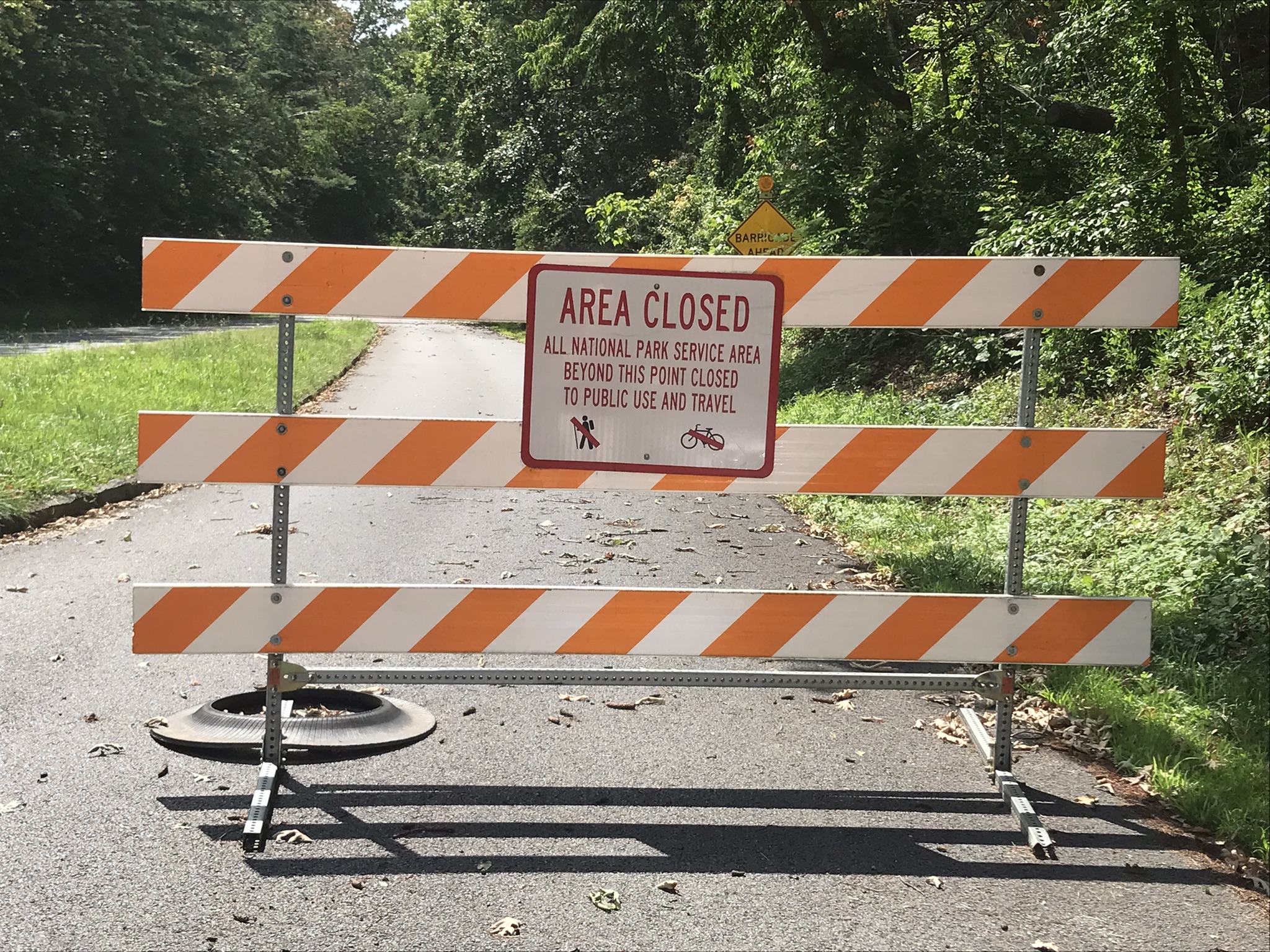
Surprise news: I-40 reopened on Friday, just two days after Tennessee Department of Transportation indicated they were trying to get it reopened by July 4.

More good news: Chimney Rock State Park has reopened after being closed for nine months due to hurricane damage to the park and the Town of Chimney Rock.

As of Friday, 62 roads in North Carolina were still closed due to Hurricane Helene. That count included five US highways, nine state highways, and 48 state roads.

Like my report as of Friday, June 20 showed an increase in closures due to Hurricane Helene over the Friday before, this report is a slight increase in closures over the one for June 20. There is no explanation, just a chart showing each category of closures by NC DOT district. I assume some damages were longer showing up than others and/or some roads that were passable for the months immediately after the storm have now been closed for repairs.


Until my next blog post, which will be tomorrow

I hope you have a good book to read.

Keep family and friends close in your thought, prayers, and activities.

Remember the people of Ukraine and western North Carolina.

Janet

How do we get out of this mess?

Many of my blog posts this year have been about the mess we’re in. American democracy is being challenged like no other time in recent history, if ever.

Some people have been known to say in the last six months that we could have another civil war in the United States. Perhaps you’ve thought it yourself or heard someone else say those words.


Series of Webinars Sponsored by The Carter Center

Photo of President Jimmy Carter
President Jimmy Carter Photo by Library of Congress on Unsplash

This spring I watched a series of webinars sponsored by The Carter Center about our divided country. Panelists explored how we got to this place, how we can learn from other countries, what we can do to avoid what other countries have experienced, and where we can start.

The country that served as the example in the four webinars was Northern Ireland.

The facilitator for the webinars was the Rev. Dr. Gary Mason, a Methodist minister, peacemaker, and peacebuilder from Northern Ireland. Dr. Mason founded Rethinking Conflict in 2015. It seeks to model the principles of Northern Ireland’s Good Friday Agreement.

That agreement finally ended the conflict on Good Friday, April 10, 1998. Dr. Mason has taken this model to the Middle East and now, to the United States.

Dr. Mason spoke from personal experience growing up during “The Troubles.”

If you are interested in watching the four “Why are we divided?” webinars, here’s the link: https://georgiadrn.org/divided-webinar/.


What if “The Troubles” happened in the United States?

British troops occupied Northern Ireland in August 1969. Everyone thought it would be over before Christmas, but there was an amazing amount of violence over the next 30 years. It was the longest occupation by the British Army in history.

To give Americans some perspective on the amount of violence that took place in Northern Ireland during “The Troubles,” Dr. Mason gave the following statistics: At that time, Northern Ireland had a population of 1.5 million. During The Troubles, nearly 4,000 were killed, 47,000 were injured, there were 37,000 shootings, 30,000 people went through the penal system, there were 22,000 armed robberies, and 16,000 bombings.

He extrapolated that out to compare with the population of the United States over a 30-year conflict. If we had such a civil war in the US, we could see 800,000 killed, 9 million injuries, 7 million shootings, 6 million political prisoners, 4 million armed robberies, and 3 million bombings.

Imagine that level of carnage in America. I can’t.

An estimated 618,000 Americans died in our Civil War in the 1860s. To bring it “home,” I’ve studied the local losses in my own church in that war. Out of a membership of 400 white members and 200 black enslaved members, the congregation lost 74 men in the war. I cannot imagine that number of deaths in this community.

Just like it, undoubtedly, took decades for my community to recover from the war, 27 years after the Good Friday Agreement, Dr. Mason says in Northern Ireland “we are still wrestling with the legacy of the conflict. It’s really the one piece of unfinished business of the peace process.”

Indeed, in the United States we’re still wrestling with the legacy of our civil war. Confederate statues were taken down, but Trump wants them put back in place. Confederate names were removed from US military installations, but now the names are being restored, albeit technically they are not being renamed for the Confederates.

For example, Fort Bragg here in North Carolina was originally named for Braxton Bragg, a Confederate Army General who owned slaves. His name was removed, all the signs and letterhead replaced to say “Fort Liberty” in June 2023, and then in February 2025, Fort Liberty was renamed Fort Bragg but this time for a decorated Private in World War II, Roland X. Bragg.

We are still wrestling with the legacy of our Civil War, so it is not surprising that 27 years after the fact, the people of Northern Ireland are wrestling with theirs.


In Northern Ireland, People Hated Each Other

When peace talks began in Northern Ireland, the people in the room hated each other. No wonder it took so many years for them to develop a peace agreement.

Is that where we are today in the United States of America?

In polite society, we generally get along with each other. But, as I wrote about in my April 17, 2025, blog post, Is your family getting together during Holy Week? Brace yourself!, it only takes one person making an inflammatory remark and a heated argument can break out even among a group of friends or a family gathering.


Do Americans hate each other?

I don’t hate anyone, but I hate what some individuals and groups are doing to our country.

I hate that the US Congress has relinquished its legislative responsibilities to a US President who is legislating via Executive Orders.

I hate that thousands of federal employees have been fired or forced to take early retirement.

I hate that medical research funds and researchers have been eliminated.

I hate that people are being shipped off to a prison in El Salvador without due process.

I hate when people are shipped off to a prison El Salvador by mistake, the US President says he is powerless to do anything about it.

I hate that USAID was halted and will result in people starving.

I hate that universities, museums, and libraries are being targeted and punished.

I hate that Moms for Liberty think they have the right to dictate which books should not be read.

I hate that the Heritage Foundation was able to slide Project 2025 into the White House while the Republican Presidential nominee denied having anything to do with it.

I hate that many of the most vocally hateful voices in this country come from people who claim to be Christians. They give Christianity and Christians a bad name.


So how do we get out of this mess?

If we take the peacemaking and peacebuilding experience of Dr. Gary Mason into consideration, since he has lived through a civil war, we will open avenues of communication with people with whom we disagree.

The core advice from How to Have That Difficult Conversation in Uncivil Times, by Janet Givens is that we start by finding common ground to break the ice with people we need to have that difficult conversation with. Surely, there is something you and they have in common. (See my August 22, 2022, blog post, <em>L.E.A.P.F.R.O.G.: How to hold a civil conversation in an uncivil era</em>, <em>Third Edition, </em>by Janet Givens.)

Photo of cover of L.E.A.P.F.R.O.G.: How to hold a civil conversation in an uncivil era, by Janet Givens
LEAPFROG: How to hold a civil conversation in an uncivil era, by Janet Givens, M.A.

Taking Dr. Mason’s advice, we will then calmly and sincerely ask the person or persons why they feel the way they do about the topic with which we know we disagree with them, and then we will respectfully listen to their story.

Hopefully, they will be equally curious about our story and allow us to explain our position and why or how we arrived at it. Without honesty by both parties and a genuine curiosity by both parties, and a real listening by both parties… it won’t be a successful conversation.

Then, we move on to another person with whom we disagree and repeat the process.

Hmmm. Sounds easy on paper?

No, it doesn’t even sound easy on paper, much less in real life.

Bottom line is, I don’t know how we get out of this mess.

It has been my experience that people who stand on the opposite end of the political spectrum from where I stand, are not interested in hearing my story. They tend to be loud, rude, and condescending. They tend to call names and belittle, like their political leader on Pennsylvania Avenue.

So I really don’t know how we will get out of this mess. When I consider having “that difficult conversation” with anyone I know who supports Trump, I honestly cannot imagine that I would be able to have a productive conversation with them about politics. Our worldviews and core beliefs about democracy are just that far apart.


A chilling perspective

I just reread White Robes and Broken Badges: Infiltrating the KKK and Exposing the Evil Among Us, by Joe Moore. I blogged about that book on October 7, 2024, in What I Read Last Month & a Hurricane Helene Update, and I will blog about it again on July 7.

Photo of book cover for White Robes and Broken Badges by Joe Moore
White Robes and Broken Badges, by Joe Moore

Speaking from the unique place of having infiltrated the Ku Klux Klan twice for the FBI, Moore stated in his book, “The radical right cares nothing about process, only outcome. They’re not interested in a civil discussion to work out differences, because they are so consumed by ideology that it has hijacked their civility. They have a clear vision of what they want the country to look like, and democracy itself is the only thing standing in their way.”

That leaves us in a hopeless situation. I don’t want to be hopeless, but I admit I don’t know how to have a productive conversation about politics with anyone who supports Donald Trump.

Even when Donald Trump is no longer in office, the people who agree with his tactics will still be with us. Our mess is bigger than an election or two can clean up.


Until my next blog post

How do you think we can get out of this mess?

What have you tried? Did it work?

It is going to take all of us to get our country out of this mess. The politicians certainly aren’t going to save us!

Remember the people of Northern Ireland, Ukraine, and western North Carolina.

Janet

P.S. I wrote and scheduled today’s blog post before the United States bombed three nuclear facilities in Iran on Saturday night, Eastern Time.

Memorial Day Observance

This is Memorial Day in the United States.

Photo by Aaron Burden on Unsplash

This is the day every year on which Americans are called on the remember the men and women who have died in the military service to our country. It dates back to 1868. After the Civil War, the 30th day of May was set aside as “Decoration Day” on which the graves of those soldiers who had given their lives for their country were to be decorated with flowers.

For decades it was called Decoration Day. Unfortunately, since it was begun as a day to remember those who had been killed in the military service of the United States, some in The South selected a different day in May to honor those who had died fighting for the Confederate States in the Civil War.

I can remember older people even in the 1960s who still marked Confederate Memorial Day. I’m glad we have gotten beyond that, or at least I hope and think we have.

Even after World War I, the day was specifically to remember those who died in the Civil War. After World War II, though, it was decided that it should be a day to honor the sacrifice made by all who had died in the military service, no matter the war or circumstances of their death during service.

Congress passed the National Holiday Act of 1971 and it designated that Memorial Day will be observed on the last Monday in May.

In 1915, Moina Michael was inspired by the poem “In Flanders Field” to write the following: “We cherish too, the Poppy red That grows on fields where valor led. It seems to signal to the skies that blood of heroes never dies.”

Photo of a field of red poppies
Photo by Irina Iacob on Unsplash

She then had the idea that we should wear red poppies on Memorial Day to honor those who died in the service. She sold them on her own and gave the money she made to benefit veterans in need. The custom was admired by a Madam Guerin of France, and she initiated the practice there to raise money for the children orphaned and the women widowed by war. The practice spread across many countries.

In 1922, the Veterans of Foreign Wars (VFW) organization became the first organization to sell the poppies across the US. IN 1924, disabled veterans started making the artificial poppies for the VFW members and their auxiliary members to sell.

So, if you see them selling poppies outside a supermarket, a shopping mall, or elsewhere today, stop and buy a poppy and wear it today to remind yourself and those who see you what this holiday is all about.


Until my next blog post

I hope you have a good book to read.

Spend time with friends and family for you and they won’t be here forever.

Remember the people of Ukraine, western North Carolina, and the flooding victims in New South Wales, Australia, and in southern France. No part of the world is immune to war or extreme weather

Janet

#OnThisDay: The Wilmot Proviso of 1846

“The what?” you say. I must admit I’m guilty, too. I had to look it up.

In a nutshell, the Wilmot Proviso of 1846 was a failed attempt in the US Congress to ban slavery in the western territories the US obtained as a result of the Mexican-American War. It was just this type action that paved the way for the American Civil War in 1861.

Photo by Tasha Jolley on Unsplash

The proviso was named for David Wilmot, the Congressman from Pennsylvania who introduced it on August 8, 1846. The proviso was a rider on a $2 million appropriations bill three months into the Mexican-American War. The bill passed in the House of Representatives but failed in the Senate.

Some background

Photo by Edgar Moran on Unsplash

Perhaps in the southwestern US states, the Mexican-American War is taught in elementary and high schools, but it was my experience in North Carolina that the two-year war in the 1840s was just mentioned in passing. Or perhaps I just wasn’t paying attention. Anyway, I had to do some research to find the details of the Wilmot Proviso.

The Missouri Compromise of 1820 prohibited slavery in the remaining Louisiana Territory above the 36th parallel, 30 north latitude line. The “compromise” was that Missouri was admitted to the Union as a slave state at the same time Maine was admitted as a free state.

Photo by Ray Shrewsberry on Unsplash

The controversy over the annexation of the Republic of Texas enters into the story, as did New Mexico and California, which had been captured by the US during the Mexican-American War. After substantial land area gains by the US early in the war, Congress started setting its sights on more expansion from the Atlantic to the Pacific.

Slavery was a hot button issue and Democrats and Whigs (the two main political parties in the US at that time) tried to keep it out of national politics. There was no way to avoid it, however. It was the proverbial “elephant in the room.”

Photo by Library of Congress on Unsplash

There was disagreement within the Democratic Party over the way Martin Van Buren had been denied the party’s nomination for US President in 1844 when southern delegates uncovered an old convention rule that required a nominee to receive a two-thirds vote by delegates. (I didn’t take time to thoroughly research that. I’m sure there’s more to the story than meets the eye.)

More and more over time, the Mexican-American War was more popular in the southern states than in the northern states. It was seen by many in the south as a way to gain more territory where slavery would be accepted.

Back to the Wilmot Proviso

President James K. Polk sent a request to Congress for $2 million to boost negotiations with Mexico to end the war. That was on Saturday, August 8, 1846. Congress was scheduled to adjourn two days later. A special night session was arranged by the Democrats so the request could be considered.

Photo by Library of Congress on Unsplash

Rules mandated that debate be limited to two hours. No one member of Congress could speak for more than ten minutes. A Polk supporter and friend to many southerners, David Wilmot was selected to present the bill to help ensure its passage.

The following language was included in the proviso that would apply to all territory the United States would acquire from Mexico by virtue of any peace treaty: “neither slavery nor involuntary servitude shall ever exist in any part of said territory, except for crime, whereof the party shall first be duly convicted.”

The Senate took up the House bill and there was a push to pass it with the exception of the Wilmot Proviso. The Democratic politicians thought the House would then be forced to pass the bill without the proviso due to the bewitching midnight hour when Congress had to adjourn.

Senator John Davis, a Massachusetts Whig, schemed that he would speak on the floor of the Senate so long that the Senate would have to vote on the bill as written because it would be too late to return the bill to the House of Representatives.

Does anyone know what time it is?

Photo by Jon Tyson on Unsplash

In a twist of fate (or by design?), there was an eight-minute difference in the official clocks of the Senate and the House. The clock in the House struck midnight before Davis could call for the vote in the Senate. The 1846 session of Congress had adjourned without full passage of the $2 million bill.

Proponents introduced the bill again in 1847 as a $3 million bill, but it had the same results. There were efforts to resurrect the proviso in 1848 as part of the Treaty of Guadalupe Hidalgo, but those efforts also failed.

The Wilmot Proviso would have effectively made the 1820 Missouri Compromise null and void.

What happened about slavery in the western territories/states?

California’s constitution banned slavery, so it was given statehood as a free state in 1850. Nevada was admitted to the Union as a free state in 1864. The US. acquired New Mexico and Utah in 1848, and slavery was legal in those territories until slavery was banned in all US territories in 1862.

How did Texas play into this?

My research about the Wilmot Proviso prompted me to delve into the history of Texas. The Republic of Texas was annexed by the United States and granted statehood in 1845 – just months before the debates over the Wilmot Proviso began. I knew there were slaves in Texas. We just recently celebrated Juneteenth, marking the anniversary of the slaves in Texas finally being told they were free.

I learned that there were African slaves in Texas as early as 1529. Texas joined the United States as a slave state. Slavery was a deciding factor in the annexation of the Republic of Texas while James K. Polk was US president.

Photo by Vivian Arcidiacono on Unsplash

Therefore, since Texas was already a US state prior to the debate over the Wilmot Proviso of 1846, slavery in Texas wouldn’t have been affected by the proviso, had it passed. It would have only pertained to territories the US gained as a result of the Mexican-American War.

What a difference one action or inaction can make

My research last week brought to mind how nations evolve and how peoples’ lives can turn on a dime with decisions made by governments. What if the Wilmot Proviso had passed in 1846 (or 1847 or 1848?) What if Texas had not been a state in 1846? What if the US had not won the Mexican-American War? What if the South had won the Civil War? What if African slaves had never been brought to North America? What if America had been defeated in the American Revolutionary War? What if Germany and Japan had won World War II?

How different world history would be if just one of those decisions or wars had gone the other way!

Aftermath of the Wilmot Proviso

If nothing else, the Wilmot Proviso brought to light how divided the United States was between the North and the South. The Democrats and Whigs were both split by regional loyalties.

Neither party wanted to vote on the issue of slavery, but the vote on the Wilmot Proviso pulled the cover off and began to lay bare the true division within the country. What had begun some 70 years earlier as an experiment in democracy was now under more pressure than ever and would ultimately be tested in a civil war just 15 years later.

Photo by Juan Manuel Merino on Unsplash

Even with the end of that civil war, the issue of race relations in the United States would not be settled and, sadly, remains a point of conflict to this day. It is still “the elephant in the room” – that difficult conversation we still struggle with in our society today.

Since my last blog post

As you might guess, I spent several hours researching the Wilmot Proviso and condensing my findings into a somewhat digestible blog post. You’re probably saying, “That was more than I wanted to know about the Wilmot Proviso.” I felt the same way as the history got increasingly complicated.

With the Wilmot Proviso out of the way, I turned my focus to working on my family cookbook project, my historical short stories, and some reading.

Until my next blog post

I hope you have a good book to read. I’ve already read a one this month and I’m ready to share my thoughts about it in my September 5 blog post.

Life is short. Make time for friends and family.

If you don’t have a hobby, find one.

Don’t forget the people of Ukraine, Uvalde, and Highland Park, etc. and the people in Kentucky whose lives have been turned upside down by flooding.

Janet

#OnThisDay: The War that Never Ends

The American Civil War began on April 12, 1861, when southerners fired on Fort Sumter, South Carolina. Fort Sumter was, of course, a United States military fort on the coast of South Carolina.

Photo credit: Michelle Burdick on unsplash.com

The American Civil War was the culmination of the falling apart of a nation.

Confederate Gen. Robert E. Lee surrendered his troops to US Gen. U.S. Grant at Appomattox Court House, Virginia, on April 9, 1865, but fighting continued for a while west of the Mississippi River. U.S President Andrew Johnson declared the war over in all states but Texas on April 2, 1866. After accepting the new state constitution for Texas, President Johnson officially declared the insurrection over on August 20, 1866.

Death toll

The exact number of deaths in the American Civil War is unknown, but it seems to be agreed upon that it was at least 620,000 and as high as 750,000.

Local losses

In 1999, I compiled a booklet, “Rocky River Presbyterian Church and the War Between the States,” about how the American Civil War affected Rocky River Presbyterian Church in Cabarrus County, North Carolina. Established in 1751, in 1860 the congregation had 616 members. 440 of them were White and 176 of them were Black. The congregation lost 72 men in the Civil War. Their average age was 28. The youngest was 16 and the oldest was 44. Of the 72 who died, 52 died between January 1862 and November 1863. I’ve tried to imagine what an emotional impact that had on this farming community, but I can’t.

Rocky River Presbyterian Church, Cabarrus County, North Carolina

I researched each of the 72 men and boys in published genealogies, church records, census records, etc. in an effort to put names and real people on the statistics. Some families were hit especially hard, losing several sons.

Another local loss

In addition to the numerical and economic loss those 72 men and boys cost the congregation, the war resulted in a radical and racial change in the church’s make up. In 2004, I compiled another booklet, “Slaves and Free Blacks Known to be Associated with Rocky River Presbyterian Church Prior to 1870.” My purpose was to compile in one document all known records about the slaves and free Blacks who were communing and/or baptized members of the congregation from the earliest extant church records (1835) through 1870.

Photo credit: US Library of Congress, via unsplash.com.

I was astounded when the project was finished to find that I had a list of 917 slaves and 11 free Blacks. In addition to the church membership rolls and Session disciplinary trial minutes, I searched the 1860 and 1863 Cabarrus County Tax Assessment Lists – which listed every slave living in the county at those times—and the US Census records for Cabarrus County from 1870 and 1880. (By the way, the county tax assessment lists recorded not only the names of each slave under his or her master’s name, but also included each slave’s age, physical condition, and value. They are sobering documents.)

In 1867, present-day Bellefonte Presbyterian Church was formed by former Black members of Rocky River. The White pastor of Rocky River, being a product of the place and time, was hurt when the Black members of his congregation chose to go two or three miles up the road to establish their own church. Unfortunately, he saw them as children who didn’t know what they were doing. He didn’t understand why they didn’t want to stay at Rocky River and continue to sit in the balcony while the White members sat downstairs on the main floor of the sanctuary. No wonder they left! That’s easy for us to see today.

How racism continues to this day

Southerners tend to romanticize about the Civil War, but I doubt there was anything romantic about it at the time. The wives, mothers, sisters, and younger brothers were left behind to try to farm the best they could, not knowing when or if their loved ones would come home. I would not have wanted to be alive during that time.

All four of my great-grandfathers and one of my great-great-grandfathers fought on the losing side in the American Civil War. They were farmers in North Carolina. They did not own slaves. In trying to put myself in their places in that place and time, I can’t help but think they didn’t have much choice in joining the North Carolina Troops when the war began.

Lee Dulin, home from the Civil War

One was a boy of 16, no doubt out on a bit of an adventure with his neighborhood friends in the same company. He wrote letters to his parents and sister asking them to send him socks. One was in the 1st NC Cavalry and survived a severe head wound at Gettysburg that left him with headaches and a convulsive disorder for the rest of his life. One had restricted use of one of his arms for the rest of his life due to injuries sustained in the Seven Days Battle of Richmond. One was in Charleston at the end of the war and walked the 200 miles home. One of my great-great-grandfathers was a man in his early 50s – much too old to go off to war, but that’s what he did. It’s hard to find the romance in any of that. They came home defeated, with perhaps a little worthless Confederate currency, only to have to go back to eking out a living by farming in a broken economy.

They were not the ones who built monuments to Confederate leaders. They did not raise the Confederate battle flag by their houses to show their Southern pride. They just went back to the hard-working lives they’d known since birth and tried to live out their lives as law-abiding American citizens.

I don’t know what any of those five ancestors of mine thought about race. I can’t sit in judgment of any of my ancestors any more than I can take credit for anything good they accomplished in their lives. Each of us is accountable for our own ideas, beliefs, and actions.

Where do we go from here?

Until Americans have an honest discussion about slavery and the ramifications of it… until people across the country study the facts and recognize that slavery existed in some northern states… until people across the country realize that northern states benefitted from the slavery in the South because the slaves picked the cotton that was sent to northern textile mills to be turned into fabric for people there to sell and wear at a low cost due to slavery… until people across the country accept each other and fight for all citizens to have the same rights and chances to excel… until as individuals we admit our prejudices and have the courage to speak up when we see racial injustice… I’m afraid the American Civil War will never be over.

Photo credit: Nathan Dumlao on unsplash.com

My heart sinks at the sight of the Confederate battle flag because, to people of color, it is a symbol of hate. I didn’t see it that way when I was growing up because I was White, but I do now. When you know better, you should do better.

As Americans, it’s easy for us to sit back, protected by the Atlantic Ocean on the east and the Pacific Ocean to the west and criticize the Arabs and Jews in Israel holding grudges over wrongs committed centuries ago, but many Americans are unwilling to forgive and forget when it comes to our own Civil War after 160 years. We can’t see the plank in our own eye because we’re concentrating on the speck in someone else’s eye.

#ElectoralCollge #USConstitution #12thAmendment
Photo by Luke Michael on Unsplash.com

Since my last blog post

We finally got to bring our diabetic dog home from the hospital last Thursday. He was hospitalized for eight days with bronchial pneumonia. We’re so thankful for the good care he received at CARE (Charlotte Animal Referral & Emergency) once again.

Until my next blog post

Continue to celebrate D.E.A.R. (Drop Everything And Read) Month. I hope you have at least one good book to read this week.

Make time for a hobby.

Note: The two booklets I referenced in today’s blog, “Rocky River Presbyterian Church and the War Between the States” and “Slaves and Free Blacks Known to be Associated with Rocky River Presbyterian Church Prior to 1870,” are available through http://www.JanetMorrisonBooks.com. Click on “Rocky River Presbyterian Church Booklets.”

Janet

Books Read in November 2020

As has become my routine, my first blog of the month is about the books I read the previous month. I read a couple of good books in November, so I’m eager to tell you what I thought about them. As sometimes happens, more than one book with difficult topics presented themselves at the same time. This was a month of unpleasant topics, but the writing was excellent.


And the Crows Took Their Eyes, by Vicki Lane

You must read this book! It is historical fiction at its best.

And the Crows Took Their Eyes, by Vicki Lane

The name of this historical novel might be a turn-off for some people but, if you are a true fan of historical fiction, you must read this book. If you desire to learn more about the American Civil War, you must read this book. Vicki Lane has done a masterful job of weaving the story of the war in the mountains of North Carolina through the voices of five point-of-view characters.

This is a story that the history books rarely mention. If it’s mentioned, it is glossed over and allotted one sentence. I remember reading references in history textbooks such as, “Brother turned against brother” and “Neighbor turned against neighbor.”

Those descriptions of what actually happened in places like Madison County, North Carolina, don’t hold a candle to the depth of hate and evil that took place there. And the Crows Took Their Eyes, by Vicki Lane, puts flesh and bones, horror, heartache, and names on such mundane statements that you’ll find in history books.

Ms. Lane’s novel is based on a true story, and four of her five main characters were real people. It is not pleasant reading, but it is artfully written. The suspense slowly builds until unspeakable evil takes place. And the Crows Took Their Eyes is the perfect title for this tale of hate and revenge.

Oh, how I wish I could write historical fiction like Vicki Lane does!


A Time for Mercy, by John Grisham

I listened to this latest legal thriller by John Grisham. Michael Beck always does an outstanding job reading Mr. Grisham’s novels for the audio editions. He outdid himself on this one with the numerous accents. And Mr. Grisham outdid himself with some gut-wrenching courtroom testimony.

A Time for Mercy gets into some tough subjects. A boy kills his mother’s abusive boyfriend. To give more details here would be revealing too much, and I don’t want to spoil the book for you. It is a gripping story with many layers. I highly recommend it.


Since my last blog post

I finished writing a couple of historical short stories. I now have five stories completed and six others in various stages of planning and researching. Maybe I’ll get a collection of short stories published in 2021.

It has been refreshing to spend more time writing lately. I realized that I am happiest when I’m writing.


Until my next blog post

I hope you have a good book to read. I’m reading Fifty Words for Rain, by Asha Lemmie.

I hope you have quality, imaginative, and satisfying creative time, no matter where your creative interests lie.

Wear your mask and try to stay well until we all get through the Covid-19 pandemic.

Janet

Happy Birthday, Mark Twain!

Today marks the 185th anniversary of the birth of Samuel Longhorn Clemens, who wrote under the pen name Mark Twain.

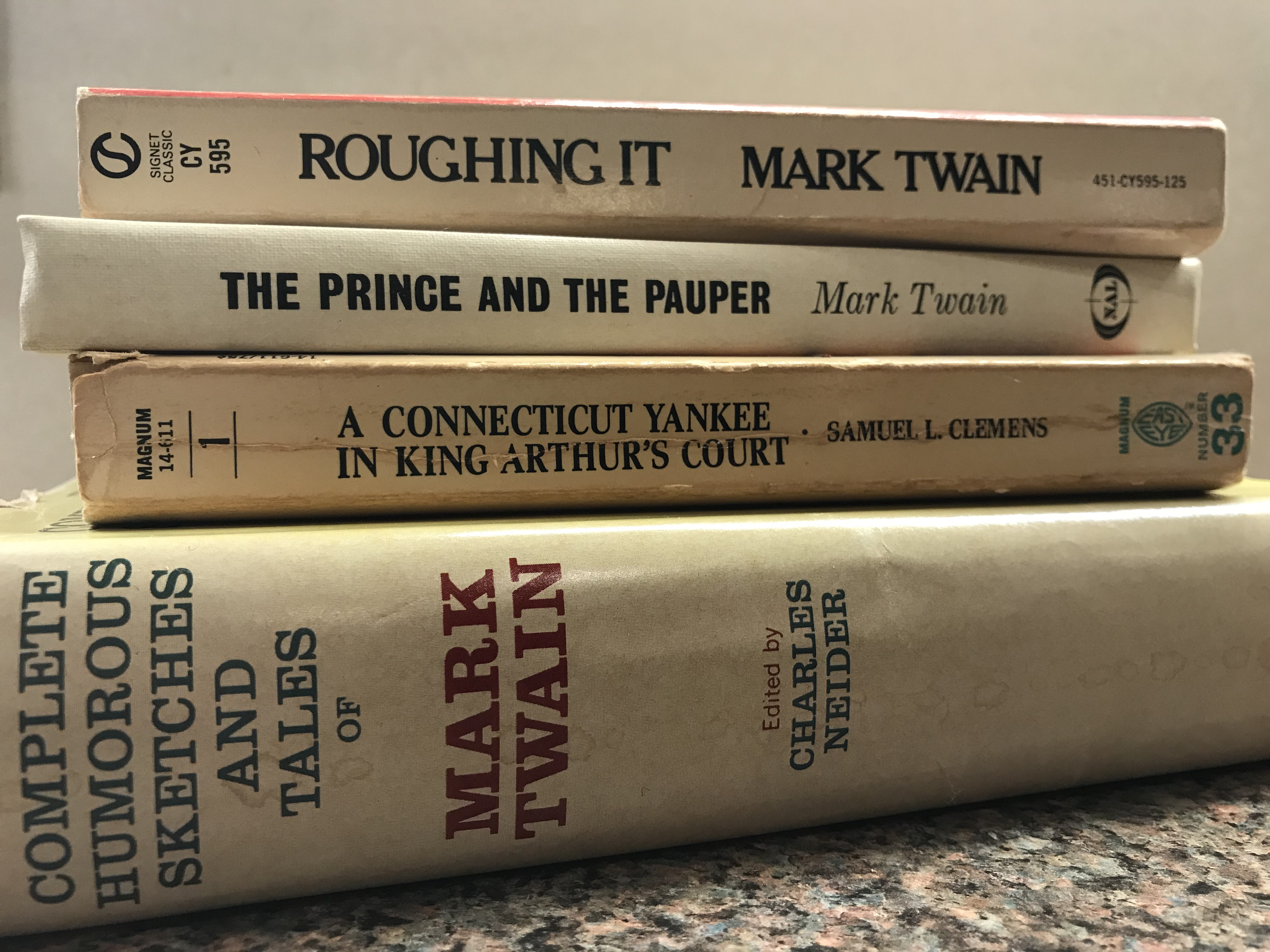
Mark Twain has been a favorite author of mine since my first introduction to Tom Sawyer and Huck Finn in elementary school. I loved the humor. I loved the honesty. I loved the way he wrote like people talked. Decades later, those are still the things I love about his writing. A Connecticut Yankee in King Arthur’s Court is another favorite novel of his.

A selection of Mark Twain books

Years ago, I enjoyed how actor Hal Holbrook brought Mark Twain alive on the stage and TV. When vacationing in New York a few years ago, I enjoyed visiting Elmira, where Twain lived. There was a live portrayal of him there, which was excellent. I still have those memories and the plastic souvenir cup from my visit.

Perhaps even more than his novels, I like many of Mark Twain’s quotes. It was through his little snippets or sayings that his humor really came through. Here are a few of my favorites:

“It is better to keep your mouth closed and let people think you are a fool than to open it and remove all doubt.”

“The secret of getting ahead is getting started.”

“A man who carries a cat by the tail learns something he can learn in no other way.”

“If you tell the truth, you don’t have to remember anything.”

“A person who won’t read has no advantage over the person who can’t read.”

“Kindness is the language which the deaf can hear and the blind can see.”

“When your friends begin to flatter you on how young you look, it’s a sure sign you’re getting old.”

Since my last blog post

The Covid-19 pandemic has worsened here in the United States. I’m thankful for all the people who work in healthcare facilities and other essential workers who risk exposure to the virus every day so the rest of us can have the services we need. I’m fortunate that I can stay home most of the time.

I finished reading a splendid new historical novel by Vicki Lane. Get your hands on a copy of And the Crows Took Their Eyes. Don’t let the title scare you off, but be aware that the book is not about a pleasant subject. It is, however, masterfully written. It sheds light on a part of North Carolina history that has received too little attention in the history books. It brings to life the horrors of neighbors taking opposite sides in the American Civil War. I read it slowly and savored the writing. Look for more about this book in my blog post on December 7, 2020.

My sister and I had some productive time one day as we continued to proofread my manuscript for Harrisburg, Did You Know? Stay tuned for progress reports.

My root canal went well last Monday, and I was able to enjoy turkey, dressing, and gravy on Thanksgiving Day.

Until my next blog post

I hope you have a good book to read and a challenging one to write, if you’re a writer.

Be creative. Find what you’re passionate about and make time to do it. Find a way to make a living doing it. I wish I had.

Wear a mask.

Janet

A Wake-Up Call from Dr. Henry Louis Gates, Jr.

“Find Your Roots” with Henry Louis Gates, Jr. on PBS

I’ve enjoyed the various television series Dr. Henry Louis Gates, Jr. has done on PBS (the Public Broadcasting System in the United States.) With my interest in genealogy, I’ve especially enjoyed his “Finding Your Roots” series where he (and his assistants) do a thorough genealogical search for well-known Americans. Many times, the findings are surprising.

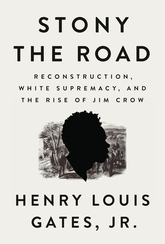
In my blog post last Monday, https://janetswritingblog.com/2019/06/03/4-or-5-books-i-read-in-may-2019/ , I wrote about the books I read in May. I mentioned reading the first two chapters of Henry Louis Gates, Jr.’s new book, Stony the Road:   Reconstruction, White Supremacy, and the Rise of Jim Crow.

Stony the Road:   Reconstruction, White Supremacy, and the Rise of Jim Crow, by Henry Louis Gates, Jr.

Stony the Road: Reconstruction, White Supremacy, and The Rise of Jim Crow, by Henry Louis Gates, Jr.

The events and facts Dr. Gates included in his book were not in the history textbooks of my youth. This period in our nation’s history was omitted from our textbooks, as were the dark decades which followed in which “Jim Crow” laws were enacted and strictly enforced. All this was swept under the rug and not talked about. The precious little I was taught about the Reconstruction Era could be summed up as, “After the Civil War the ‘carpetbaggers’ from “up North” came down here to tell us what to do.” This always had negative connotations. I grew up in North Carolina.

As a lover of history, even at a young age, I lamented the fact that every year in school we’d study the years up to the end of the American Civil War, the school year would end, and the same thing would happen the next year. It always came across as a lack of time to study anything that happened after that war but, with the perspective I’ve gained in the last several years, I now wonder if this was part of a grand design by the State of North Carolina. Perhaps it was by intention that we never studied the Reconstruction Era.

A snapshot of my school years

So you’ll know the background from which I speak, here are the highlights of my school years as far as race goes: I attended an all-white public school through the sixth grade; racial desegregation was optional in 1965 when I was in the seventh grade (meaning there were three children from a black family who desegregated our school of grades 1-12 with around 1,000 students); the historic black public schools in our county were closed at the end of my seventh grade year, so the schools were completely racially-integrated thereafter.

Can you imagine being one of just three students of color in a school of 1,000 white students? I cannot imagine how Carolyn Morris and her two siblings felt. I also cannot imagine how all the black students in our county felt the following year when their schools were closed and they had no choice but to attend the schools that had preciously been all-white. It was a blessing that five of the six county high schools were consolidated in 1967 into two new high schools, so Central Cabarrus High School and Northwest Cabarrus High School were never racially-segregated.

Back to Dr. Gates’ book

From Dr. Gates’ book I learned in greater detail than I had before that great strides were made for racial integration during Reconstruction; however, “Jim Crow” laws started popping up all over the country (yes, even in The North) to squelch that progress. One fact that epitomizes the century after the American Civil War is that the University of South Carolina was racially-integrated after the War, but then laws were instituted to prohibit black students. The university wasn’t desegregated again until 1963.

The most important thing I learned as a writer

Stony the Road: Reconstruction, White Supremacy, and The Rise of Jim Crow, by Henry Louis Gates, Jr.

The most important thing I learned as a writer from reading Dr. Gates’ book is about the use of “Plantation Dialect” in fiction. It is something I have wrestled with in the years I’ve written and re-written my manuscript for The Spanish Coin/The Doubloon. With every revision I’ve deleted words of dialect. I had it down to just a couple of words (nawsuh for No, sir; Yessum for Yes, ma’am) by the time I read Dr. Gates’ book. Now I realize how that use of dialect, no doubt, comes across to an African-American reader.

As a white Southerner, I don’t like it when someone mocks my accent. I’m proud of my accent, but to see it overdone in spoken or written word is demeaning.

I’m fascinated by the regional accents in the United States. It’s a subject I’d like to study. I think these regional accents are a beautiful warp and weft in the fabric of our nation. If we all spoke just alike, life would be boring.

In next Monday’s blog post, I plan to delve more deeply into this subject as Dr. Gates’ book prompted me to do additional research about the use of dialect and accents in fiction. Learning to write fiction is a journey.

Since my last blog post

For a variety of reasons, I’ve made only scant progress on my manuscript for The Doubloon; however, what I’ve learned about the use of accent and dialect in fiction is far more important than my novel’s word count.

Until my next blog post

I hope you have a good book to read. I’m reading The Things We Cannot Say, by Kelly Rimmer and The Book Woman of Troublesome Creek, by Kim Michele Richardson.

If you’re a writer, I hope you have productive writing time.

Thank you for reading my blog. You could have spent the last few minutes doing something else, but you chose to read my blog.

Let’s continue the conversation

What is your experience in writing or reading fiction in which dialect and accent were overdone? Have you noticed an evolution in how dialect and accent are handled in novels?

Janet

Two for Tuesday: Two Books that Remind Me of Someone

Have you ever read a book and thought one of the characters was a dead ringer for someone you knew?

Today’s #TwoForTuesday writing prompt “two books that remind you of someone,” turned out to be more difficult for me than I had anticipated, but I chose A Man Called Ove, by Fredrik Backman and The Importance of Pot Liquor, by Jackie Seals Torrence. One is a well-known book and the other one not so much.

A Man Called Ove, by Fredrik Backman

A Man Called Ove, by Fredrik Backman

The main character in this book, Ove, reminds me of a relative of mine who I will not identify for obvious reasons.

Ove is a 59-year-old man at odds with the world. From the opening scene of computer-illiterate Ove attempting to buy a computer from a much younger computer geek store assistant to the scenes in which Ove pays his respects to foreign cars, much of his personality and outlook on life resonated with me and brought to mind my relative. That’s what made much of A Man Called Ove so funny to me.

The Importance of Pot Liquor, by Jackie Seals Torrence

The Importance of Pot Liquor, by Jackie Torrence

Chances are, you’ve never heard of this book. Chances are, you have no idea what pot liquor is unless you’re of a certain age and a native of North Carolina or another state in the American South. I’ll start by giving an explanation of “pot liquor.” It has nothing to do with the alcoholic kind of liquor. It is sometimes spelled “pot likker.”

What in the world is pot liquor?

Pot liquor is the liquid left in the pot after beans or other vegetables have been cooked and removed from the pot. I learned the term from my mother who was born more than 100 years ago on a farm and was one of 10 children. In other words, she grew up in a household where no food was wasted.

Therefore, I also grew up in a household where no food was wasted. We would never (and still wouldn’t dream of) pouring pot liquor down the drain. (Well, actually, I don’t drink or save broccoli pot liquor. I have to draw the line somewhere.)

When a pot of beans or other vegetables had been eaten and only the juice remained, my mother would usually offer the “pot liquor” to me. I rarely turned it down. What my mother knew that I didn’t know is that pot liquor is nutritious. It contains the vitamins and minerals that the cooking water leached out of the vegetables. I just thought it tasted good. My favorite has always been black eyed peas.

To this day, I like pot liquor, but now I usually freeze it. I keep a quart container in the freezer in which I add pot liquor from the cooking of various vegetables. This combination of various pot liquors is eventually used when I make homemade vegetable soup or have a recipe that calls for vegetable broth.

A note about the author

The author of The Importance of Pot Liquor, Jackie Torrence, lived in Salisbury, North Carolina, not far from where her slave ancestors lived on Second Creek. Though born with a speech impediment, Ms. Torrence became a master storyteller and traveled the United States performing her stories and teaching others the craft of storytelling. She died in 2004, confined to a wheelchair due to arthritis.

Back to the book title…

With my explanation of pot liquor (which probably made some of you gag) out of the way, let’s get back to the book that reminds me of someone. I read the book in 2011, so I don’t remember the details of the book. That’s all right, because it is the title itself of Jackie Seals Torrence’s 1994 book, The Importance of Pot Liquor, which reminds me of my mother and also of an elderly family friend and distant relative, Miss Eugenia Lore.

Miss Eugenia and “The Wah”

Miss Eugenia was quite a character and very much a product of her generation and family history. She was born in 1888 in Concord, North Carolina. Her father served in the Army of the Confederate States of America during the Civil War. She showed us the canteen he carried in the War which, in her Southern accent, she always referred to it as “The Wah.”

The portrait of Robert E. Lee that hung on her parlor wall had been purchased by her father as part of a fundraiser to secure the money needed to erect a statue of Lee in Richmond, Virginia. If anyone in her presence dared to call it the “Civil War,” she was quick to correct them with the words, “There was nothin’ civil about it!”

Unlike my mother, Miss Eugenia was raised in town. Her mother had “help” as in The Help, by Kathryn Stockett. One time Miss Eugenia made a disparaging remark about pot liquor because no one of her social status would have drunk it, and my mother responded with something like, “Oh, I love pot liquor. You don’t know what you’re missing.” Miss Eugenia was visibly appalled. In her mind, only an African-American household servant would “have” to drink pot liquor.

I agree with my mother. Miss Eugenia didn’t know what she was missing!

Until my next blog post

Thank you, Rae, of “Rae’s Reads and Reviews Blog” for this month’s #TwoForTuesday blog post prompts. I learned about it in her January 8, 2019 blog post:  https://educatednegra.blog/2019/01/08/two-for-tuesday-prompts/comment-page-1/#comment-1646.

Let’s continue the conversation

Thank you for taking the time to read my blog today.

Is there an “Ove” in your family?

Had you ever heard of pot liquor before reading my blog post? Do you like pot liquor or do you find it disgusting?

What is a book that reminds you of someone?

Janet

“Had a family once.” (Revisited)

In my blog post on June 18, 2018 “Had a family once.”, I wrote about the opening line of the prologue to Right Behind You, by Lisa Gardner:  “Had a family once.”

Central American Refugees – “Had a family once.”

I can’t get that line out of my head. “Had a family once,” must be how the refugees at the US-Mexico border feel. Children have been separated from parents and there was, obviously, no plan in place for the uniting of those families. What a logistical nightmare now, and all the result of an ill-conceived change in US Government policy. “Had a family once.”

Young soccer team and coach in Thailand

As I write this, the world is watching and holding its collective breath as valiant attempts are being made to rescue a dozen young soccer players and their coach from a flooded cave in Thailand. Those boys, their parents, and their coach must have spent many hours in the past two weeks thinking, “Had a family once,” and praying they’ll still have their families intact when this ordeal and rescue is over.

African Slaves in America – “Had a family once.”

My interest in genealogy and local history recently led me on a fascinating trek into the lives of some people of African descent who were slaves in Cabarrus County, North Carolina in the 1800s. That sounds like a long time ago, but it really isn’t when you think in terms of a person’s lifespan and generations within families.

“Had a family once.”

Caroline had a family once.

In the records of Rocky River Presbyterian Church, Caroline, infant daughter of slaves Nat and Marie owned by R. Biggers, was baptized on August 16, 1835. Caroline, a slave of George Leroy Morrison, joined the church April 29, 1859. Was this the same Caroline?

Yes, she was! There is a bill of sale dated October 30, 1856 in which a 22-year-old woman named Caroline and her two children (Robert, aged about four years and an unnamed infant about three months old were sold by Rebecca Biggers to George Leroy Morrison.

The idea of slavery is repulsive, but seeing an actual bill of sale makes me physically ill. Having this information, I owed Caroline a few hours of my time to try to determine if she survived to be free after the American Civil War. What I was able to piece together was surprising and thrilling.

1863 Cabarrus Tax Assessment

In 2004, I compiled a list of the records of the more than 900 slaves who were baptized at and/or joined Rocky River Presbyterian Church between around 1820 and the end of the Civil War in 1865. The 1863 Cabarrus County Tax Assessment List gave details about some of those slaves such as age, physical condition, and monetary value.

George Leroy Morrison died May 6, 1860. The 1863 Cabarrus County Tax Assessment states that his brother, Q.C. Morrison was guardian of four slaves:  Abram, aged 45 and valued at $1,100; Caroline, aged 26 and valued at $1,400; Robert, aged 9 and valued at $900; and Matt [name was probably Nat] aged 1 and valued at $100. Q.C. Morrison died in the Civil War on August 7, 1863.

According to the 1863 Cabarrus County Tax Assessment, Rebecca Biggers had a 55-year-old slave named Nathaniel. He was valued at $100 with the notation, “cripple.) Rebecca did not have a slave named Marie at that time, but we know from church records that Nat and Marie were Caroline’s parents.

Armed with that information, I wanted to know more. I wanted Caroline to survive the War, gain her freedom, and have a life. She’d “had a family once.” Did she have that same family after the War?

Yes, she did!

The 1870 US Census of Cabarrus County, Township One finds Caroline, wife of Albert Morrison, along with children Robert, Nathaniel, Edward, and Albert.

According to the agriculture schedule of the 1870 Census, Albert and Caroline Morrison owned 40 acres of improved land valued at $200 along with farm machinery valued at $15. They owned livestock valued at $100 and reported how many bushels of wheat, Indian corn, and corn they had raised in 1869.

And, by the way, Albert Morrison was one of the five elders elected at the founding and organizational meeting of the African-American church that was formed by former slaves who had been members of Rocky River Presbyterian Church. Originally called Rocky River Colored Presbyterian Church, it soon became Bellefonte Presbyterian Church and is still going strong in Harrisburg, NC.

The next record of Caroline

The next time we find a record of Caroline Morrison is in the Cabarrus County, NC Wills and Estate Papers. “The widow Caroline Morrison & family” of seven children received a one year’s dower on March 30, 1876.

1880 US Census

Caroline Morrison is the head of a household in Township One in Cabarrus County, NC when the 1880 federal census is taken. Sons Edward, Albert, Eugene Mc., and John are in the household along with Caroline’s granddaughter, Harriet.

Summary of my research

I won’t go into all the details of the rest of my research into the life of Caroline Morrison. Suffice it to say that I found marriage licenses for her sons, Nathaniel A. and Albert. Albert (Jr.) and his wife and children are in the 1900 US Census. I even found a 1925 death certificate for Albert (Sr.) and Caroline’s son, Robert. He was employed at the Southern Railway Railroad Shop in Forsyth County, NC.

Did Caroline have a family? Yes, she most certainly did!

Until my next blog post

There’s no telling what interesting history tidbits I’ll uncover. I love this stuff!

I hope you have a good book to read. I’m reading Educated:  A Memoir, by Tara Westover and several other small nonfiction books.

If you’re a writer, I hope you have productive writing time. I didn’t work on my novel last week, but I had a rewarding time researching Caroline Morrison and writing about my findings.

Thank you for reading my blog. You could have spent the last few minutes doing something else, but you chose to read my blog. I appreciate it!

Janet