I write southern historical fiction, local history, and I've written a devotional book. The two novels I'm writing are set in Virginia and the Carolinas in the 1760s. My weekly blog started out to follow my journey as a writer and a reader, but in 2025 it has been greatly expanded to include current events and politics in the United States as I see our democracy under attack from within. The political science major in me cannot sit idly by and remain silent.
Once-a-week, since November 25, I have blogged about a different story from my new book, Traveling Through History: A Collection of Historical Short Stories.
The sixth story in the book is “Whom Can We Trust? A Mecklenburg Declaration of Independence Short Story.”
Tradition tells us that Archibald and Maggie Sellers McCurdy built their log cabin in what is now Cabarrus County, North Carolina, in 1773. At that time, Cabarrus had not yet been formed out of the eastern part of old Mecklenburg County. Their house was on the National Register of Historic Places until vandals burned it down a few years ago. Sadly, I never did see the house, but I have seen photographs of it and detailed floor plans and exterior drawings have been preserved.
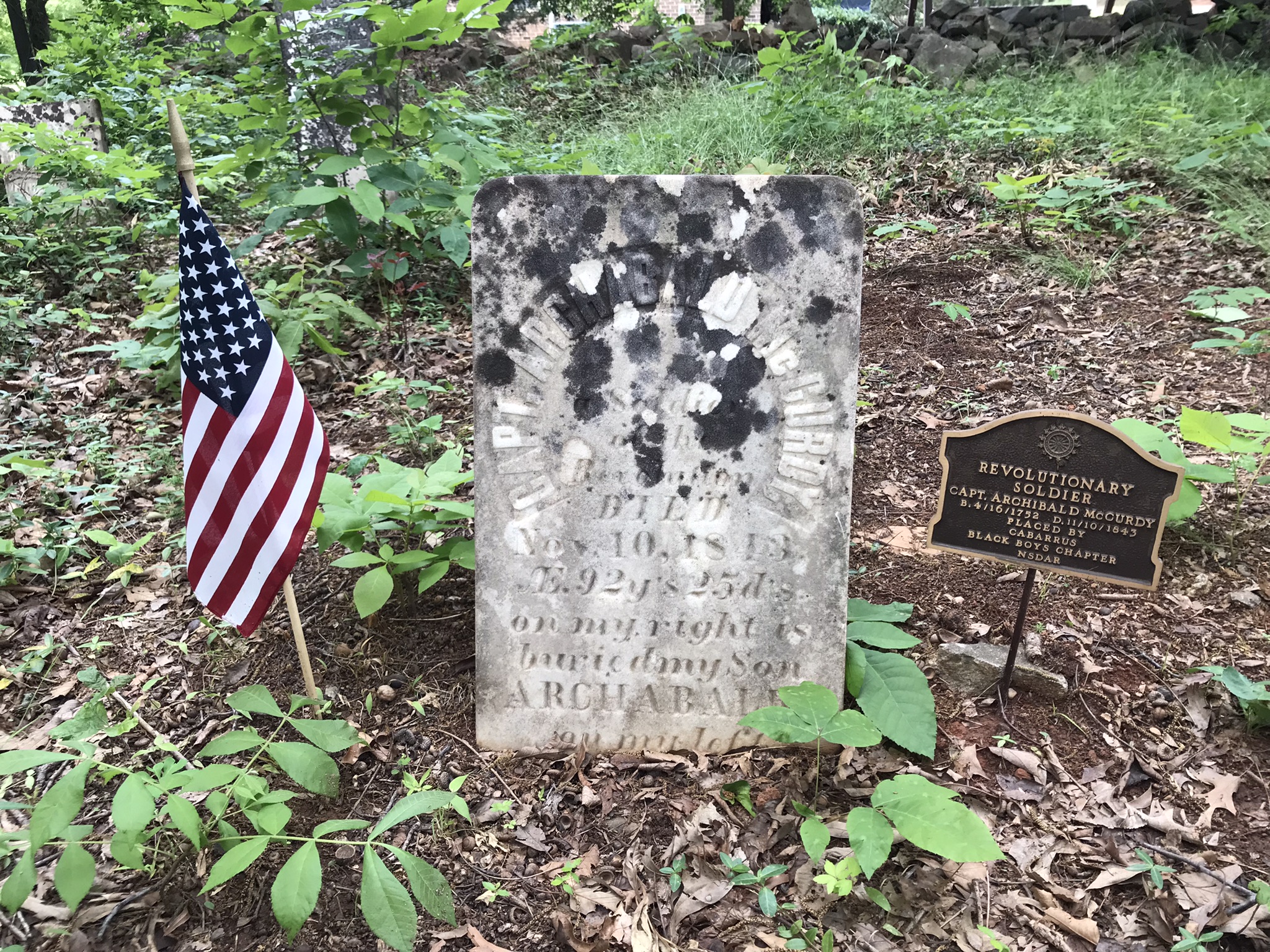
Archibald McCurdy’s gravestone at Spears Graveyard of Rocky Ri er Presbyterian Church, Cabarrus County, North Carolina
Those drawings and photographs made it easy for me to imagine the McCurdys’ lives. Theirs are names I’ve heard all my life. Archibald was a foot solider in the militia during the Revolutionary War. Maggie was a patriot in her own right, as she earned the name “She-Devil” by the British and Tories. I explain a couple of her feats in the Author’s Note at the end of “Whom Can We Trust?”
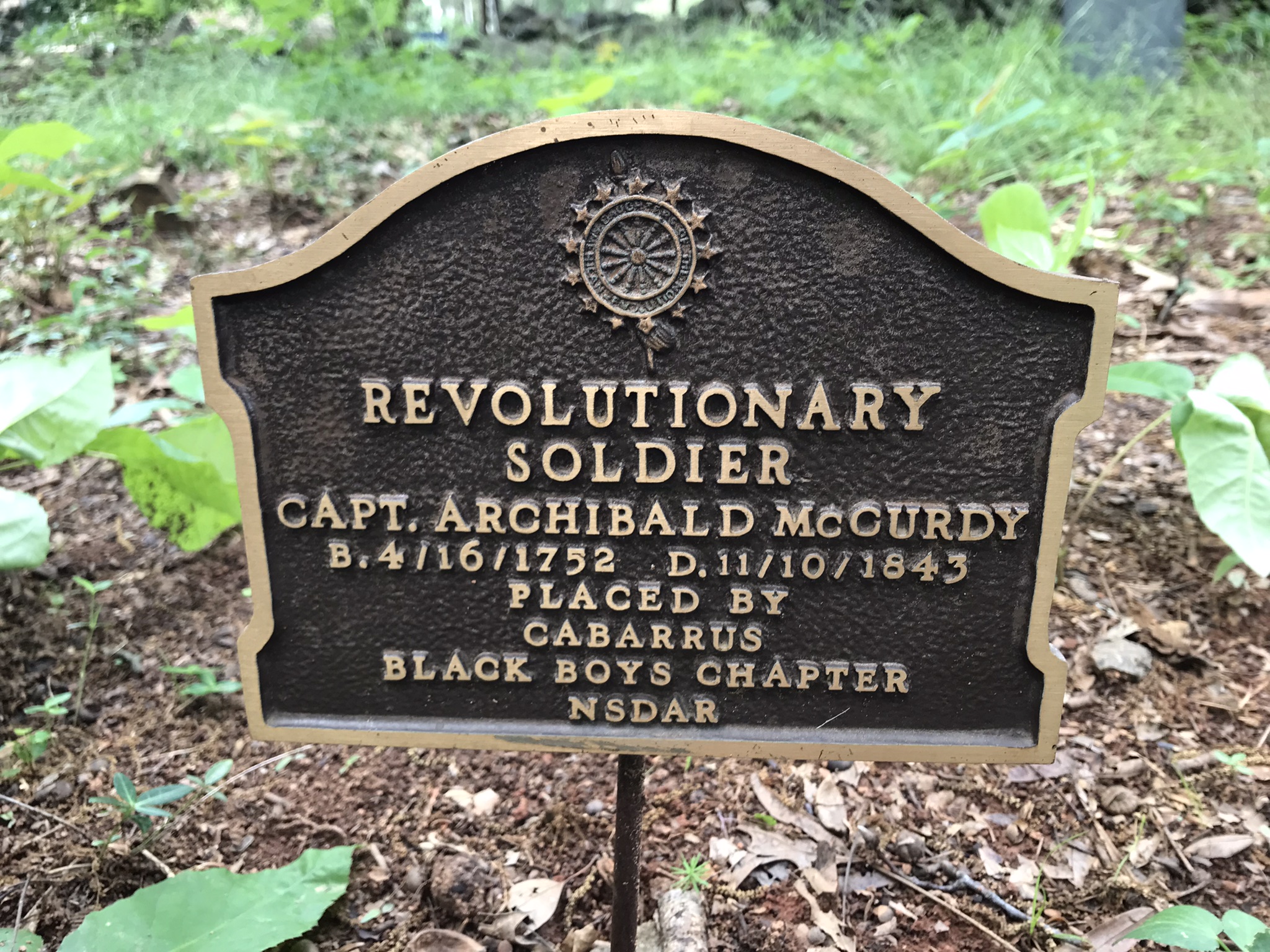
Marker placed at Archibald McCurdy’s grave by the Daughters of the American Revolution
The story is set in May 1775 at the time of the signing of the Mecklenburg Declaration of Independence. I was inspired by a story I’ve heard all my life about what Archibald McCurdy did on the day that document was signed.
You can find the paperback at Second Look Books in Harrisburg, NC, or ask for it at your local independent bookstore. Bookstores can order it from IngramSpark.
I wanted to blog about the sinking of the Ida Nicholson, a schooner that sank off Ocracoke Island, North Carolina in 1870, but I was unable to find sufficient information about the incident. It was hauling 101,600 of the one million bricks needed for the construction of the Hatteras Lighthouse when it went down in a gale in the infamous “Graveyard of the Atlantic.” The entire cargo was lost.
Plan B: My chance to introduce you to Dr. Nicholas E. Lubchenko
The amazing Dr. Nicholas E. Lubchenko was a topic I kept on the backburner to use when I didn’t have another blog subject calling my name. Today is that day!
In case you’ve wondered why I end my blog posts by asking you to remember the people of Ukraine, in addition to my heartfelt belief that Ukraine deserves to remain an independent nation, it is my small way of honoring the memory of a country doctor who served so many in my community for decades, regardless of their ability to pay the small fee he charged.
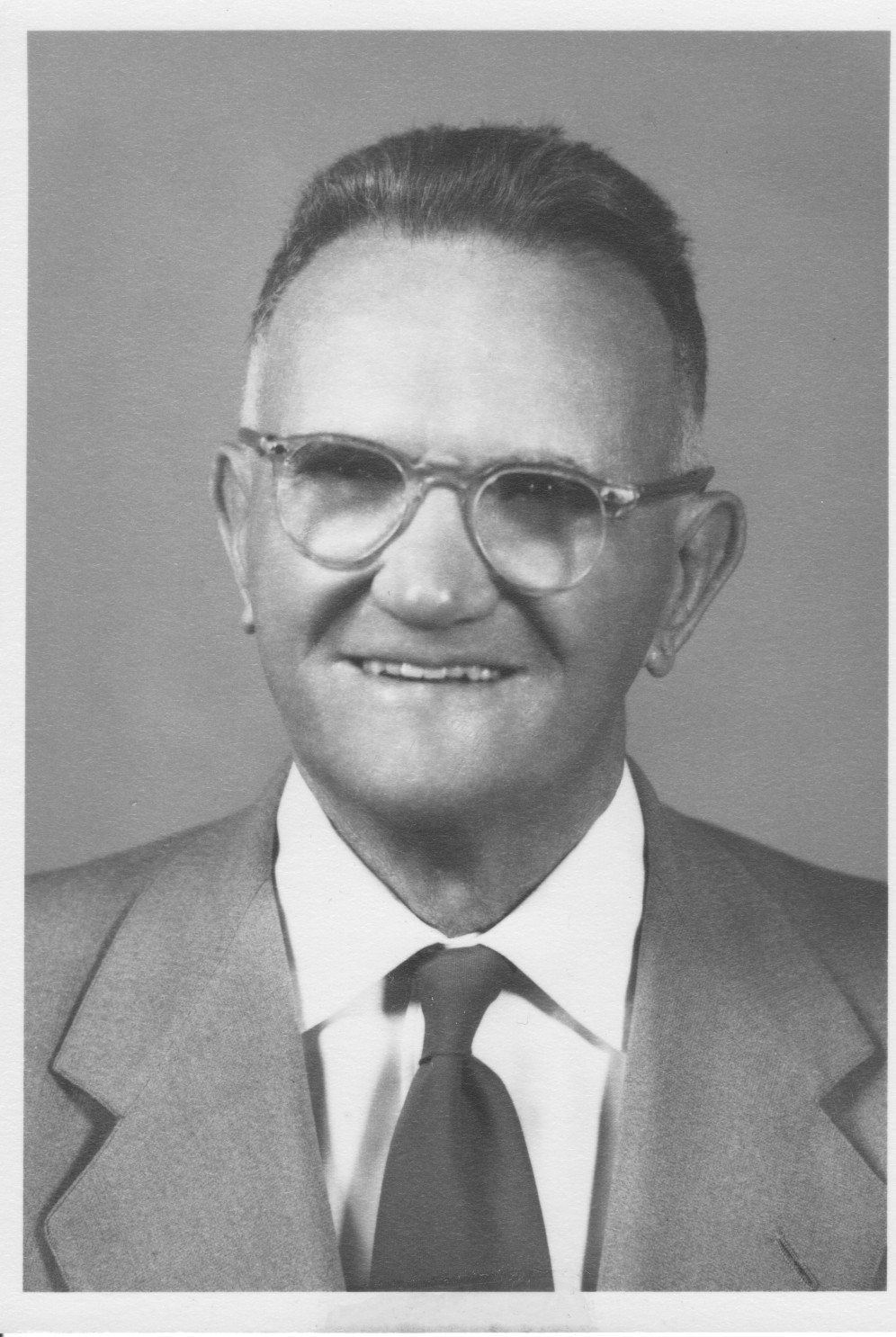
Dr. Nicholas E. Lubchenko
Those are Dr. Lubchenko’s people in Ukraine, and they yearn to remain a free nation not under the thumb of Vladimir Putin.
Dr. Lubchenko’s Early Years, Military, and Medical School
Nicholas E. Lubchenko was born in Bulai, Zerkov, near Kiev, Russia (now, Ukraine) in 1882. One of ten children of a leather worker, he graduated from an agricultural college in Kharkov. Kharkov, Ukraine is familiar to us now since Russia’s invasion of Ukraine and the ongoing war.
By 1906, Lubchenko was in the Russian army. His dream was to get to America, which he called “the greatest country in the world.” He concluded that if he did not escape from the army, he would never make it to America.
Quoting from my book, Harrisburg, Did You Know? Cabarrus History, Book 1: “One day in 1906, while still in the arm, he walked out of Russia and crossed into Austria, with a ‘samovar (a Russian urn with a spigot made for boiling water for tea) under his arm and one change of clothing.’ He could speak French and German but not English.
“He got a job working on a ship bound for New Orleans. After he arrived in America in November of 1906, an eastern Louisiana family helped him until he saved enough money to travel to South Carolina where his brother, Alexis, lived.”
He worked on a cotton farm in Ridgeway, South Carolina, saved his money, and after five years was able to borrow money to attend the North Carolina Medical College in Charlotte, NC. He had $69 when he arrived in Charlotte.
He put himself through medical school by working for various doctors in his spare time. During World War I, the North Carolina and Virginia Medical Schools had to merge due to the economy, so Lubchenko moved to Richmond, Virginia, and graduated in 1915.
Dr. Lubchenko’s Medical Career
Dr. Lubchenko served as a medical officer in the Merchant Marine on a transport ship in World War I and then started his medical practice in Newell, NC. He married a nurse from Cabarrus County, NC.
During the 1918-1919 Spanish Influenza Epidemic, Dr. Lubchenko made house calls from morning and into the night.
Dr. Lubchenko became a naturalized American citizen on April 2, 1923. He moved his family to Anson County, NC, but then they moved to Harrisburg and he resumed serving the people of eastern Mecklenburg County and western Cabarrus County.
He tried unsuccessfully to enlist in the US Army when World War II started, but age and the vital medical service he was rendering in the Harrisburg area prevented that. It is said that he stayed angry about that for a long time.
Dr. Lubchenko operated his medical practice out of his home in Harrisburg, NC, but the majority of his work was probably done through house calls. He practiced medicine in Harrisburg until his death in 1960.
Dr. Lubchenko, the Humanitarian
In a 1989 newspaper interview, one of the Lubchenkos’ daughters said he did not send bills to his patients. As stated in my book, “She quoted him as saying, ‘If they don’t want to pay, they won’t. If they do, they will, and if they want to pay and couldn’t, it would embarrass them.’” A 1944 ledger indicates that his usual charge for services was $3.00.
In addition to being a physician around the clock, 365 days a year, Dr. Lubchenko loved his adopted community and worked to make life better for the residents. Harrisburg was a small community of just 300 people in 1950, but Dr. Lubchenko wanted the best for the wider community.
He donated the land for and was the driving force in establishing the Harrisburg Volunteer Fire Department in 1954. It was the first volunteer fire department in Cabarrus County and served a wide area. For instance, we lived five miles from Harrisburg, but my father was a charter member of the fire department.
In 1955, Dr. Lubchenko helped organize a post of the Ground Observer Corps in Harrisburg. These were the days of the Cold War before radar was in place to detect enemy aircraft.
Reflections
As a child, I was scared of Dr. Lubchenko. I could not understand his heavy Russian accent and he was somewhat gruff. It was only as an adult, many years after his death, that I gained a true appreciation for him.
Although Harrisburg started growing rapidly a few years after Dr. Lubchenko’s death, it would be 30 years before the town had another doctor. His death left a great void in the wider Harrisburg community.
You can read all about Dr. Lubchenko, his medical practice, his house, the Harrisburg Volunteer Fire Department, the Ground Observer Corps, and many other aspects of local history in Harrisburg, Did You Know? Cabarrus History, Book 1. The book is available in paperback at Second Look Books in Harrisburg and in paperback and as an e-book from Amazon.com. (By the way, Harrisburg, Did You Know? Cabarrus History, Book 2 is also available.)
Hurricane Helene Update
As of Friday, 169roads in North Carolina are still closed due to Hurricane Helene, including Interstate 40 near the Tennessee line. That count consists of 1 interstate, 11 US highways, 20 state highways, and 137 state roads. That’s a decrease of two roads over the report two weeks ago. More heavy rain, wind, and icy conditions hit over the weekend with more of the same predicted for midweek. Repairs are made slow under such conditions.
There has been some good news about I-40. It is thought that by March 1 one lane of I-40 in both directions will open. The speed limit will be 40 mph on that stretch just east of the TN-NC line. I have not read whether commercial vehicles will be allowed, but my hunch is that they won’t.
News about the Blue Ridge Parkway in North Carolina is not good. The flooding and wind from Hurricane Helene last September caused 48 landslides in one 38-mile section of the parkway. There are no estimates for when those 38 miles will be completely rebuilt or if all of it can even be rebuilt. That section between Asheville and Linville will not reopen in 2025.
Until my next blog post
I believe most people want to see a peaceful end to the war in Ukraine, but I don’t want Ukraine to have to do all the compromising.
I hope you have a good book to read.
Remember the people of Ukraine and western North Carolina.
Even though we can’t show you an original copy of this declaration, it is written on our hearts as the descendants of those who whole-heartedly supported it as they prepared for the inevitable war against King George III of Great Britain.
The Americans’ beef wasn’t with the people of Great Britain – many of them were their relatives and friends – their beef was with the King – and they knew their friends and relatives back in Scotland were secretly wishing them well for they were also under the thumb of the King.
The year was 1775. The date was May 20.
The people of Mecklenburg County in the backcountry of North Carolina had had all they could take of King George and the oppressive laws and taxes he and the British Parliament continued to impose on the American colonists. After all, the reason most of them had left Europe was to escape monarchs who had little or no regard for their subjects.
The years leading up to May 20, 1775 had been tense. On May 2, 1771 a group of Mecklenburg County residents had taken matters into their own hands and blown up a shipment of munitions King Charles had ordered to be transported from Charleston, South Carolina to Rowan and Orange counties in North Carolina to put down The Regulator Movement.
The perpetrators of that gunpowder plot had been declared traitors and were still being hunted down by the Royal Government authorities when the county militias sent representatives to a convention in Charlotte to debate political conditions. The result was the writing of the Mecklenburg Declaration of Independence more than a year before the more famous one was written in Philadelphia.
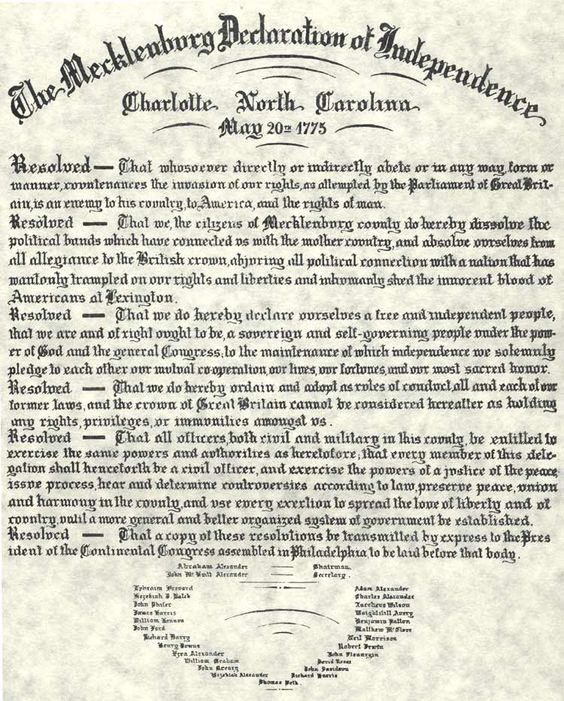
The document set out the citizens’ grievances and declared themselves free and independent of Great Britain. Sadly, the original copy of the declaration was lost in a fire at the home of John McKnitt Alexander on April 6, 1800. The Declaration was reconstructed from the memories of those who had written it and signed it.
A recreation of the Mecklenburg Declaration of Independence.
There are Mecklenburg Declaration of Independence doubters today, but I have no doubt that it existed. It was followed just 11 days later by the Mecklenburg Resolves, which was a similar document.
Captain Archibald McCurdy of the Rocky River Presbyterian Church area of old Mecklenburg County that is present-day Cabarrus County, stood at the Mecklenburg County log courthouse steps and heard the Declaration read. He went home and told his wife, Maggie, they needed to make a list of the people they knew they could trust. There were a few Loyalists in the area.
Whatever you’re doing this Saturday, May 20, take a moment to reflect on what the brave people of Mecklenburg County, North Carolina did 248 years ago. If you live in the United States of America, ponder the stand they took on that day. The King proclaimed them to be in a state of rebellion, and the men who signed the document risked their very lives by proclaiming they were free.
Since my last blog post
Spring is finally in full force here in North Carolina. All I have to do is put a hanging basket of pretty flowers on a hook on the side porch and I can count on “Mama Bird” – a Carolina Wren – to build a nest in it. She’s done is for decades.
Having bronchitis and no set schedule allowed me time to do some reading last week. I have some interesting books to tell you about in my May 22 and June 5 blog posts.
I continue to remind folks on Facebook to purchase my local history books. I’m trying not to be a nuisance.
Until my next blog post
I hope you have a good book to read, including Harrisburg, Did You Know? Cabarrus History, Books 1 and 2, as well as The Blue Ridge Mountains of North Carolina.
Don’t forget to visit my website (https://www.janetmorrisonbooks.com) and subscribe to my newsletter. I have special plans for May 20 and I can’t wait to tell you all about them in my July newsletter!
Make time for family and friends.
Remember the people of Ukraine.
Happy Mecklenburg Declaration of Independence Day on Saturday!
The first documented gold discovery in the United States was here in present-day Cabarrus County, North Carolina in 1799. The discovery by a little boy playing in Little Meadow Creek led to gold fever in the area. Numerous gold mines were dug and mined to various levels of success.
In fact, there was enough gold found in the southern piedmont of North Carolina that a branch of the United States Mint was built in Charlotte in 1836 and 1837. It opened for the production of gold coins in 1837.
A trip to the National Archives at Atlanta (which is in the Atlanta suburb of Morrow, Georgia) a few years ago gave me the opportunity to look at ledger books from the Mint in Charlotte. Within those pages I recognized names from my community.
Register of Gold – Branch Mint – Charlotte
I’m blogging about some of that information today to give you an example of the type of documented local history I included in Harrisburg, Did You Know? Cabarrus History, Book 2. Although the book (and Harrisburg, Did You Know? Cabarrus History, Book 1) concentrate on Harrisburg, both books do include articles about other communities in Township One.
One of the communities rich in history in the township is Pioneer Mills. Little more than a quiet crossroads now, it was a center of activity in the mid-1800s after the discovery of gold and the opening of Pioneer Mills Gold Mine.
I recognized names such as John C. Barnhardt from the Pioneer Mills community as taking 123 ounces of amalgam to the Charlotte Mint on August 31, 1843, for which he was paid $2,340.33. That was no small sum of money in 1843!
Robert Harvey Morrison, on whose land the Pioneer Mills Gold Mine was located, was paid more than $4,000 for the gold bars and amalgam he took to the Mint from late in 1846 into early 1850.
Other names I recognized in the Mint ledgers included two other Barnhardts, Robert R. King, three men with the surname Treloar, and R.B. Northrop.
Comparing US Census records, Charlotte Mint records, and various years of Branson Business Directories helped me get a better idea of what the Pioneer Mills Community must have looked like 150 to 180 years ago. There was a general store, a dry goods store, a blacksmith, a school, and a post office, In 1869, Pioneer Mills Community had three physicians.
Gold mining brought people from Canada, Great Britain, and New York to Pioneer Mills. Gold mining, no doubt, brought some undesirable people into the community, which led the wife of the pastor of Rocky River Presbyterian Church to say in the early 1870s that Pioneer Mills “is no place for a preacher’s son!”
If you’d like to read more about the history and people of Cabarrus County, North Carolina, you might enjoy Harrisburg, Did You Know? Cabarrus History, Books 1 and 2. They are available in paperback at Second Look Books in Harrisburg and in paperback and for Kindle from Amazon.
By the way, you can visit the research room at the National Archives at Atlanta (in Morrow, Georgia) by appointment only. Visit the website for more information: https://www.archives.gov/atlanta.
Until my next blog post
I hope you have a good book to read.
I hope you spend time with family and good friends.
And, as always, remember the people of Ukraine and count your blessings.
In case you think I’m spending too much time this month blogging about our local history, just keep in mind that May is an important month of historical events in Cabarrus County, North Carolina.
My May 2, 2022 blog post, __#OnThisDay: 251st Anniversary of 1771 Gunpowder Plot__ was about patriots’ blowing up the king’s munitions just off the Great Wagon Road in present-day Cabarrus County.
Today, my blog is about the Mecklenburg Declaration of Independence in 1775 while present-day Cabarrus County was part of Mecklenburg County and its citizens played just as important a role in the declaration as anyone living in what is present-day Mecklenburg County.
Friday, May 20, 2022 was the 247th anniversary of the signing of the Mecklenburg Declaration of Independence.
A recreation of the Mecklenburg Declaration of Independence.
But what about the 1775 Mecklenburg Declaration of Independence?
I blogged about the Mecklenburg Declaration of Independence on May 21, 2018. To refresh your memory, or to introduce you to the topic if you aren’t aware of it, the following nine paragraphs are reblogged from that post:
My immigrant ancestors were among the Scottish Presbyterian pioneers who settled old Mecklenburg County, North Carolina. Years of discontent in the American colonies were piled on top of the anti-British Crown feelings they brought with them across the Atlantic.
Weary of unfair taxes imposed by the Crown and the discrimination they were subjected to as Presbyterians slowly brought the settlers to the boiling point. An example of the persecution these Presbyterians felt were the Vestry and Marriage Acts of 1769. Those acts fined Presbyterian ministers who dared to conduct marriage ceremonies. Only Anglican marriages were recognized by the government.
In May of 1771 a group of young men from the Rocky River Presbyterian Church congregation in the part of Mecklenburg County that later became Cabarrus County, disguised themselves by blackening their faces and under the cover of darkness ambushed a shipment of Royal munitions traveling north on the Great Wagon Road. The supplies were destined for Rowan County to put down the Regulator Movement.
Blowing up three wagons loaded with gunpowder and other supplies, the teens and young men who perpetrated the deed were declared outlaws by the Royal Governor and had to go into hiding until May 20, 1775 when all the citizens of Mecklenburg County were declared to be rebels against the British Crown.
On May 20, 1775, the citizens of Mecklenburg County, North Carolina declared themselves to be free and independent of the rule of Great Britain. It was a sober and sobering declaration not entered into lightly. Those American patriots meant business, and they knew the risks they were taking.
Archibald McCurdy, an Elder in Rocky River Presbyterian Church, heard the document read from the steps of the log courthouse in Charlotte. When he got home, he and his wife, Maggie, listed everyone they knew of who could be trusted in the coming fight for American independence.
No original copies of the Mecklenburg Declaration of Independence survive today. The local copy was lost in a house fire at the home of one of the signers. The copy taken to the Continental Congress in Philadelphia by Captain James Jack on horseback was also lost. Later, signers of the document recreated it from memory.
Nevertheless, those of us who were raised on stories of the Mecklenburg Declaration of Independence and the brave souls who risked their lives to sign it know that the document was real. The blood of the American patriots still flows in our veins and their spirit of freedom still beats in our hearts.
Don’t mess with our freedom of the press, freedom of speech, freedom of religion, or our freedom of assembly!
Until my next blog post
I’m considering taking a week off from writing my blog, unless something interesting comes along and begs to be written. Next Monday, May 30, is Memorial Day in the United States of America. It is a day to remember all the men and women who have lost their lives while serving in the armed forces of the United States.
I hope you have a good book to read until I blog again on June 6.
Take time for a relaxing hobby and spend some time with friends and family.
The recent “leak” that the United States Supreme Court is on track to abolish the 1973 landmark decision Roe v Wade should stand as a wake-up call to all Americans.
Even a 49-year-old Supreme Court decision that has stood the test of time and numerous challenges, can be undone by five Supreme Court Associate Justices who claimed under oath before Congress that they had no intention of voting to undo that 1973 Court decision.
This begs the question, “What comes next? What other US Supreme Court decisions will be wiped away by this Court which was “stacked” by our former president and the radical “right” in Congress?
If I just “stepped on your toes,” so be it.
Brown v Board of Education of Topeka, 1954
This brings me to the topic of today’s blog post, which I chose months ago because it is the anniversary of another landmark US Supreme Court decision, Brown v Board of Education of Topeka. It was 68 years ago today that the Court published its unanimous decision on that case, which made it illegal to have separate public school systems based on race.
Photo credit: CDC on unspash.com
Until Brown v Board of Education of Topeka, it was legal for states to have “separate but equal” school systems for the different races. Everyone knew there was nothing equal about them, but they were legal in the eyes of the law.
The Brown v Board of Education of Topeka decision overturned the 1896 US Supreme Court case, Plessy v Ferguson. Plessy v Ferguson is proof that the US Supreme Court can make terrible mistakes. That decision ruled that having “separate but equal” school systems for each racial group was all right, and now it was deemed legal under the U.S. Constitution.
I grew up in the racially-segregated South. Before you get too puffed up about being from one of the other sections of the United States, though, take a moment to consider your childhood. Segregation might not have been mandated where you lived, but were your community and schools racially-integrated prior to the 1960s?
In a recent conversation with a friend from the Midwest, I said that our public schools here in Cabarrus County, NC were integrated when I was in the seventh grade. That was 1965. The person I was talking to made an interesting remark: “I lived in a non-segregated state, but I didn’t go to school with black students until high school. I lived in a farming community and there just weren’t any black people.”
Since I also grew up in a farming community, I found it strange that there weren’t a mix of white people and black people where she grew up. It was interesting to hear her perspective on the issue.
To our more-enlightened 21st century minds, it seems ridiculous that prior to Brown v Board of Education of Topeka it was legal to have racially-segregated public school systems. Since I was born in 1953, 1954 doesn’t seem very long ago. (Please stop rolling your eyes. If you don’t already understand, you will someday.)
The dual school systems didn’t disappear overnight – not by long shot. They continued here in Cabarrus County until the beginning of the 1966-67 school year. The previous school year, students had the option of attending the school not designated for their race. Few students chose to do that. For instance, in the previously all-white school of 1,000 students that I attended, only three black students chose to enroll in 1965. Looking back on it, I can’t imagine the courage it took for them to do so.
The following school year, the previously all-black schools in the county were closed. The buildings weren’t even used! I believe that’s proof in and of itself that the school board members knew that previously all-black schools weren’t on par with the previously all-white schools. Or, perhaps they knew that most white parents wouldn’t want their children assigned to those previously all-black schools. They carried a stigma which was based on racial bias and a deep-seated prejudice.
What a luxury the school board had then to let school buildings sit empty. It was just a couple of years before the county’s population started growing so fast that the school board was never again able to build schools fast enough to keep up.
The mid-1960s were volatile years as school desegregation took place. Southern states were held up by the national media as a backward place where white people resented black people and wanted their schools kept separate. That’s what we were told and we didn’t know any better until race riots broke out in Boston in September 1974 when the public schools there were ordered to desegregate.
In conclusion
In light of this history and what I read last week in Viola Davis’ memoir, Finding Me, I’m left to conclude that people everywhere are prejudiced against people who don’t look like they do.
We see racial profiling and discrimination all over the United States. Housing redlining takes place every day as mortgage lenders find ways to disguise such practices which limits where people of color can purchase homes. Every time I think this no longer takes place, investigative reporters uncover proof that I’m wrong.
I’ve come to realize that the desegregation of public schools didn’t always translate into equal opportunity. Students of all races and economic backgrounds experience different levels of support and nurture at home. Those of us who grew up in happy homes were blissfully unaware that some of our fellow students were subjected to abuse and neglect in their homes. Teachers — knowingly or unknowingly — bring their own prejudices into the classroom. So do students. It’s human nature, and it’s something we all need to be aware of as we interact with one another in our daily lives. You don’t know what the other person might be going through in his or her personal life.
Until my next blog post
I hope you have one or more good books to read this week.
When the first week of May rolls around every year, I’m reminded of a bold, dangerous, and exciting event in our local history in Cabarrus County, North Carolina. It dates back to the early days of the American Revolution. In fact, it predates the American Declaration of Independence by five years. Most Americans have never heard of it.
Gunpowder Shipment
As the Regulator Movement reached the boiling point in Alamance County, North Carolina in April 1771, word came to the Rocky River Community in present-day Cabarrus County (but then part of Mecklenburg County) that a shipment of gunpowder was on its way from Charleston, South Carolina to General Waddell in Salisbury (in Rowan County.)
Knowing that the gunpowder was destined to be used to put down the Regulator Movement in counties north of Mecklenburg, eight or nine youths and young men from the Rocky River Presbyterian congregation put their heads together and designed a plan to make sure the gunpowder never reached General Waddell.
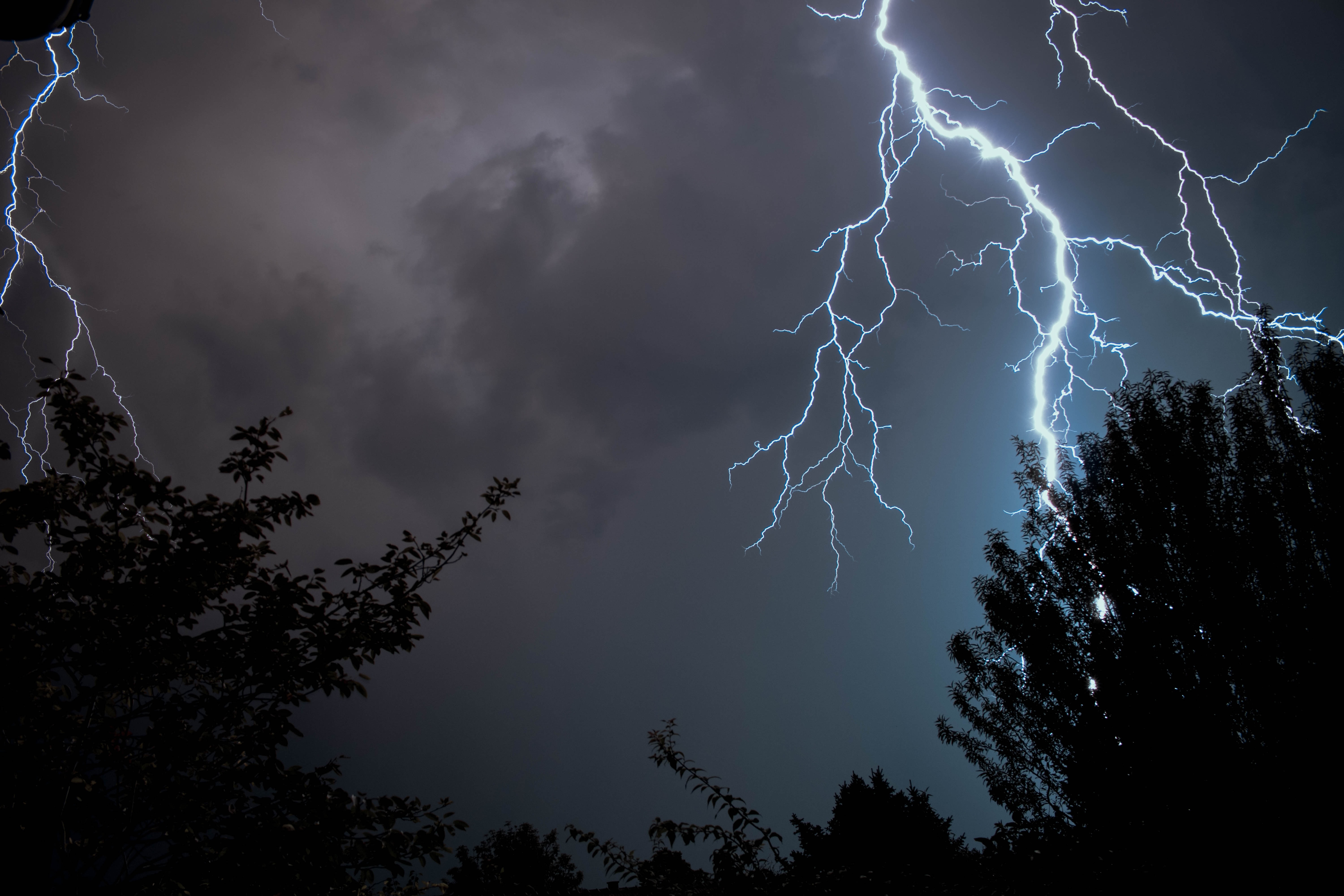
While making plans in secret to intercept the gunpowder shipment, the young men took cover from a late April 1771 thunderstorm in the springhouse on the Andrew Logan farm near where Reedy Creek now passes under Lower Rocky River Road.
Photo credit: Jonas Kaiser on unsplash.com
Not all sources agree on the names or even the number of conspirators, but it is believed they were as follows, based on the sworn testimony of James Ashmore: James White, Jr.; John White, Jr.; William White; Robert (Bob) Caruthers (who was married to a sister of James White, Jr.); Robert Davis; Benjamin Cochran; William White (cousin of the other Whites and son of the “Widow White”); James Ashmore; and Joshua Hadley, a half-brother of James Ashmore.
Photo credit: Mick Haupt on unsplash.com
One source credits Joshua Hadley with producing a New Testament on which each one swore that if anyone should ever divulge their plot that a ball might be shot through his heart and his soul sent to the lowest hell. Furthermore, they swore that if one of them ever revealed the names of the participants, he might die where no one should see him and that he should be denied a Christian burial.
Meanwhile…
Three munitions wagons from Charleston arrived in Charlotte but, upon learning that the gunpowder was destined to be used to put down the Regulators in Alamance and Rowan counties, the teamsters refused to take the munitions any further. It is said that Militia Colonel Moses Alexander had difficulty securing volunteers to take the wagons on to Salisbury.
An informant took word to the conspirators at Rocky River that the wagons were in Charlotte and they would stop for the night at the muster grounds near the present-day intersection of US-29 and Poplar Tent Road in Concord. (Since US-29 essentially follows the route of The Great Wagon Road, that’s the route the wagons would have taken to Salisbury.)
Thursday, May 2, 1771
The conspirators met at the home of James White, Sr. They blackened their faces to disguise themselves and set out for the muster grounds. They cut across the county and sometime on the night of May 2, 1771, converged on Phifer’s old muster grounds.
Can’t you just image those teenage boys and young men nervously waiting from a vantage point near the muster grounds? Can’t you imagine their hearts pounding as they ran down the hill and approached the wagons?
It is thought that James White, Jr. was the ringleader. The signal was given! The band of patriots surprised the guards! One of the teamsters was James Caruthers. He recognized his brother, Bob, as one of the attackers. In a low voice he said, “You’ll rue this, Bob.”
“Hold your tongue, Jim,” came his brother’s reply.
The conspirators moved the guards and teamsters to safety. They emptied the wagons and put the gunpowder and blankets in a pile. A train of powder was laid. James White, Jr., fired his pistol into the train.
Photo credit: Cee on unsplash.com
The resulting explosion was heard nine miles away in the vicinity of Rocky River Presbyterian Church. Some people thought it was thunder, while others mistook it for an earthquake.
Photo credit: Andy Watkins on unsplash.com
It is said that James White, Jr. carried a scar for the rest of his life where a flying stave from one of the gunpowder barrels hit him above his eye and cut to the bone before he could run from the explosion.
Photo credit: Christopher Burns on unsplash.com
The conspirators got home the best way they could in the wee hours of Friday, May 3, cleaned themselves up, and said nothing of their overnight adventure.
The Consequences
The Battle of Alamance took place on May 16, 1771, and the Regulator Movement in North Carolina was effectively put down by the royal government. Gov. William Tryon proclaimed on May 17 that he would pardon the rebels if they would turn themselves in by May 21. Bad weather and other circumstances prompted Tryon to postpone the deadline.
Some of the Regulators were put on trial on May 30. The trial was expected to last three weeks. No doubt, news of all this was moving up and down the Great Wagon Road and the conspirators from Rocky River were anxiously awaiting the outcome.
Photo credit: Jon Toney on unsplash.com
Giving in to exhaustion, at one point some of the gunpowder conspirators set out for Hillsborough to take the governor up on his offer of pardon. Before they reached their destination, they were warned that it was a trick and were told the Governor Tryon intended to hang them. Some returned to the canebrakes of Reedy Creek, while others fled to Georgia and Virginia.
June 11, 1771
Governor Tryon proclaimed that he knew some of the rebels in the colony wanted to turn themselves in, so he extended the deadline by which they could do so to July 10, except for “all the Outlaws, the Prisoners, all those concerned in blowing up General Waddell’s Ammunition in Mecklenburg County” and sixteen named Regulators.
The Governor sensed that he was losing control of North Carolina. He wanted the young men who destroyed his gunpowder brought to justice, but he didn’t know who they were.
In mid- to late-June, the Regulators’ trial came to a close. Twelve Regulators were tried and found guilty of high treason. Six were hanged while the other six waited for the King to decide their fate.
Photo credit: Alireza Jalilian on unsplash.com
Perhaps word of the Regulator trial results reached Rocky River, or maybe James Ashmore and Joshua Hadley simply feared that one of the other conspirators would disclose their identities. For whatever reason, Ashmore and Hadley went independently to tell Colonel Moses Alexander (who lived on a plantation at the present-day site of Charlotte Motor Speedway) what they knew.
Imagine their surprise when they ran into each other on Colonel Alexander’s front porch!
The two half-brothers jockeyed for position. James Ashmore eventually pushed his way into the house and told Col. Alexander that he was ready to talk.
June 22, 1771
James Ashmore was taken to Charlotte, where he gave a sworn deposition before Thomas Polk, a Mecklenburg County Justice of the Peace. That’s when things went from bad to worse for the conspirators.
Photo credit: Alessio Fiorentino
In his deposition, Ashmore told Polk how the conspirators had met at Andrew Logan’s old plantation after James McCaul advertised a sale or something to be held there. It was there that James White, Jr. asked Ashmore if he would be interested in helping to blow up the gunpowder shipment.
Ashmore said in his deposition that he was asked in the planning stages if he thought there was any harm in blowing up the gunpowder. He said he didn’t see any harm in it. He said the next morning between ten and eleven o’clock he stopped working on his plantation and went three-quarters of a mile to look for his horses.
Photo credit: Aurelien Faux on unsplash.com
Ashmore claimed it was there that he met six men on the road “who in appearance resembled Indians.” One was either recognized or identified himself as James White, Jr. White persuaded Ashmore to come back and join them after taking his horses home and recruiting his half-brother, Joshua Hadley.
They joined the men later about a half-mile from the Ashmore home. It was at that point in the deposition that Ashmore named six men with whom he and Hadley assembled.
Ashmore’s deposition goes on to describe the attack on the munitions wagons and how the conspirators had been sworn to secrecy.
In hiding
Once the names were revealed, the search for the men began in earnest. As stated earlier, some escaped to Georgia and Virginia. Others hid the canebrakes of Reedy Creek in the vicinity of the bridge on present-day Lower Rocky River Road where the women of Rocky River Presbyterian Church took them food and clothing.
Photo credit: Gorrin Bel on unsplash.com
When in need of something, one of the young men would pop up in a ravine and whistle. Nearby resident of around 40 years of age, William Spears, would acknowledge the fugitive by removing his hat. He would then walk off in the opposite direction so he would not be seen as aiding the conspirators.
Agnes Spears, William’s wife, would then take them food. For nearly one year the women of Rocky River Presbyterian Church fed and concealed the young men who took refuge along the banks of Reedy Creek. The authorities would never think to question the women because they couldn’t imagine that the women of the community had anything to do with the plot or its aftermath.
Photo credit:
The Rev. Hezekiah James Balch openly prayed for the safety of the young men from the pulpit of Rocky River Presbyterian Church.
The participants in the gunpowder plot were fugitives until independence was declared. After the Mecklenburg Declaration of Independence was issued on May 20, 1775, all Mecklenburg County citizens were considered to be in rebellion. After the Declaration, the conspirators were finally able to move about as freely as anyone else and prepare to fight in the coming Revolutionary War.
When May 2 and July 4 roll around every year, think about those brave young men from Rocky River who risked their lives to help gain our freedom in America.
Since my last blog post
Is it me, or are the weeks just flying by? I’m hard-pressed to remember what I’ve done since last Monday. I just know I’ve been busy. I visited a bookstore in downtown Concord, North Carolina on Friday. More on that in next week’s blog post. I’ve done some reading and quite a bit of brainstorming over the plot of my novel-in-progress. I work out many of the plot twists and some of the dialog while on my daily walks.
Yesterday we celebrated “May Meeting” at Rocky River Presbyterian Church. The tradition started as early as 1757. On the first Sunday in May, present members of the congregation, others associated with the church throughout its history, and other visitors from the community gather for worship, the Lord’s Supper, and Dinner in the Grove. It’s been a mainstay in my life since 1953.
We had perfect weather for Dinner in the Grove. Everyone brings food and spreads it out on a long four-foot-wide wire “table” that’s put up just for such occasions. It’s fun to try a little bit of this and a little bit of that. Some people bring special dishes they’re known for. There’s always good food and fellowship as we all eat together. After having an abbreviated version during the Covid-19 pandemic, it was exciting this year to get back to the way it used to be.
Until my next blog post
My blog post next Monday will be about some of the books I read in April.
I hope you have at least one good book to read and a hobby to enjoy.
The American Civil War began on April 12, 1861, when southerners fired on Fort Sumter, South Carolina. Fort Sumter was, of course, a United States military fort on the coast of South Carolina.
Photo credit: Michelle Burdick on unsplash.com
The American Civil War was the culmination of the falling apart of a nation.
Confederate Gen. Robert E. Lee surrendered his troops to US Gen. U.S. Grant at Appomattox Court House, Virginia, on April 9, 1865, but fighting continued for a while west of the Mississippi River. U.S President Andrew Johnson declared the war over in all states but Texas on April 2, 1866. After accepting the new state constitution for Texas, President Johnson officially declared the insurrection over on August 20, 1866.
Death toll
The exact number of deaths in the American Civil War is unknown, but it seems to be agreed upon that it was at least 620,000 and as high as 750,000.
Local losses
In 1999, I compiled a booklet, “Rocky River Presbyterian Church and the War Between the States,” about how the American Civil War affected Rocky River Presbyterian Church in Cabarrus County, North Carolina. Established in 1751, in 1860 the congregation had 616 members. 440 of them were White and 176 of them were Black. The congregation lost 72 men in the Civil War. Their average age was 28. The youngest was 16 and the oldest was 44. Of the 72 who died, 52 died between January 1862 and November 1863. I’ve tried to imagine what an emotional impact that had on this farming community, but I can’t.
Rocky River Presbyterian Church, Cabarrus County, North Carolina
I researched each of the 72 men and boys in published genealogies, church records, census records, etc. in an effort to put names and real people on the statistics. Some families were hit especially hard, losing several sons.
Another local loss
In addition to the numerical and economic loss those 72 men and boys cost the congregation, the war resulted in a radical and racial change in the church’s make up. In 2004, I compiled another booklet, “Slaves and Free Blacks Known to be Associated with Rocky River Presbyterian Church Prior to 1870.” My purpose was to compile in one document all known records about the slaves and free Blacks who were communing and/or baptized members of the congregation from the earliest extant church records (1835) through 1870.
Photo credit: US Library of Congress, via unsplash.com.
I was astounded when the project was finished to find that I had a list of 917 slaves and 11 free Blacks. In addition to the church membership rolls and Session disciplinary trial minutes, I searched the 1860 and 1863 Cabarrus County Tax Assessment Lists – which listed every slave living in the county at those times—and the US Census records for Cabarrus County from 1870 and 1880. (By the way, the county tax assessment lists recorded not only the names of each slave under his or her master’s name, but also included each slave’s age, physical condition, and value. They are sobering documents.)
In 1867, present-day Bellefonte Presbyterian Church was formed by former Black members of Rocky River. The White pastor of Rocky River, being a product of the place and time, was hurt when the Black members of his congregation chose to go two or three miles up the road to establish their own church. Unfortunately, he saw them as children who didn’t know what they were doing. He didn’t understand why they didn’t want to stay at Rocky River and continue to sit in the balcony while the White members sat downstairs on the main floor of the sanctuary. No wonder they left! That’s easy for us to see today.
How racism continues to this day
Southerners tend to romanticize about the Civil War, but I doubt there was anything romantic about it at the time. The wives, mothers, sisters, and younger brothers were left behind to try to farm the best they could, not knowing when or if their loved ones would come home. I would not have wanted to be alive during that time.
All four of my great-grandfathers and one of my great-great-grandfathers fought on the losing side in the American Civil War. They were farmers in North Carolina. They did not own slaves. In trying to put myself in their places in that place and time, I can’t help but think they didn’t have much choice in joining the North Carolina Troops when the war began.
Lee Dulin, home from the Civil War
One was a boy of 16, no doubt out on a bit of an adventure with his neighborhood friends in the same company. He wrote letters to his parents and sister asking them to send him socks. One was in the 1st NC Cavalry and survived a severe head wound at Gettysburg that left him with headaches and a convulsive disorder for the rest of his life. One had restricted use of one of his arms for the rest of his life due to injuries sustained in the Seven Days Battle of Richmond. One was in Charleston at the end of the war and walked the 200 miles home. One of my great-great-grandfathers was a man in his early 50s – much too old to go off to war, but that’s what he did. It’s hard to find the romance in any of that. They came home defeated, with perhaps a little worthless Confederate currency, only to have to go back to eking out a living by farming in a broken economy.
They were not the ones who built monuments to Confederate leaders. They did not raise the Confederate battle flag by their houses to show their Southern pride. They just went back to the hard-working lives they’d known since birth and tried to live out their lives as law-abiding American citizens.
I don’t know what any of those five ancestors of mine thought about race. I can’t sit in judgment of any of my ancestors any more than I can take credit for anything good they accomplished in their lives. Each of us is accountable for our own ideas, beliefs, and actions.
Where do we go from here?
Until Americans have an honest discussion about slavery and the ramifications of it… until people across the country study the facts and recognize that slavery existed in some northern states… until people across the country realize that northern states benefitted from the slavery in the South because the slaves picked the cotton that was sent to northern textile mills to be turned into fabric for people there to sell and wear at a low cost due to slavery… until people across the country accept each other and fight for all citizens to have the same rights and chances to excel… until as individuals we admit our prejudices and have the courage to speak up when we see racial injustice… I’m afraid the American Civil War will never be over.
Photo credit: Nathan Dumlao on unsplash.com
My heart sinks at the sight of the Confederate battle flag because, to people of color, it is a symbol of hate. I didn’t see it that way when I was growing up because I was White, but I do now. When you know better, you should do better.
As Americans, it’s easy for us to sit back, protected by the Atlantic Ocean on the east and the Pacific Ocean to the west and criticize the Arabs and Jews in Israel holding grudges over wrongs committed centuries ago, but many Americans are unwilling to forgive and forget when it comes to our own Civil War after 160 years. We can’t see the plank in our own eye because we’re concentrating on the speck in someone else’s eye.
Photo by Luke Michael on Unsplash.com
Since my last blog post
We finally got to bring our diabetic dog home from the hospital last Thursday. He was hospitalized for eight days with bronchial pneumonia. We’re so thankful for the good care he received at CARE (Charlotte Animal Referral & Emergency) once again.
Until my next blog post
Continue to celebrate D.E.A.R. (Drop Everything And Read) Month. I hope you have at least one good book to read this week.
Make time for a hobby.
Note: The two booklets I referenced in today’s blog, “Rocky River Presbyterian Church and the War Between the States” and “Slaves and Free Blacks Known to be Associated with Rocky River Presbyterian Church Prior to 1870,” are available through http://www.JanetMorrisonBooks.com. Click on “Rocky River Presbyterian Church Booklets.”
I had a bit of fun last week in posting a five-part series about my bizarre accident in January and the equally strange ensuing weeks. I hope you enjoyed my tale of woe.
Today it’s back to work, though, on the craft of writing. This post is geared toward writers, but I think we can all learn how to communicate our thoughts more vividly whether in the written word or in our conversations.
Photo by Aaron Burden on Unsplash
Advice from Barbara Kyle
In her email on March 27, 2020, author and writing coach Barbara Kyle gave some welcomed advice for writers having trouble concentrating on their writing during the coronavirus-19 pandemic. She recommended that writers use this time to do research, if they’re having difficulty producing creative words on the page.
In my recent weeks of confinement due to my fractured leg, I’ve worked on some blog posts in advance. That’s the case with today’s post as I continue my sporadic #FixYourNovel series.
Time and place
The more a writer knows about the geography, demographics, history, culture, and people of her story’s location and time period, the better. You don’t have to tell everything you know. In fact, please don’t! You do need to draw from your first-hand knowledge and research to discern which details to give the reader.
Example: The historical novel I’m working on
The historical novel I’m still editing is set in the backcountry of the Carolinas at the close of the 1760s. Specifically, the story is set in present-day Lancaster County, South Carolina and present-day Cabarrus, Mecklenburg, and Rowan counties in North Carolina.
Without knowing what I was preparing myself for, I’ve soaked in the history of this region all my life. My study of local history, colonial American history, and my own family’s history have grounded me in the time and place in which my novel manuscript is set.
Have you heard of en.esosounds.net? (Pardon the pun!)
I recently discovered a helpful website (http://en.ecosounds.net/) as I was trying to add local flavor to the sounds my characters were hearing as they rode along a dirt road in July of 1769. It was a cold, dreary, blustery day as I was trying to transplant my mind and ears to a hot and humid piedmont Carolina day in July. Since I grew up in a rural area there, I know in my head the sounds I want to share with my reader. Putting those sounds on the page can be a challenge. I have to assume my reader is not familiar with the mid-summer sounds in rural South Carolina.
Something I found beneficial as I wrote the sounds my characters were hearing in the countryside on that hot July day in 1769 was this website: en.ecosounds.net. On that site you can listen to recorded sounds form various localities. Listening to a couple of those recordings was the perfect backdrop for me to listen to while I edited that particular scene.
Borrowing the wisdom of Barbara Kyle again
In her book, Page-Turner: Your Path to Writing a Novel that Publishers Want and Readers Buy, Ms. Kyle writes about the importance of using “concrete” words and images in one’s writing. Here’s a quote from chapter seven:
“For example, let’s say you’re describing a man in clothes that are damp from rain. If the reader is given just the appearance of those clothes, the man could be across the room, but if they read that the man’s sweater gives off the musty, wet-dog smell of damp wool, they’re right next to him.”
Ms. Kyle goes on to explain that including sensory details in our writing pulls on the reader’s emotions and thereby makes the writing more memorable for the reader.
Barbara Kyle’s website is https://www.barbarakyle.com/, in case you want to know more of what she has to offer writers.
A case of serendipity
I love when serendipity happens. I had been working on this blog post on March 3 when I changed gears and stopped to read some blogs. I follow Joanna Penn’s Creative Penn blog. I read her March 2, 2020 blog post, ”Opportunities in Audiobook Publishing with Michele Cobb.” (Here’s the link to it: thecreativepenn.com/2020/03/02/opportunities-in-audiobook-publishing-with-michele-cobb/.)
Michele Cobb is executive director of the Audio Publishers Association, the publisher of AudioFile magazine, and a consultant for the audiobook business at Forte Business Consulting.
In an interview Joanna Penn did with Ms. Cobb, they discussed the speed at which audiobooks have caught on around the world and the trend that audiobooks are the thing of the future as people like to listen to books while driving, cooking, crafting, or doing any number of other things.
The thing that jumped out at me from the interview was the following quote from Michele Cobb:
“And when you create specifically for the audio format, you might have multiple narrators, you might have music, you might have sound effects, and you may never want to put that experience into a print format because it wouldn’t work with your eyes.”
Joanna Penn added, “Actually, enhanced ebooks are audiobooks with all the sound effects.”
Maybe such ebooks exist. I haven’t listened to one yet.
I couldn’t help but think about my experience of listening to meadow and forest sounds on en.ecosounds.net while editing that scene in my book. How the book listening experience could be enhanced if there were sound effects on an audiobook! The possibilities are limitless.
In the meantime, a writer still needs to hone her skills in writing sensory details. I think we’ll always have printed books, even if eventually the only “printed” format of books is electronic. If the prose is particularly beautiful, I want to read it over and over again. If I were writing this in 2040 or even 2030, perhaps I’d say, “I want to listen to it over and over again.”
My head is swimming as I try to imagine an audio of my novel with the buzzing of flies and bees, and the chirping of native birds playing in the background as my written words are being read.
I guess you could say I’m “old school.” I just started listening to books on CD a year or so ago, and more recently started downloading MP3 books onto my tablet. In the interview with Joanna Penn, Michele Cobb said that of the CD versus digital books being published today, 4% are on CD and 96% are digital!
Since my last blog post
I’ve sat in my chair with my fractured leg elevated on a stool. My chair is by a south-facing window through which I can watch a variety of birds at one of our birdfeeders. Over the last couple of weeks I’ve watched the maple tree go from bare limbs to tiny red buds that blossomed into green leaves.
Dogwood blossoms. Photograph by Janet Morrison
I’ve watched a dogwood tree transition from bare limbs to tiny buds to gorgeous white blooms. I’ve watched as the goldfinches almost overnight went from their drab winter US Army greenish brown to their brilliant yellow and black feathers. The Ruby-Throated Hummingbirds are due back from Central America any day now, so it’s time to put out our hummingbird feeders. Many of our azaleas are in full bloom.
Azalea. Photograph by Janet Morrison.
I am blessed to live where I do. Sunshine streams through my south-facing window every morning. I can see the road on which an occasional car, truck, bicycle, moped, or green John Deere tractor passes. I can see the Carolina blue sky and puffy white clouds. I can see the pollen piling up on my red pick-up truck. I can see my brother’s pine tree farm.
I can see the open meadow across the road that is now harvested for hay to feed local cattle. In my mind’s eye, I can still see the rows of soybeans Uncle Ross used to grow there, but I especially remember the years he planted red clover to replenish the soil – and how the red heads of the clover swayed in a soft summer breeze when I was a child.
What more could a person have than what I have outside my window?
Until my next blog post
I hope you stay safe and well as we all journey through this coronavirus-19 pandemic. We truly are all in this together.
I hope you have a good book to read or listen to while you live under “stay-at-home orders.”
Please tell your friends about my blog.
Let’s continue the conversation
As recently as a couple of years ago I did not like listening to books. Now audiobooks make up probably 75% of my reading.
What about you?
What are the pros and cons of audiobooks?
Have you listened to an ebook that included sound effects?
This week’s writing prompt for Rae’s #TwoForTuesday blog post was a real challenge for me. I don’t tend to read books with flowery language, so I was stumped for a few days. If you’re interested in participating in Rae’s #TwoForTuesday blog post prompts or want to read what other participants are saying, go to Rae’s blog at https://educatednegra.blog/2019/04/01/april-two-for-tuesday-prompts.
A Christmas Carol, by Charles Dickens
A Christmas Carol, by Charles Dickens
Many novels of the 1800s would qualify for today’s
#TwoForTuesday prompt, but I decided to go with A Christmas Carol, by Charles Dickens. You need go no further than
the preface to know you’re in for some flowery language.
“I have endeavoured in this Ghostly little book, to raise
the Ghost of an Idea, which shall not put my readers out of humour with
themselves, with each other, with the season, or with me. May it haunt their
houses pleasantly, and no one wish to lay it. Their faithful Friend and
Servant, C.D., December, 1843.”
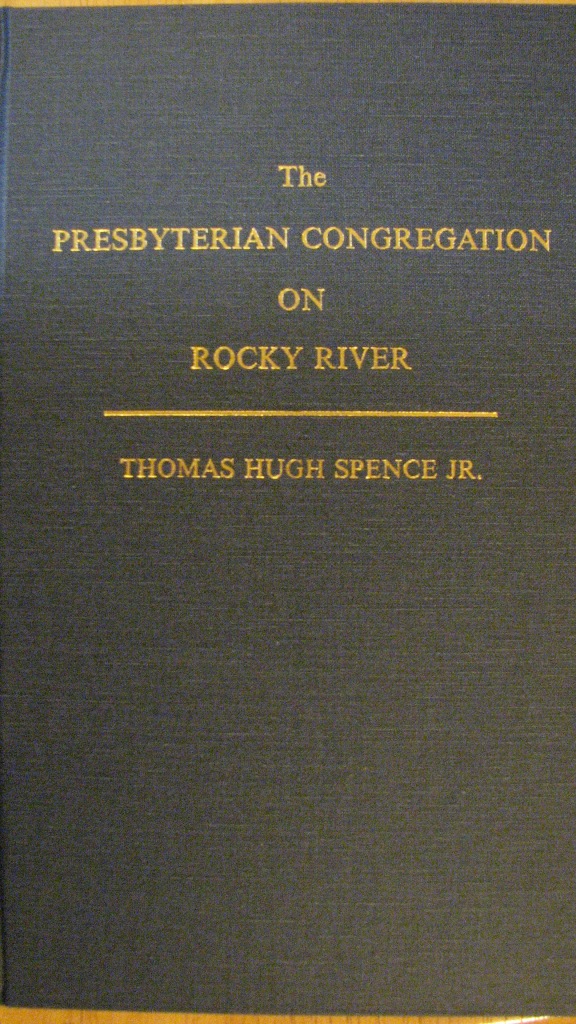
The Presbyterian Congregation on Rocky River, by Dr. Thomas Hugh
Spence, Jr.
The Presbyterian Congregation on Rocky River, by Thomas Hugh Spence, Jr.
The first book that came to mind for today’s topic is an excellent nonfiction book by Dr. Thomas Hugh Spence, Jr. You might be familiar with it if you live in the Charlotte area or have ancestors who were or are part of that congregation. It’s a history of Rocky River Presbyterian Church called The Presbyterian Congregation on Rocky River.
Dr. Spence’s father was the pastor of Rocky River Presbyterian Church in Cabarrus County, North Carolina in the 1910s, and Dr. Spence loved that church. He did a yeoman’s job of researching the first 200 years of the life of the congregation. The flowery language Dr. Spence sprinkled throughout this 1954 book endear it to me all the more because it demonstrates his abiding love for the congregation.
After the preface, is a page about the Rocky River and the first
church that took the river’s name. I think you’ll agree that the language is a
bit flowery.
“The waters of more than two centuries have followed the course of Rocky River toward the Eastern Sea since the vanguard of the Scotch-Irish settled along its banks and branches…. The foundations were laid beyond the seas, amid the verdant valleys of Ulster, or, even earlier, upon the heathered hills of Scotland. But there is no uncertainty in regard to that staunch and sturdy race who made their way across the Atlantic, settled for a season in Pennsylvania, and then resumed the march to rest only intermittently until the Yadkin had been forded and the region of Rocky River attained.”
(This book is available from the Rocky River Presbyterian Church office at 7940 Rocky River Road, Concord, NC 28025. You may contact the church office at 704-455-2479 or churchadmin@rockyriver.org for details. The church’s website is http://rockyriver.org/.)















 Janet's Writing Blog