
I don’t know if the Pledge of Allegiance is still recited in public school classrooms like it was in the 1950s and 1960s.
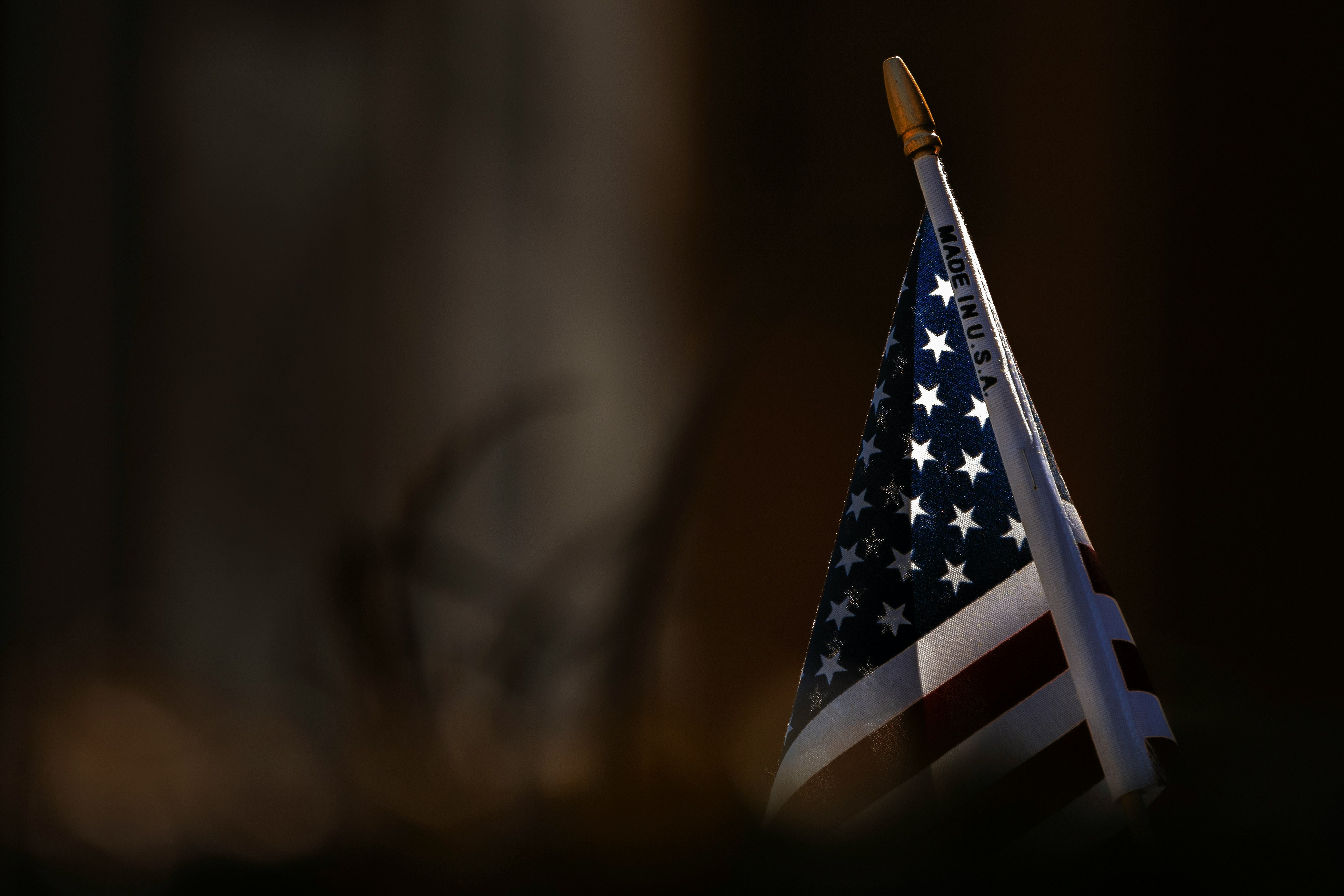
I will be 73 years old this week, and I remember standing beside my desk in elementary school, facing the American flag that hung from a wooden dowel at an angle from the wall of the classroom, putting my right hand over my heart, and reciting the Pledge of Allegiance.
I did it even before I understood the words we were saying.
I pledged my allegiance to the flag and to the republic it represented.
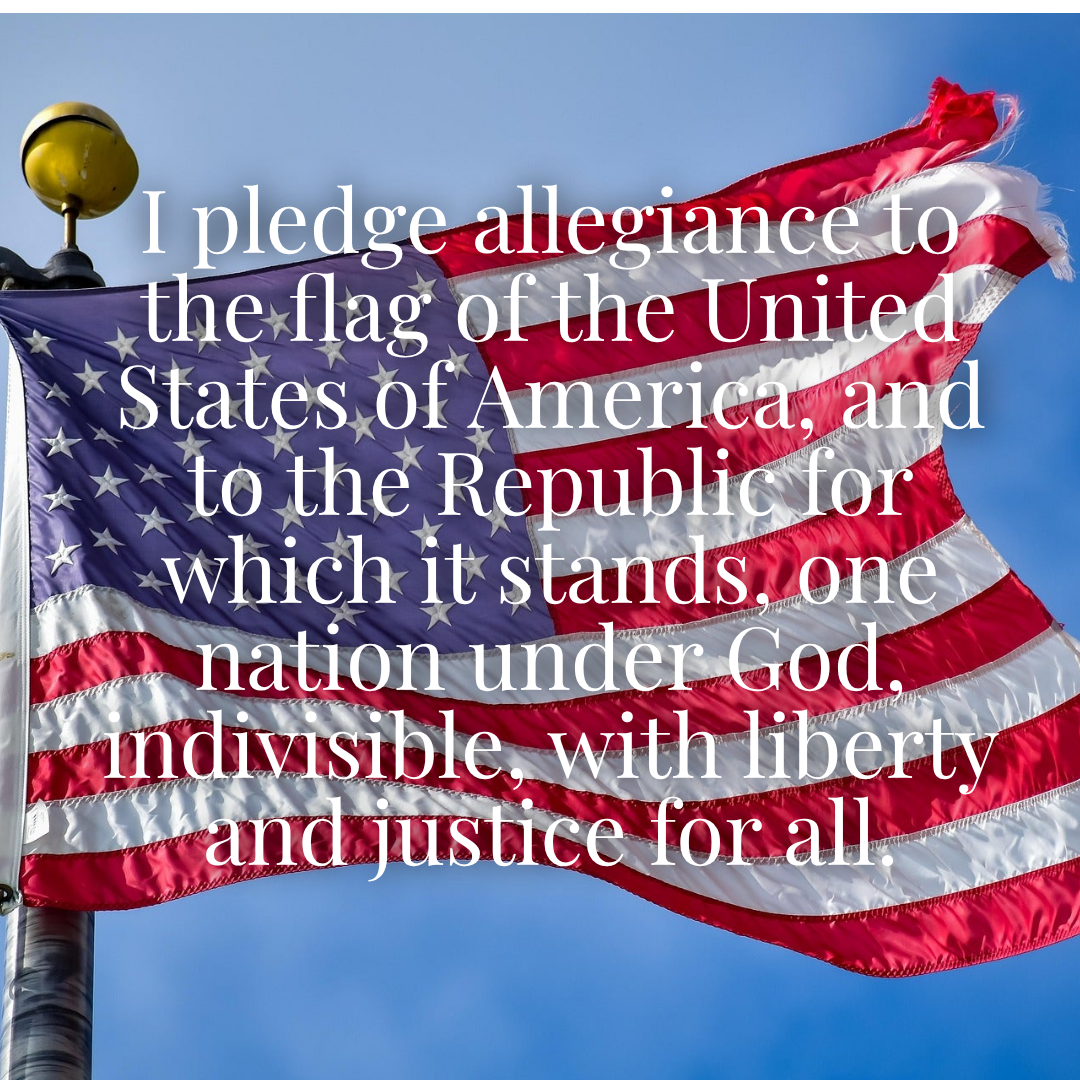
“I pledge allegiance to the flag of the United States of America and to the Republic for which it stands, one nation, under God, indivisible, with liberty and justice for all.”
My generation learned from an early age to revere the flag and to revere the ideals the United States of America strives to attain and uphold.
We were born after World War II. Yes, we are the “boomers” who the Gen X-ers make fun of. We did not yet know or comprehend the horrors of war. We had no concept of liberty and justice. We were too young to know that our country was special and unlike any other country in the world.
We slowly learned those things. We learned that all American citizens did not enjoy the same rights and privileges that we in an all-white school took for granted. We learned about civil rights by living through the Civil Rights Movement and school desegregation. We learned that all people are the same, regardless of skin pigment.
Somehow, the 31 simple – yet profound – words of the Pledge of Allegiance settled into our bones and our minds and our souls.
I might not remember what I ate for breakfast this morning, but the words of the Pledge of Allegiance still easily roll off my tongue.
Did Donald Trump ever learn the words of the Pledge of Allegiance? Perhaps it was not taught and recited in the prestigious private schools he attended in New York. I don’t know.
Did James Donald Bowman recite the Pledge of Allegiance in his school in Ohio? My hunch is that he did, even though he seems to have forgotten. You probably know him as James David “J.D.” Vance. (I still think it is a stretch to call the northeastern suburbs of Cincinnati “Appalachia,” but I digress.)
What about Kristi Noem? Was she taught the Pledge of Allegiance in the school she attended in South Dakota? Surely, she was. I know nothing about the political science department at South Dakota State University, but I question the validity of her Bachelor’s degree.
And what about Gregory Bovino? Did he learn the Pledge of Allegiance as a young student in California? I am appalled to report that he graduated from Western Carolina University and received a Master’s degree from my alma mater, Appalachian State University. This sickens me. I don’t know what his degrees are in. I pray they are not in political science. His buzzcut, his olive-green uniform, his practice of hurling tear gas canisters at protesters have allowed him to become the poster child for the crackdown on illegal immigration that the Trump regime espouses. The cross body strap his uniform includes is reminiscent of Hitler’s “brown shirts.” This is not a look that we are accustomed to seeing in the United States. On Saturday, Bovino adamantly told us that the federal agents in Minneapolis had followed their training that morning when they killed Alex Pretti. Before Mr. Pretti’s bullet-riddled body was cold, Bovino claimed that Pretti “wanted to do maximum damage and massacre law enforcement.” That’s how afraid members of the Trump regime are of a Veterans Administration ICU nurse armed with a cell phone.
What about Stephen Miller? It is ironic that he allegedly campaigned to get the Pledge of Allegiance said in his high school in California. Most of the things he says about our rights as Americans call into question the political science education he received at Duke University.
Karoline Leavitt is of a younger generation, so perhaps she never learned the Pledge of Allegiance. She often wears a necklace from which hangs a cross – a symbol of Jesus Christ. It is offensive when people wear cross necklaces or verbally claim to be followers of Jesus Christ, yet the truth is not in them.
What has happened to these people? Did the Pledge of Allegiance not settle in their bones and their souls?
The Pledge of Allegiance does not mention telling lies. That comes from the Bible. The Eighth Commandment instructs us to “not bear false witness.’ In other words, it tells us not to lie.
When a person is raised in a home where the truth is always told, that commandment becomes second nature. It becomes a core value. Telling the truth is what you do. You don’t have to pause and decide whether to tell the truth. It’s just what you do.
When a person is exposed to lies in their home or in their work place, perhaps the telling of lies becomes second nature to them.
I don’t know much about the private lives of the people in the Trump Administration, but I know they are feeding the American people and the world a lot of lies about what transpired on Saturday morning in Minneapolis, Minnesota.
They are telling me not to believe my eyes and ears.
Two days after the murder, members of the Trump regime are still defiant. They will defend the actions of the ICE and Border Patrol Officers until the end. Until the end of our democracy. They told us weeks ago that Trump’s federal agents are above the law.
They seem to have lost sight of the Pledge of Allegiance, the Declaration of Independence, the Constitution of the United States of America, and the Ten Commandments.
The United States is a country rooted in the rule of law and the ideals proclaimed in our founding documents. The political party to which Donald Trump and his regime belong claims to be rooted in the Bible. They don’t pay much attention to the New Testament, but they claim to love the Old Testament.
That’s where the Ten Commandments are found. It is in the Old Testament that we are instructed not to tell lies.
I suggest that Trump and the members of his regime take a few minutes to sit quietly and read the Pledge of Allegiance, the Declaration of Independence, the Constitution of the United States of America, and the Ten Commandments. All of this might be new literature for them, but I think taking time to read these documents and Bible verses might be beneficial for them and the nation they vowed to serve and protect.
My faith in what is being taught in the political science departments at the public and private universities in the United States is being shaken. I fear the students who were born after my college days are not being taught the tenets of democracy that I was taught in school and on the university level. I fear they are not being taught to serve the public with integrity and honesty.

I fear they were not taught that the government should be afraid of its citizens, not the other way around.
I would have much preferred to have written scene 43 in my historical novel this afternoon, but I’ve spent several hours contemplating and writing this blog post. And yet, people wonder why it is taking me so long to write my novel. My brain is being torn between 2026 and 1768.
The irony is not lost on me. The people I’m writing about who were living in North Carolina in 1768 were also rebelling against tyranny. That’s not what the novel is about, but the colonists’ patience with the English Crown was already growing thin.
Janet
The government should be afraid of its citizens, not the other way around.



 Janet's Writing Blog