I write southern historical fiction, local history, and I've written a devotional book. The two novels I'm writing are set in Virginia and the Carolinas in the 1760s. My weekly blog started out to follow my journey as a writer and a reader, but in 2025 it has been greatly expanded to include current events and politics in the United States as I see our democracy under attack from within. The political science major in me cannot sit idly by and remain silent.
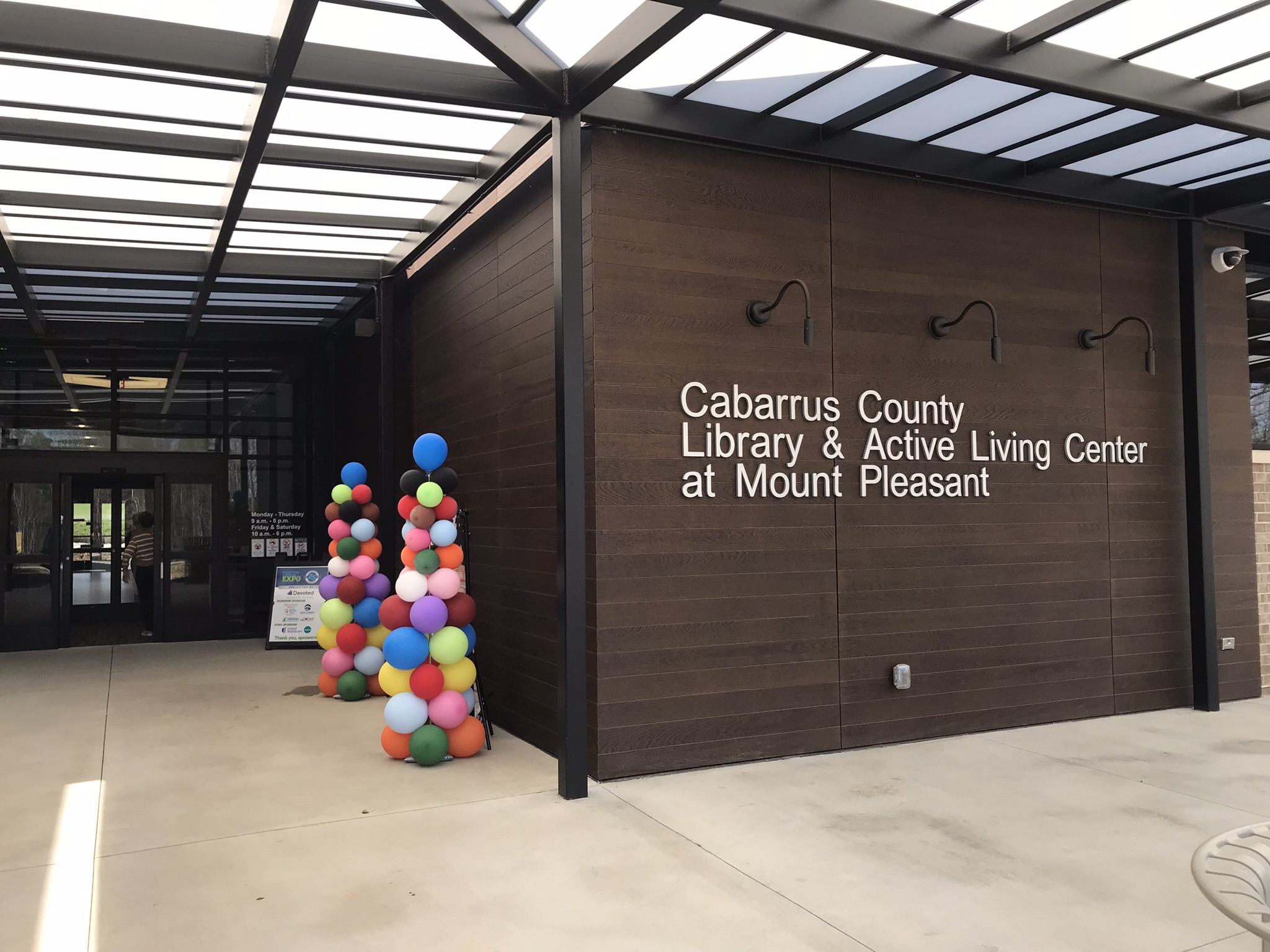
I had two delightful experiences last Thursday at the first day of the second annual Mt. Pleasant Literary Festival in Mt. Pleasant, North Carolina. The public library staff and The Friends of the Mt. Pleasant Library are real go-getters!
Mt. Pleasant is a quiet little town, more of a village than a town originally settled by German immigrants in the mid-1700s. It is in eastern Cabarrus County.
The Bernheim Literary Society (named for the literary society for the students of Mont Amoena Female Academy, located in Mt. Pleasant from 1859 until 1927), The Friends of the Mt. Pleasant Library, the Cabarrus Arts Council, and individual and commercial sponsors make this annual literary festival possible for the public – free of charge.
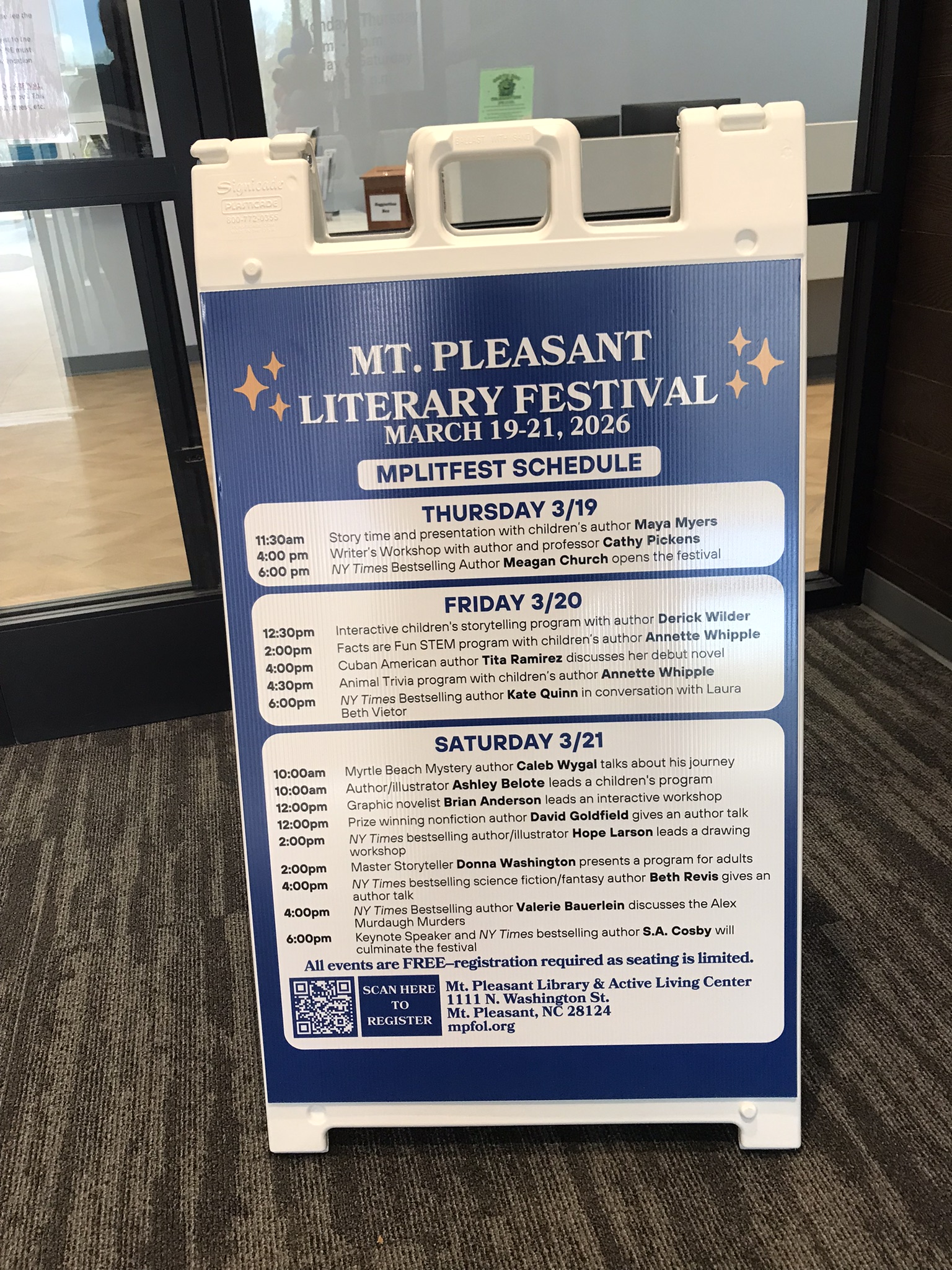
Schedule for the 3-Day event
This second annual event attracted such authors as Kate Quinn and Meagan Church! I understand some authors have already been signed on for next year’s festival. I can’t wait to find out who’s coming!
I was too late registering for Kate Quinn’s presentation. Lesson learned for future festivals!
The first event I attended on Thursday was a 90-minute Writer’s Workshop with author and professor Cathy Pickens. She has an impressive history as a lawyer, a professor, and a writer, so I was privileged to have the opportunity to finally attend one of her workshops.
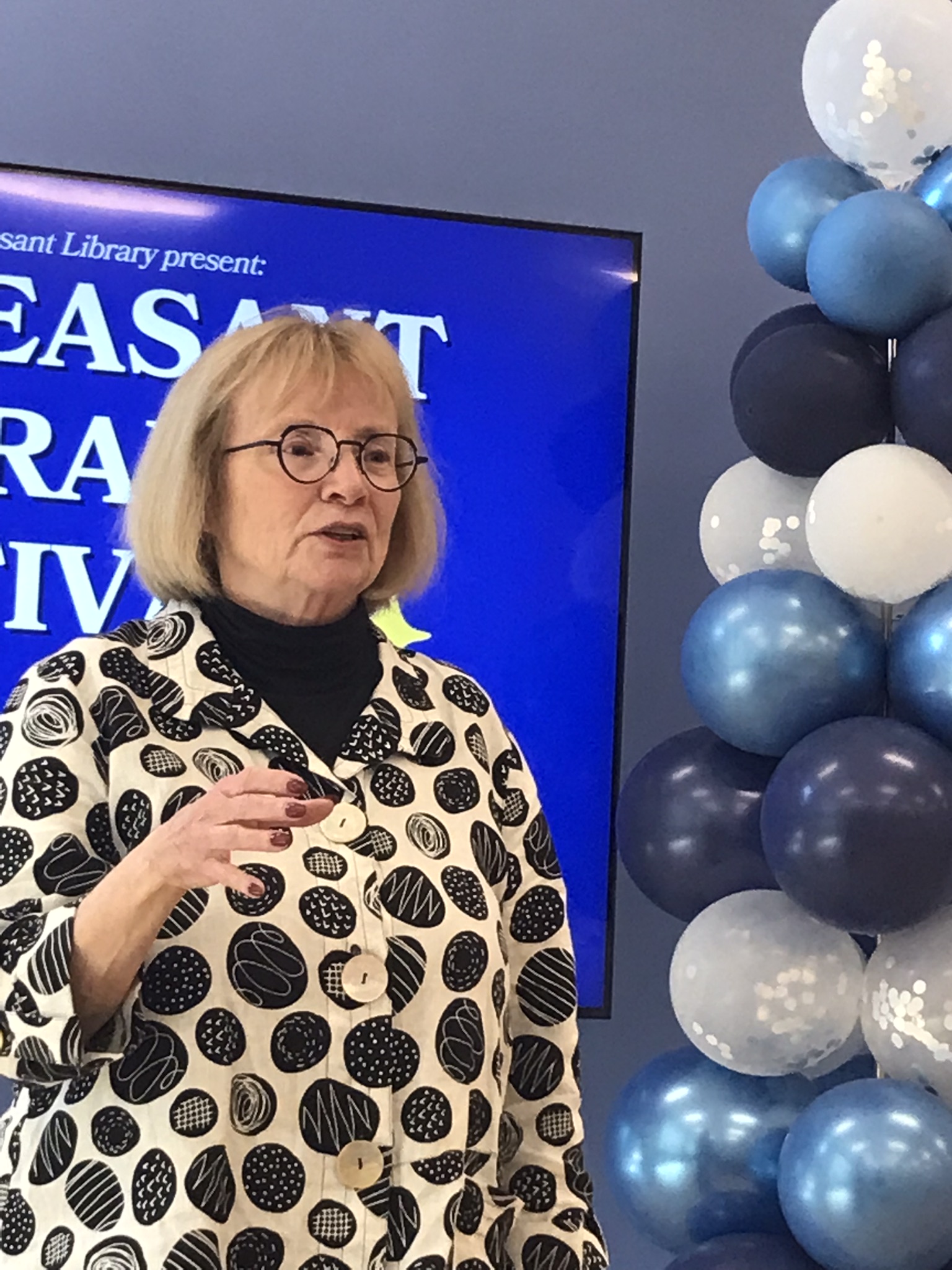
Cathy Pickens, teaching a Writer’s Workshop at the Mt. Pleasant Literary Festival, March 19, 2026
She led us through a systematic series of writing prompts to help us clarify the roots of our creativity and why we want to write what we want to write.
Workshop attendees were in various stages along our writing journeys. The first thing she had us write about was our “pinprick.” What was the pinprick that set in motion my desire to write the story I want to write? I knew immediately what the pinprick was for the series of historical novels I’m writing. It was a banjo from Africa.
(That’s all I will tell you about that banjo for now. You will need to continue to read my blog posts and subscribe to my e-newsletter if you want to find out later just how that came about. It seemingly came “out of the blue,” but maybe it is deeply connected to the historical fiction I want to write.)
Back to the workshop… I was able to quickly write an entire page about that banjo as my inspiration or “pinprick” as she called it.
Ms. Pickens talked about how it was sometime between the ages of eight and eleven that something happened that influenced the paths our lives take. Whether or not we are aware of it at the time, something happened that set us on a path to writing. Our worldview begins to shift, and you start to try to figure out what you want to be when you grow up. She asked us to write down everything we could remember from those years of our life.
I was surprised at how many things I remember and in minute detail and how each of those incidents made me feel. As I wrote, it became clear to me that my lifelong interest in the colonial era of United States history and what unbeknownst to me put me on the path to majoring in political science and minoring in history in college started when I was in Miss Judy Ford’s fourth grade class at Harrisburg School in Harrisburg, North Carolina.
Miss Ford made Jamestown and Colonial Williamsburg come alive to us, although we lived a long way from those places and had no hopes of visiting them in the foreseeable future. I’ll never forget that Colby Cochran’s father, Dan, built a pillory for the class so we could in some small way experience what that public form of punishment and humiliation was like for our nation’s colonial ancestors.
As you can see, Ms. Pickens’ questions and writing prompts triggered a flood of memories for me and helped me piece together why in later life I want to write historical fiction.
She talked about how creative young children are, but usually when we are in our teens peer pressure kicks in and most of us begin to stifle our creativity. We’re told to pursue occupations or fields of study to lead us to a way to make a living.
Being a writer is not the occupation one should choose in order to make a living!
CREATE! by Cathy Pickens
Ms. Pickens talked about the writing process. Different participants in the workshop shared what their process is. She asked us what holds us back in our writing. (No one was pressured to voice their answers to any of her questions; it was a very relaxed and welcoming atmosphere.)
Ms. Pickens recommended that we set a goal to write a certain length of time or a certain number of words each day. Even if it’s only 15 minutes, slow and steady seemed to be her advice.
I recently revealed in my February 27, 2026 blog post (My new discovery: I’m a binge writer!) that I’d had the epiphany that I am a binge writer when it comes to my novel(s). I find it easy to work on a blog post or two each day, but when it comes to writing fiction I have not been able to discipline myself to write every day of the week.
Ms. Pickens advised us to be very specific in categorizing what we are writing. She pointed out that the Library of Congress categorizes books in more specific details than the Dewey Decimal System. She suggested that we look inside the front covers of books in the genre in which we write to familiarize ourselves with how the Library of Congress labels books.
She suggested that instead of asking a writer, “How long did it take you to get your book published?” a better question is, “How long did it take you to get your book publishable?”
The road to traditional publishing is typically years and years long.
Ms. Pickens ended by saying that the secret to success is discipline – time, place, and goal. To read more about Cathy Pickens, visit her website, https://cathypickens.com/. She has written a Blue Ridge Mountains series of cosy mysteries, a book of Charleston mysteries, nine true crime books, and CREATE! — a book for writers.
Tune in tomorrow for my blog post about author Meagan Church’s presentation.
Janet
The government should be afraid of its citizens, not the other way around.
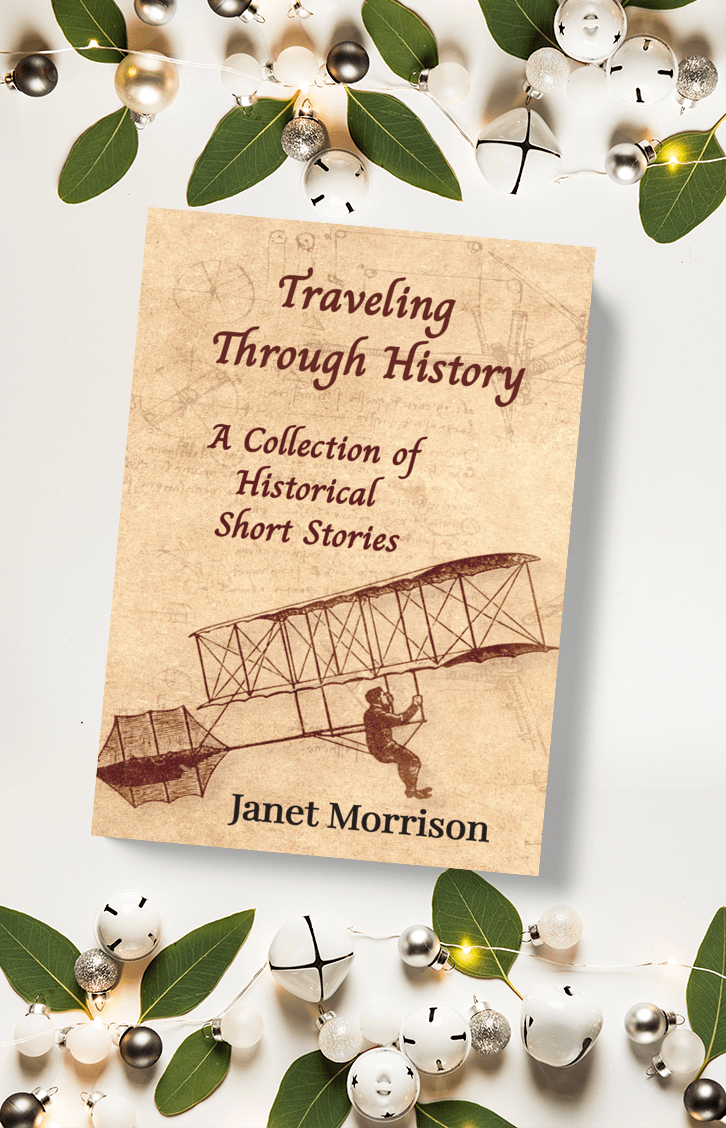
The eleventh story in my new book, Traveling Through History: A Collection of Historical Short Stories, is about a fourteen-year-old foster child who is a veteran at changing homes and foster families.
Some foster children only have a trash bad to put their belongings in. Photo by Sven Brandsma on Unsplash
In “Secrets of a Foster Child,” Lorraine finally found a family she felt a part of in 1948, just three years after World War II ended.
Things did not go as hoped, but she just might find dignity in a simple suitcase.
The dignity of a simple suitcase. Photo by Shamblen Studios on Unsplash
In 2001, the congregation of the church I am a member of contacted the county’s Department of Social Services in search of a hands-on project. When we were told that many foster children have nothing but a garbage bag to carry their belongings in to a foster home, we knew we had found a project we could get excited about.
We collected enough new and like-new suitcases to make sure every foster child in the county had a suitcase. We hoped that would help them no longer think of themselves as “throwaway children.”
As you can see, if you have been reading my book or reading this series of blog posts about the stories in my book, I get my inspiration from many sources.
In case you have missed any of the previous blog posts about the stories in the book, here are the links:
Thank you for reading my blog and supporting my writing. Look for Traveling Through History: A Collection of Historical Short Stories on Amazon or at your favorite independent bookstore.
Where to find my book of historical short stories
If you cannot find it locally, you can visit my website, https://www.janetmorrisonbooks.com, click on the book, then click on the Bookshop.org button. Through Bookshop.org you can order books from any independent bookstore in the United States. As an affiliate, I will make a commission from the sale of any book purchased through my website. Thank you!
Janet
The government should be afraid of its citizens, not the other way around.
As I write this on the night of January 20, 2026, Trump is on his way to the World Economic Forum in Davos, Switzerland. (In fact, news came in as I wrote this that Air Force One had been turned around due to an electrical problem. Trump will be moved to a back-up plane.)
This gathering includes many NATO countries – the very NATO countries he threatened with tariffs this week. He will, no doubt, attempt to dazzle them with his perception of the current economy of the United States. Those of us who live here, know better. The picture he painted today in his news conference was far-removed from reality. He will embarrass us in Davos. He would embarrass himself, but that is not possible.
The next couple of days will not go well. Trump never comes across as Presidential here at home or on the world stage. Will he further insult our allies at this forum? Probably. That’s all he knows to do. At the very least, he will probably make fun of French President Emmanuel Macron’s eye condition. Trump has a record of belittling people with medical problems.
In today’s news conference, he finally feigned regret that an ICE agent shot and killed Renee Nicole Good in Minneapolis. Did you hear why he pretended regret today? Because someone told him that Ms. Good’s father was a Trump supporter.
I cannot remain silent as I see my government attack the least of these among us. As a Christian, it is my responsibility to speak up for the people who have no voice or whose voices are being ignored. As the President claims ICE agents are only going after “the worst of the worst,” my eyes and ears know better.
American citizens are being accosted and detained. One has already been killed on a street in Minneapolis. My government has not come after me yet, but if I wait until it does, there will be no one left to speak up for me.
Without further adieu, here is my planned blog post for today
Today’s post is about the eighth story in my short story book. “A Letter from Sharpsburg,” is a fictitious letter from an imaginary Confederate soldier who had fought in the Battle of Sharpsburg in Maryland during the American Civil War.
Photo by John Kostyk on Unsplash
As I explain in the book, it was general practice for the Union to name battles in the Civil War for a nearby physical feature, such as a creek. It was the practice of the Confederacy to name battles for the nearest town. This has led to confusion for more than 160 years.
This battle took place along Antietam Creek, near the town of Sharpsburg. Therefore, the Union called it the Battle of Antietam and the South called it the Battle of Sharpsburg.
Another example is the First and Second Battles of Bull Run (Union name) being called the First and Second Battles of Manasses in the South. It seems to me that we studied the Civil War almost every year in elementary school, but I don’t recall ever being told how or why the North and the South had different names for the same battles. Knowing the reason behind this practice would have been helpful.
I patterned this fictitious letter after letters one of my great-grandfathers wrote to his parents and sister during the Civil War. It was common in that day for a soldier to begin a letter with the words, “I seat myself and take pen in hand to write you a few lines.”
I chose this battle because more Americans were killed on the battlefield that day than on any other day in American military history. It is said that 2,100 Union soldiers and 1,550 Confederate soldiers lost their lives on September 17, 1862 near Sharpsburg, Maryland. Nearly 10,000 Union soldiers were wounded and more than 7,700 Confederate soldiers were wounded there that day.
In my book, I included author’s notes, questions for consideration, and a bibliography of the sources I used in writing “A Letter from Sharpsburg.”
You can find the paperback at Second Look Books in Harrisburg, NC, or ask for it at your local independent bookstore. Bookstores can order it from IngramSpark. It is supposed to be available at Barnes & Noble, but I’ve been told it is not necessarily in stock in the brick-and-mortar stores.
If you purchase my book and enjoy it, please give it a rating on Amazon and write a brief review of it for that site or Goodreads.com. Also, recommend it to your friends!
Word of mouth publicity is the best! Thank you!
Keeping me honest
My readers continue to try to keep me honest, which is my goal as a writer of historical fiction. Facts matter to me. Facts form the basis for my writing.
I mentioned in an earlier blog post that it had been brought to my attention that I have the wrong date in my book for the Battle of Kings Mountain. Yesterday, a friend clued me in that in “Ghost of the Battle of Guilford Courthouse: An American Revolutionary War Ghost Story,” I have someone calling 911 to report an incident to the police in 1963.
Unfortunately, 911 emergency service did not come into being until 1968. In my flimsy defense, I will point out that I originally had the story set in 1973. When I changed it to 1963, I failed to catch my 911 error.
I appreciate my historical errors being brought to my attention. This will help keep me on my toes as I write my novel. If you find another historical error in my book, please let me know.
Janet
The government should be afraid of its citizens, not the other way around.
The fictional character I’m introducing to you today is George. He is a slave in South Carolina in the mid-1700s in the third story in Traveling Through History: A Collection of Historical Short Stories, “To Run of Not to Run.”
When you meet George, he is a young boy. He and his father, who was born in Senegal, have just been sold and are being taken from Camden to the Waxhaws.
Photo by Asso Myron on Unsplash
Here’s an excerpt from when George and his father are in the back of a wagon being taken to their new living situation in the Waxhaws:
“George sensed his father was tiring of his questions, so he shut his eyes tight and tried to turn off his mind. But the harder he tried not to think, the more questions flooded his head. The ones that kept crowding out all the others were ones he knew not to ask because he was afraid his papa did not know the answers. When will we see Mama again? When are we going to be free?“
You will follow George as he has a lot to learn and grows up fast. His new master’s son is about his age. Therein forms a dynamic that will ultimately be further developed in the historical novels I am planning and writing.
Remember George. He is a character who grew out of my imagination and has never let me go. I don’t think he will let you forget him either.
Getting into the skin, brain, and soul of a young boy with black skin who is living as a slave in America in the mid-1700s allowed me to stretch my imagination in ways that my other fictional characters did not.
Where to purchase Traveling Through History: A Collection of Historical Short Stories
You can find my new short story collection on Amazon in e-book and paperback. You can find the paperback at Second Look Books in Harrisburg, NC, or ask for it at your local independent bookstore.
Hurricane Helene Recovery Update
I haven’t offered a Hurricane Helene recovery update since my November 3 blog post.
As of Friday, December 5, 25 roads in North Carolina were still closed due to Hurricane Helene’s wind, flooding, and landslides on September 26, 2024. That is a decrease of six roads since a month ago. There are three U.S. highways, two State highways, and 20 state roads closed more than 14 months after the hurricane.
In Tennessee… as of Tuesday, December 2, U.S. 321in Elk Mills, in the Watauga Lake area, is officially reopened since being heavily damaged by the hurricane.
Sections of the Blue Ridge Parkway in North Carolina will remain closed until at least next fall, and I-40 at the Tennessee line will continue to be just two lanes at 35 miles-per-hour for a couple more years while five miles of the highway are being rebuilt in the Pigeon River Gorge.
The following success story was cut and pasted from a U.S. Forest Service – National Forests in North Carolina Facebook post on December 3, 2025: “Two decades ago, after Hurricane Frances and Ivan, our ecosystems team saw how erosion could unravel an entire ecosystem. Brady Dodd, hydrologist for the National Forests in North Carolina, developed and executed a plan to reshape eroded riverbanks, plant riparian flood resistant species and add erosion prevention structures. After Helene arrived, the banks held, and the water ran clear due to the work that had been done years prior. This story serves as a model to our forests as we continue to build resilience into each of our Helene recovery projects.”
We’ve gone from fall leaf season to snow ski season in western North Carolina since my last update. Be aware that you might run into a detour, and you can’t drive the full length of the Blue Ridge Parkway.
If you visit, please drop by Blue Ridge Books in Waynesville and Highland Books in Brevard. Tell them I sent you. They sell my books!
Francisco Bravo Cabrera graciously featured me and my new book, Traveling Through History: A Collection of Historical Short Stories on his e-zine in Spain (LatinosUSA (English Edition/Masticadores) this morning at 8:00 a.m. Madrid Time!
Francisco Bravo Cabrera is a bit of a Renaissance man. He is an artist, a poet, a writer, and a musician. He is based in Valencia, Spain, but has also lived in Miami, Florida. His blog, JaZzArt en Valencia, can be found at https://paintinginvalencia.com/, and his work can also be found on https://www.fineartamerica.com.
I cut and pasted Francisco’s magazine article about my new book below, but two of the photographs did not copy. Here’s the link, if you want to see the original for yourself: https://latinosenglishedition.wordpress.com/?p=8436.
New Historical Fiction by Janet Morrison (Editor Francisco Bravo Cabrera)
(Photo: Janet Morrison/provided by Janet Morrison)
As a big fan of history and novels, there is no genre that fascinates me more than «historical fiction,» therefore I would like to feature today a historical fiction writer from North Carolina (US), Janet Morrison, who has just released a new book, Traveling Through History: A Collection of Historical Short Stories. I am sure it can easily be found in Amazon or in your neighbourhood book store.
I have asked Janet to bring us a synopsis of the 13 stories included in the book. And although she thought it a bit tricky, I think she has covered them in a concise way.
Traveling Through History: A Collection of Historical Short Stories, by Janet Morrison, will transport you from 17th century Scotland to 20th century America! The more than one dozen short stories are set in Scotland, Pennsylvania, Maryland, Virginia, North Carolina, and South Carolina.
Each story includes author’s notes, so you will learn what inspired the story, how the story is based in history but is a work of fiction.
There are stories set in Colonial America and the American Revolutionary War Era. One story is the fictitious letter an American Civil War soldier wrote to his parents. Another story follows a slave who contemplates escaping. A couple of the stories are set in the southern Appalachian Mountains – one during a blizzard in the 1870s and involves a dog and a bear during The Great Depression. There is one ghost story. In another story, a girl in foster care discovers the dignity a suitcase can bring. The final story in the book is told by an old farmhouse that remembers the family it sheltered in the 1800s.
+++
Janet Morrison’s educational background is in political science and history. She has worked as a local government administrator, a travel agent, and a newspaper columnist. She enjoys writing historical fiction and local history at her home in North Carolina. Her vintage postcard book, The Blue Ridge Mountains of North Carolina was published in 2015. Since then, she has published two local history books, a devotional book, and a cookbook. Janet uses her blog, https://www.janetswritingblog. com, as a platform to write about the books she reads, events in history, and politics. The most rewarding thing about her blog is that it has made it possible for her to make friends around the world. When she has spare time, she loves researching her genealogy and learning to play the dulcimer. Be sure to visit https://www. janetmorrisonbooks.com to learn more about her books and to subscribe to her newsletter.
+++++
I would like to thank Janet so much for her participation in today’s episode and to remind her that she is welcome here any time. I am sure that we will all enjoy reading this historical fiction book as well as the other books she has written.
AND
If you are a writer, a poet or an artist (in any of the arts) and would like to appear in our magazine LatinosUSA (English Edition), please contact me, Francisco Bravo Cabrera, editor: ArribaPamplona@gmail.com
Today I am introducing you to the main character in “You Couldn’t Help But Like Bob,” the second story in my new book, Traveling Through History: A Collection of Historical Short Stories.
Genealogy has been a hobby of mine since I was a young adult. Robert Dooling is the most colorful of my ancestors that I have found so far. He immigrated from Ireland to America in the early 1700s and settled in Virginia.
Some people would be embarrassed at discovering one of their great-great-great-great-great-grandfathers was on the wrong side of the law in Colonial Virginia, but that just made Robert Dooling that much more interesting to me. To my way of thinking, that’s a lot better than just knowing an ancestor’s birth and death dates.
I devoured the colonial court records, eagerly searching for every tidbit or reference to Robert. As far as I know, he never did anything too serious. Perhaps his worst offence was “abusing” a Justice of the Peace. (I’m not clear on what constituted “abusing” a Justice of the Peace in Tappahannock, Virginia in the early 18th century.
I had fun creating a fictional story about this man I only know on paper, but his blood runs through my veins and I’m grateful to know more about him than just his name.
Here are the opening lines in the story:
“You couldn’t help but like Bob. Unless he owed you money. Unless you were a Justice of the Peace in Essex County, Virginia in the early 1700s.
“Even so, you just couldn’t help but like Bob.
“To say Bob was irritating would be an understatement, but you couldn’t stay made at him for long. Unless he owned you money or tobacco. Unless you were a Justice of the Peace, tired of seeing him dragged into your court room.”
I hope you will enjoy reading the story as much as I enjoyed writing it.
After you read “You Couldn’t Help But Like Bob” in Traveling Through History: A Collection of Historical Short Stories, you’ll know more about him. I hope you will like him, too!
Today I’m introducing you to what prompted me to write “The Tailor’s Shears,” the first story in my new book, Traveling Through History: A Collection of Historical Short Stories.
Photo by Matt Artz on Unsplash
This was a story I wrote in 2001 soon after I completed a fiction writing course in the Continuing Education Department at Queens University of Charlotte. I had edited it over the years as I learned more about the craft of writing fiction. The fact that I took a fiction writing course is in itself an interesting story.
I had never read a lot of fiction. I’d always read history books and probably didn’t read any fiction in college other than what was required in English classes. Being a political science major with a history minor, fiction wasn’t on my radar. Imagine my sister’s surprise (or should I say shock?) when I told her I was taking a course in fiction writing! Needless to say, I had a lot to learn.
Those of us who completed the course were given the opportunity to join Queens Writers Group. It was a congenial group with a range of talents. When it was decided we would self-publish a collection of short stories, I jumped in. Self-publishing and print-on-demand were new to all of us and to the world. We felt like we were trailblazers!
It was decided that each of us would write a story based on an item found in the castle keep at a fictitious Lochar Castle in Scotland. Each of us had to choose an item we wanted to write about. No other instructions were given.
In doing family research and visiting Scotland, I had learned about the Covenanters. I knew I wanted to work that into my story, and then I had to figure out the item I would write about. In a nutshell, the Covenanters were a group of Presbyterians in Scotland who signed the National Covenant in 1638 to affirm their opposition to the Stuart kings’ interference with the Presbyterian Church of Scotland. The signers and the people who agreed with them were Covenanters. Many of them were executed by the government.
I was fascinated by the sacrifices the Covenanters made, especially after seeing the plaque that marks the spot in The Grassmarket in the Old Town section of Edinburgh where many Covenanters were hanged for their religious beliefs. (See a photo at http://www.covenanter.org.uk/grassmarket.html.) I also visited Greyfriars Churchyard where the National Covenant was signed. Some of them signed their names in blood. It was all an eye-opening experience to learn that part of my Presbyterian background!
Somehow, with that history in my head, I decided to write about a tailor who was a Covenanter and it was his shears that would be found later in the Lochar Castle keep. The story is written from the point-of-view of Sir Iain Douglas, the patriarch of the Douglas Clan who lived in the castle at the time of the tailor’s shears ended up in the castle. In the story, Sir Iain shares his recollections of his tailor, Alexander Montgomery, and how Mr. Montgomery was persecuted for being a Covenanter.
Here’s an excerpt from the story:
“‘Just why is it the Covenanters cannae compromise and make peace with the King? Back forty years ago in my military days, I thought I had a fairly good idea of what the Covenanters stood for, but with the passage of time I have grown somewhat weary of it all and wonder if the present-day Covenanters even know what they’re fighting for or against.’
“Montgomery’s face turned red as a beetroot and his blue eyes blazed.”
I hope you will be transported back to the 17th century in Scotland as you read “The Tailor’s Shears” in Traveling Through History: A Collection of Historical Short Stories, by Janet Morrison. You can find my book on Amazon, if it is not available at your favorite independent bookstore.
Traveling Through History: A Collection of Historical Short Stories, by Janet Morrison
Sometimes the best-laid plans just don’t pan out. Such is life.
This is Janet’s Writing Blog, so today I start my post with a behind-the-scenes glimpse into my life this week as a self-published writer.
If you read my blog on Tuesday, Traveling Through History is released today!, you know I was celebrating the release of the e-version of my new book, Traveling Through History: A Collection of Historical Short Stories, but I mentioned that the paperback was not being released that day as planned.
Traveling Through History: A Collection of Historical Short Stories, by Janet Morrison
I thought I had everything in place for the paperback’s release worldwide by Ingram-Spark.
I sent handwritten notes to various independent bookstores along with a detailed information sheet about the book. I told them they would be able to order the book from Ingram-Spark and have it in stock in their stores on November 4 or very shortly thereafter.
The e-book is available – and I’m over the moon about that! But as of today, I still don’t know what the hold-up is for the paperback. Perhaps I will learn something today.
I decided to go ahead and self-publish the paperback on Amazon in the United States, and I expect it to be available here on November 11. I hope Ingram-Spark will release it for worldwide distribution next week – which will include Amazon in countries other than the U.S. — but that remains to be seen. Bookstores will not order it from Amazon. I needed Ingram-Spark for that.
Such is the life of a self-published author! This glitch is not the end of the world. It was just something I had hoped to get checked off my to-do list on November 4.
Thank you to those of you who have congratulated me on the release of the e-book. And a huge thanks to those of you who have purchased the book! I understand that Ingram-Spark has distributed the e-book to Amazon.UK, so I assume it is also available on the worldwide e-markets of Amazon.
Meanwhile, in Washington, DC…
The government shutdown continues as I write this on the night of November 6. One result of the shutdown is that the air traffic controllers and TSA agents who keep the flying public safe are not being paid. They are expected to show up for work and give their undivided attention to all the details their jobs entail… without pay.
To try to force Congress to do its job and pass a federal budget, the White House gave the airlines less than 24 hours’ notice that they had to start cancelling flights at the forty busiest airports in the country. A certain percentage of flights must be cancelled with each passing day beginning today.
But none of this will interfere with Trump’s weekly trip to play golf in Florida.
Since an alleged “businessman” is President of the United States, it baffles me that the order came from the White House (or what’s left of it) with no regard for the chaos such a sudden order will cause airlines, airports, passengers, and the employees of the airlines and airports.
It appears “President Marie Antoinette” knows no more about business than he knows about a democratic government. Throwing a Great Gatsby-themed party at his mansion in Florida last week while federal employees are not receiving paychecks is the height of being tone deaf. He is completely out-of-touch with the average American.
President Antoinette says commercial aviation in the U.S. is “100% safe,” even though air traffic controllers work without pay and some have had to take a second job and are working exhausted.
And why was a large “The Oval Office” sign installed at what’s left of the White House this week? Can President Antoinette not find his office?
Yesterday, the President announced that he will force the price of weight-loss drugs down because they are too expensive. Dr. Mehmet Oz, head of the Medicare and Medicaid programs announced that Americans will lose 135 billion pounds before the mid-term elections next November. I’m not good at math, but the population of the United States is around 343 million. That means every American would have to lose 394 pounds to make Dr. Oz’s statement true.
Something is very, very wrong in Washington, DC, and it is being denied by the members of Congress and by what’s left of the White House.
A cheaper Thanksgiving Dinner?
Trump and various Republicans in Congress have bragged this week that they talked to the CEO of Walmart and he told them that everyone’s Thanksgiving Dinner will be 20% cheaper this year than it was last year while Joe Biden was US President.
What Trump and none of the Republicans have explained is that the Walmart CEO based that on the fact that this year Walmart decreased the number of items it considers to be a Thanksgiving dinner. Slick move, Walmart!
Of course, Trump has changed the 20% to 25% because that is what he does. He exaggerates or decreases statistics in whichever way serves his purpose.
The Walmart CEO’s hocus-pocus with the facts has led many Republican lawmakers who have never set foot in the grocery store to announce that grocery prices have plummeted since Trump took office on January 20, 2025. They really do think American citizens are stupid and will believe the politicians instead of their own wallets.
Until my next blog post
I will be caring for my sister as she recovers from surgery over the coming weeks, so I might not blog as often as I have in the recent past. We expect everything to go smoothly, but I will have added responsibilities vying for my time and attention.
The time you take to read my rants and blog posts is appreciated more than you know. Your “likes” and comments are what keep me going.
The First Amendment to the Constitution of the United States of America
I’m grateful that I still have the freedom of speech guaranteed to me by the First Amendment of the U.S. Constitution. I am very aware that some of the people reading my blog in other countries cannot imagine having the freedoms we have in America. Even though our form of government is under attack from within, I believe there are enough of us who love democracy to save our country and put things right someday.
I planned to write one of my #OnThisDay history blog posts today about the Treaty of 1818, which established the 49th parallel as the Canada-United States border from the Great Lakes, west. However, I couldn’t get very excited about that topic.
I’m sure it was a big deal in 1818, during President James Monroe’s first term in office, and I’m sure it meant a lot to the people in the border states and provinces in the two countries. I just couldn’t come up with much to say about it.
I’ll just say, “I think I can speak for all Americans when I say, ‘We love you, Canada.’”
With that said, I will jump into what I am excited to write about today: a book I finished reading Friday night.
The Weight of Snow and Regret, by Elizabeth Gauffreau
If you regularly read my blog, you know I used to blog the first Monday of each month about the books I read the previous month. Some months I read so many books, it took two posts to write about all of them.
Then, January 2025 came along. I read The Frozen River, by Ariel Lawhon, in January, but then I hit a dry spell. I became so distracted by politics that I found it impossible to find a novel that I could concentrate on long enough to get interested, much less finish reading.
Then came October, and the release of The Weight of Snow and Regret, by Elizabeth Gauffreau. Historical fiction is my “go to” genre for reading and writing, and I had yearned all year for another book that would grab me like Ariel Lawhon’s book.
The Weight of Snow and Regret, by Elizabeth Gauffreau
The Weight of Snow and Regret is written in a way that would not let me go. Ms. Gauffreau was inspired to write the book after learning about the Sheldon Poor Farm in Vermont, which closed in 1968.
The book is expertly researched, which made it possible for the talented writer that Ms. Gauffreau is to infuse every scene with a level of authenticity that puts the reader in the story.
Each resident at Sheldon has a distinct personality and way of speaking that makes them easy to remember and tell apart.
The main character, Hazel, is matron at the Sheldon Poor Farm. Her husband runs the farm. The reader can’t help but be drawn to Hazel as she has the overwhelming job of cooking, cleaning, and in all ways caring for the residents of this very real poor farm. She has a heart for the job, and as her backstory is revealed the reader learns why she is the way she is.
Every time I thought I could close the book, I found myself plunging into the next chapter to see what was going to happen next. Every time I thought life couldn’t get more difficult for Hazel… it got more difficult. Somehow, Hazel kept her sense of humor, and that comes through in the book.
This novel is set in the 1920s, 1940s, and 1960s. I usually don’t enjoy novels that move back and forth between decades, but Ms. Gauffreau pulled this off masterfully. I think it was the perfect way for this story to be told.
The characters in The Weight of Snow and Regret will stay with me for a long time. It’s that kind of story.
There were “poor houses” when I was a child for people who were too poor to live anywhere else and had no relatives willing to take them into their homes. This novel made me stop and wonder where those people go now. I guess they are the people who live under bridges on the streets and highways in the cities.
If you like to read historical fiction, I highly recommend The Weight of Snow and Regret, by Elizabeth Gauffreau.
Hurricane Helene Update
As of Friday, 33 roads in North Carolina were still closed due to the September 26, 2024, Hurricane Helene. That count included five US highways, two state highways, and 26 state roads, meaning two state roads opened since my last blog update two weeks ago.
Of course, sections of the Blue Ridge Parkway in North Carolina will remain closed for another year or more, and I-40 at the Tennessee line will continue to be just two lanes at 35 miles-per-hour for a couple more years while five miles of the highway are being rebuilt in the Pigeon River Gorge.
But western North Carolina is open for business and tourists this fall. Just be aware that you might run into a detour, and you can’t drive the full length of the Blue Ridge Parkway.
January turned out to be a good reading month for me, and I have much to report on Hurricane Helene recovery in western North Carolina. I’ll jump right in and tell you about some of the books I read.
The Frozen River, by Ariel Lawhon
The Frozen River, by Ariel Lawhon
My sister recommended that I read this historical novel. Finally, when it was chosen as the January read for the book club we’re in, I checked it out. I immediately fell in love with the way Ariel Lawhon writes.
The novel is set in Maine in the 1700s. The story switches from one decade to another, not necessarily in chronological order. That’s not my favorite way to read a story, but this one worked better for me than others I’ve read.
The story is inspired by Martha Ballard, a real-life midwife in Maine at that time. As Lawhon explains in her author’s notes at the back of the book, she did take creative license in some areas to make it a more manageable story. That said, the book is well-researched and in the author notes Lawhon explains why the book sometimes deviates from the facts. After all,… it is fiction!
The novel includes murder, rape, attempted rape, young love, vengeance, lying, under-handed business dealings, the unique lifestyle along a river that freezes over in winter, and the birth of numerous babies. There is conflict between Martha Ballard and a young, inexperienced physician who moves to the town. There are court cases, and there are judges of questionable character. There is a lot going on in this novel!
As an aspiring novelist, I plan to read The Frozen River again just to study how it is written.
I highly recommend The Frozen River to anyone who likes to read historical fiction set in 18th century America.
The Lion Women of Tehran, by Marjan Kamali
The Lion Women of Tehran, by Marjan Kamali
This novel follows the friendship of two people through the 1950s, 1960s, and 1970s against the backdrop of what was happening in Iran. Iran went from being under the rule of the Shah to being under the rule of the Ayatollah Ruhollah Khomeini.
For those of you who might not have lived through those three decades… It was under the Ayatollah Ruhollah Khomeini that women lost all their rights. The radical Islamic view that women are put on earth for one purpose – to wait on and obey men and bear their children – is what Iran has turned into. They are not to be seen. It wasn’t enough that they had to wear the hijab in public. As of a couple of weeks ago, windows in their homes through which it would be possible for a man to see them were outlawed. Let that sink in!
Back to the novel… In The Lion Women of Tehran, we see two young girls become friends although Ellie is from a privileged family and Homa is from a poor family. Ellie, in fact, defies her mother’s wishes that she not befriend someone from the poor part of town.
Ellie and Homa share their dreams of attending college and becoming professionals in a modern Iran. Homa even aspires to get a law degree and someday be a judge. This is a reasonable aspiration for a girl in Iran at that time. Girls are seeing women have jobs they\ had been excluded from until the somewhat enlightened time of the early 1960s.
The book follows the ups and downs of Ellie and Homa’s friendship and the challenges of the cultural and governmental restrictions on women and free speech.
Spoiler Alert: When the novel comes to an end, one of the two – women now – has escaped to the United States. The aspiring lawyer has been raped in prison for protesting injustice and she reaches out to her now-estranged friend in America to help her get her teenaged daughter out of Iran.
The Lion Women of Tehran had an especially chilling affect on me because I was reading during the first week of Trump’s second administration when we were witnessing what it looks like when a country’s leader daily pushes the limits of the power of the office he or she holds – even in a democracy.
This is the second novel I’ve read by Marjan Kamali. In October 2019, I read The Stationery Shop. (See my November 4, 2019 blog post, A New Favorite Novel? in which I told how impressed I was with Marjan Kamali’s writing.)
How to Stand Up to a Dictator, by Maria Reesa
How to Stand Up to a Dictator: The Fight for Our Future, by Maria Reesa
I wish I could take credit for reading I Was Anastasia and How to Stand Up to a Dictator in the same month, but I was at the mercy of the waitlists at the public library. Sometimes things just fall into place through no effort of our own!
After hearing Maria Reesa interviewed on NPR and learning that she had written a book, I immediately got on the waitlist for it at the public library.
Maria Reesa is from The Philippines. She was awarded The Nobel Peace Prize in 2021 for her courageous work at a journalist.
In her book, How to Stand Up to a Dictator, Reesa writes from her own experience. She was arrested for reporting the truth – a truth that ex-President Rodrigo Duterte of The Philippines did not want people to know.
Meticulously written, the book points out how in many ways what happens in politics in The Philippines eventually happens in politics in the United States. That was a revelation for me, but the examples she gave painted a compelling picture.
Near the end of the book, Reesa gives the 10-Point Plan to Address the Information Crisis that she and fellow-2021 Nobel Peace Prize recipient Dmitry Muratov presented at the Freedom of Expression Conference, Nobel Peace Center, Oslo, Norway, on September 2, 2022.
In a nutshell, points 1-3 call on transparency and a consideration for human rights by tech companies, right to privacy of citizens to be beefed up, and public condemnation of attacks on journalists.
Points 4 through 9 are directed at the European Union, and point 10 calls on the United Nations to “Create a special Envoy of the UN Secretary-General focused on the Safety of Journalists (SESJ) who would challenge the current status quo and finally raise the cost of crimes against journalists.”
Reesa calls on young people to put their phones down and focus on the people they love. She writes, “You find meaning by choosing where to spend your precious time.” We can all benefit by taking that to heart. She told a high school audience that they can’t find meaning on social media.
She writes about how social media can easily be hijacked by individuals and elected officials with ill intent, and how misinformation spreads like wildfire while fact-checking and retractions never spread as quickly or easily as lies.
Reesa says if the rest of the world wants to know what unbridled social media will do to their country, all they need to do is look at what happened in The Philippines.
In 2012, Reesa cofounded a digital only news website in the Philippines called Rappler. Rappler has exposed corruption and manipulation in government and in technology companies.
She warns, “the Philippines is ground zero for the terrible effects that social media can have on a nation’s institutions, its culture, and the minds of its populace. Every development that happens in my country eventually happens in the rest of the world – if not tomorrow, then a year or two later.”
She goes on to say, “This book is my attempt to show you that the absence of rule of law in the virtual world is devastating.” She warns us, “Don’t become a Monster to Fight a Monster. Embrace Your Fear.”
Blogging for Authors, by Barb Drozdowich
Blogging for Authors, by Barb Drozdowich
Reading this book made me aware of some ways I’m falling down on the job when it comes to my blog. The author says that an author’s blog is “… by far the most important method of communicating with your readers.” She also says, “… you want readers to be able to Google the genre they read and find your site in a search.”
Since I write local history and historical fiction, there’s a slim-to-none chance someone will find my blog by typing either of those topics in a search engine. Just for fun, I tried.
I have tried to blog about historical events to convey my lifelong foundation in the study of history and my ability to do historical research. I’ve blogged about the craft of writing as I continue to learn more about it every day. I hope I’ve been successful, but now I might need to consider how to express how those things are converging in my effort to write my first historical novel. Stay tuned!
Hurricane Helene Update
As of Friday, 171 roads in North Carolina are still closed due to Hurricane Helene, including Interstate 40 near the Tennessee line, but that’s a decrease of 12 since the Friday before. That count consists of one interstate, 12 US, 19 state highways, and 139 state roads. There is no estimate for when the Blue Ridge Parkway in North Carolina will be fully reopened.
WLOS in Asheville reported that the Biltmore Estate donated at least 40 hotel rooms of furniture to the Habitat for Humanity Restore to resell. All proceeds from items sold at a Habitat for Humanity Restore, of course, funds new home construction.
WLOS is also reporting a new partnership in Haywood County between Mountain Project and Habitat for Humanity as others to build 10 homes specifically for families impacted by Hurricane Helene.
Verizon has partnered with ForgiveCo, a public benefit corporation, to pay off $10 million in debts owed by 6,500 people in the 39 North Carolina counties impacted by Hurricane Helene. A Verizon spokesperson said the company thought they needed to do more than restore customers’ telephone service. The debt forgiveness recipients were randomly selected.
The newspaper in Boone, The Watauga Democrat, reported that NC Gov. Josh Stein announced a joint $30 million small business grant program with Dogwood Health Trust to support small businesses affected by Hurricane Helene.
Businesses with annual revenue up to $2.5 million are eligible for grants up to $50,000 from the Western North Carolina Small Business Initiative Grant Program. Dogwood Health Trust, a private foundation, created the Western North Carolina Small Business Initiative last fall in response to the Hurricane Helene disaster.
Businesses in the 28 counties and the Eastern Band of Cherokee Indians covered by President Biden’s federal disaster declaration or in Dogwood Health Trust’s 18-county footprint and that meet revenue requirements are eligible to apply for a grant.
Governor Stein announced that the State of North Carolina is awarding $3 million to Baptists on Mission and $3 million to Habitat for Humanity NC for their housing repair initiatives in the western part of the state.
Photo by Greyson Joralemon on Unsplash
The Boone newspaper reported stated: “In the wake of Helene, impacted businesses lost $13 billion in revenue. These grants will help businesses make payroll, pay operating expenses, and stabilize the local economy as tourism slowly ramps up again.”
The work of Brother Wolf Animal Rescue and The21st Century Packhorse Librarian continue and will appreciate your support for the foreseeable future.
Jake Jarvis of Precision Grading in Saluda continues to work in the area every day free-of-charge with his heavy earth-moving equipment. He has built bridges, reconstructed driveways and private roads, and excavated places for homes to be rebuilt.
It is said that no good deed goes unpunished. After doing what he thought was due diligence, Mr. Jarvis was scammed out of $77,000 he paid for a bulldozer in Texas. He wanted a larger bulldozer so he could help more people. A friend of his has set up a GiveSendGo fundraiser to help Mr. Jarvis replace the money he pulled out of savings for the bulldozer which never was delivered.
Until my next blog post
I hope you have a good book to read. If you’re a fan of historical fiction, I highly recommend The Frozen River. If you are concerned about the role of social media in our world and particularly in our politics, I highly recommend How to Stand Up to a Dictator.
It has been a tough week since last Monday’s blog post. The airplane and helicopter collision in Washington, DC; the Medivac plane crash in Philadelphia; wildfires in some of the Hurricane Helene-ravaged parts of western North Carolina;….
Remember the people of Ukraine and all the places where people are suffering through no fault of their own.















 Janet's Writing Blog