
My blog post from yesterday grew to be too long, so I divided it into two parts. Before reading today’s post, it would be useful for you to read yesterday’s to put today’s post into context: Is The United States of America a Christian Nation? – Part 1.
As I stated yesterday, Christian Nationalists love to say that the United States was founded as a Christian nation, but you will not find the words “Christian” or “Jesus” in the Declaration of Independence or the U.S. Constitution.
The First Amendment to the U.S. Constitution prohibits the United States from making any “law respecting an establishment of religion, or prohibiting the free exercise thereof.”
Americans, under our Constitution, are free to practice any religion they choose. They are free to practice no religion whatsoever. That is one of the bedrocks and beauties of the United States of America.
That is why I find the likes of U.S. Secretary of Defense Pete Hegseth so dangerous. As I noted in yesterday’s blog post, he sees our current war in Iran as a holy war. But the United States of America does not fight holy wars. The day we start down that road will be the beginning of our demise.
One only needs to look at the history of Europe to see how differing interpretations of Christianity in government can create great conflict. When one monarchy favors Roman Catholicism to the detriment of Protestantism… or a monarchy favors Protestantism to the detriment of Roman Catholicism we see oppression and wars.
My Presbyterian ancestors experienced that struggle in Scotland and it, no doubt, influenced them to come to America in the mid-1700s. My ancestors on the Kintyre Peninsula of Scotland had to worship in secret in the 1600s in gatherings called conventicle because the monarchy favored Roman Catholicism at the time.
(One of the historical short stories in my book, Traveling Through History: A Collection of Historical Short Stories is about the Covenanters in Scotland and how they were punished for not espousing the Roman Catholic traditions.)
In Colonial America, religious freedom and religious overreach were issues. As noted in my Author’s Notes after “You Couldn’t Help But Like Bob” story in my short story book, fines ordered by the courts in Colonial Virginia were often to be paid to the Church of England or the Anglican Church.
There was no separation of church and state in Colonial America. In Colonial North Carolina, the Episcopal church held sway over the government. It was illegal in North Carolina for a Presbyterian minister to officiate over a marriage. Marriages conducted by Presbyterian ministers were not recognized by the Royal Government. My Presbyterian colonial North Carolina ancestors were on the wrong side of the law.
It is almost impossible for 21st century Americans to comprehend how life was in colonial times. That is why it makes it so easy for Christians in 21st century America to call for the Ten Commandments to be posted on public school classroom walls and courtroom walls. They do not grasp the danger – the slippery slope – such actions can lead to.
In their hearts and minds, they think they are doing a good thing. They think they are following Jesus’ instructions found in Matthew 28:18-20: “Then Jesus came to them and said, “All authority in heaven and on earth has been given to me. Therefore go and make disciples of all nations, baptizing them in the name of the Father and of the Son and of the Holy Spirit, and teaching them to obey everything I have commanded you. And surely I am with you always, to the very end of the age.”
But Jesus did not say we are to make our governments Christian. Christianity is a personal acceptance of Jesus Christ as one’s Lord and Savior. It is not a belief to be imposed upon another human being. It is not a belief system to be used as a cudgel by a government. To see it that way is blasphemous and indicates a basic misunderstanding of Jesus Christ.
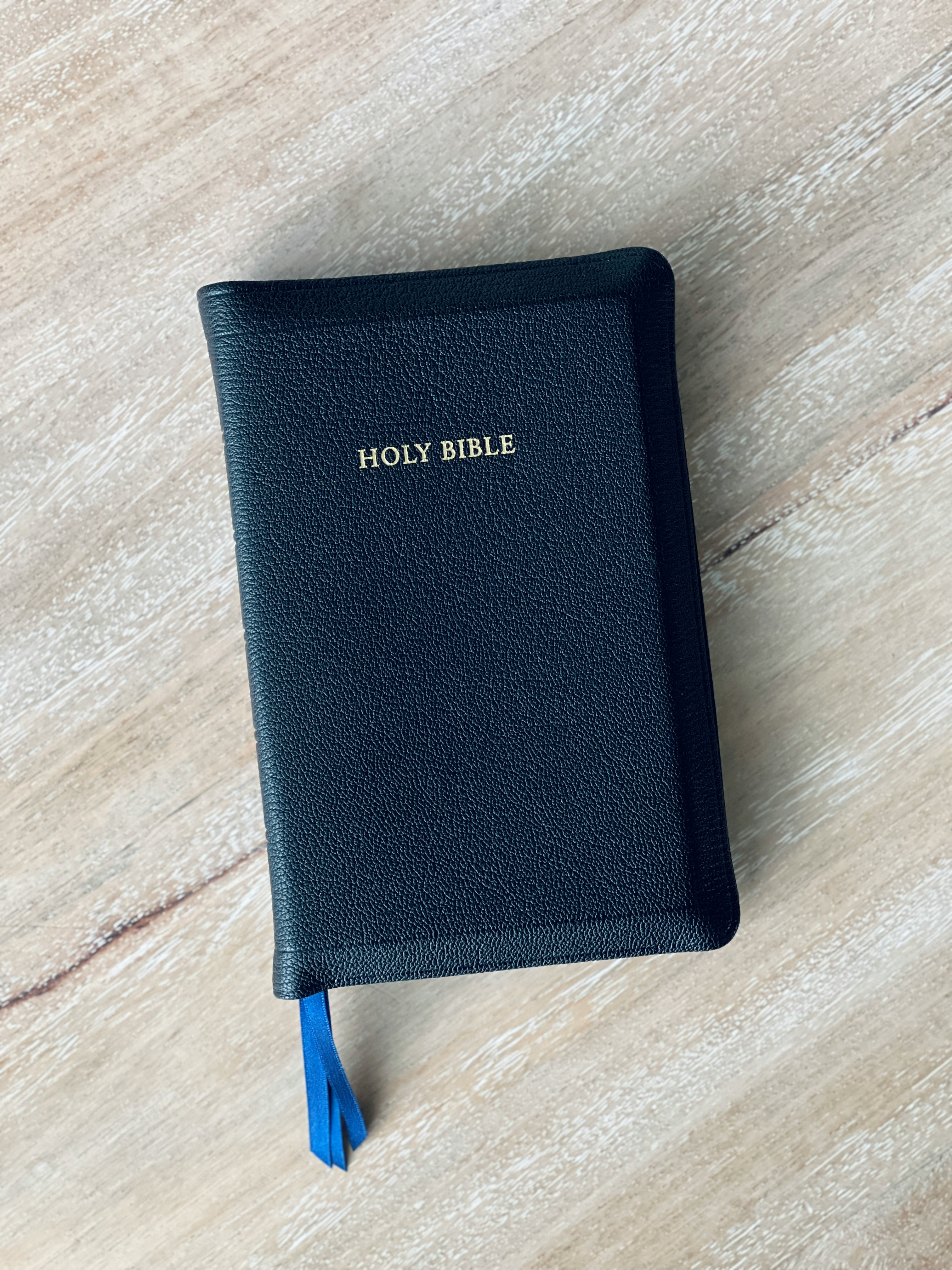
In Matthew 22:15-21 (as found in the New International Version of the Bible), the Pharisees try to trap Jesus by questioning him about paying taxes:
Then the Pharisees went out and laid plans to trap him in his words. They sent their disciples to him along with the Herodians. “Teacher,” they said, “we know that you are a man of integrity and that you teach the way of God in accordance with the truth. You aren’t swayed by others, because you pay no attention to who they are. Tell us then, what is your opinion? Is it right to pay the imperial tax to Caesar or not?” But Jesus, knowing their evil intent, said, “You hypocrites, why are you trying to trap me? Show me the coin used for paying the tax.” They brought him a denarius, and he asked them, “Whose image is this? And whose inscription?” “Caesar’s,” they replied. Then he said to them, “So give back to Caesar what is Caesar’s, and to God what is God’s.”
In Mark 12:13-17, that same encounter between Jesus and the Pharisees is recorded as follows in the New International Version of the Bible:
Later they sent some of the Pharisees and Herodians to Jesus to catch him in his words. They came to him and said, “Teacher, we know that you are a man of integrity. You aren’t swayed by others, because you pay no attention to who they are; but you teach the way of God in accordance with the truth. Is it right to pay the imperial tax to Caesar or not? Should we pay or shouldn’t we?” But Jesus knew their hypocrisy. “Why are you trying to trap me?” he asked. “Bring me a denarius and let me look at it.” They brought the coin, and he asked them, “Whose image is this? And whose inscription?” “Caesar’s,” they replied. Then Jesus said to them, “Give back to Caesar what is Caesar’s and to God what is God’s.”
Getting back to Matthew 28:18-20, yes, Jesus instructed us to spread the Gospel, but the Christians who want to force the Gospel on people by weaponizing the government with the Bible are taking the easy way out. They are taking a dangerous way out. The Bible and its words should never be used as a weapon.
Not once in the New Testament did Jesus force or instruct His followers to force His brand of religion on the government or on the people via the government.

Christians have countless ways to share the Good News of Jesus Christ with others. Forcing the Gospel on people through our government is not one of them.
Janet
The government should be afraid of its citizens, not the other way around.

 Janet's Writing Blog