I write southern historical fiction, local history, and I've written a devotional book. The two novels I'm writing are set in Virginia and the Carolinas in the 1760s. My weekly blog started out to follow my journey as a writer and a reader, but in 2025 it has been greatly expanded to include current events and politics in the United States as I see our democracy under attack from within. The political science major in me cannot sit idly by and remain silent.
Tag: The Blue Ridge Mountains of North Carolina by Janet Morrison
When I was a freshman at Appalachian State University in 1971, there were 7,800 students. Before I graduated four years later, the university chancellor had announced that enrollment would be permanently capped at 10,000.
Fast forward to the 2024-2025 academic year, and Appalachian has more than 21,000 students. I visited the campus last week, and I can testify to that!
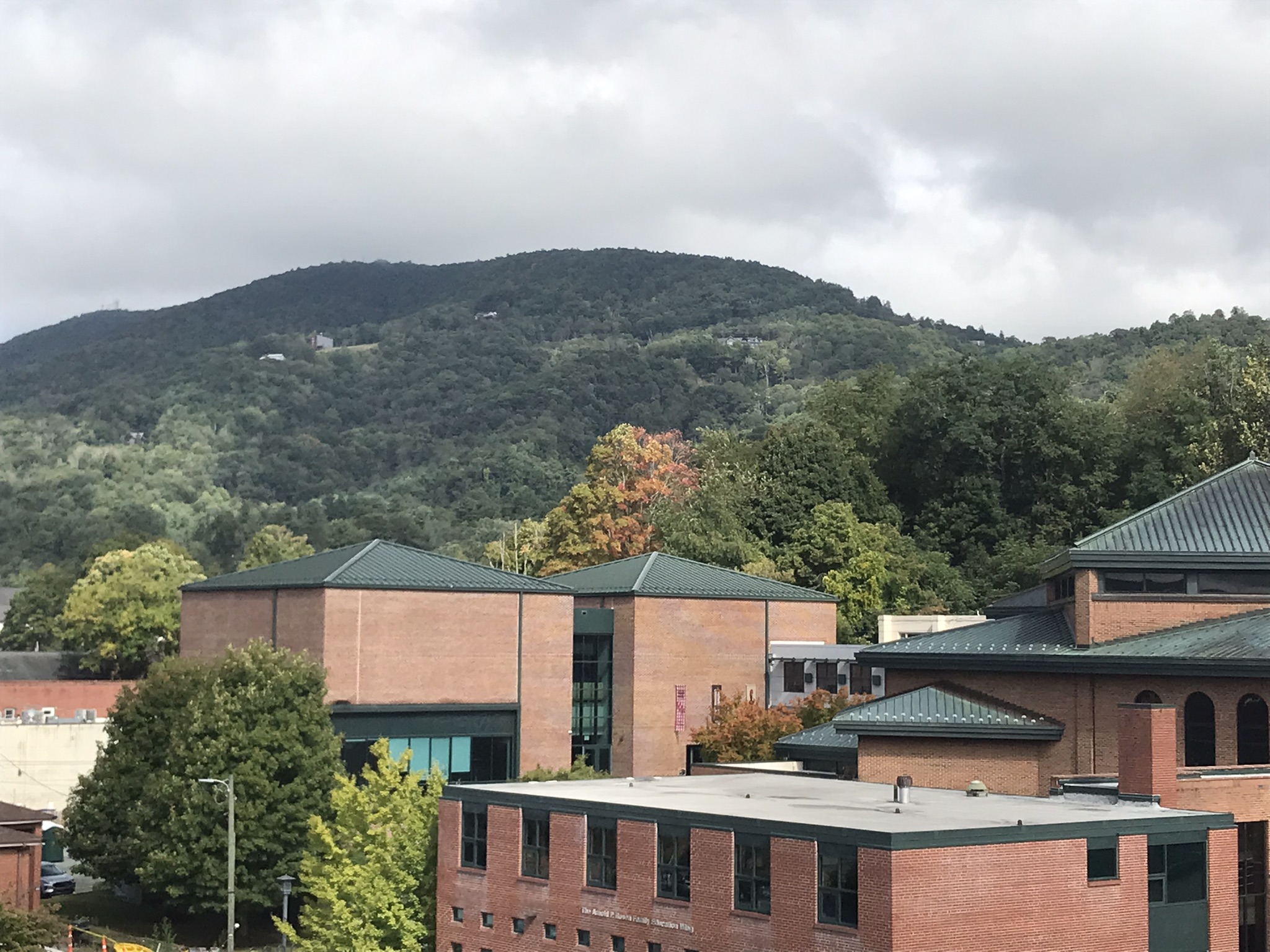
View of Rich Mountain from Appalachian State University Campus
The campus is in a valley at the foot of beautiful Rich Mountain and Howard’s Knob. It’s where Daniel Boone camped sometimes and the mountain is supposedly named for one of his friends with the surname Rich.
A view of Belk Library and Information Commons
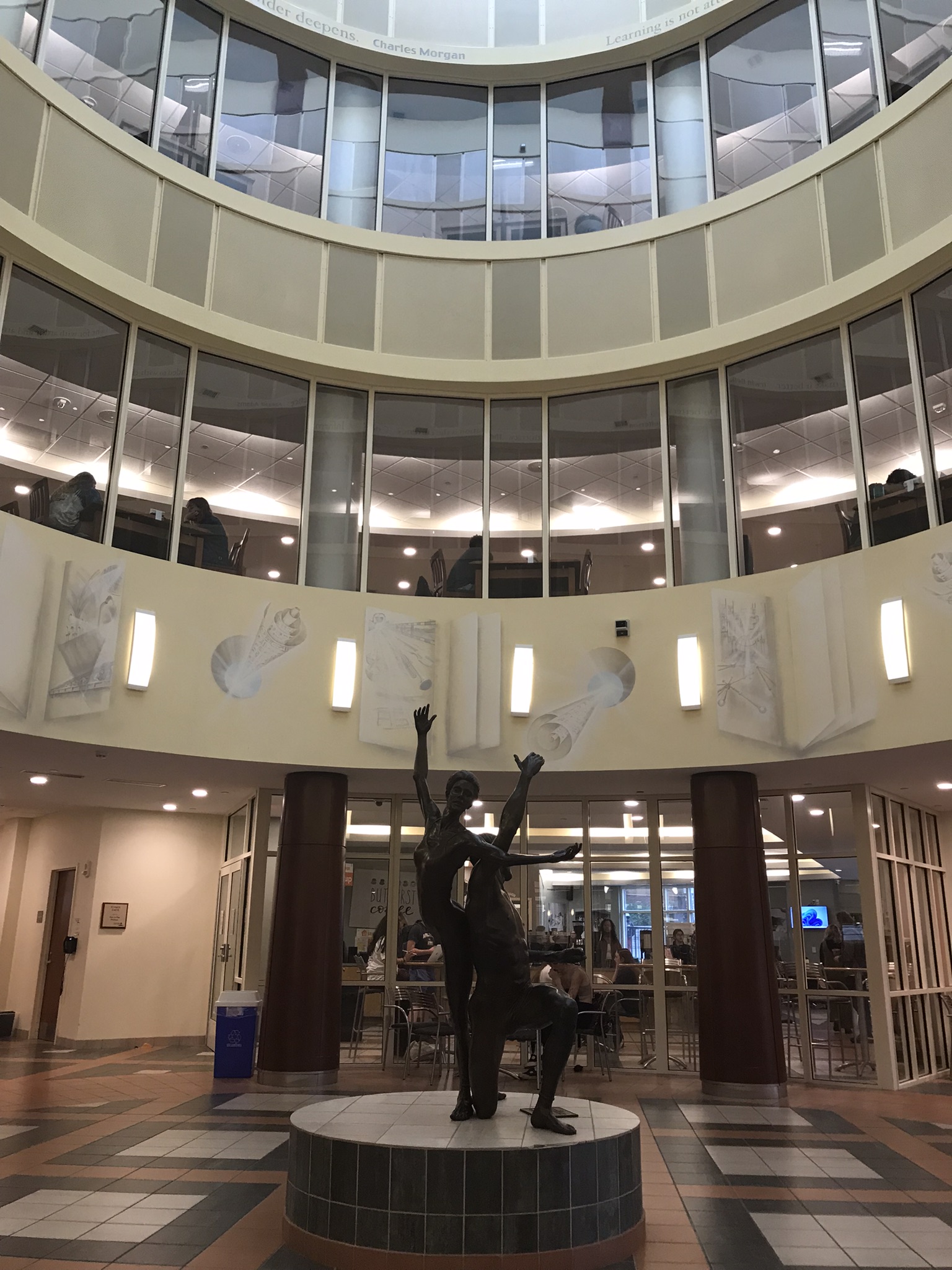
My sister and I were treated to a tour of Belk Library and Information Commons during our visit last week. Marie, being a Library Science major alum of ASU, she was particularly interested to see the great leaps in technology the library offers since her student days there in the mid-1960s.
Lobby at main entrance to Belk Library and Information Center
3-D printers in the library’s Makerspace
One of the statues outside the library
Statue outside library. The little boy is reading Jack Tales.
The library where I spent many hours reading materials that various professors would put on reserve there for on-site-only reading has been converted to classrooms.
Anne Belk Hall (formerly, Belk Library in the 1970s
The building where I majored in Political Science in the 1970s has been replaced by one of many parking decks on campus. Parking decks weren’t needed when my sister and I were students. Very few students could afford to have a car. We walked everywhere we went and thought nothing of it, since none of our friends had a car.
All four of the dormitories I lived in while a student are still there – even East Residence Hall, which I suppose is now the oldest dormitory on campus.
Whereas almost all students back in the day lived in dormitories, most of them now live in apartments. The town of Boone is covered in apartments and restaurants, and much of the old charm of the college town is gone. In the 1960s and 1970s, all the students were on a meal plan and ate in the cafeteria. There was no money for eating out except for the occasional going in together in the dorm on a Saturday night and ordering a pizza.
When someone in the dorm had a birthday, their friends would chip in and buy a square Pepperidge Farms cake at the Winn-Dixie just off campus.
The downtown Boone business district hasn’t changed as much as the campus and the rest of the town in 50 years. Mast General Store still beckons shoppers and The Appalachian movie theater has been refurbished and still offers students and the public the latest in movies as well as other cultural programs. I doubt admission is still 50 cents, though.
My favorite memory of The Appalachian Theater was going to see “Dr. Zhivago” there for 50 cents and having to sit on the front row. Talk about feeling like you are in the middle of the action! (And in the middle of a blizzard in Russia!)
The student infirmary where I worked the night shift on Fridays and Saturdays my last three months on campus was in the former hospital. The nurse I worked with was very compassionate. We were rarely very busy. If we had no patients coming in by around 2:00 or 3:00 a.m., she would let me take a nap. It wasn’t easy to sleep, though, because the pipes carrying the heat from the campus heat plant to the radiators were constantly banging above my head.
When my shift ended 7:00 a.m. I would trudge through the snow to my dorm where I would immediately fall into bed. Minimum wage was around $2.00 an hour then, but that $32 I made on those 10 to 12 weekends was a Godsend and helped me start socking away money to pay for graduate school.
The Daniel Boone Inn still draws crowds of repeat diners for family-style old-time country and mountain cooking. I couldn’t afford to eat there as a student, but my friends took me out for dinner there on my last Saturday on campus at the end of winter quarter in 1975. We enjoyed a huge meal of fried chicken, mashed potatoes and gravy, country ham, green beans, corn, slaw, stewed apples, and cornbread as we watched snow falling outside.
I wrapped up all the leftover fried chicken on the serving platter and took it to the student infirmary when I went there to work at 11:00 that night. It was, of course, my last night to work there. The nurse I worked with and I would drool over the Kentucky Fried Chicken commercials on our little black-and-white TV every weekend night, so I thought it was apropos for me to take fried chicken for the two of us to munch on that night. The joke was on both of us, as she showed up that night with a bucket of Kentucky Fried Chicken! We ate chicken until we were about to explode! What memories!
I didn’t get to eat at the Daniel Boone Inn last week. At this point in my life, I just don’t need to pig-out on so much food. But I have the memories of that night in 1975 with my friends, the nurse at the infirmary, and all that fried chicken!
Until my next blog post
I hope you have a good book to read. I’ve read some good ones already this month!
If you haven’t already purchased a copy, I invite you to buy The Blue Ridge Mountains of North Carolina, the vintage postcard book I wrote for Arcadia Publishing. If you’ve spent time in the Appalachian mountains, no doubt these postcards will trigger some memories for you. The book is available as an e-book and in paperback from Amazon.
Make time for friends and family, and make sure they all have a copy of my book!
Between the piedmont of North Carolina and the Outer Banks there are many interesting places to visit. Here’s a sampling of the places my sister and I stopped to enjoy in the northeastern coastal plain on our way to and from the Outer Banks a month ago.
Somerset Place State Historic Site and Lake Phelps
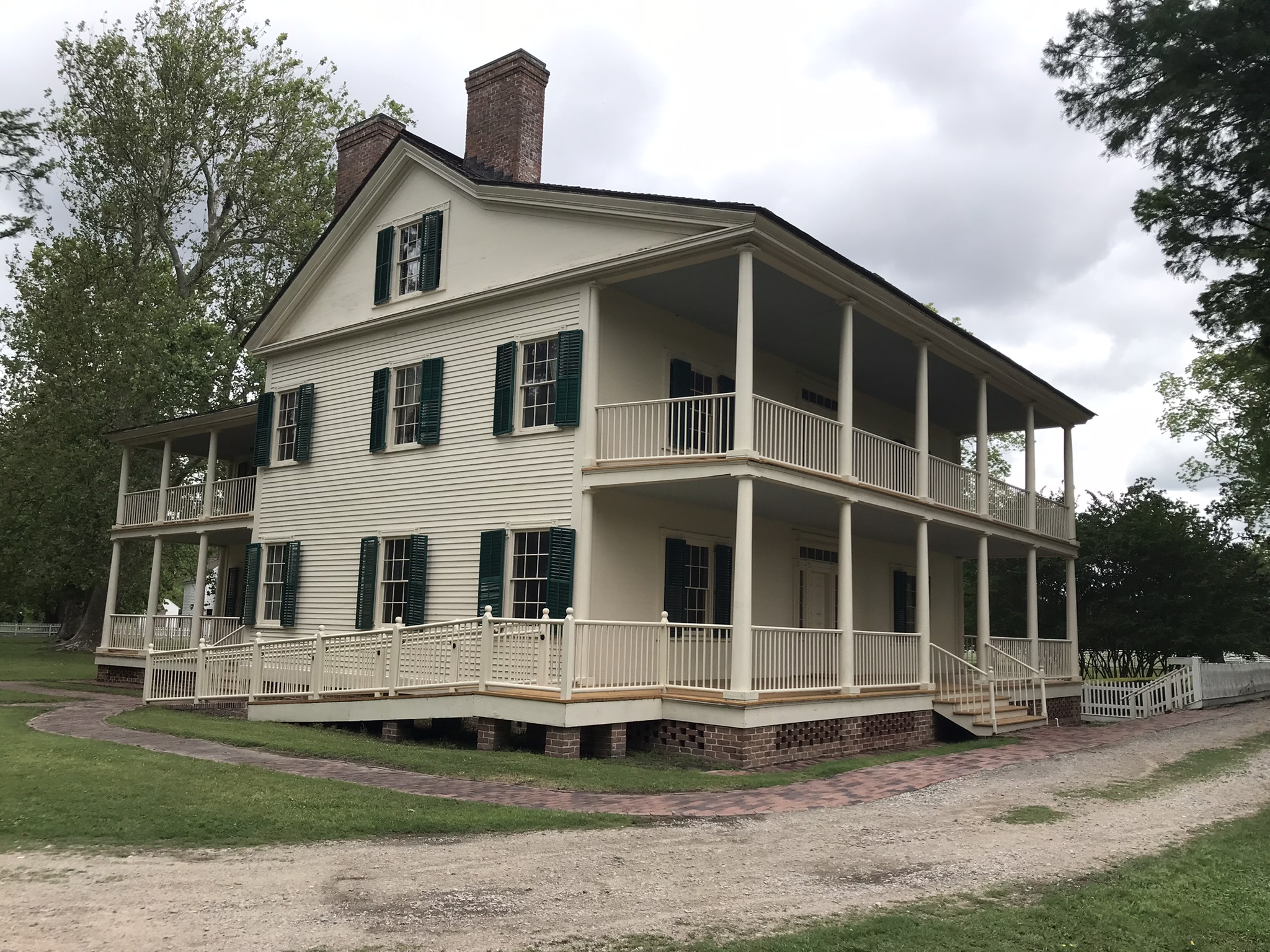
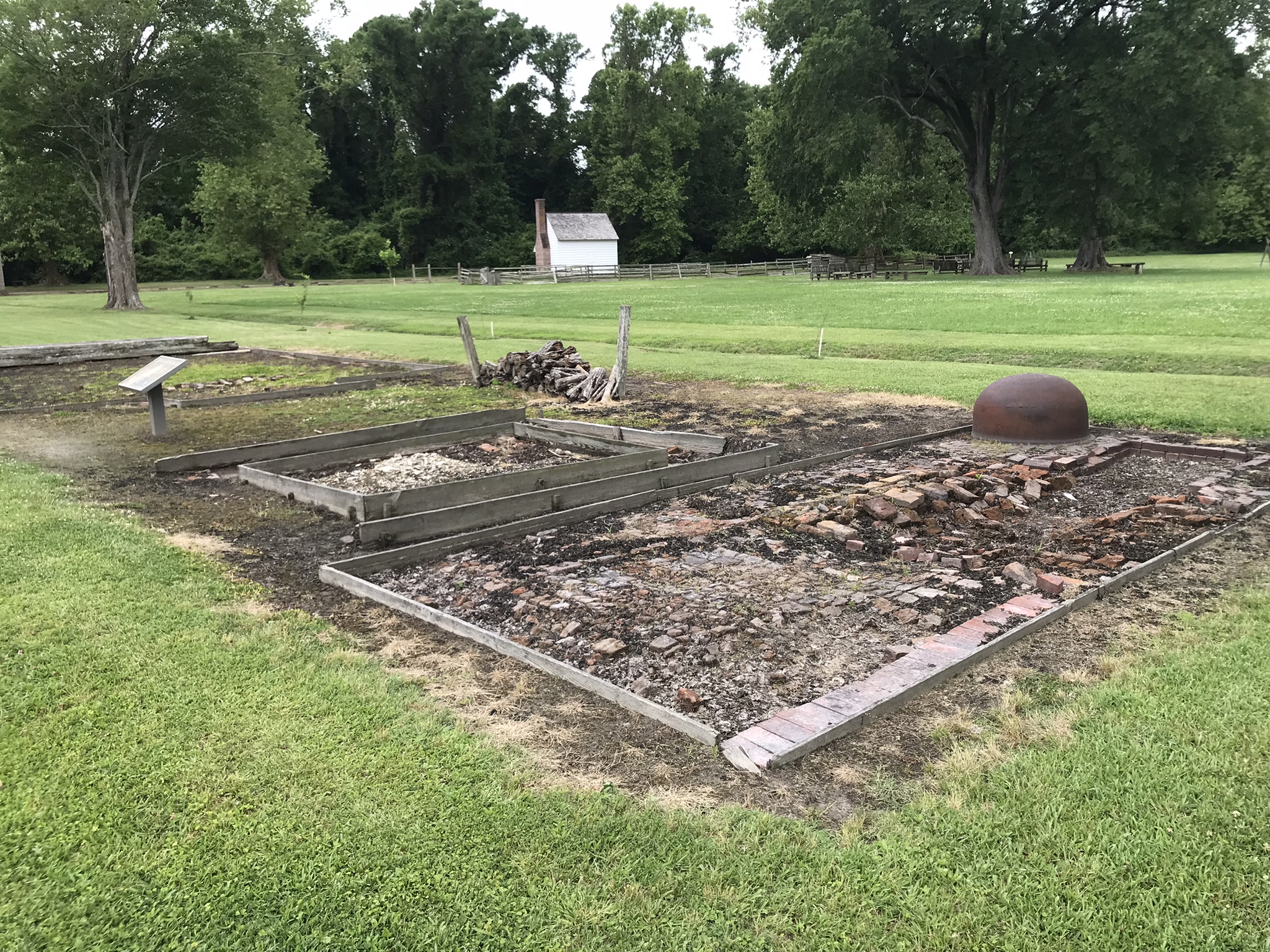
The plantation house was not open for tours on this trip, but we were more interested in seeing some of the slave buildings. The foundations of some of the buildings used by the Africans who were enslaved there in the 18th and early 19th centuries have been excavated. Several have been identified as buildings that were used by the slaves to prepare their midday and communal Sunday meals.
Excavated foundations of buildings at Somerset Place
There was also an on-site jail, stocks, and descriptions of the punishment meted out to some of the slaves who attempted to escape.
Plantation hospital at Somerset Place
Below is a photo of a building called Old Sucky’s House. It is a reconstruction of one of the many dormitory-like structures at Somerset Place that housed as many of 26 people. Old Sucky Davis was known as a matriarch among the hundreds of slaves that were held at Somerset Place.
Old Sucky’s House (Reconstructed) at Somerset Place
Interior of Kitchen House at Somerset Place
Needless to say, Somerset Place was a somber first stop on our trip. If you want to learn more about this plantation, I highly recommend Somerset Homecoming: Recovering a Lost Heritage, by Dorothy Spruill Redford with Michael D’Orso.
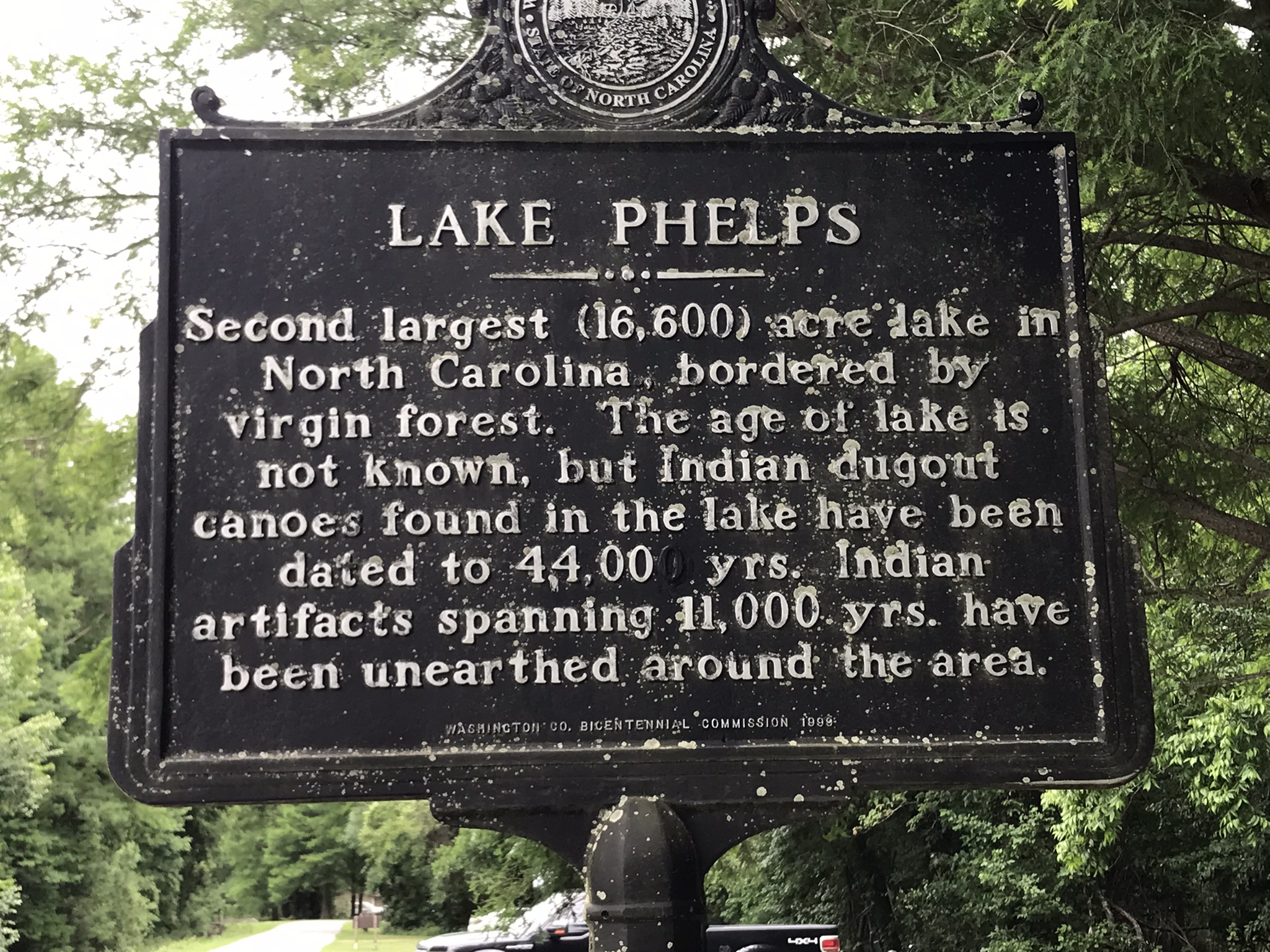
Sign condensing history of Lake Phelps
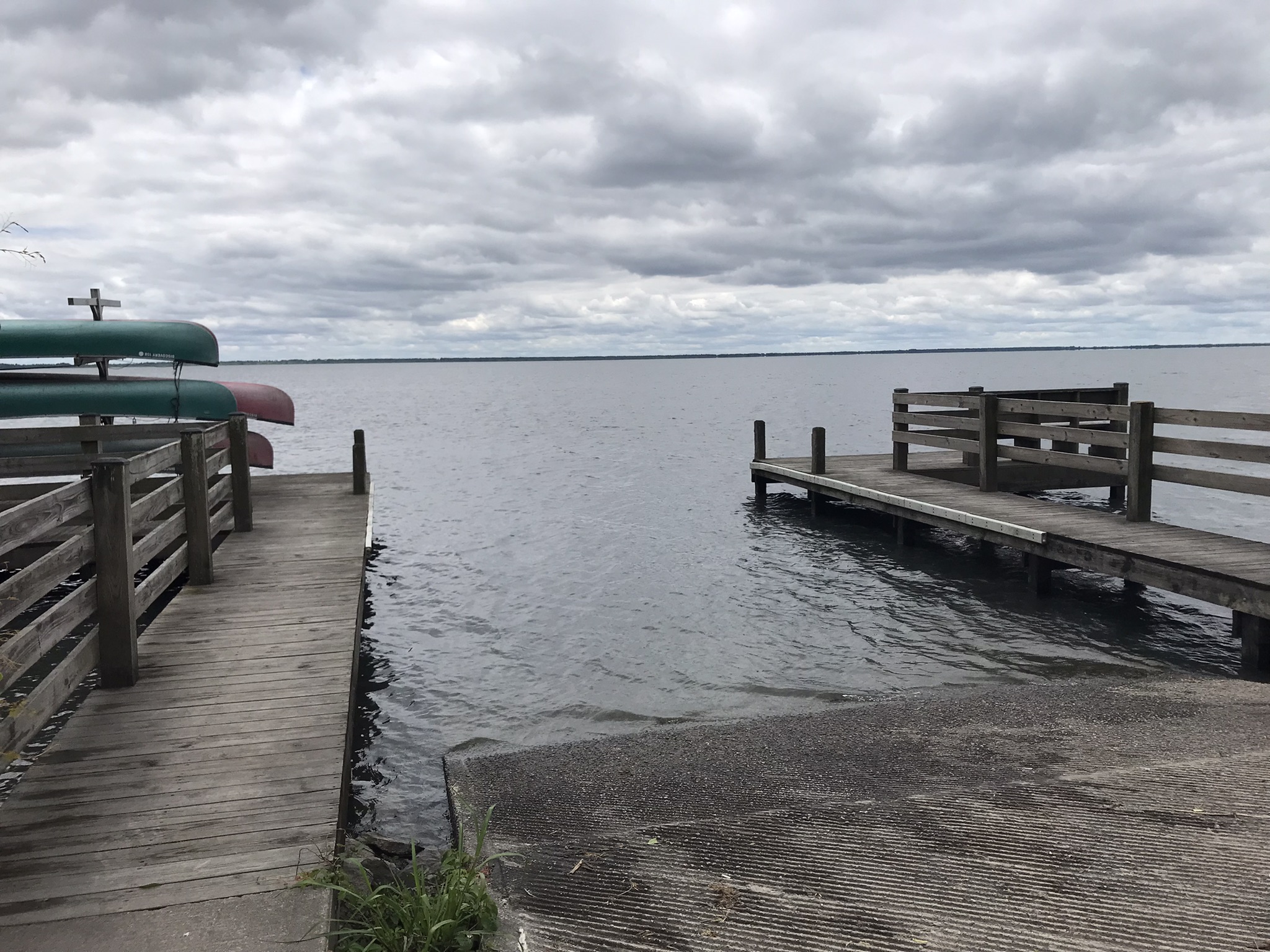
A view of Lake Phelps
Pocosin Lakes National Wildlife Refuge
Our next stop was the visitor center for Pocosin Lakes National Wildlife Refuge on the Scuppernong River in Columbia, NC. This is on the Inner Banks on the Albemarle-Pamlico Peninsula in the northeastern part of the state. In case you are not familiar with the word “pocosin,” it is derived from a Native American word that means “swamp on a hill.”
Welcome Center at Pocosin Lakes National Wildlife Refuge
The refuge has a sponge-like organic soil called peat. It varies in depth there from two inches to 12 feet, and it takes 100 years for one inch of peat to be created. Tree stumps four feet in diameter have been found there which indicates there was once a white cedar and cypress swamp forest there.
See the turtle?
Peat can burn underground and even as it floats on water. Some peat fires here have burned for months on end. As one can imagine, it is difficult to extinguish such a fire. The pond pine and some other plants there depend on fire for their propagation. The heat from fire is necessary for the pond pine cones to release their seeds.
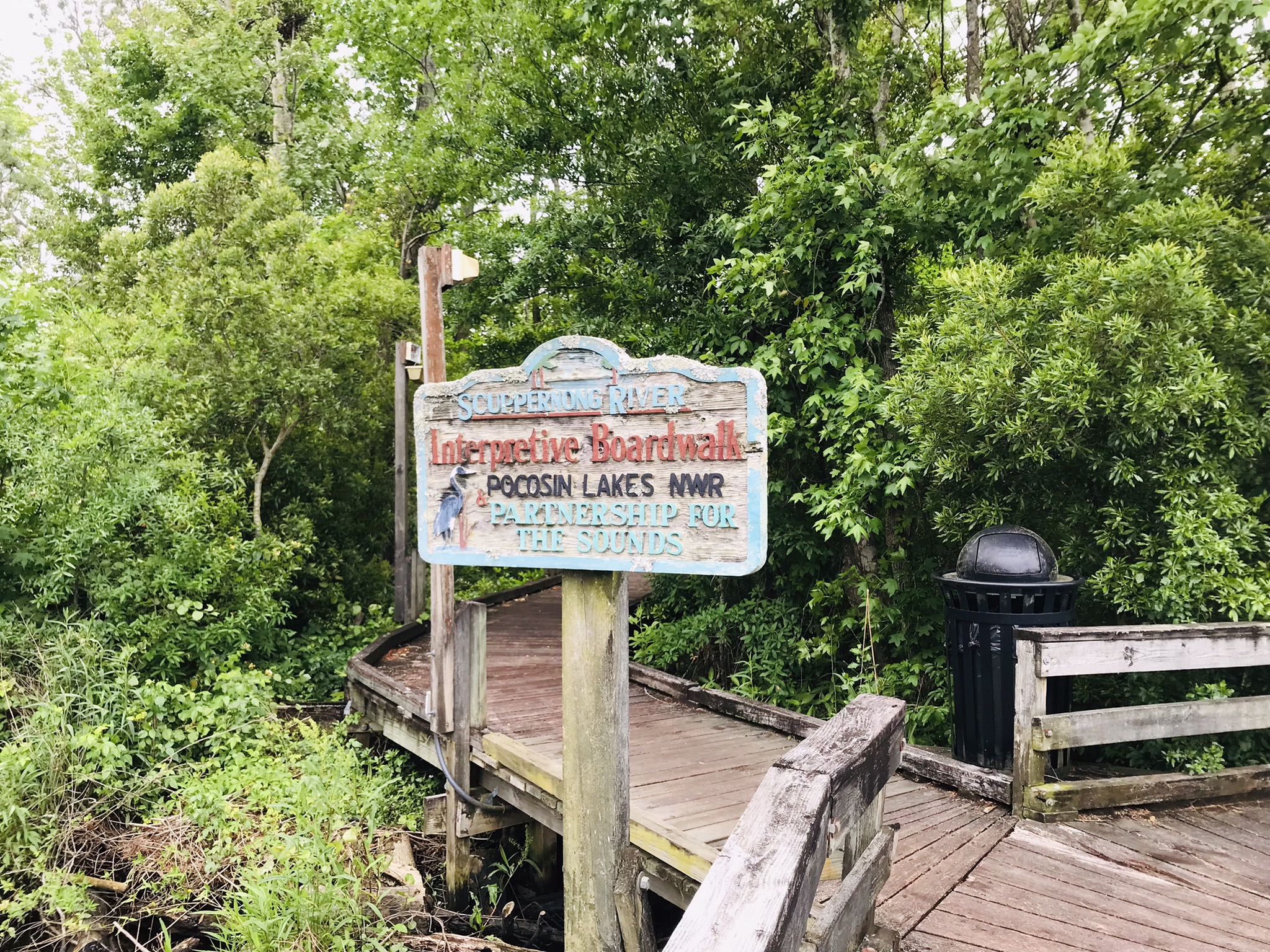
Interpretive Boardwalk at Pocosin Lakes National Wildlife Refuge
Wild irises were in bloom the day of our visit. More than 100,000 ducks, geese, and swans over-winter on the refuge. The refuge and surrounding area are home to an estimated 8,000 black bears. To learn more about the refuge, visit https://www.fws.gov/refuge/pocosin-lakes/about-us.
Wild Irises at Pocosin Lakes National Wildlife Refuge
First, we stopped at Jarvisburg Historic Colored School at Jarvisburg, NC. (Yes, that’s the official name. I’m not being disrespectful.) Established in 1868, the school building is on the National Register of Historic Places. Unfortunately, it was closed for restoration. (That was a recurring theme on our trip!)
Jarvisburg Historic Colored School, under restoration
Great Dismal Swamp
We saw just a miniscule part of the Great Dismal Swamp, a portion of which is in Virginia. It once covered a million square miles. The canal was created by slave labor in the 1700s. It is unimaginable the miserable work that was in the heat and humidity of northeastern North Carolina, not to mention the poisonous snakes, alligators, and mosquitoes.
Dismal Swamp Canal (a.k.a, Lake Drummond Canal)
Constructed about 1805, the canal is now part of the Intracoastal Waterway and is listed on the National Register of Historic Places. There were five boats and small yachts moored at the landing near the visitor center when we arrived. One was from Maine, one was from Toronto, and one was from Washington State.
Boats and small yachts moored at Great Dismal Swamp Canal Visitor Center
Across the canal is the Dismal Swamp State Park. It has a visitor center and walking trails. Exhibits in the visitor center include wildlife, early Native American, commercial logging in the swamp, and the swamp’s participation in the Underground Railroad during the American Civil War.
Dismal Swamp State Park entrance at canal drawbridge
Unfortunately, every acre of the Great Dismal Swamp has been logged at least once.
When we were leaving the walking trails on the other side of the drawbridge, we got to see a small vessel cross through. The canal traffic has right-of-way over pedestrians, but we were entertained by seeing both ends of the bridge rise while the middle section of it swung to the side.
Dismal Swamp Canal Drawbridge in Operation
Merchant’s Millpond State Park
Along Cypress Point Trail in Merchant’s Millpond State Park
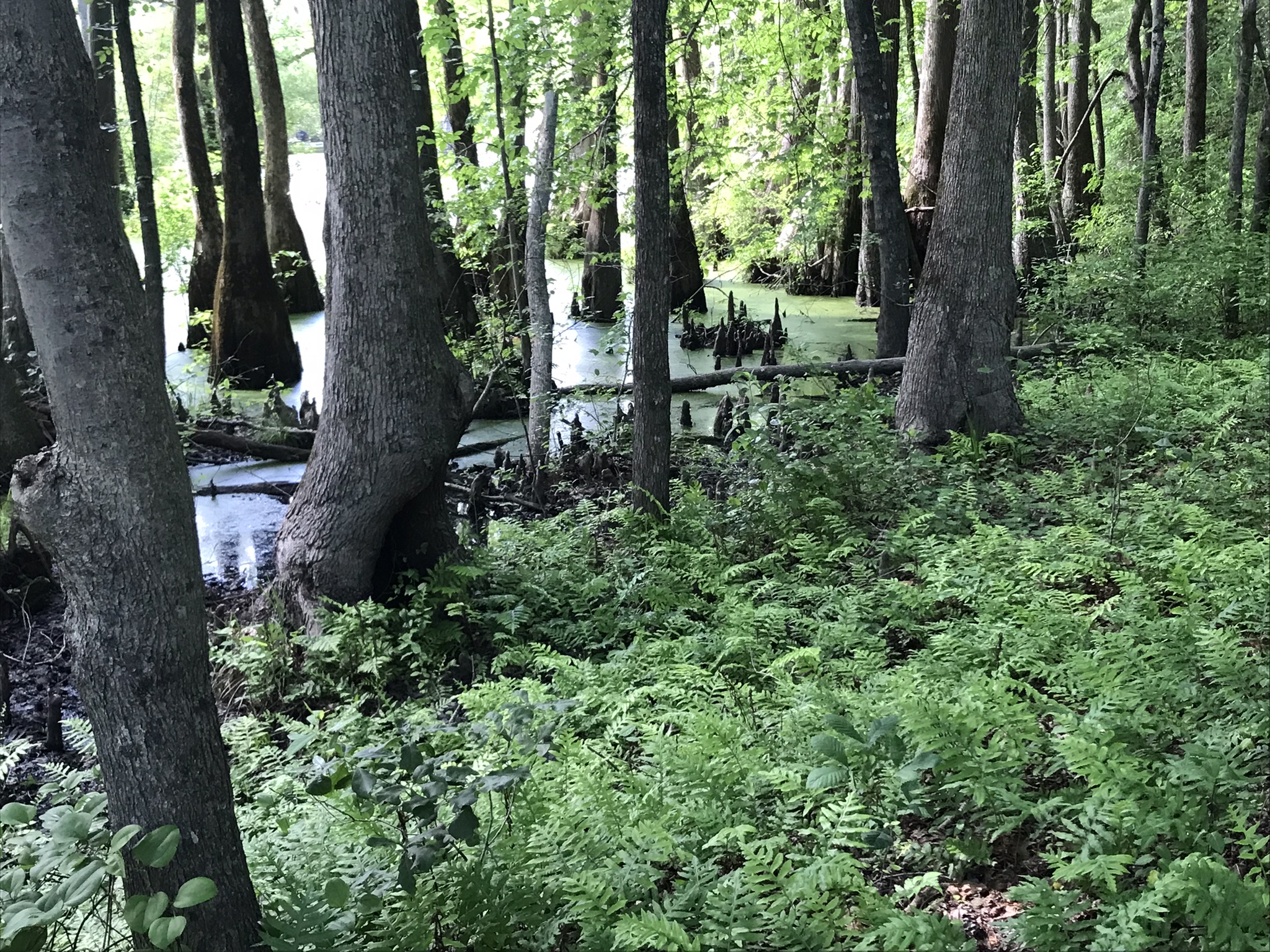
A view of Lassister Swamp at Merchant’s Millpond State Park
Merchant’s Millpond State Park is just a few miles west of the Great Dismal Swamp Canal. There is a 19.5-foot dugout canoe from the 1800s on display in the visitor center.
View of Spanish Moss hanging on trees at Merchant’s Millpond State Park
Cypress trees at Merchant’s Millpond State Park
We thoroughly enjoyed walking on the trail there. It was quite something to see. The park includes 3,500 acres, the millpond, and Lassiter Swamp. We did not see any of the native alligators, but that’s okay.
Boat ramp at Merchant’s Millpond State Park
Sky and clouds reflected in water at Merchant’s Millpond State Park
Sylvan Heights Bird Park
East African Crowned Crane
The last destination on our trip before visiting a friend in the Raleigh area was Sylvan Heights Bird Park at Scotland Neck, NC. The Sylvan Heights Bird Park and adjacent Sylvan Heights Avian Breeding Center just might be North Carolina’s best keep secret! In today’s blog post I’m sharing just a small fraction of the photos I took at the park.
Green Peafowl
Demoiselle Crane
It was a perfect last stop on our trip home from the 120-mile string of barrier islands that form the outer coast of North Carolina. Here’s a bit of the history of the park and avian breeding center…
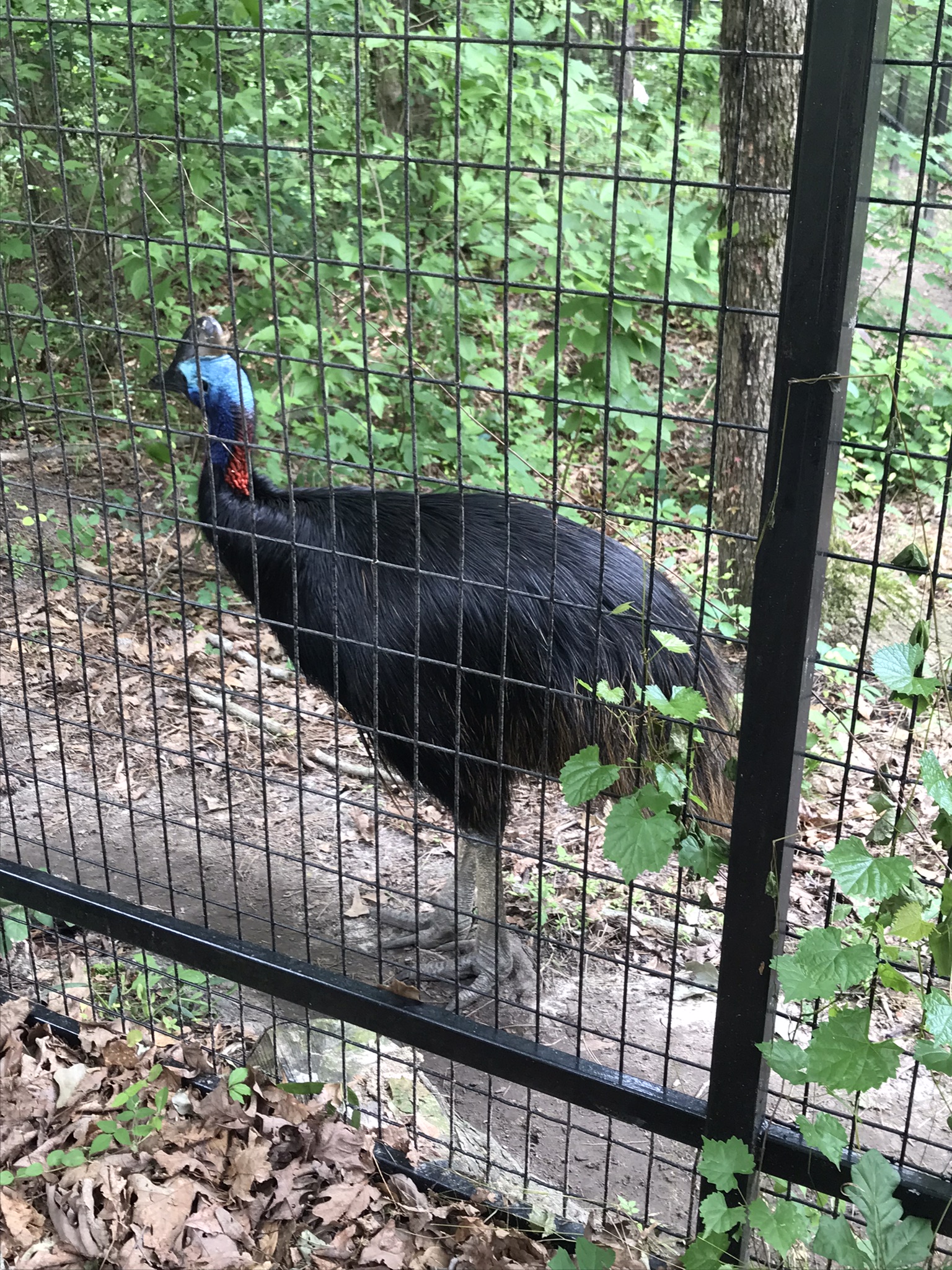
Southern Cassowary
Mike and Ali Lubbock moved to the United States from England in 1981. They had extensive waterfowl knowledge and founded Sylvan Heights Waterfowl in the mountain town of Sylva, NC.
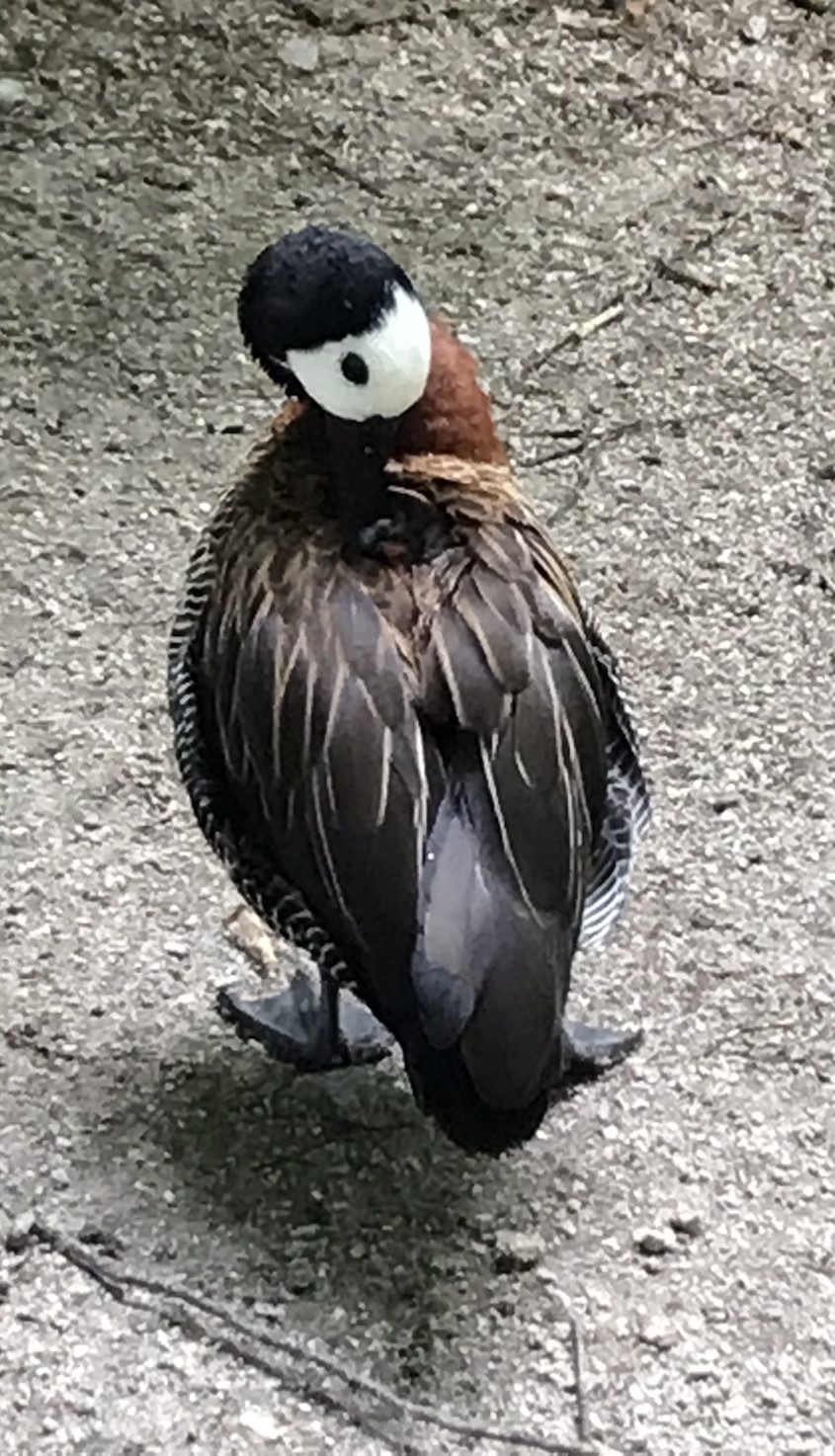
White-faced Whistling Duck
In 1989 the internationally-known aviculturist Lubbocks moved their entire collection and operation to Scotland Neck in northeastern North Carolina where they founded the Sylvan Heights Avian Breeding Center. Today, the center cares for more than 2,500 individual birds, including more than 1,000 hatchlings every year.
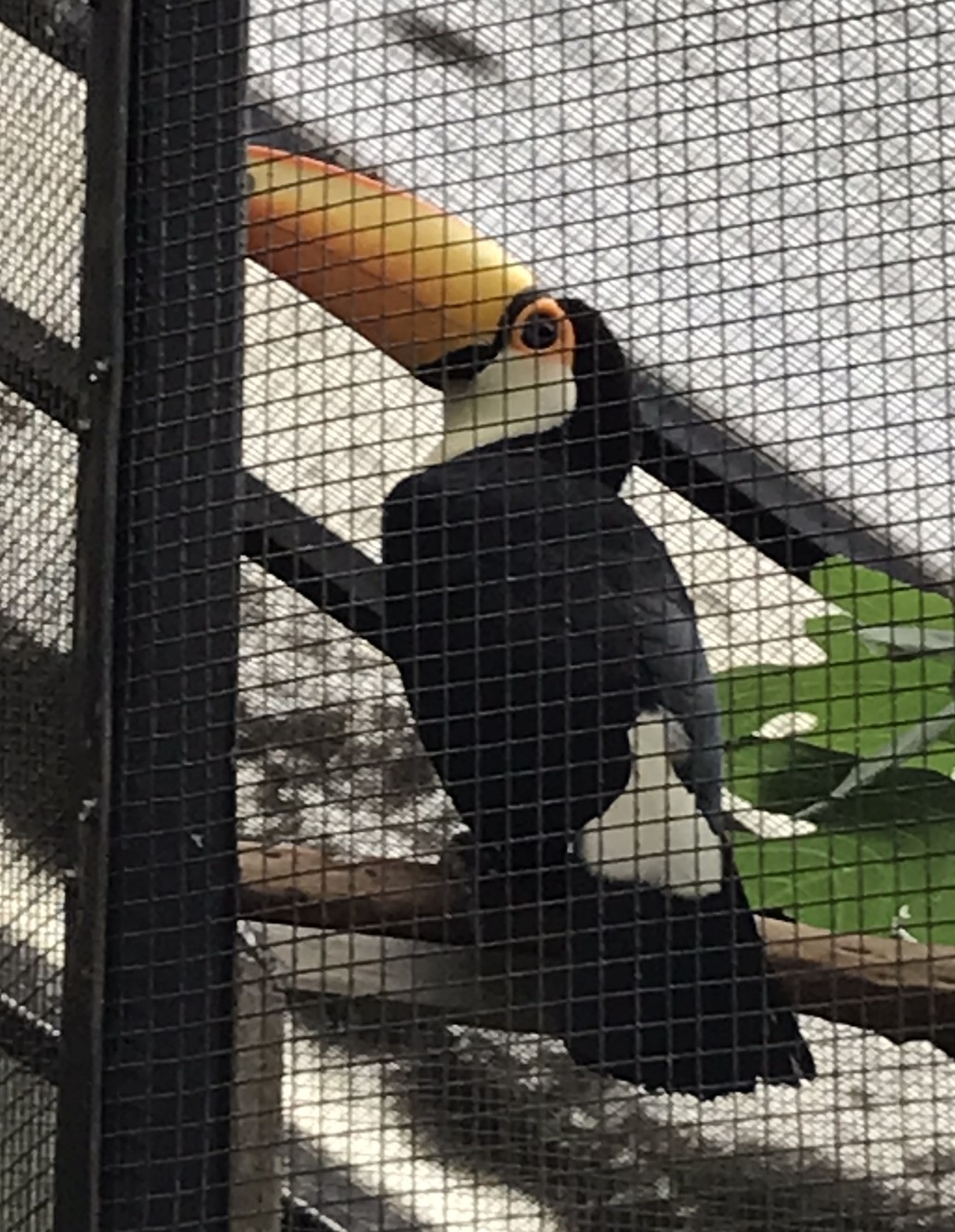
Toco Toucan
The center is an avicultural training site for biologists with an interest in conservation. Professionals from zoos from across the United States go there to learn advanced avian husbandry techniques.
Blue-throated Macaw
Quoting from the website, “Sylvan Heights is home to breeding populations of some of the world’s rarest waterfowl. In some cases, fewer than 250 individuals of these species remain in the wild, and the collaborative captive breeding programs taking place here may be their last barrier against extinction.”
Himalayan Monal – The National Bird of Nepal
Sylvan Heights Bird Park opened in 2006. The park “seeks to advance conservation of waterfowl and wetlands, to act as a local educational resource for avian biology and wetlands ecology, and to serve as an international center for avicultural training and research.”
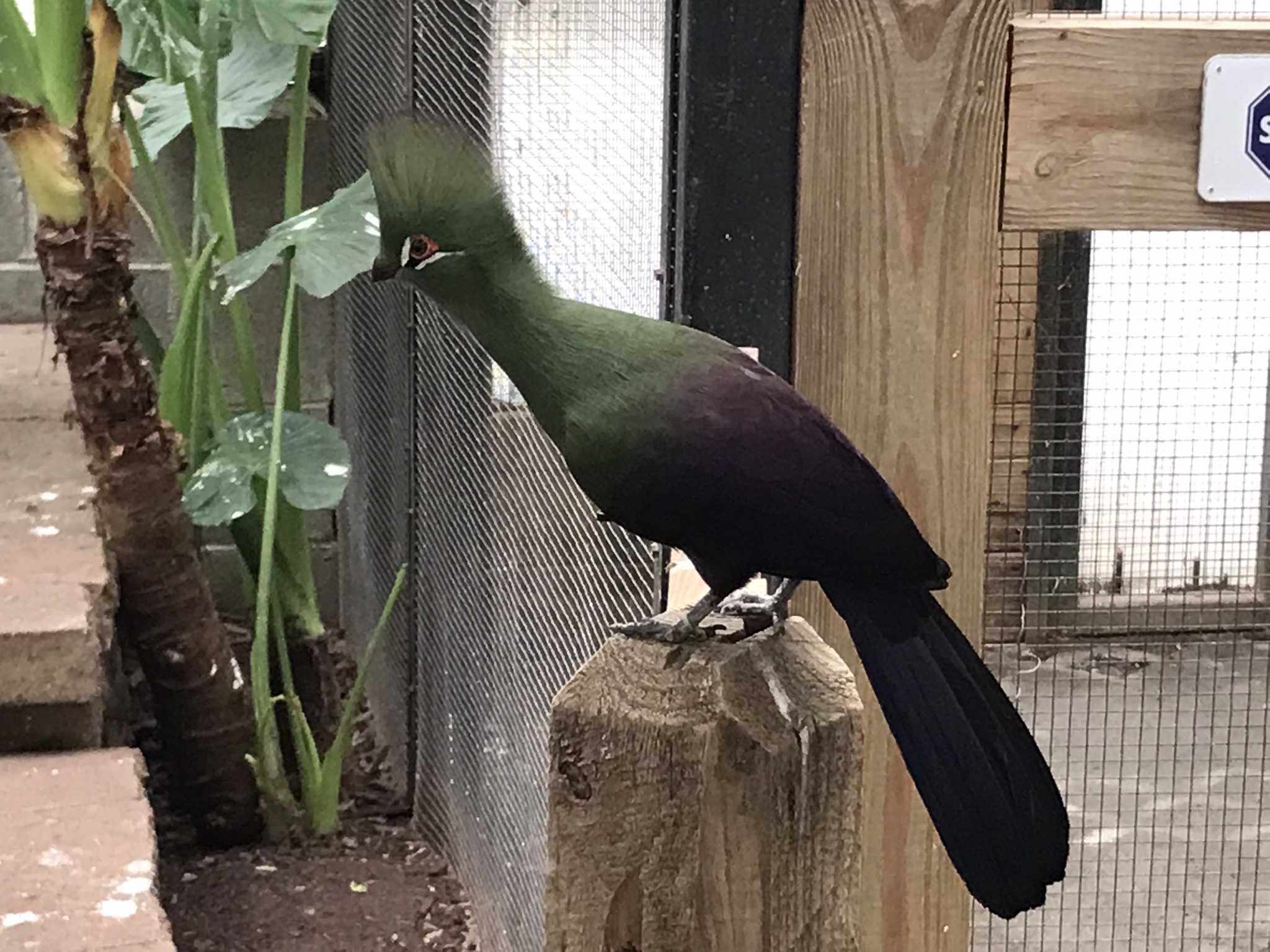
Guinea Turaco (Underneath side of its wings are bright red!)
Sylvan Heights has the largest collection of exotic and rare waterfowl in the world. It houses more than 3,000 birds representing 140 species. Together, the park and the breeding center form the world’s largest waterfowl collection and the second largest collection of birds in the country.
Scarlet Ibis
The Sylvan Heights Avian Breeding Center is not open to the public, due to the nature of its work, but the park is open year-round.
Wetland Bridge in Sylvan Heights Bird Park
Whew! This trip had been on my “bucket list” since before the Covid-19 pandemic. I needed a change of scenery, and this trip delivered! Each day held the promise of walking, enjoying the beauty of nature, peace and quiet, relaxation, and learning something new. What more could someone desire?
Are northeastern North Carolina and the Outer Banks now on YOUR bucket list?
Unfortunately, my publisher did not let me compile books of vintage postcards from either the piedmont or coastal plain of North Carolina because the company was not set up to market regional books, but don’t let that stop you from purchasing my vintage postcard book, The Blue Ridge Mountains of North Carolina. Please look for it on Amazon!
I recently read a blog post that made my head spin. It left me wondering if I can make it as a writer. The world is changing at warp speed, and I cannot keep up.
My post today is a bit of a rant. Please bear with me. I’m curious. Do you feel the same way, or am I just an old fuddy-duddy? (Granted, if I casually use the term “fuddy-duddy,” I probably am one.)
What set off this particular rant (a.k.a., blog post)?
I didn’t realize how much I was lagging behind in the world of social media until I learned that “you might want to consider IG Thread, Mastodon, or Bluesky (still in Beta and by invite only). The stated goal of Threads is to become part of the Fediverse (of which Mastodon is a part) so many people have just jumped straight over to Mastodon.”
WHAT?
That one paragraph was confusing on so many levels.
I continued reading and learned that there is also a social media platform called BeReal, in case I want people to know where I am at all times.
No thanks.
I learned that Reddit “has released an API in preparation for its upcoming IPO.” I have used Reddit, but I don’t know an API from an IPO. In fact, I have very little interest in learning the difference. (I’ve looked them up before, but I don’t have enough brain cells to clutter up my head with information I don’t need to recall.) It’s frustrating to read an article about what authors need to know about social media when you don’t understand the abbreviations. It’s overwhelming.
Granted, API and IPO were clickable, but the assumption is that I should already know what they are. It just reinforces my feelings that I’m so far behind there’s no hope for me to catch up. And, oh… in my spare time, when I’m not studying the latest technological advances and numerous social media platforms, I can do historical research and turn that into a novel.
I also learned from the Writers in the Storm blog post that “Google has been talking about E-A-T for a few years now, but with the extensive use of generative AI, they have added another E. This is good news for us, as their requirements and Quality Rater Guidelines for good content will almost certainly exclude most AI-created content. E-E-A-T stands for Expertise, Experience, Authoritativeness, and Trustworthiness.”
The explanation of E-E-A-T was much appreciated because I had never heard of E-A-T in the first sentence of that paragraph, much less E-E-A-T.
My readers know I’m not the most computer-savvy person in the world, but I have managed to write a blog on a regular basis since January 24, 2010, format and publish two local history books, two short stories, and a cookbook for publication. All but the cookbook are available in electronic as well as print form. I’m on Facebook and have many boards of interest on Pinterest. I’ve learned how to create book covers and memes. I put a new meme on Pinterest six days a week to publicize my various books and short stories. I’ve created bookmarks, flyers, and business cards. I publish an e-newsletter. I have my own website.
Apparently, it is not enough.
I should not have to be a technology whiz to be an author, but I have read and heard a multitude of times that I need tens of thousands of followers on social media if I stand a chance of catching the eye of a literary agent or book publisher.
Perhaps I was born in the wrong century.
And did I mention the scammers I have to deal with several times a week?
I’m proud of my vintage postcard book, The Blue Ridge Mountains of North Carolina, published by Arcadia Publishing in 2014; however, I can’t visualize it as a movie. I get numerous phone calls from people speaking broken English telling me that I can make boatloads of money if I agree to let them turn the book into a movie. I received a call a couple of weeks ago from someone claiming to be with HBO promising me $300,000 if I would allow them to turn my postcard book into a made-for-TV movie.
The Blue Ridge Mountains of North Carolina, by Janet Morrison
Yeah, right! I’m sure it would be a blockbuster.
Since my last blog post
I’m putting the finishing touches on my March newsletter. If you have not subscribed to my newsletter, please go to https://www.janetmorrisonbooks.com, click on the “Subscribe” button, and fill in your email address. In return, you will receive a free downloadable copy of one of my short stories, “Slip Sliding Away: A Southern Historical Short Story” and you will receive my newsletter every other month.
In my newsletters I give details of the “field trips” I take to do research for my historical short stories and the historical novels I’m working on as well as photographs from those trips. I give more information about the things I’m doing to move my writing career forward than I do in my weekly blog posts.
I promise I won’t bombard your inbox with emails!
Until my next blog post
I hope you have a good book to read. As usual, I’m reading several books. So many books… so little time!
Please get your news from more than one reliable source.
Remember the people of Ukraine and let your representatives in Washington, DC know how you feel about aid to that country. It just might get through to them and make a difference.
I love the months in which I get to read so many books that it takes me more than one blog post to tell about them! May was one of those months. Today’s post is about the last two books I read in May. I hope at least one of them will appeal to you.
One Thought Scares Me, by Richard Dreyfuss
In One Thought Scares Me, Richard Dreyfuss presents his thoughts about how democracy has been eroded in the United States by the removal of the study of government (or civics) in our public schools. He pinpoints this quiet removal as happening 50 years ago, so it was after I graduated from high school.
One Thought Scares Me, by Richard Dreyfuss
I remember hearing a few years ago that in North Carolina the high school American History curriculum would begin with the Presidency of George Washington. I’ve wondered since then how the Presidency of George Washington would make any sense to a student who didn’t know that it followed an American Revolution.
If an American knows nothing about the Declaration of Independence – why it was written, who wrote it, when it was written, who we were declaring our independence from — and most importantly, how the signers of it risked their very lives by signing it – then they will not know what political conditions the early American settlers lived under.
If an American knows nothing about the American Revolution – why it happened, when it happened, who we were rebelling against, etc., then that American will not value what it means to be an American citizen. If they don’t know what those who came before us suffered through just to gain the right to vote, they will not value their right to vote. They will feel no obligation to vote.
If an American knows nothing about the Bill of Rights – why those ten rights were spelled out in the United States Constitution and what they are – then they won’t know when a US President or the US Congress or their State Legislature is taking away one or more of those rights.
If an American knows nothing about US history, they won’t know that July 4th is more than just a day off from work when you eat burgers and hotdogs and shoot off fireworks.
In order to be a good citizen of the United States of America, you must know the history of the country. As Mr. Dreyfuss points out in his book, it was the system of public education in the United States in the early 1800s that made it possible for every child to learn to read and write. It made it possible for every child to learn the Pledge of Allegiance, to learn about colonial times, to learn about the American Revolution, to learn about the ugliness of slavery, to learn about the Civil War, and to learn about all the wars American have fought around the world in the name of freedom.
My two-cents’ worth: If you take that out of the public schools – and if you disrespect public education and public school educators the way the North Carolina General Assembly continues to do – then you lose the level playing field on which our country was built and you lose what binds us together as a nation.
Seeking the Historical Cook: Exploring Eighteenth-Century Southern Foodways, by Kay K. Moss
Reading this book after taking the Open Hearth Cooking Class at Hart Square Village on May 20 was very beneficial. The hands-on class was invaluable to me in writing historical fiction, and the book made a lot more sense to me having had the class.
Seeking the Historical Cook, by Kay K. Moss
The book covers how to interpret historical “receipts” as recipes were called in the American Colonial Era, and the importance of incorporating an 18th century mindset when using the old recipes. Ms. Moss and her books are a goldmine for anyone doing research on frontier life in the Carolinas.
This book is illustrated and very detailed in cooking instructions, including the importance of getting the hot coals just right and judging the heart, cooking/baking time, and always having hot water on-hand.
Cyberspace fiasco since my last blog post
To say it was a frustrating week would be an understatement. My email service was disrupted for about 24 hours Tuesday into Wednesday. My Facebook account was hacked on Thursday. My LinkedIn account was hacked on Saturday. My Evernote account was hacked on Sunday.
Would be writers like me are told we must have a vast social media presence if we want to ever get published. We must have followers in the thousands and tens of thousands.
After what I’ve been through over the last few days, I’ve decided to remove myself from Facebook, LinkedIn, and Evernote. Each of those accounts had unique passwords. It bothers me that hackers can take control of my stuff without any problem; however, when I try to get an account back I must provide all sorts of documentation to prove that I am me. Life is short. I don’t foresee ever having time again for Facebook, LinkedIn, or Evernote. I’ll miss some things about Facebook, but the other two won’t be missed at all. Just for good measure, I’ll no longer be on Twitter either. It was a hassle anyway. I won’t miss it a bit.
If not having 40,000 followers on Facebook, Twitter, LinkedIn, etc. means I’ll never get my novels published, I guess that’s the price I’ll pay.
If you receive notification via Facebook when I’ve posted a blog, you’ll no longer receive those notifications because as of last Thursday, I have no control over my Facebook account. In fact, you won’t be notified about today’s post. Someone else, apparently in Beijing, has control of my account now. Facebook indicated it would take them 48 hours to verify that I am Janet Morrison. It’s been longer than that, so I guess they’re still just playing games with the hacker in Beijing. I regret that I didn’t get to tell my acquaintances on Facebook goodbye.
My blog is protected through a whole different server, etc., so I plan to continue to blog every week and treasure the lifeline it has become.
I envy Harper Lee and her manual typewriter. She got to just hide away in Alabama and write To Kill a Mockingbird with no worries about cyberspace. There’s something appealing about that era.
Speaking of birds… the three neighborhood cats must have miserable home lives because they want to stay in our yard all the time stalking our wild birds. In my spare time last week, I had to construct a barricade to try to prevent the cats from getting to the nest of baby Carolina Wrens in the hanging basket on my porch.
I hope you have at least one good novel or non-fiction book to entertain and educate you.
With the smoke from the wildfires in Canada dissipating, we on the east coast of the US look forward to clear skies and some sunshine.
In case you’re planning a trip to Great Smoky Mountains National Park, Cherokee, or the Blue Ridge Mountains this year, be sure to pick up a copy (paperback or for Kindle) of my vintage postcard book, The Blue Ridge Mountains of North Carolina. I packed as much natural history and human history into the postcard descriptions as Arcadia Publishing would allow. I think you’ll find it entertaining and painlessly educational.
The Blue Ridge Mountains of North Carolina, by Janet Morrison
Don’t forget the people of Ukraine. Believe me… I know my life — even with all my cyberspace problems — is easy compared to their suffering. I truly know that.
Today’s topic is somewhat obscure and isn’t given much thought by the average citizen until it comes into play. When it needs to be put into action, it is of monumental importance.
The Presidential Succession Act of 1947 was signed into law by President Harry S. Truman on July 18, 1947. To fully appreciate US Presidential Succession, however, we need to first look at the United States Constitution and the Presidential Succession Acts prior to 1947. Later in this post, we’ll learn about what has happened on this matter since 1947.
My post today is longer than usual, but please read on. You might learn something. I did!
US Constitution, Article II, Section I, Clause 6
Photo by Brett Jordan on Unsplash
The vice president is designated as the first in the presidential line of succession by Clause 6 in Section I, Article II of the US Constitution. That is all many Americans know, since we’ve never lost a sitting president and sitting vice president at the same time… or lost a president who has assumed the office due to the death or incapacity of his predecessor.
Clause 6 also gives Congress the authority to provide for the line of succession after the vice president.
US Presidential Succession Act of 1792
The Presidential Succession Act of 1792 designated the US Senate president pro tempore as next in line after the vice president, followed by the Speaker of the House.
US Senate Practice in the 1800s
During most of the 19th century, the US Senate assumed it could elect a president pro tempore only during the absence of a vice president. With Congress only being in session approximately half the year at that time, concerns were raised over the high mortality rate of the era. What if the president and vice president both died or became incapacitated during Congress’ adjournment?
The solution was for the vice president to voluntarily exit the Senate chamber before the current session of Congress ended. While the vice president was out of the room, the Senate would elect a president pro tempore.
That scheme sort of worked for decades, but then vice presidents from the minority political party started fearing that in their absence from the Senate chamber, someone not from their political party might be elected. To remedy that, some vice presidents refused to leave the chamber while the vote was taken.
Congressional Action in 1886
Photo by Joshua Sukoff on Unsplash
No deed goes unpunished, and it seems that Congressional members are always looking for something they can change and take credit for. In 1886, Congress changed the presidential succession order after the vice president cabinet secretaries in the order in which their federal departments had been created.
No Act of Congress goes uncriticized. Proponents of the 1886 Act maintained that the office Senate pro tempore is filled based on parliamentary skills and not on the person’s executive skills.
The Death of President Franklin D. Roosevelt in 1945
Vice President Harry Truman was in House Speaker Sam Rayburn’s office enjoying a glass of bourbon when they received word that President Roosevelt had died and Truman was to take the oath of office for the Presidency as quickly as possible.
Mr. Truman was friends with Sam Rayburn and had a somewhat strained relationship with Senate President Pro Tempore Kenneth McKellar. It came as no surprise then when President Truman started campaigning for a change in presidential succession.
Arguing that Sam Rayburn had been chosen by his Congressional peers to be their leader in the office of Speaker of the House, Truman pushed for a change in the law.
This was completely political. Although Truman, Rayburn, and McKellar were all Democrats, Truman preferred Rayburn over McKellar and saw his chance to reinstate two elected officials in the line of succession after the vice president and before cabinet members. Cabinet members, of course, are not elected. They are nominated by the sitting US President and reflect the governing philosophy or the President.
The Presidential Succession Act of 1947
President Truman prevailed. The result was the Presidential Succession Act of 1947, which established the line of succession as the vice president, the Speaker of the House, the Senate President Pro Tempore, followed by the cabinet secretaries in the order in which their departments were created.
When House and Senate Leaders are in Opposition to the President
Of the 76 years since the Presidential Succession Act of 1947, the Speaker of the House has not been from the President’s political party 44 years. The President Pro Tempore of the Senate has not been from the President’s political party for 36 of those 76 years.
Photo by Andy Feliciotti on Unsplash
As we have witnessed in recent years, these situations can create stalemates in Congress when it comes to a US President being able to get his legislative issues passed into law. It boils down to the balance of power between the three branches of the federal government and the system of checks and balances. Sometimes it’s a good thing, and sometimes it’s a bad thing. It all depends on which political party or philosophy you align yourself with and how quickly you want to see the laws of the land changed.
The 25th Amendment to the US Constitution in 1967
Until the adoption of the 25th Amendment to the US Constitution in 1967, there was no way to replace a deceased, incapacitate, or resigned US vice president or one who had moved into the office of US president due to an unexpected vacancy in that office.
Prior to the 25th Amendment, therefore, the office of vice president remained vacant until the next presidential election. That meant the Speaker of the House was first in line if something happened to the president.
With the 25th Amendment in place when Vice President Spiro Agnew resigned, President Richard M. Nixon had the authority to nominate Gerald R. Ford on October 12, 1973. Mr. Ford was confirmed by Congress on December 6, 1973. It is ironic, then, that Gerald Ford became the president when Richard Nixon was forced to resign. I was majoring in political science in college at the time. It was a great time to participate in political debates. There was never a dull moment in poli sci class!
When Presidential Succession becomes a concern, it suddenly becomes a big concern
When President John F. Kennedy was assassinated in 1962, Vice President Lyndon B. Johnson became the President. Next in line for the office were 73-year-old Speaker of the House John W. McCormack and 86-year-old Senate President Pro Tempore Carl Hayden.
Photo by History in HD on Unsplash (I couldn’t help but notice there’s not a woman or a person of color in the entire photo. It’s an image that epitomizes government in the US in the early 1960s.)
Our current US president is 79 years old. He might run for reelection in 2024. Regardless of one’s political leanings, age is an issue. That said, though, I would be remiss if I didn’t point out that a 73-year-old and an 86-year-old in the year 1962 were definitely considered elderly. Seventy-three isn’t considered as old as it did in 1962 – and I’m not just saying that because I’m in my late 60s.
Spiro Agnew resigned as vice president in 1973. When that happened, Carl Albert was in line for the presidency. I’ve read that Mr. Albert had an alcohol problem and didn’t want to be president; however, when Gerald R. Ford became president less than a year later, Mr. Albert was still next in line. That was not a good situation for the country.
Think back to the beginning of the Covid-19 pandemic in 2020. “He who shall not be named” was the US president. He was hospitalized with Covid-19. What if he had died and Vice President Mike Pence had also succumbed to the virus? Speaker of the House Nancy Pelosi was next in line and from the other major political party. Even if you’re a Democrat, you must admit such a transition of power would have created political havoc in our country.
This possible scenario, along with the creation of the Department of Homeland Security in 2002 in response to the 9/11 terrorist attacks in 2001, raise the question of presidential succession anew. It has been suggested that the Secretary of Homeland Security should be elevated from last in the line of succession to a higher position in that line
What do you think?
Is it time for Congress to revisit the line of presidential succession?
I think it is, but members of Congress and the American public are too polarized in 2022 for anything of such importance to be considered. Everything today is decided along political party lines – even in the US Supreme Court and perhaps within the US Secret Service.
When the political pendulum swings back to a more moderate place of common sense and an adherence to the philosophy that all elected officials should only work for the common good, perhaps then the issue of Presidential Succession can be revisited.
Since my last blog post
My sister and I enjoyed an overnight trip to the Blue Ridge Mountains of North Carolina. (By the way, I wrote a vintage postcard book by that name a few years ago and it’s still available on Amazon and from Arcadia Publishing. You just might like to read it and see the postcards which all date prior to 1970, with most being from the 1940s and 1950s. Pardon the shameless plug for my book. I must blow my own horn.)
The Blue Ridge Mountains of North Carolina, by Janet Morrison
It poured rain on us most of the way to Boone on Sunday, and then dense fog set in and blocked our views along the Blue Ridge Parkway most of the way to Asheville. Even so, it was good to get away if just for a couple of days.
Upon returning home, I took the plunge and purchased access to Atticus writing software. I’ve started my first book on the platform, which formats one’s writing ready for electronic and print publication. That first book is tentatively called The Aunts in the Kitchen: Tried and True Recipes from the Aunts in Our Family.
I read a book that’s been on my “To Be Read” (TBR) list for several years. One down, 300+ books to go.
It’s been a good week.
Until my next blog post
I hope you have a good book or two to read. I’m listening to and reading books by some authors I’ve not read before.
Take time for family, friends, and a hobby.
Remember the four-year-old little girl in Ukraine who was pushing her baby stroller one minute and was killed by a Russian rocket the next; the surviving children in Uvalde and the parents who lost children in the domestic terrorist attack there; and the orphaned two-year-old boy, the partially-paralyzed little boy, and all the grieving and traumatized people in Highland Park. Unfortunately, the list could go on and on.
When I planned today’s topic, the war had not begun in Ukraine. When I wrote the rough draft, the people of Ukraine were not fleeing for their lives. What has happened in the last month put the topic of public libraries in a whole new light.
Kyiv, Ukraine before mid-February 2022. Photo credit: hristo sahatchiev on unsplash.com
National Public Radio (NPR) here in the United States reported this week that libraries in Ukraine are doing what libraries do. Just as historic statues are being sand-bagged and stained-glass windows in 13th century churches are being covered in metal shields, the library staffs and volunteers are working around the clock to save what they can. Irreplaceable library items and collections are being taken to other countries for safe keeping.
I can’t image living in such a situation as the Ukrainians are dealing with. A couple of months ago, they were working, playing, going to school, eating in restaurants, going shopping, and enjoying the benefits of libraries. Today they are fighting for their very lives and the survival of their democracy.
Lviv, Ukraine. Photo credit: Nataliia Kvitovska on unsplash.com
My library experience
It’s odd how some months I read quite a few books and some months I read only one or two. I couldn’t afford to purchase most of those books, so how did a I manage to read so much?
I have two free public library systems to thank for all of them. Before you say, “Public libraries aren’t free; I pay for those libraries and their books with my tax dollars,” I agree; however, regardless of your tax status or how much or how little you pay in taxes, you can use those libraries.
Harrisburg Branch of Cabarrus County Public Library System
In the big scheme of things, only a few of your tax dollars are earmarked for public libraries. When you want or need to use the vast resources of your public library, it doesn’t cost you one cent.
I have access to the public library system in the county in which I live. A few years ago, my sister and I paid $100 to have lifetime household access to the library system in the adjacent county in which we used to live. It’s the best $100 we ever spent. Some adjacent counties have reciprocal agreements. You might want to check into that.
If you despair of paying local property tax, just pretend that all your tax dollars go to support the public libraries in your city or county. When local government funds get tight, the library system is usually the first service to bite the dust.
We saw library hours drastically cut during The Great Recession, and it took longer for operations to get back to normal than it did for the doors to be locked almost overnight.
In my county, at least, each branch manager can tell you how many people come through the doors and how many books are checked out every month. The director of the public library system uses those statistics every May and June to prove to the county commissioners how important the library system is. The more the commissioners know how much the system is being used, the harder it will be for them to cut library budgets.
A library card is free. All you need is proof of residency to get one. The public library has computers for the public to use, newspapers for you to read, books in various formats for you to check out, magazines for you to read on-site and sometimes to check out, and music CDs for you to borrow.
Most public library branches offer programs for adults and children and classes you can take. For instance, a few years ago I took a free course about Excel at my local library. The library is also a good, safe, public place for your child to meet with a tutor.
I borrow e-books, borrow books on CD, download books on MP3, borrow large print books, and regular print books. I borrow past issues of magazines. I borrow music CDs. I attend programs and get to hear authors speak (or did before the pandemic.) There are reference books I can use on site. I can do research and read microfilmed records in the local history/genealogy room.
If your hobby is genealogy, but you prefer not to pay for a subscription to a service such as Ancestry.com, inquire about it at your local public library. The one in my town has an Ancestry.com membership that’s free to the public. Through it, you can access all US Census records that have been released as public information.
If you aren’t taking advantage of your local public library, please remedy that immediately! While you’re there, see if it has a copy of my book, The Blue Ridge Mountains of North Carolina, on the shelf. If it doesn’t, ask if it can be added to the collection. Did you know you can do that? You can inquire in person at your local branch or you can probably submit a request through your library’s website. There are no guarantees, but such requests will be given consideration by the library system’s administrators.
Free public libraries help to “level the playing field.” We need more of that in this time when the gap between “the haves” and “the have nots” seems to be widening.
Where else can you get all that and more?
Never, never, never take public libraries for granted!
Since my last blog post
Do you ever have one of those weeks when you feel like you were busy but when Friday rolls around you can’t remember anything you accomplished? That sounds like me last Friday when I sat down to type this paragraph.
I didn’t work on my novel like I should have or planned to do, but I made a lot of progress on the old graveyard photography project I mentioned in last Monday’s blog post.
I’ve also been taking pictures of items my sister and I have that belonged to our parents or grandparents. We’re adding them to a photo album we’ve dedicated to such items in which we write the history of each item so future generations that end up with them will know where they came from. It will be up to future generations to decide what to keep and what to discard, but at least they’ll know why each item held importance to us.
I also did some cross-stitching and college basketball watching. After all, it was the first week of “March Madness” in the United States.
Until my next blog post
Keep checking out library books! I hope you have a good one to read this week.
Find time for a hobby.
Read newspapers, listen to NPR, and watch reputable news broadcasts on TV. Don’t shy away from watching the news because “it’s all bad” or you “don’t want to see that.” You owe it to yourself and your fellow residents of your country and this world to keep up with current events.
I cringe every time someone tells me they don’t watch the news – like someone did last week. Just because you choose not to be aware of what’s happening doesn’t mean it’s not happening.
My little white dog died last Monday. He was the perfect dog for my sister and me, and we will forever miss him. It’s been a difficult week, but each day gets a little bit easier as we deal with our loss.
Those of you who are “dog people” understand. Those of you who aren’t, I can’t explain to you how sad it is to lose one.
Notice his Carolina Panthers pillow in the background.
He was a rescue dog, and we’ll never understand how his former family turned him out to fend for himself in a city until he was picked up by the county’s animal control personnel. He was rescued from the animal shelter by a dog rescue organization, and it was through that organization that this sweet little white dog adopted my sister and me.
He took us on as his project. I guess we were his “purpose.” He helped us do everything and was our constant companion and caregiver. I think he thought we were helpless, and that’s why it was so hard for him to let go last Monday afternoon.
He was so proud the day in 2014 when my vintage postcard book, The Blue Ridge Mountains of North Carolina arrived!
I tried to determine if the poem, “My Little White Dog,” by Nell Gay White was in the public domain, but I couldn’t find any information about Ms. White or her poem. I’m going out on a limb here and sharing that poem with you today. I copied it years ago because it touched my heart. I didn’t even have a little white dog at that time, but the one pictured in this blog post has given my sister and me joy every single day of the last eight and one-half years.
My Little White Dog, by Nell Gay White
“I wonder if Christ had a little white dog,
All curly and wooly like mine,
With two silly ears and a nose round and wet,
And two tender brown eyes that shine?
“I’m sure if he had, that little white dog
Knew right from the first he was God.
He needed no proof that Christ was divine –
But just worshipped the ground where he trod.
“I’m afraid that he hadn’t because I have read
That he prayed in the garden alone;
For all of his friends and disciples had fled
Even Peter, the one called a stone.
“And, Oh, I am sure that a little white dog
With a heart so tender and warm,
Would never have left him to suffer alone
But creeping right under his arm.
“Would have licked those dear fingers, in agony clasped,
And counting all favors but loss ,
When they took him away, would have trotted behind
Before I jump into today’s topic, I’ll tell you what I went through in preparing a blog post for today.
You can’t always trust the printed word. I read in a book (not on the much-maligned internet) that the 17th Amendment to the Constitution of the United States was ratified on May 31, 1913. In fact, I wrote a 702-word blog post about it for today.
It turns out that it was ratified on April 8, 1913, and Secretary of State William Jennings Bryan officially announced its ratification on May 31, 1913.
Photo credit: Anthony Garand on unsplash.com
“#OnThisDay: 17th Amendment’s Ratification Announced” just doesn’t have the same blog title punch as “#OnThisDay: 17th Amendment Ratified, 1913.” Upon discovering my mistake last Monday night, I had to find a new topic for today’s post.
For those of you who are dying to know all about the 17th Amendment, don’t worry. I saved that blog post on my computer and will use it some other time – perhaps when I’m in a bind and can’t think of a blog post topic. It will pop up when you least expect it.
What about today’s blog topic?
When I learn something new about reading or writing, I like to dig a little deeper and then write a blog post about it. If it’s news to me, perhaps it’s news to you, too. Let’s look into bibliophobia, scriptophobia, and graphophobia.
Bibliophobia
A few minutes after I discovered that my blog topic for today shouldn’t be the ratification of the 17th Amendment, my sister made me aware that reading is stressful for some people. We are both avid readers and were gobsmacked to learn this.
This is a real thing. Bibliophobia is a fear of books – and can be extended to a fear of reading or a fear of reading aloud in public. It probably affects more people than I can imagine.
Photo credit: Siora Photography on unsplash.com
The cause of bibliophobia is not certain, but it is thought that some people develop it after having an embarrassing experience when reading aloud. That negative experience is remembered by the brain and can come back when asked or told to read out loud in public again.
A person who has bibliophobia usually knows it is irrational to be afraid of books or afraid to read in public but is hard-pressed to do anything about it. The reaction this phobia causes can be both physical and psychological and be as severe as to cause panic attacks.
Scriptophobia or Graphophobia
Scriptophobia or Graphophobia is a fear of writing in public. I didn’t know this was a thing until I stumbled upon the words while researching bibliophobia. Ironically, I think I have it, at least to a degree.
Photo credit: Alvaro Serrano on unsplash.com
It makes me extremely uncomfortable for someone to watch me sign my name. This source of stress came to light in 2014 when my vintage postcard book, The Blue Ridge Mountains of North Carolina was published.
Photo credit: Marie Morrison
I had a book launch event and was thrilled when people lined up to buy my book and get me to autograph their copy. But as soon as the first person eagerly waited for me to sign their book, I nearly froze. I think that was the first time I realized I had a problem. I just didn’t know there was a name for it until last week.
When I have to sign a contract, application, or other such document, it is stressful because someone is usually watching me. I know this is irrational. Now that I know it has a name, I want to overcome it.
Treatment for Bibliophobia and Scriptophobia/Graphophobia
Recognizing you have such a phobia is Step One. Step Two is seeking treatment. According to what I’ve read this past week, cognitive behavior therapy and desensitization therapy are usually helpful in treating phobias like bibliophobia and scriptophobia.
Disclaimer
I am not a psychologist or a medical doctor, so the information in my blog post today is based entirely on sources I’ve read in the last week. The terms bibliophobia, scriptophobia, and graphophobia were new to me as of last Monday, and I just thought I’d blog a little about them today in case some of my blog readers weren’t familiar with the terms. If you have either of these two phobias, just know that there is help available. Perhaps I can get help to overcome my fear of signing my name in public before I have another book signing.
Since my last blog post
One of my great-nieces graduated from high school in Georgia on Thursday. I couldn’t be there in person, so I was delighted to be able to watch it live online. Two of my other great-nieces graduated from high school in past years. I couldn’t attend their commencement ceremonies either. Thanks to the expanded use of technology due to the Covid-19 pandemic, many people are enjoying the opportunity to watch such family milestones online. I hope school districts will continue to offer this service even after the pandemic is over.
Writing today’s blog post made me realize that we all have phobias. I not only fear writing my signature in front of someone, I also have a phone phobia. Email and texting have been a blessing for me.
Until my next blog post
I hope you have a good book to read. I finished listening to A Million Reasons Why, by Jessica Strawser on CD last night, and I’m reading The Library of Legends, by Janie Chang on my tablet.
I’ve admitted some very private things in this blog post. I don’t expect any of you to tell me about your phobias when you leave a reply, but it helps me to know and might help you to know that a lot of people have at least one irrational phobia. Stop being hard on yourself or other people about their phobias. Most people are trying hard in this life and are doing the best they can.
If you know someone with bibliophobia or scriptophobia/graphophobia to the point it disrupts their lives, please encourage them to seek treatment. It makes me sad to know that there are people so afraid to read in public that it causes them mental and physical distress.
Trust me — it was easier to write 700 words about the 17th Amendment to the US Constitution than it was to write what I’ve posted today.
Note: Get ready! June starts tonight at midnight. June is Audiobook Appreciation Month. As I’ve found it more and more difficult to read books in regular-sized print, I’ve come to appreciate audiobooks. I didn’t see that coming any more than I saw the topic of today’s blog post coming!
Without further explanation, I’ll launch right into my impressions of four of the eight books I read in February.
The Last Year of the War, by Susan Meissner
The Last Year of the War, by Susan Meissner
I listened to this novel. It was mesmerizing. It is told from the point-of-view of an American woman, Elise, whose father immigrated from Germany. Due to lies a neighbor boy told about her father during World War II, she (as a teen) and her parents were scooped up and sent to a family internment camp in Texas. Her best friend there was an American teenage girl of Japanese descent.
I was immediately drawn into the story as the book starts with Elise as an older woman suffering from dementia. More than perhaps anything else I’ve read, the author put me inside the body of this woman who knew she was losing her memory but refused to give in to the disease. She even had a name for her memory-deficient self — Agnes.
Her coping skills were quite impressive. Elise got on a plane to track down her long-loss internment camp friend so they would reconnect before she completely lost her memory. I was right there with her on her physical journey, and then the book took me on a trip through their experiences in the internment camp.
I was unaware of this family internment camp in Crystal City, Texas. After giving the reader an idea of what life was like in the camp – where German- and Japanese-Americans were held captive until they could be sent to their ancestral countries in exchange for Americans who had been caught behind enemy lines when the war started, the novel takes you on Elise’s journey as she and her family spend the last year of the war living in Germany. It then follows Elise’s life after the war and ends by jumping back to the beginning of the book in Los Angeles in 2010 on her trip to look for her long-lost Japanese-American friend, Mariko Inoue.
It was a lovely story to listen to. It was well-written and I found myself pulling for Elise from the first page to the last page. I found myself listening to it at bedtime and struggling to stay awake long enough to listen to just one more chapter. If you’re an avid reader, you know what I mean.
If you want to know more about the Crystal City, Texas internment camp, Jan Jarboe Russell has written a nonfiction book about it, The Train to Crystal City: FDR’s Secret Prisoner Exchange Program and America’s Only Family Internment Camp During World War II.
Soroosh, by Laleh Chini
Soroosh, by Laleh Chini
Laleh Chini is a blogger I follow. Soroosh is Laleh’s new novel. In the beginning, Soroosh is a 10-year-old boy who has to become the man of the house and find a way to support his mother and younger siblings. Living in the port city of Abadan, Iran — home to an enormous refinery — Soroosh’s mother is between the proverbial rock and a hard place as she isn’t allowed to work or go into public places alone since she’s a woman in a Muslim country.
Soroosh takes his new role very seriously and starts brainstorming to figure out a way to earn money to support the family. He starts by purchasing handmade Persian rugs one at a time from a woman and sitting by the side of the street to sell them. He is industrious and a good salesperson.
Mid-way through the book, Soroosh is a young adult and has continued to work hard to provide for his s extended family. I don’t want to give the plot away, so I won’t give more story details. Always eager to step out of his comfort zone, Soroosh is constantly looking for a way to expand his business interests so he can help others – whether that is providing jobs or bringing in enough income that he and his wife can do charity work.
Although Soroosh and his family face many challenges and sad events, it is an uplifting story of what persons of strong faith can do when they work hard, remember their meager beginnings, and look for ways to give back to society.
Ms. Chini is an excellent storyteller, which comes through in this novel. She writes in a way that enables the reader to visualize the scenes she describes. Written in first-person, it reads like a memoir as it follows Soroosh for decades of his life. I’m impressed at Ms. Chini’s ability to write a novel in English, as it was a second language for her. She also brings in some history and historic sites as Soroosh travels for his business endeavors, as Iran has such a rich and long history.
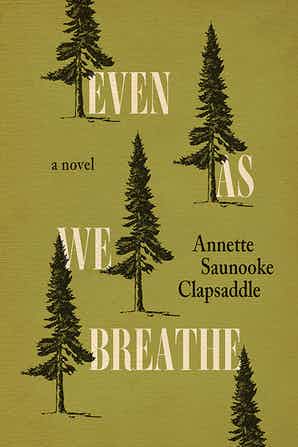
Even As We Breathe, by Annette Saunooke Clapsaddle
Even As We Breathe, by Annette Saunooke Clapsaddle
I can’t remember how I heard about this book, but I’m so glad I did. It is the kind of novel that’s hard to put down. The characters are developed well and I really wanted both of the main characters to find happiness and what they were looking for.
A young Cherokee man, Cowney Sequoyah, and a young Cherokee woman, Essie Stamper, get jobs working at the Grove Park Inn in Asheville, North Carolina, during World War II. The resort had been taken over by the US Government and housed foreign diplomats and their families.
Even As We Breathe is the story of the pull the Qualla Boundary has on Cowney and Essie. (The Qualla Boundary is the land trust in North Carolina that the descendants of the Cherokee people who hid out in the Great Smoky Mountains to avoid the Trail of Tears to Oklahoma in 1838 live on.) Even as they yearn to get away from Cherokee and the Qualla Boundary, they are drawn to it. The story shines a light on the white world’s prejudice against Cherokee Indians in the World War II era.
(Before you get upset that I use the term “Indian” instead of the politically-correct term “Native American,” when I did the research for my book, The Blue Ridge Mountains of North Carolina, I learned that, since the term Native American can be used to describe anyone born in America, the North American Indian Women’s Association recommends using the term American Indians. Therefore, I use the word Indian in this blog post and I used it in my vintage postcard book referenced herein.)
There are many, many layers to this story. Cowney’s club foot prevents his being able to serve in the US military during the war, which is a constant guilt he must deal with. There are family secrets that unfold throughout the book. His Uncle Bud plays heavily in Cowney’s life – and not in a good way.
The young daughter of one of the diplomats disappears. Through a series of bad decisions made by Cowney, Essie, and one of the US soldiers on duty at the Grove Park Inn – and the fact that Cowney is a Cherokee Indian and, thereby, is immediately suspect – things go badly for Cowney.
I hope I’ve given you enough information to make you want to read the book and not enough details to spoil it for you. Perhaps I especially enjoyed this book since I live in North Carolina and have visited Cherokee and Asheville many times, but I think you’ll like it, too.
The author, Annette Saunooke Clapsaddle is a member of the Eastern Band of Cherokee Indians and holds degrees from Yale and the College of William and Mary.
Below is a postcard of the Grove Park Inn that I included in my vintage postcard book, The Blue Ridge Mountains of North Carolina, published by Arcadia Publishing. If you’re interested in learning more about the Great Smoky Mountains, Cherokee and the Qualla Boundary, and Asheville, my book is available on Amazon and from the publisher.
A portion of a linen vintage postcard of Grove Park Inn.
Since I was on the waitlist at the public library for The Last Year of the War and Even As We Breathe for quite some time, it was coincidental that I read them at the same time and both were set against the backdrop of internment during World War II. Another Cherokee connection was in Step into the Circle: Writers in Modern Appalachia, edited by Amy Greene and Trent Thomson, which I read in January. (See my February 8, 2021 blog post, 4 Other Books I Read in January 2021.) My favorite part of that book was the section about Cherokee translator Marie Junaluska.
Dead Wake: The Last Crossing of the Lusitania, by Erik Larson
Dead Wake: The Last Crossing of the Lusitania, by Erik Larson
I can’t say enough about the way Erik Larson writes nonfiction books. He has a way of bringing history alive and holding me spellbound. Granted, I’m a bit of a history buff, but I think many of you would enjoy this book even if you don’t think you would.
The Lusitania was an ocean liner of the Cunard Cruise Line out of England. Ignoring the danger all British ships – military and otherwise – faced from German U-boats in 1915 (during World War I, of course), the Lusitania sailed out of New York City toward Liverpool, England, with more than 1,900 people on board.
Mr. Larson researched the backgrounds of the people who sailed on that voyage of the Lusitania and shares with us tidbits of their lives and why some were going to England. He weaves into the book the hot potato issue of the day: Were cruise ships fair game for German U-boats?
Germany maintained that they were fair game because they were probably carrying munitions as well as passengers.
Tension grows chapter-by-chapter as we alternate between seeing the war and enemy ships from the perspective of the captain of U-Boat 20 and from the perspective of passengers on and the captain of the Lusitania.
I found listening to Dead Wake: The Last Crossing of the Lusitania to be a painless way to learn details about its fateful voyage as well as more than I’d known before about German U-boats and torpedoes. The book goes beyond the sinking of the Lusitania as US President Woodrow Wilson hesitated to enter the war. In fact, it was two years after the sinking of the ocean liner before US troops arrived in England to help “the mother country” out of its dire situation.
Since my last blog post
I’ve had more books vying for my attention than I had time to read or listen to them. At the same time, I’m getting the first 50 pages of my manuscript for my historical novel The Doubloon (or perhaps The Spanish Coin) ready for a professional critique. It’s time to take the plunge!
Spring is in the air here in North Carolina. The daffodils are blooming. They’ve been the harbinger of spring my entire life. I can still remember running into the house clutching a fistful of daffodils and announcing to my mother, “The daffodils are blooming! The daffodils are blooming!” I suppose I’ve had Seasonal Affective Disorder all my life. They just didn’t have a name for it until recent years.
Until my next blog post
I hope you have one or more good books to read this week. Maybe one of the books I wrote about today will catch your eye.
If you’re a writer or other artist, I hope you have productive creative time.
I hope you stay safe and well. I’ll get my second Covid shot before my next blog post. I’m excited about that and the promise it brings. I’ll keep wearing a mask and maintain social distancing as long as necessary, though. I hope you can get vaccinated soon.
This isn’t what I had planned to blog about today, but after receiving an email from an independent bookstore in the small western North Carolina town of Sylva last week, I decided it was time for me to put in a plug for independent bookstores.
Some of us (including myself!) are guilty of ordering books from big online stores. By doing so, we might save a little money, but during this time of pandemic it just might be more important for us to order our books online from an independent bookstore.
If you’ve followed my blog for long, you know I’m a supporter of public libraries. I still am and always will be; however, the public libraries are closed now for an indefinite length of time. I still borrow e-books and some downloadable audiobooks from the public library, but many books are not available in those formats.
City Lights Bookstore & Café, Sylva, North Carolina, in December 2014
Today I’m highlighting City Lights Bookstore in Sylva, North Carolina. Chris Wilcox and his staff there would really appreciate your ordering a book or two (or more!) from his shop, https://www.citylightsnc.com/.
The website states: “Selling new and used books, cards, gifts, journals, maps, and more since 1985.“
Nestled in the Appalachian Mountains in western North Carolina, Sylva is a fairly small town. Although the county seat of sparsely-populated Jackson County, the downtown business district in only a few blocks long.
The town heavily depends on the summer tourist season and the faculty and students of nearby Western Carolina University. But classes are online now and the students have gone home until further notice. With the summer tourist season looking doubtful this year, the independent businesses in places like Sylva need our support.
Chris is trying to stay in business, but he really needs our help. He and his shop hold a special place in my heart because City Lights was one of the first bookstores to carry my vintage postcard book when it was published in 2014. When I visited the shop, Chris invited me to autograph the copies he had in stock. That made me feel so good!
If you live in the Sylva area, Chris is offering curbside service on Tuesdays through Saturdays from 10:00 a.m. until 6:00 p.m. (except for siesta time from 3:30 until 4:00.) The store is closed for browsing to help curb the spread of Coronavirus-19, but you can browse on the shop’s website: https://www.citylightsnc.com/ and place your order for delivery via the United States Postal Service.
I love the stated goal of City Lights Bookstore: “Our goal is to share the literature of the region with the world, and the world of books with our community.”
In addition to the books other independent bookstores carry, City Lights Bookstore has a wonderful selection of regional books, fiction and nonfiction, from the Appalachians, including books about The Eastern Band of Cherokee Indians.
Fighting this pandemic is a marathon, not a sprint. If you are able, please support City Lights Bookstore this week and every week or two. It would be a shame if City Lights Bookstore or any other independent bookstore went out-of-business due to the pandemic.
Chris has made it easy for you. If you want to order a book from his shop or set up a private wishlist, all you have to do is submit your email address through his website and verify that you’re a human being. He’ll then send you an email with a special link for you to use to set up an account. Easy peasy!
Chris has no idea I’m blogging about his shop today. I bet he’ll wonder what’s going on when he starts to receive book, journal, and map orders from my blog readers! His shop is closed on Mondays, but I imagine you can go ahead and create an account online and place your order.
If you’re ever in Sylva, drop by City Lights Bookstore and tell Chris that Janet Morrison sent you even though he probably doesn’t remember my name. It’s not like my vintage postcard book, The Blue Ridge Mountains of North Carolina was a bestseller! City Lights Café is located downstairs and is a good place to grab lunch.
Since my last blog post
I’ve been somewhat at loose ends. There are numerous books I could have read and just as many writing projects I could have worked on. It took most of the week, but I finally settled on concentrating on reading books about the craft of writing. Those books held my interest longer than any novels I picked up.
I reworked my “editorial calendar” for my blog for the next 12 months. More than a few topics in my #FixYourNovel series needed to be rescheduled for later this year and even into 2021.
Until my next blog post
If you’re fortunate enough to have an independent bookstore in your town, do what you can to keep it in business. If you don’t, I invite you to visit Sylva, North Carolina’s City Lights Bookstore online: https://www.citylightsnc.com/. I know you’ll find something you want to order.
I hope you have a good book to read. Who knows? Maybe I’ll get my mind back on reading fiction. Or maybe I’ll put some of the writing techniques I learned last week into practice and make some progress on my novel or the short stories I’m writing.
I hope you have creative time.
I hope you stay safe and well. Please stay at home if your job allows that during this pandemic. Follow the rules, if not for yourself, do it for the rest of us. You can do this.
Let’s continue the conversation
If you know of an independent bookstore that’s struggling during this pandemic, please give us the name and location along with website details, if possible, in the comments below or in the comments when I post this on my Facebook page, Janet Morrison, Writer. That way, my readers and I will discover some independent bookstores all over the world!




























 Janet's Writing Blog