New nonfiction book about Regulator Movement in NC

This weekend I finished reading and taking copious notes from an excellent new nonfiction book, The Regulator Movement in North Carolina: Prelude to the Revolution, by Marcia D. Phillips.

Today is National Tell a Story Day, and this nonfiction book tells quite a story!
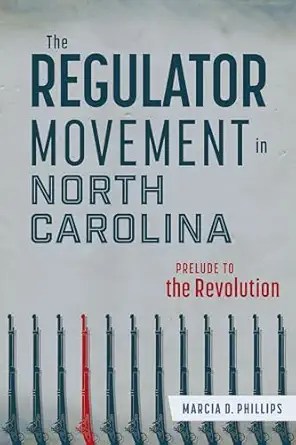
The Regulator Movement in North Carolina: Prelude to the Revolution,
by Marcia D. Phillips

If you want to know some of the little-known background leading up to the American Revolution, I highly recommend this book. As a native North Carolinian, I learned about the Regulators in North Carolina History classes; however, to read the details of it as an adult is to better grasp the terror that many residents of my state were living under in the late 1760s and early 1770s.

The author did an amazing job, like no one else I’ve read, of giving hundreds of years of history leading up to the Regulator Movement in North Carolina. She wrote about how the feudal system in Europe and even the Magna Carta laid the groundwork for what happened here in the mid-1700s!

I had never connected some of the dots that Ms. Phillips connected, but it all fits together now in my mind.

The book also does a great job of explaining the differences between the Regulator Movement in North Carolina and the Regulator Movement in South Carolina. That’s something important for me to keep in mind as I write my historical novels in progress.

Quoting from The Regulator Movement in North Carolina: Prelude to the Revolution, by Marcia D. Phillips,

“In a nutshell, the North Carolina Regulators were not attempting to overthrow the colonial government, just convince it to be the same one they had for years and true to British common law. Their actions were not intended to disrupt the law but to ensure the government’s actions were regulated, to promote uniformity and fairness. The issues of the day – excessive taxation and fees with limited recourse in the assembly, lack of justice in court rulings, and forced taxation for the Anglican Church, which none of the Regulators attended – were the sticking points but also indicative of underlying principles being violated. These discontented farmers were even willing to self-regulate if the colonial government would allow it.”

The Regulators signed petitions in an effort to get Governor Tryon to address their grievances. His appointed officials in the North Carolina Piedmont – particularly in the northern Piedmont part of the province owned by Lord Granville – were robbing the citizens blind and pocketing the money they collected.

They were sick and tired of paying tax to support the Anglican Church. They were Presbyterians and Baptists, and they wanted the right to pay their own clergy. Their clergy were not allowed to officiate over marriages or funerals. For people who had left Europe for religious freedom, this was unacceptable.

The Regulator Movement in North Carolina came to a head in Alamance County on May 16, 1771, when Governor Tryon ordered eight cannons to fire upon a group of Regulators who had asked to be heard. Under the Johnston Riot Act, Tryon gave them until noon to disperse; however, instead of arresting them at noon when they did not disperse, he turned eight cannons on them. It is called the Battle of Alamance, but it was really an ambush.

As the book gives in detail, that was not the end of Tryon’s reign of terror. He had a number of Regulators hanged and had many of their farms burned to the ground.

The book includes an extensive bibliography for readers wanting to do additional research. Thank you, Ms. Phillips, for giving us such a concise and well-researched account of the Regulator Movement in North Carolina.

Perhaps it is partly because of our current political environment that, but while reading this book, it struck me how similar Governor William Tryon of North Carolina was to Donald Trump. I’m not just referring to the fact that he built an extravagant palace for himself while in office.

Some leaders build palaces. Others build ballrooms and triumphal arches.

But it is the pattern of retribution demonstrated by Tryon and by Trump that hit me as an undeniable and frightening similarity between the two men.

Janet

The government should be afraid of its citizens, not the other way around.

4 or 5 Books I Read in May 2019

My reading was haphazard in May, to say the least. I read snippets of several books here and there. I read three books, listened to one book, and read 35% of another one before it had to go back to the public library. I’m having some issues with my computer, but here goes.

The First Conspiracy:  The Secret Plot to Kill George Washington, by Brad Meltzer and Josh Mensch

The First Conspiracy: The Secret Plot to Kill George Washington, by Brad Meltzer and Josh Mensch

I love learning things, and it’s amazing how much I don’t know at my age. One thing I learned from this book seems so basic I’m embarrassed to admit I didn’t know it. In my history studies I didn’t learn that the Continental Congress created the Continental Army in 1775. In my mind, I assumed the Continental Army was formed after the signing of the Declaration of Independence in 1776.

The First Conspiracy:  The Secret Plot to Kill George Washington, by Brad Meltzer and Josh Mensch is almost a day-by-day telling of American Revolutionary history with focus on the little known facts of the things that happened in the shadows – behind the scenes. I minored in history in college, but I didn’t know about the conspiracy to kill George Washington as Commander of the Continental Army.

Most of what I knew about William Tryon was how he robbed the citizens of North Carolina blind to build “Tryon Palace” in New Bern, North Carolina while he served as the colony’s governor. I knew he left that position to take the more lucrative office of governor of the New York colony.

One thing I learned from The First Conspiracy was how Tryon was ruthless in his dealings with the rebels in New York and how he continued on that mission even after taking refuge in a British ship in New York Harbor.

An amusing part of the book was the description of the arrest and questioning of the four men who had decided to print paper currency in secret for the colonies. They hadn’t agreed on an alibi, so each one had a different explanation than the others and, of course, one denied having any knowledge of the printing press in the attic.

I’d read about 70% of the book before it had to be returned to the public library because another patron was waiting for it. I’ll check in out again later in order to read the rest of the story.

The Waxhaws, by Louise Pettus, assisted by Nancy Crockett

The Waxhaws, by Louise Pettus with Nancy Crockett

I wish I’d known in 1983 to purchase a copy of this book when it was published. Now, if you can find a copy to buy, it will likely cost you more than $150. I was delighted to find a circulating library copy in May, and I devoured the content.

This book, more than anything else I’ve read, helped me get a feel for life in The Waxhaws just south of the North Carolina-South Carolina border in colonial times. I hope I’m able to communicate that sense of place and time in my historical novel, The Doubloon, which primarily takes place in that Carolina backcountry settlement in 1769-70.

Anyone interested in day-to-day life in colonial America owes Louise Pettus and Nancy Crockett a debt of gratitude for all the South Carolina history they preserved and shared with each other and their readers.

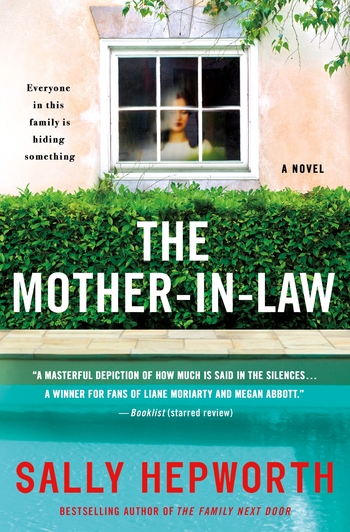
The Mother-in-Law, by Sally Hepworth  

The Mother-in-Law, by Sally Hepworth

I’ve become a fan of Sally Hepworth’s novels, so I got on the wait list for her latest book as soon as it showed up on the “on order” list on the public library’s online catalog. I’ve read all her novels except The Secrets of Midwives.

This novel will keep you guessing “who dunnit.” Everyone seems to have issues with the mother-in-law. Her daughter-in-law tells this story. She has issues with her mother-in-law. So does her husband, his sister, his sister’s husband. It seems like most people who come in contact with the mother-in-law have a hard time dealing with her quirks and aloofness.

There is a totally different side the mother-in-law shows the people she helps through her volunteerism, though. It’s difficult for her family members to understand this part of her life because it seems out-of-character.

As the reader begins to learn the mother-in-law’s backstory, he or she will understand what made her the way she is or was. She’s found dead in her home. Who killed her? You might be surprised.

The Personal Philosophies of Remarkable Men and Women, edited by Jay Allison and Dan Gediman in association with NPR (National Public Radio)

I listened to this book. It contains “This I Believe” essays written by people from all walks of life. Some are or were famous, others I had not heard of. Among those whose essays are in this current audio collection are Helen Keller, John McCain, Oscar Hammerstein II, William O. Douglas, Albert Einstein, Leonard Bernstein, Martha Graham, John Updike, Carl Sandburg, Jackie Robinson, Eleanor Roosevelt, Gloria Steinem, Colin Powell, Helen Hays, and Bill Gates.

The Afterword by Dan Gediman gives the history of This I Believe. The original book contained 100 essays and was done by legendary journalist Edward R. Murrow. The first of the essays was broadcast on radio on Easter Sunday in 1949.

In a nutshell, the This I Believe essays are supposed to be about “the guiding beliefs by which they live their lives.” They are short, being about five minutes long.

One of the goals of the This I Believe organization is “to facilitate a higher standard of public discourse.”

If you wish to know more about this international organization, visit

https://thisibelieve.org/.

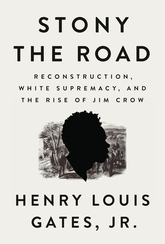
Stony the Road:   Reconstruction, White Supremacy, and the Rise of Jim Crow, by Henry Louis Gates, Jr.

Stony the Road: Reconstruction, White Supremacy, and The Rise of Jim Crow, by Henry Louis Gates, Jr.

I learned a lot from this book. I knew I would. Henry Louis Gates, Jr. is an icon when it comes to history. I only had time to read the first two chapters of Stony the Road: Reconstruction, White Supremacy, and the Rise of Jim Crow, before it disappeared from my Kindle and went back to the public library. (Don’t worry. I immediately got back on the wait list for it so I can continue reading it.)

Look for my blog post next Monday about the important lesson I learned as a writer while reading Stony the Road. It wasn’t a lack of interest that caused me to read only two chapters. It was a case of “too many books, so little time” and the fact that I dedicated most of my time to writing instead of reading in May.

Since my last blog post

Since last Monday’s blog post, we jumped right over spring and went into summer. Last week it was 95 degrees on five days and 94 on the other two. According to the calendar, summer begins in three weeks. We have gone from too much rain to no rain in about three weeks. I’d rather have heat and drought than flooding or tornadoes like they’re having in the central part of the US, so I’m not complaining.

I got some good feedback about last Monday’s blog post. Thank you, Jules Horne and all the others who took the time to comment on here and on my Facebook pages.

Until my next blog post

A couple of weeks ago I read that a blogger should use second person point-of-view instead of first person. There are too many rules. I’ll try to do better in the future.

If you’re a writer, I hope you have quality writing time and your projects are moving right along.

Thank you for reading my blog. You could have spent the last few minutes doing something else, but you chose to read my blog.

Let’s continue the conversation

Have you read any of these books? If so, please share your thoughts below. What are you reading?

Janet