Am I a sun or just another star?

I read a thought-provoking blog post on January 22, 2020 – yes, nearly two years ago! I made a note about it in case I wanted to write about it in a future blog post.

That blog post was written by Cristian Mihai for his Art of Blogging blog. The name of the post was “Blogging Mindset – You Are a Blogstar.” 

Photo credit: Davide Cantelli on upsplash.com

In the blog post, Cristian Mihai compared the blogosphere to the number of stars in our galaxy. He recommended that I, as a blogger, try to be the sun so I won’t be overlooked like the other billions of stars.

Photo credit: Klemen Vrankar on unsplash.com

Instead of emphasizing the need to get more followers than other bloggers, in this particular post Mr. Mihai wrote: “And yes, it takes back-breaking amounts of work to stand out, to be relevant to your readers, but if you turn yourself into a sun, no matter how small your audience is, you’ll find out that the benefits of blogging are more numerous than you ever thought possible.”

Speaking for myself, I want to attract blog followers who will also want to purchase my novel when I get it published. The trick is to find a balance between my journey as a writer, my lifelong interest in American history, my love of reading, and my long-range goal of providing you with historical fiction you love to read.

It’s a winding path. The path has been fraught with detours and incidents that appeared to be deadends.

Experts in blogging tell us that a blogger needs to solve a problem for the reader. In his August 12, 2019 blog post, “Blogging is All About Problem Solving,” Christian Mihai stated, “Now, what problems are you solving by blogging? That’s a serious question, and you should think about it, because your success depends on what you answer.”

This question has buzzed around my head for more than two years. I’m just trying to write a good historical novel, so how will tales of my journey solve anyone’s problems?

The best answer I’ve been able to come up with is this: 

While I try to write the best historical novel you’ve ever read that’s populated by unforgettable characters — each playing their part in a story that will linger in your head long after you’ve finished reading it – I must convey to you through my blog posts that I have writing skills that are worthy of your time and hard-earned money, and that I know the history of a time and place so well that I can transport you there with my words.

No pressure there!

My Conclusion

I appreciate each and every one of you who have stuck with me since I started my blog June 24, 2010. I have my nephew-in-law to thank for setting up the website (http://janetmorrisonbooks.com) through which my sister and I publicize and sell our three Morrison genealogy books. Shortly after designing our website, he told me I should blog. The idea had never occurred to me.

When I started my blog, I didn’t know what I was doing. Some days, I still feel like that, but this is my 548th blog post. My posts were erratic in the beginning. I tried many different schedules. I settled on posting every Monday morning beginning June 26, 2017. That has worked well for me, but I wonder if I need to adjust that schedule again.

I keep promising you a novel. Hold on tight. The road will continue to be bumpy, but I believe there is light (and a novel) at the end of the tunnel.

I’ve concluded that, in light of Christian Mihai’s blog post referenced in the beginning of this blog post, I’m a star and not a sun.

Every minute of every day, 4,000 blog posts are published. There are more than 570 million active blogs in the world today. I don’t know how many suns there are in that 570 million, but I don’t expect Janet’s Writing Blog to ever qualify as a sun. For the time being, I’m happy to just be a star in the blogosphere.

Since my last blog post

Since last Monday, I’ve read Three Sisters, by Heather Morris, and The City of Mist, a collection of 11 short stories by Carlos Ruiz Zafón. I’ve also read How to Write Winning Short Stories, by Nancy Sakaduski and How to Write a Series: A Guide to Series Types and Structure Plus Troubleshooting Tips and Marketing Tactics, by Sara Rosett.

I continue to work on my novel. Do I dare consider it might be the first book in a series? If that’s a possibility, it will influence some of the details and plot lines it. Part of me thinks it’s presumptuous of me to think in terms of a series when it has taken me more than a decade to write the first book and it’s still in the editing stage.

Until my next blog post

In case you want to check out Cristian Mihai’s blog, you can reach it through his website: https://cristianmihai.net/. He’s been a full-time blogger for nine years.

I hope you have a good book to read and find fulfillment in your activities.

For those of us who are Christians, this is the Advent Season. I wish you joy, hope, and peace in the days leading up to Christmas Day.

Let’s continue the conversation

What do you look for in a blog? What do you look for in MY blog? I really need to know. What do you like about my blog? Do you wish I’d write more posts about a particular topic? Do you want me to continue my occasional “#OnThisDay” posts? Are you sick and tired of hearing about the novel I’m writing?

Janet

Books Read in November 2021

It seems impossible that today could be the first Monday in December. That means I’m supposed to tell you about the books I read in November.

I happily spent more time working on my novel manuscript last month than reading, but I’ll fill you in on what I did read.

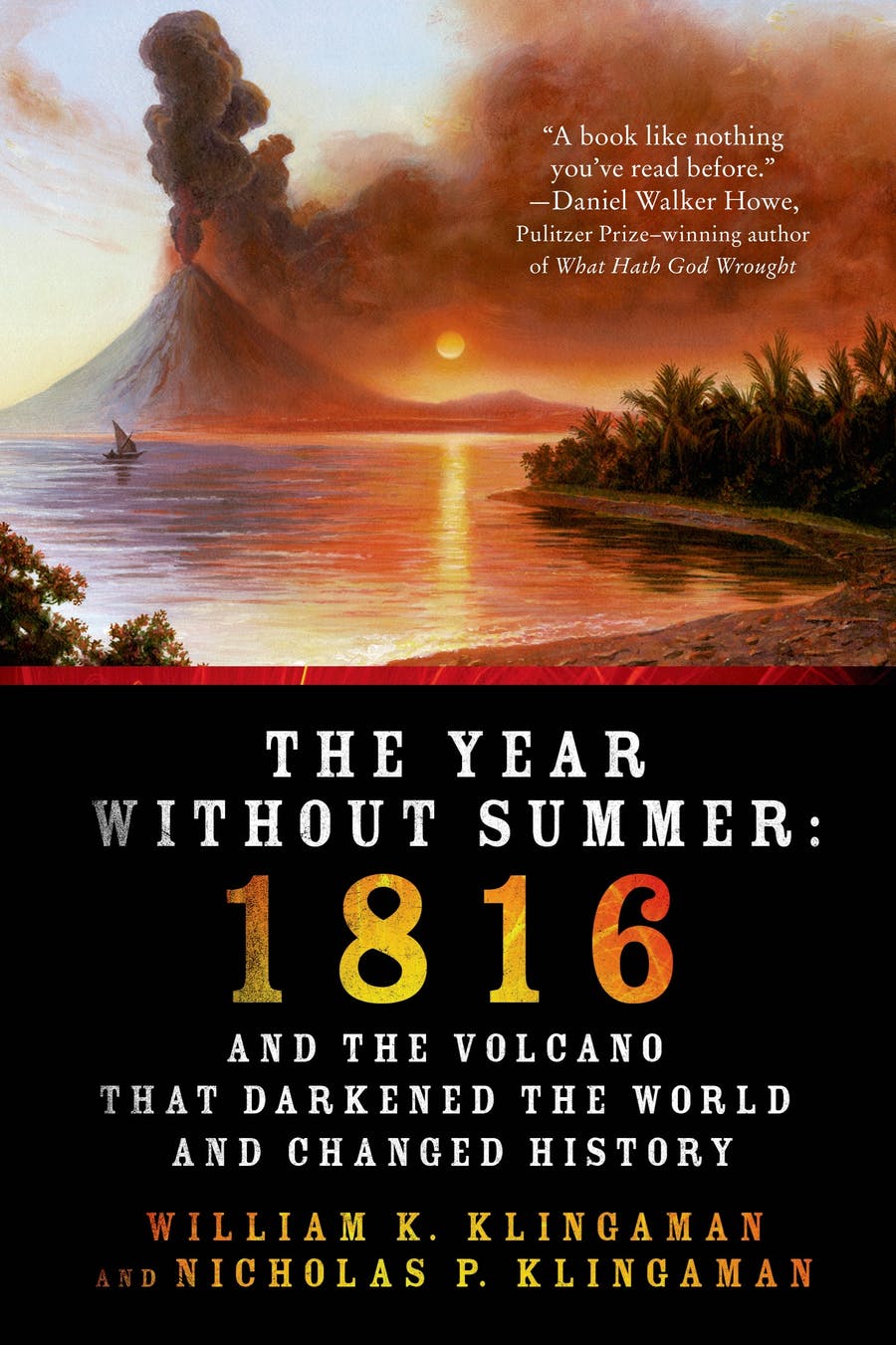
When Ghosts Come Home, by Wiley Cash

When Ghosts Come Home, by Wiley Cash

I’ve enjoyed everything else I’ve read by Wiley Cash. He’s a North Carolina author whose novels are set in North Carolina. They are places I’m familiar with and there’s something special about that. That said – and you may have guessed where I’m going with this – I didn’t like When Ghosts Come Home so much.

It’s set on Oak Island, North Carolina, and I could almost smell the saltwater air while reading the first half of the book. That’s all I can comment on, because I just didn’t have the interest or time to read the second half. I’m curious to know what was on that plane that crashed on page one, but the tremendous amount of backstory in the next chapters became a distraction.

Curious to know if I had the same reaction to the book as others, I read many online reviews. It turns out that many readers have given the novel five-star reviews, but a number have given it one- or two-star reviews for much the same reason I lost interest in the book. As of Saturday afternoon, 1,955 people had reviewed it on Goodreads.com, giving the book an average of 3.77 stars on a five-star scale.

I looked forward to reading this book, and got on the waitlist for it at the public library months ago. It makes me sad not to give it a glowing review. Since it’s received so many five-star reviews, maybe I need to put it on the back burner for a little while and give it another chance later.

The Silk Roads: A New History of the World, by Peter Frankopan

The New Silk Road: A New History of the World, by Peter Frankopan

I’m still making my way through this extraordinary book. Thank you, Chris Andrews, for recommending it to me.

World of Toil and Strife: Community Transformation in Backcountry South Carolina, 1750-1805, by Peter N. Moore

World of Toil and Strife: : Community Transformation in Backcountry South Carolina, 1750-1805, by Peter N. Moore

I’ve read this book before, but I’m getting even more out of it the second time around. It zeros in on the history of the location where my historical novel, The Doubloon (or, The Spanish Coin) is set in 1769. Bits of information in the book are enriching the story I’m writing and also giving me insight into the place in which some of my ancestors lived in the 1760s and 1770s.

If you have an interest in colonial American life in the far-inland portion of South Carolina along the North Carolina border, I believe you would enjoy this book.

The Judge’s List, by John Grisham

The Judge’s List, by John Grisham

John Grisham’s latest novel of legal suspense, The Judge’s List, was a welcome change of pace from the other books I was reading in November. I was on the public library waitlist for the book on CD for months and was able to check it out just a few days ago.

I found myself thinking I’d listen to just one more CD before bedtime but listening to a second or third one instead. It’s that kind of book. It’s Grisham at his best.

The story line is so convincing, it makes me wonder if a judge could actually get away with having such a double life. Also, what this judge is able to do on his computer gives me pause and makes me want to never get on the internet again!

Since my last blog post

I’ve tried to be more organized in reading other blogs. I try to read and comment on at least two or three blogs each weekday. I read more than three, but I try to leave thoughtful comments on at least two or three every day. It means a lot to me to receive comments on my blog, so I want to give some level of encouragement to other bloggers I enjoy following.

I worked on my novel. Making revisions isn’t as much fun as writing the first draft, but it has been easier than I anticipated. I’ve changed some characters’ names and made adjustments in the storyline based on recent research.

I spent some time on one of my hobbies – genealogy. My best “find” was a Revolutionary War Military Pay Voucher for one of my ancestors. Sewing has been another hobby of mine, but I’ve neglected it for several years. I literally blew the dust off my sewing machine cover last week and made a Christmas present for someone.

I also put some thought into the historical short stories I’ve written or plan to write. If I can get myself organized, I want to publish some of them in e-book form in 2022. I’ll keep you posted.

The colder, windy weather and seasonal allergies are keeping me indoors most of the time. I’m fortunate to have the option of staying inside where it’s warm.

Until my next blog post

I hope you have at least one good book to read. As in November, I have too many books vying for my attention and time to do them all justice. It’s a wonderful predicament to be in. I’m so blessed to live in a country where I have free access to a world of books through the public library system.

Thanks for taking the time to read my blog post today.  See you next week.

Janet

What do you know about the 17th Amendment?

There’s probably a limited audience to be reeled in by the title of today’s blog post, but I couldn’t think of a more creative way that might trick some unsuspecting readers to dive in.

If US Constitutional History is not your cup of tea, please visit my blog again next week. I’m not sure what the topic will be, but I’ll try to avoid the US Constitution.

You might recall that I mentioned the 17th Amendment to the Constitution of the United States in my May 31, 2021 blog post because I’d read that it was ratified on May 31, 1913. After discovering that it was actually ratified on April 8, 1913, I had to come up with another topic for May 31. I’ll explain the confusion somewhere below.

Here we go…

Thank goodness for the 17th Amendment to the Constitution of the United States of America!

Even though I majored in political science in college, if asked out of the blue what the 17th Amendment to the U.S. Constitution was about, I’d be hard-pressed to give you the correct answer.

Photo credit: Anthony Garand on unsplash.com

The 17th Amendment, in a nutshell

The 17th Amendment to the Constitution of the United States mandates that the two Senators from each state “shall be” elected by the people of each respective state. It also states that U.S. Senators shall serve six-year terms and each Senator shall have one vote.

What about before the 17th Amendment?

The 17th Amendment was passed by Congress on May 13, 1912. Prior to the amendment’s ratification on April 8, 1913, each state’s U.S. Senators were chosen by the state legislatures. Whoa! Let that sink in for a minute! I shudder to think about the possibilities.

Living in the state of North Carolina, I tremble to think about who the NC General Assembly would have chosen for the US Senate, especially over the last decade or more. Granted, the general populous has rarely elected the people I would have preferred for these offices since Senator Sam Ervin died, but at least a fair and open election gives the citizens some measure of confidence in the people we send to Washington, DC. What they do after they get there is a whole other story. But I digress.

The reasoning behind the way it was before 1913

The framers of the United States Constitution weren’t sure the average citizen was smart enough to vote. They formed our government as a democracy, yet the white men who were in charge in our country’s infancy didn’t completely trust the general populous to elect the right people.

Come to think of it, the white men in charge in Washington, DC and in many state legislatures today don’t trust us to “vote right” either. It seems like we would’ve made more progress than this in more than 200 years, but I digress again.

The framers of the Constitution wanted the United States Senate to be a check on the masses. James Madison assured the attendees of the Constitutional Convention that cooler heads would prevail in the Senate than in the House of Representatives where representatives were elected by popular vote of the people. (Well, not really “the people,” for you could only vote then if you were a white male who owned some real estate. The Electoral College was also instituted as a buffer between the people and the US President. But that’s a topic for another day.)

The reasoning behind having the state legislatures elect US Senators was that the senators would be insulated from public opinion. To borrow a question from Dr. Phil McGraw, “How’s that workin’ for ya?”

An examination of Senatorial elections, 1871-1913

The political scientist in me found a study online of how the system worked from 1871 until 1913. Written by Wendy J. Schiller, Charles Stewart III, and Benjamin Xiong for The University of Chicago Press Journals, their article, “U.S. Senate Elections before the 17th Amendment: Political Party Cohesion and Conflict, 1871-1913,” can be found at U.S. Senate Elections before the 17th Amendment: Political Party Cohesion and Conflict 1871–1913 | The Journal of Politics: Vol 75, No 3 (uchicago.edu). (If this link doesn’t work, please do a search for the article.)

I was eager to see what their study found. My hunch was that the election of US Senators was viciously fought over in the state legislatures and the said elections, no doubt, took up weeks and weeks of the legislatures’ time.

Unfortunately, it would have cost me $15 to gain access to the study, so I’ll just give you this quote from the article’s abstract: “We find significant evidence that under the indirect electoral mechanism, Senate elections were contentious, and winning majority control of the state legislature did not always ensure an easy electoral process. Specifically, the breakdown of caucus nominating processes, the size of majority coalitions, and whether the incumbent senator was running for reelection each exerted an effect on the probability of conflict in the indirect election process.”

Point of confusion

In my opening remarks, I promised to explain the confusion over the date of the 17th Amendment’s ratification. It was ratified on April 8, 1913, when the Connecticut legislature approved it. With Connecticut’s vote, three-fourths of the state legislatures had approved it. That met the requirement for an amendment’s ratification. It was not until May 31, 1913, that Secretary of State William Jennings Bryan officially announced the ratification in writing. Some sources have picked up that date as the date of ratification.

More than a century later, that’s probably all we need to know. This blog post probably already falls into the category of “too much information” for many of you, so I’ll just leave it at that.

Since my last blog post

I’ve been busy working on my novel. The working title is still either The Spanish Coin or The Doubloon. Unless I self-publish it, I won’t get to choose the title. The manuscript stands at just over 91,000 words. That number fluctuates from day-to-day as I make changes.

I’m re-reading World of Toil and Strife: Community Transformation in Backcountry South Carolina, 1750-1805, by Peter N. Moore. As more of it “soaks in,” I’m making some changes in my novel manuscript – changes that should result in a richer story and an additional layer of setting authenticity.

Until my next blog post

I hope you have a good book to read. I’m reading When Ghosts Come Home, by Wiley Cash. I’m trying to finish reading it by tomorrow night, so I can write about it in my blog post next Monday.

I’m also still making my way through The Silk Roads: A New History of the World, by Peter Frankopan. It’s not a book one can rush through. At least, I can’t.

Note: Get Ready! December is Read a New Book Month!

Thanks for reading my blog today.

Janet           

#OnThisDay: President Kennedy was Assassinated, 1963

For those of us who were alive at the time, it just doesn’t seem possible that President John F. Kennedy was assassinated 58 years ago today. If you were at least six or seven years old on that day, it’s probably a day you’ll never forget.

US President John F. Kennedy; Photo credit: history in hd on unsplash.com

It was one of those life experiences like September 11, 2001. I’ll always remember where I was and what I was doing when I heard the news of that attack. My parents’ generation always remembered where they were and what they were doing when the news came over the radio that Pearl Harbor had been bombed on December 7, 1941.

I was in the fifth grade when President Kennedy was assassinated. It was a normal day at school. It was the Friday before Thanksgiving, so I’m sure I was counting the days until that holiday because it would mean a four-day weekend. I was a good student, but it’s no secret that I didn’t like school.

Shortly after one o’clock that Wednesday afternoon, the principal came to the door and motioned for my teacher, Miss Judy Ford. The school building was built in the mid-1920s and there was no intercom. There was no way for a general announcement to be made to all the classes, so the principal went from room-to-room to tell each teacher that President Kennedy had been shot and skilled and school would be dismissed a few minutes later.

At the time, I thought Miss Ford was old. We all did. She broke her foot playing basketball that year, and we all were aghast! She was 24 years old. What was she doing playing basketball?

Now, when I think back on that day, I wonder what had prepared that young, second- or third-year teacher to come back into the classroom and tell a bunch of 10-year-olds that the president of the United States had been killed. Nothing like this had happened in our lifetime. Nothing like this had happened in her lifetime.

As I recall, silent tears ran down her cheeks and she calmly told us the bare facts. We got our personal things together, and in a few minutes the bell rang signaling that school was dismissed. I rode the school bus home.

As I recall, some students seemed happy. They were probably just happy to get to go home early, but some of the children were possibly happy because they’d heard their parents said unsupportive things about the president. I think most of us were confused. We didn’t understand the gravity of what had happened, and we weren’t sure how we were supposed to react. Having seen my teacher in tears, though, had indicated to me that this was pretty serious.

My mother had the TV on when I got home from school. Our family watched the coverage that evening. Since Vice President Lyndon Baines Johnson was from Texas, he and his wife had accompanied the President and First Lady to Dallas. As Jacqueline Kennedy stoically stood by, Johnson was sworn in as President on Air Force One.

Even on our black and white TV we could tell that Mrs. Kennedy’s suit (described as being pink) was stained with her husband’s blood. We watched TV the following days as Walter Cronkite kept us informed, but I still didn’t grasp what had happened.

Lee Harvey Oswald was arrested for the murder. Then, on Sunday afternoon, Jack Ruby shot Oswald at close range and killed him. It was a bizarre sequence of events that was witnessed live on black and white TV.

President Kennedy’s funeral procession was like nothing I’d seen before. His coffin was carried in a wagon pulled by horses. His young wife and children even younger than I stood as it passed and little “John-John” saluted. He was far too young to understand what had happened.

Somehow, it was through the black-and-white TV coverage of President Kennedy’s inauguration and funeral that impressed on my mind the importance, sacredness, and fragility of our government. I still remember seeing out-going President Dwight Eisenhower and in-coming President Kennedy dressed in their top hats for JFK’s inauguration in 1961 and the solemn pageantry of his funeral in 1963.

Since my last blog post

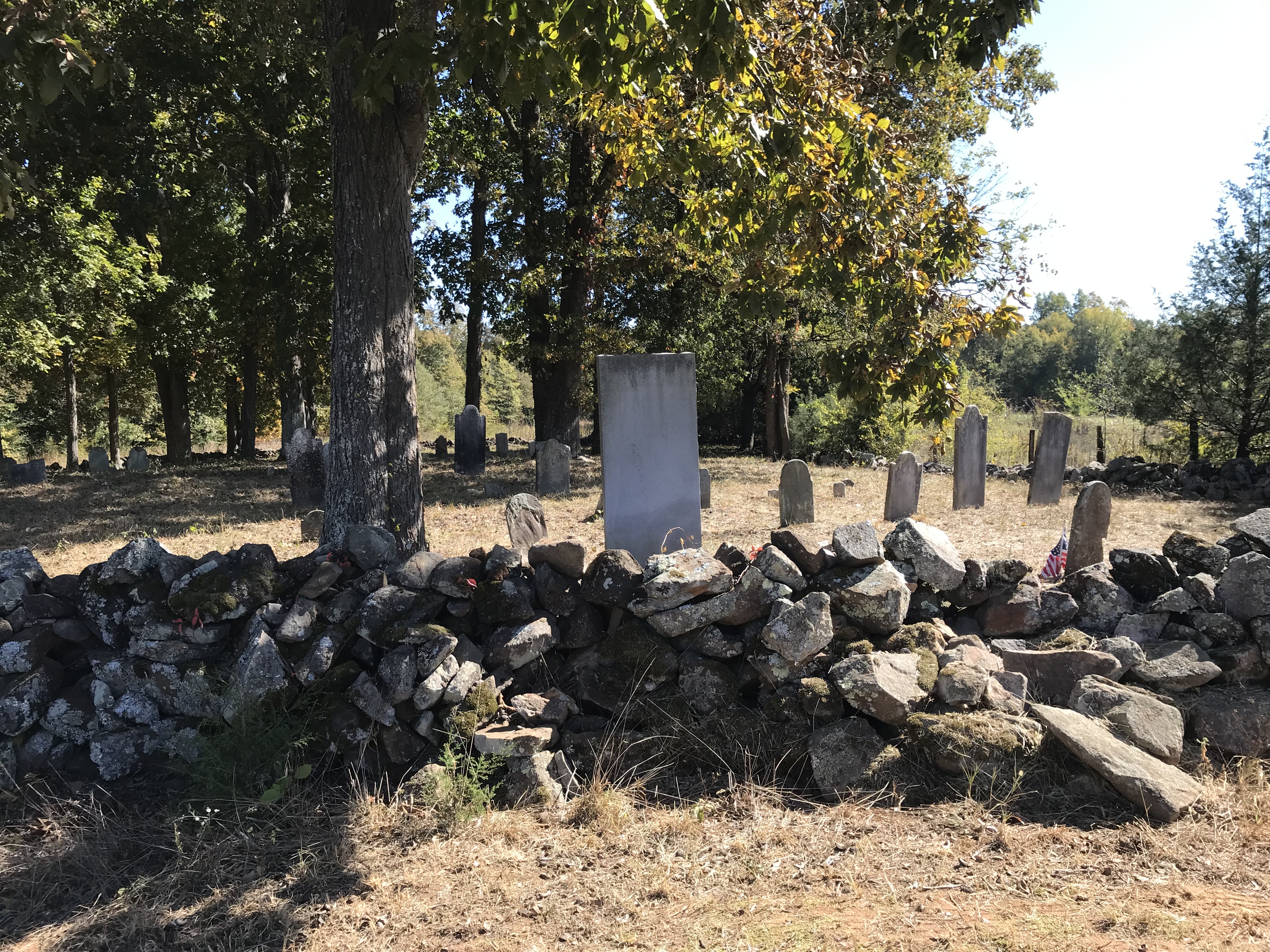
I’ve had a productive writing week. I’ve concentrated on deep point-of-view in my novel manuscript. I did some historical research about legal procedures in South Carolina in 1769, and I revisited the location in which most of my novel is set in Lancaster County, South Carolina.

I needed to get a feel for the common trees and their state of autumn color in mid-November. Even though the setting is only an hour from where I live, I found a couple of interesting differences between my location and the area around Old Waxhaw Presbyterian Church.

Until my next blog post

I hope you have a good book to read. Four books I had been on the waitlist for at the public library all came in this week. I’d rather spend my time writing this week, but I must make time for some reading.

Thursday is Thanksgiving Day here in the United States. I wish my American readers a nice holiday. It’s a good time to stop and count our blessings.

I have everything I need. I hope you do, too.

Janet

#OnThisDay: Articles of Confederation, 1777

It’s been four weeks since my last #OnThisDay blog post. Today’s might not be the most exciting topic for you, but I think it’s important for Americans to be reminded about the early days of our democracy. The historian in me just can’t help myself.

The Articles of Confederation document was the forerunner of the U.S. Constitution.

Photo credit: Anthony Garand on unsplash.com (Preamble of the US Constitution)

On November 15, 1777, the Continental Congress adopted the Articles of Confederation. It was that document that established the name of our country as the United States of America. It served as the defacto constitution of the nation throughout the Revolutionary War.

I reread the Articles of Confederation last week. It had been quite a while since I’d read the document.

Still stinging from oppressive British rule, the frames of the Articles of Confederation were hesitant to create a strong federal government. Much power was retained by the individual states. States’ rights have been a bone of contention throughout the history of the U.S. and still is today. It seems like every week the legislature of at least one state in the union is testing the waters and “pushing the envelope” to see just how far they can go without being reined in by the U.S. Supreme Court. The major issues today that fall in that category are abortion rights, gun rights, and Covid-19 vaccination mandates.

There were weaknesses in the Articles of Confederation. The document did not give the U.S. the authority to issue a national currency. Hence, the various states printed their own money. It makes my head spin to think what our country would be like today if that hadn’t been corrected.

Another weakness in the document was the absence of authority of the national government to levy taxes. Some people probably think things should have stayed that way, but just think how many things we would not have today if not for federal taxes. The “common treasury” was to be supported by the states, with each state contributing an amount based on the value of the land in that state.

Of all the language in the document, the wording in Article III stood out for me. Specifically, the words, “firm league of friendship.” That phrase sounds quaint to our 21st century ears.

Article III states the following: “The said states hereby severally enter into a firm league of friendship with each other, for their common defence [sic], the security of their Liberties, and their mutual and general welfare, binding themselves to assist each other, against all force offered to, or attacks made upon them or any of them, on account of religion, sovereignty, trade, or any other pretence [sic] whatever.”

Article IV went on to state that citizens of any state had the freedom to travel to and from any other state. Of course, slaves were not considered citizens, so they were not afforded that right.

Just as details of how a democratic government operates today takes a long time and much gnashing of teeth, so it was with the Articles of Confederation. The debate leading up to the adoption of the document lasted 16 months.

The Articles of Confederation served the United States of America until March 4, 1789, when it was replaced by the U.S. Constitution. The Constitution is a living, breathing document. It is continually up for interpretation and has been amended 27 times. No doubt, it will be amended many more times.


Since my last blog post

We had spectacular autumn weather last week in North Carolina! Wednesday was a crystal clear, unseasonably warm day. I took a break from raking dead, brown leaves to walk around our yard with my cell. I couldn’t stop taking pictures as I happened on one gorgeous tree after another.

I concluded that I live in paradise. I started with one of my favorite trees. It’s a maple that my father and I found as a sprout in our woods in the fall of 1965. It wasn’t much taller than I was, but it was decked out in beautiful orange leaves. The maples in our yard were yellow in the fall, and I wanted an orange one.

Daddy marked the location of the sprout and returned later to dig it up. We planted it in front of our house, and there it proudly stands today, much taller than the house. This fall, it’s orange at top and the rest of it is yellow.

Maple Tree

I’m blessed to once again live in that house. We’re blessed with a wonderful variety of trees, including pine, cedar, maple, hickory, several varieties of oak, holly, mulberry, poplar, ash, dogwood, sweet gum, persimmon, and black walnut.

Hickory Tree
Dogwood Tree
Cedar Tree
Oak Leaves
Sweet Gum Tree Leaves trying to decide whether to turn red or yellow

Dealing with the leaves in the fall after the red, yellows, golds, and oranges have faded and the spent leaves have dropped to the ground is quite a chore. I tend to dread autumn because of the multitude of leaves that must be raked, blown, carried off, or mulched with the tractor, but this year I’ve chosen to enjoy the riot of color in our yard every day. It won’t last much longer.

This tree is pretty, but I don’t know what it is! Can anyone help me?

When not outside, I worked on my novel. I’m putting into practice some of the things I recently learned in the online writing course I’ve mentioned in earlier blog posts. It feels good to be revising, editing, and improving my novel.

Don’t give up on me, y’all!


Until my next blog post

I hope you have a good book to read.

I hope you have everything you need.

Janet

What Would Make You Happy?

On the heels of reading seven books in June, I took a step back in July and “only” read five books. I’d let the pressure of reading books so I could blog about them get too much of a hold on my life. That’s why I planned to not read as much in July. That didn’t work out very well, but I did start taking a closer look at the types of books I was reading and wanted or needed to read.

If you read my August blog posts, you know there wasn’t a fluffy beach read in the bunch. In fact, there wasn’t a novel in the five, and they were all about serious and sobering topics.

Photo credit: John Mark Smith on unsplash.com

September and October came along and most of my reading was dictated by the writing course I was taking. For two months, I read what I had to read or needed to read. It didn’t leave any time to read what I wanted to read, although I did start reading The Silk Roads: A New History of the World, by Peter Frankopan. It’s not a book that can be read quickly.

Reading is important for a writer; however, writing needs to be more of a focus for me now. I’ve procrastinated and let reading take too much of my time the last couple of years. I don’t regret reading any of the books I read, but I’ll never finish writing my novel at this rate!

What would make me happy?

About six weeks ago, I took time to discern what will make me happy. The things I came up with were (1) to work on my book; (2) to work on my genealogy; and (3) to get back to sewing and quilting. I haven’t sewn in going on two years now. I hope I can remember how to turn on the sewing machine. I have tubs of fabric that need to be turned into gifts or quilts and other household items.

The fourth item on my list is to get back to playing the mountain dulcimer. I should play it every day. I haven’t touched it in months. I hope my muscle memory kicks in when I take it out of its case today. I’m not very good at it. The reasons for that are (1) I’m not musically-talented and (2) I don’t put much time into it.

The Gifts of Imperfection, by Dr. Brene Brown

I recently reread The Gifts of Imperfection, by Brené Brown. It reminded me not to be so hard on myself and not to worry about what other people think of me. I listened to her book, Rising Strong, and it inspired me to be brave. That’s what finally prompted me to hire a professional editor to critique the first 50 pages of my novel. (See my July 12, 2021 blog post, 4 Other Books I Read in June 2021 and my July 26, 2021 blog post, How My First 50 Pages Stood up for Critique.)

Rising Strong, by Dr. Brene Brown

I’d been working on today’s blog post early in July, when I read Barbara Strickland’s July 11 blog post: Limit the Limits – Barbara Strickland – Author & Blogger (brstrickland.com. After reading an article in LinkedIn, Barbara blogged about a methodical way to figure out what your dreams are.

Her post sort of dovetailed with what I was writing four months ago that ended up being postponed until today. She looked at her list of dreams from a view of practicality. I didn’t have to consciously do that when I made my list because it’s not my nature to dream about doing or having things I can’t afford or don’t have the health to do.

Taking stock on this milestone year

I graduated from high school 50 years ago. There. I’ve said it. Do the math. Yes, I’m 68 years old.

Photo credit: Zoltan Tasi on unsplash.com

There’s something jolting about admitting I graduated from high school 50 years ago. I don’t know what it is about those anniversary years that end in a zero. I was not prompted to take stock of my life last year, 49 years after my graduation.

Our 50-year high school reunion was planned for last month but had to be postponed until sometime next year due to the Covid-19 pandemic. 

I was in a class of 191. At least 33 of my classmates have died. Talk about a sobering thought! More than one of those were special, lifelong friends of mine.

Assessing my blog topics

Once in a while, I need to take a step back and evaluate my life – how I’m spending my time, what I’m accomplishing, what I’m doing to benefit others, and what I’m doing to improve myself. This is one of those times, so please bear with me.

This is supposed to be my writing blog. My reading is important and integral to my writing; however, since the Covid-19 pandemic started, I haven’t written much about my journey as a writer until this summer when I decided to get the first 50 pages of my novel manuscript critiqued by an editor.

A blog is supposed to serve a purpose. It’s supposed to benefit the reader. I hope my continued journey as a writer will serve as fodder for my future blog posts and those posts will enlighten or entertain you in some way. Otherwise, you don’t have any reason to keep reading my blog.

No pressure there!

Photo credit: Daniel Thomas on unsplash.com

There are many things I enjoy about blogging. Over the years, I’ve developed friendly relationships with a few readers. They live all around the world. Many of them have opened my eyes to things I didn’t know. They’ve helped me understand different perspectives. They have enriched my life. I will never meet them except via the internet.

People in 20 countries visited my blog the last week in October. Since I started my blog, people in 144 countries and territories have looked at it. That is surprising, gratifying, and a bit scary.

I never know what’s going to strike a chord with readers. When I have a reader from China or some countries in Africa, it especially catches my attention and I feel a heightened sense of responsibility.

I appreciate your taking time to read my blog. I’ll try not to let you down.


Since my last blog post

Here in North Carolina, we raced right through autumn last week and jumped into winter. There was snow in the higher mountains in the state and our county had a freeze warning. It just doesn’t seem quite right to have a freeze warning before having a frost warning, but that’s life in North Carolina.

Photo credit: Janet Morrison

I’m still decluttering my home in hopes of making space for more creativity and less stress.


Until my next blog post

Have you assessed your life lately? What would make you happy? What’s missing in your life? What are you waiting for?

I hope you have at least one good book to read.

I hope you’re happy and have everything you need.

Janet

Some Odd Books Read in October 2021

The titles of the books I read in September are way off the beaten path. Since I’m writing a novel that includes a murder, I need to make sure I have certain details as accurate as possible.

Actually, I want to get all the details right, but my research and study in October concentrated on (1) the details about the dead body in the first chapter; (2) the ways in which the murderer tries to present himself as innocent; and (3) writing in deep point-of-view.

Hence, I read the books listed below. They aren’t exactly the kind of books one wants to curl up with on a lazy Sunday afternoon, but they were helpful (or, not-so-helpful) for what I needed them for.

Acting: The First Six Lessons, by Richard Boleslavsky

I checked this book out from the library in hopes that it would give pointers on how an actor “gets into character.” It did not.

In order to write a novel in deep point-of-view, I must get into character. I must write everything through the ears, eyes, and emotions of each of my point-of-view characters.

Badass Acting, by Tice Allison

I had the same hopes for this book. It failed to deliver.

Seven Pillars of Acting, by Sonya Cooke

I thought surely this acting book would include what I was looking for, but it didn’t.

I think I know what I’m doing in writing deep point-of-view. I just thought reading pointers on how an actor gets into character might be helpful. The best way to grasp this element of writing is to read the work of authors who do it well.

All these acting books might be helpful to someone learning the art of acting. They just didn’t cover what I was looking for.

Forensics for Dummies, by D.P. Lyle, M.D.

Forensics for Dummies, by D.P. Lyle, M.D.

This book contained a bit of technical information I needed to know about the timeline for the body in my novel.

Murder and Mayhem: A Doctor Answers Medical and Forensic Questions for Mystery Writers, by D.P.

Lyle, M.D.

Murder and Mayhem: A Doctor Answers Medical and Forensic Questions for Mystery Writers, by D.P. Lyle, M.D.

Like Forensics for Dummies, this book had bits and pieces of helpful information.

Forensics and Fiction: Clever, Intriguing, and Downright Odd Questions from Crime Writers, by D.P. Lyle,

M.D.

Forensics and Fiction: Clever, Intriguing, and Downright Odd Questions from Crime Writers, by D.P. Lyle, M.D.

You’ve maybe noticed a pattern here. Dr. D.P. Lyle is the leading expert in the field of forensics in writing books for writers and other laypersons.

What Every BODY is Saying, by Joe Navarro with Marvin Karlins, Ph.D.

I wanted to read this book to get pointers on how to tell if a person is lying. I wanted to incorporate “dead giveaways” in the words, body language, and behavior of the murderer in my novel. It was an interesting book. It gave some suggestions, but the bottom line was that you need to read more than one book to become an expert in spotting a lie.

What Every BODY is Saying: An Ex-FBI Agent’s Guide to Speed-Reading People, by Joe Navarro with Marvin Karlins, Ph.D.

Spy the Lie, by Philip Houston, Michael Floyd, and Susan Carnicero, with Don Tennant

This book is very much like What Every BODY is Saying, by Joe Navarro. It’s a little more indepth but gives the same admonitions that you need to do more than read a couple of books in order to become an expert at telling when someone is lying. I don’t need to be an expert, so I think I’ll end my research there.

Spy the Lie: Former CIA Officers Teach You How to Detect Deception, by Philip Houston, Michael Floyd, and Susan Carnicero, with Don Tennant.

I won’t give any examples from the book because you can’t take just one or two hints and make a definitive decision about whether a person is lying to you. I hope most of us rarely are lied to, so it’s not a huge problem for us. On second thought, if we watch certain TV networks, are on Facebook, or hear any political campaign ads, we’re lied to every day.

The Little Red Writing Book, by Brandon Royal

The Little Red Writing Book, by Brandon Royal

The most helpful part of this tiny book is the pages of often-made-mistakes in grammar. For instance, you’d think by now I’d know when to use “who” and when to use “whom,” but I always have to look it up when I’m writing. When I’m talking, I probably get it wrong every time. Now I have a cheat sheet.

Breathing Life into Your Characters: How to Give Your Characters Emotional & Psychological Depth, by Rachel Ballon, Ph.D.

You probably recognize the name of this book, since I’ve referred to it a number of times in my blog this summer and fall. I started reading and working my way through it early this summer.

Breathing Life into Your Characters: How to Give Your Characters Emotional & Psychological Depth, by Rachel Ballon, Ph.D.

The online writing course I took for eight weeks pulled me away from it, but I did finish it in October. I highly recommend it to anyone writing their first novel.


Since my last blog post

I got my Moderna Covid-19 booster shot on Tuesday. I’m happy to still be fully-vaccinated. I just wish all the people I’d like to be around at church, etc. were vaccinated. That’s not going to happen, since the Covid-19 vaccine has been politicized in the United States. Although I still wore a mask, it was nice to get back to in-person worship yesterday after a long absence.


Until my next blog post

I hope you have a good book to read. At the recommendation of one of my Australian blogger friends, Chris Andrews, I’m finally reading The Silk Roads: A New History of the World, by Peter Frankopan. It’s excellent and a nice change of pace after the books I read in October.

Note: November is National Novel Writing Month, National Family Literacy Month, National Memoir Writing Month.

Note: Today is National Family Literacy Day and Author’s Day.

Wherever you are, thank you for reading my blog. Have you read any odd books or good books lately?

Janet

Giving God the Right of Way

I plan. I make lists. I find great satisfaction in checking off the items I complete on my to-do list. There are some problems with this.

First, I always think I can accomplish more in a day than I can. This leads to frustration and feelings of guilt.

Second, I don’t allow for “down days.” Even if I didn’t have chronic fatigue syndrome and fibromyalgia, having a rigid daily to-do list would be foolish.

Third, and most importantly, I tend to leave God out of the process.

If you followed my blog this summer, you know I’ve gone through some upheaval with the novel I’m writing. I started writing it more than a decade ago. I honestly don’t know when I started it. It languished on my computer for the last several years.

In July, I decided it was “no or never.” I hired a professional editor to critique the first 50 pages of my 303-page manuscript. The feedback I got from her was constructive and attention-grabbing. At the same time, it was disheartening yet exactly what I needed to hear.

A failed plan

That detailed critique prompted me to stop procrastinating and start focusing my attention and energy on learning the skills I needed to learn so I could finally finish that novel. I made a plan. I made a daily (Monday through Saturday) to-do list for what to study and what to practice or write each day. I thought by not working on my book on Sundays I was doing the Christian thing. I would give myself Sundays off and, thereby, do what was pleasing to God. That worked fairly well for a couple of weeks.

But guess what happened. I became a slave to my plan. It was my plan. I thought I had been clever to create this plan with its one-day-a-week set aside not to work on my writing. By doing so, I thought I was “keeping the Sabbath.”

It was my plan, but it was wearing me out.

Photo credit: Glenn Carstens Peters on unsplash.com

I fell behind on August 16. I’d assigned myself too much reading, too much writing, and way too much nuts-and-bolts work on my novel regarding details about my characters.

I’d set myself up for failure.

By pushing myself to do everything on my list, I threw myself into a chronic fatigue syndrome relapse for the next three weeks; however, I read something on August 17 that got my attention. It was the third chapter in Seven Things That Steal Your Joy: Overcoming the Obstacles to Your Happiness, by Joyce Meyer.

Led by the Spirit

Ms. Meyer wrote the book in 2004. I’d bought it as a used book many years later and kept meaning to read it. I read the first chapter on August 15 and the second chapter on August 16. It was “on my list” to read the third chapter on August 17.

Little did I know that God had a reason for leading me to Chapter Three on August 17. I don’t believe in happenstance when it comes to such things. The title of that chapter is “Joy Keeper: Be Led of the Spirit.” By “Spirit,” Ms. Meyer is referring to the Holy Spirit.

The Holy Spirit is our Helper, if we are just open to It. From the first sentence in Chapter Three (“One of the most dynamic ways to keep our joy is to allow the Holy Spirit to lead us in the way we should go.”) to the last sentence in the chapter (“God will write His laws on your heart, then you won’t need reminders to keep your joy.”), that chapter was exactly what I needed to read in the emotional and physical place I was in on August 17.

It didn’t take me long to realize that my six days-a-week reading and writing plan – as detailed and as carefully- and methodically-planned as it was – lacked one thing. It lacked the most important thing. It lacked God. I spent hours working out a plan that I thought would lead me to a point next February when I’d have all this knowledge in my head and be ready to rewrite my novel’s outline and then start rewriting the manuscript.

But aside from setting aside the Sabbath to not work on my novel or my writing skills, I’d left God and the Holy Spirit out of my grandiose plan. I shredded my plan.

What’s next?

Don’t get me wrong – I still believe in having a plan, but what’s new is that I want to start each day by seeking God’s will for me that day. He may want me to tackle the next item on my novel “to-do” list, or He might have a better “to-do” list for me for that day.

I still believe God wants me to write. He might want me to write the novel I’ve had in my head and on paper for 10+ years. He might have an entirely different novel in His plan for me. He might have something else altogether in store for me.

Ms. Meyer wrote in the third chapter of her book, “If you keep your plan before the Lord, you must be ready to let Him change anything at any time. If you do this, your path will always be right and prosperous.”

She also wrote, “… and we will never find joy if we think we have to know everything before we take our first step in the direction He is leading us.”

Today is the last class in the “Eight Weeks to Writing a Commercially Successful Novel” online course I started on September 6, so it’s time for me to create a new plan.

This time, though, I’ll try to be reasonable, and I’ll try to remember to seek God’s will every morning and be ready to ditch my plan for His plan.

Since my last blog post

I’ve always been a pack rat. I keep things “because I might need it someday.” I’ve transitioned into, “I’m never going to need this.” Last week I concentrated on my file cabinets. That alone dates me. I’ve purged file folders of all descriptions.

I don’t need the paperwork for the car insurance I had in 1995. I don’t need most of the recipes I kept in the 1980s. I don’t have the energy to do much cooking. Plus, I’m trying to eat healthier in 2021 than I did in 1981. The list goes on.

This is a work in progress, but it feels good to let go of some things.

Until my next blog post

I hope you have a good book to read or productive time if you’re writing one.

Whatever season you’re transitioning into where you live, try to enjoy the gift each day is. This is a challenge for me. You know I don’t like cold weather.

Thank you for taking time out of your day to read my blog post.

I’ll leave you with this short sentence from the third chapter of Joyce Meyer’s book: “To walk in the presence of God, we must give the Holy Spirit the right of way.”  I love that!

Until my next blog post – which I have planned for next Monday – I hope you and I both give the Holy Spirit the right of way.

And wait on tiptoe to see what happens.

Janet

#OnThisDay: Russia Transferred Alaska to US, 1867

The thought of Russia selling Alaska to the United States in 1867 – or any other time – makes my head spin. My first thought was, I bet the Russians are still kicking themselves over this! That led to me look up the origins of the idiom to kick oneself.

According to my handy reference book, The American Heritage Dictionary of Idioms, by Christine Ammer, this idiom, which means to berate or reproach oneself, dates back to the late 1800s. One wonders if the expression was coined by the Russians after selling Alaska to the United States, but I guess not.

Back to Russia Selling Alaska to the US

Back to the topic of today’s blog post… I remember reading about something called “Seward’s Folly” in a lower grades’ history book, but if given only seconds to come up with the answer I’d be hard pressed to recall that it refers to U.S. Secretary of State William Seward negotiating the transaction.

Many Americans thought it foolish to purchase Alaska for the exorbitant price of $7.2 million, or around two cents per acre. That converts to a mere $120 million or so in 2021.

Photo credit: Hari Nandakumar on unsplash.com

Putting the event in historical context, though, it makes sense that people were up in arms over the federal government spending $7.2 million for a place a world away. It was a place virtually no one in the nation expected to visit. To a great extent, that still holds true today.

A four-year civil war had taken a terrible toll on the nation. The Confederate states were being brought back into the fold of the United States, although there were deep-seated hatreds on both sides of that conflict – so deeply ingrained that remnants of those feelings still exist 160 years later.

In 1867, just two years after the end of that war, the federal government pays more than $7 million for a vast wilderness at the top of the world. No wonder it seemed like folly to the average American.

Photo credit: Deon Van Zyl on unsplash.com

All that taken into account, today Alaska seems like a bargain any way you look at it. It’s one of the places I’d like to visit, but that’s highly unlikely now. The photographs of the landscape and the wildlife are breathtaking.

Just think: 663,267 square miles. Denali and other National Parks. National forests. Wildlife refuges. Fishing. Glaciers. Whales. It’s one-fifth the size of the rest of the United States put together.

Alaskan Salmon, for crying out loud! It’s delicious and so nutritious.

Photo credit: Peter Hansen on unsplash.com

Alaska became a US territory on May 11, 1912 and was admitted as the 49th state in the Union on January 3, 1959.

Fifteen percent of Alaska’s population is indigenous. Nearly two dozen native languages are spoken in Alaska. No other US state is so rich in natural beauty, wildlife, natural resources, and human history.

Thank you, William Seward!

Since my last blog post

I continue with the eight-week online writing course. A couple more weeks to go.

We had beautiful days in the mid- and high-80s last week. It was probably summer’s last gasp. I’ll miss the warm weather. The weather last week was perfect for taking care of some yardwork. It’s time to get the yard ready for the coming winter.

Until my next blog post

I hope you have a good book to read. My reading for pleasure lately has been almost nil.

I look forward to getting my Covid-19 Moderna booster shot soon.

Janet

Myths and Legends Day

Myths and Legends Day is an internationally-celebrated day on October 11 every year. Who knew? I’d never heard of it until this year.

I found it on a list of days.

This week seems to have more than its share of such days. Tomorrow wins the special day contest. It’s Cookbook Launch Day, Free Thought Day, and Old Farmers Day. My favorite thing to celebrate tomorrow, though, is International Moment of Frustration Scream Day.

International Moment of Frustration Scream Day

I think most of us could really get into International Moment of Frustration Scream Day during this pandemic. If I were a betting person, I’d bet money that there are some healthcare workers and teachers who could show us how to do it.

I wanted to scream when I learned that the local legend in Lancaster County, South Carolina around which I had written the first draft of a novel was just that. A legend. It makes for a wonderful story, but as with many yarns spun for 250 years, it’s just not true. At least, it’s not provable.

Nevertheless, I took a bit or that legend and something I saw years ago on a segment of the PBS TV series, “History Detectives,” and I’ve spun my own unique story. The working title is The Doubloon or The Spanish Coin and, if you and I live long enough, we’ll get to see it in print. Authors use the abbreviation WIP for Work in Progress. My novel is definitely a WIP.

Back to Myths and Legends Day

That brings me back to Myths and Legends Day. Look online and you can hardly find anything about it. Several websites actually use the same photograph to illustrate the day: children dressed as their favorite characters such as Superman, Robinhood, and several I can’t identify. It does sound like something fun for elementary students to celebrate and might even encourage some of them to read.

Paul Revere

One legend that came to my attention recently is the famous “midnight ride of Paul Revere.” It’s a wonderful story, and it’s true. The problem is, it’s not the whole story.

On the night of April 18, 1775, Paul Revere rode horseback through the northern Boston area to warn the Americans about the movement of British troops. I hate to burst your bubble, but he did not ride through the countryside shouting, “The British are coming! The British are coming!” I know. That’s what I’ve thought all my life, too.

Henry Wadsworth Longfellow’s poem, “Paul Revere’s Ride” has been memorized by many a school student. Paul Revere took on a superhuman aura. He did make that ride, and I don’t mean to take anything away from him; however, he’s not the only person to make such a dangerous journey.

William Dawes

William Dawes was also sent to ride that night to Lexington, Massachusetts to warn Samuel Adams and John Hancock that they were soon to be arrested. Also, his task was to alert the Minutemen that the British troops were on the move. Revere got to Lexington a half hour before Dawes. It’s thought that Revere had the faster horse. Also, Dawes was thrown by his horse as he and Revere headed on to Concord, Massachusetts, his horse escaped, and Dawes had to walk back to Lexington.

Samuel Prescott

Paul Revere recruited Samuel Prescott of Concord to meet him along the way since he was more familiar with the Concord area. He supposedly guided Revere through the darkness. When Revere, Dawes, and Prescott were met by British officers on the way to Concord, they split up and Prescott was the only one that made it all the way to Concord. Revere was captured.

Israel Bissell

Then, there was Israel Bissell. He rode 345 miles on the Old Post Road from Watertown, Massachusetts to Philadelphia to warn militia companies of British troop movements. He covered that amazing feat in four days and six hours. The horse he started out with died near Worchester, Massachusetts.

You think all that’s astounding and possibly news to you? Just wait.

What about Sybil Ludington?

I wish I’d been told about Sybil Ludington when I was in school! Her journey was more than two years after that of the above four men, but she rode 40 miles (twice as far as Paul Revere) to alert the residents of Danbury, Connecticut that the British were approaching. She was all of 16 years old.

She made her roundtrip journey between 9:00 p.m. on April 26, 1777 and dawn the next morning. Unfortunately, the British had already torched Danbury. That doesn’t take anything away from her efforts, though. She was later commended by George Washington and this statue of her atop her horse is in Carmel, New York.

Statue of Sybil Ludington in Carmel, New York

“Remember the ladies” ~ Abigail Adams

I’m reminded of Abigail Adams’ often quoted excerpt from her March 31, 1776 letter to her husband, John Adams, as he was away at a meeting of the Continental Congress in Philadelphia helping to work out the details of the American Revolution:

 “I long to hear that you have declared an independency. And, by the way, in the new code of laws which I suppose it will be necessary for you to make, I desire you would remember the ladies and be more generous and favorable to them than your ancestors. Do not put such unlimited power into the hands of the husbands. Remember, all men would be tyrants if they could. If particular care and attention is not paid to the ladies, we are determined to foment a rebellion, and will not hold ourselves bound by any laws in which we have no voice or representation.”

Yes, indeed. Remember the ladies!

Since my last blog post

My reading list so far this month might raise some eyebrows and get me some attention from the police. In conjunction with the novel I’m writing, this month I’ve read a variety of forensics books.

Until my next blog post

Note: I drew heavily in my post today from the following website: https://www.constitutionfacts.com/us-declaration-of-independence/the-five-riders/. That’s where I also found the photo of the Sybil Ludington statue.

Don’t forget to celebrate International Moment of Frustration Scream Day tomorrow!

Janet