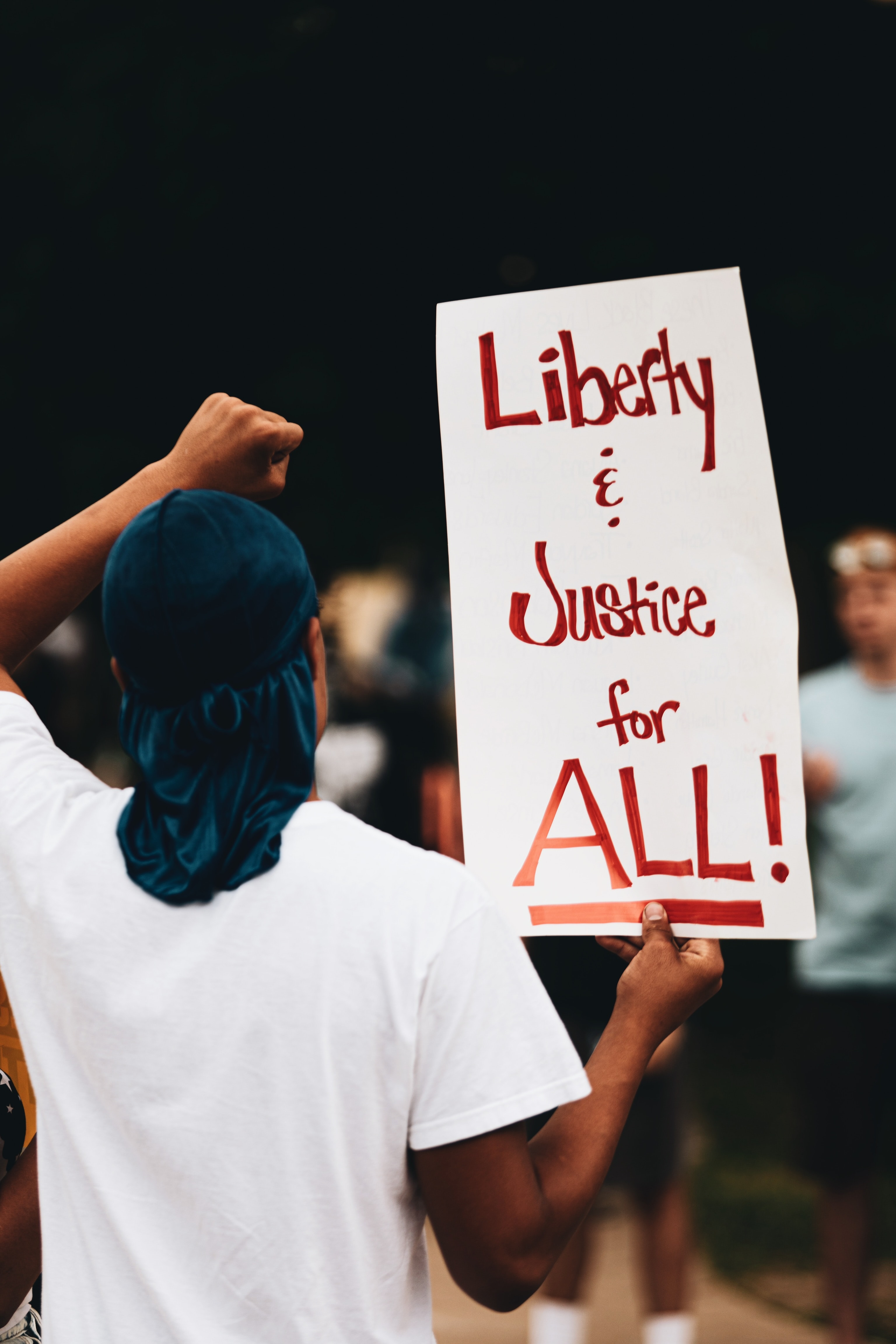
Is your family getting together during Holy Week? Brace yourself!

I did not want to write a blog post for today. I did not want to blog on Maundy Thursday.
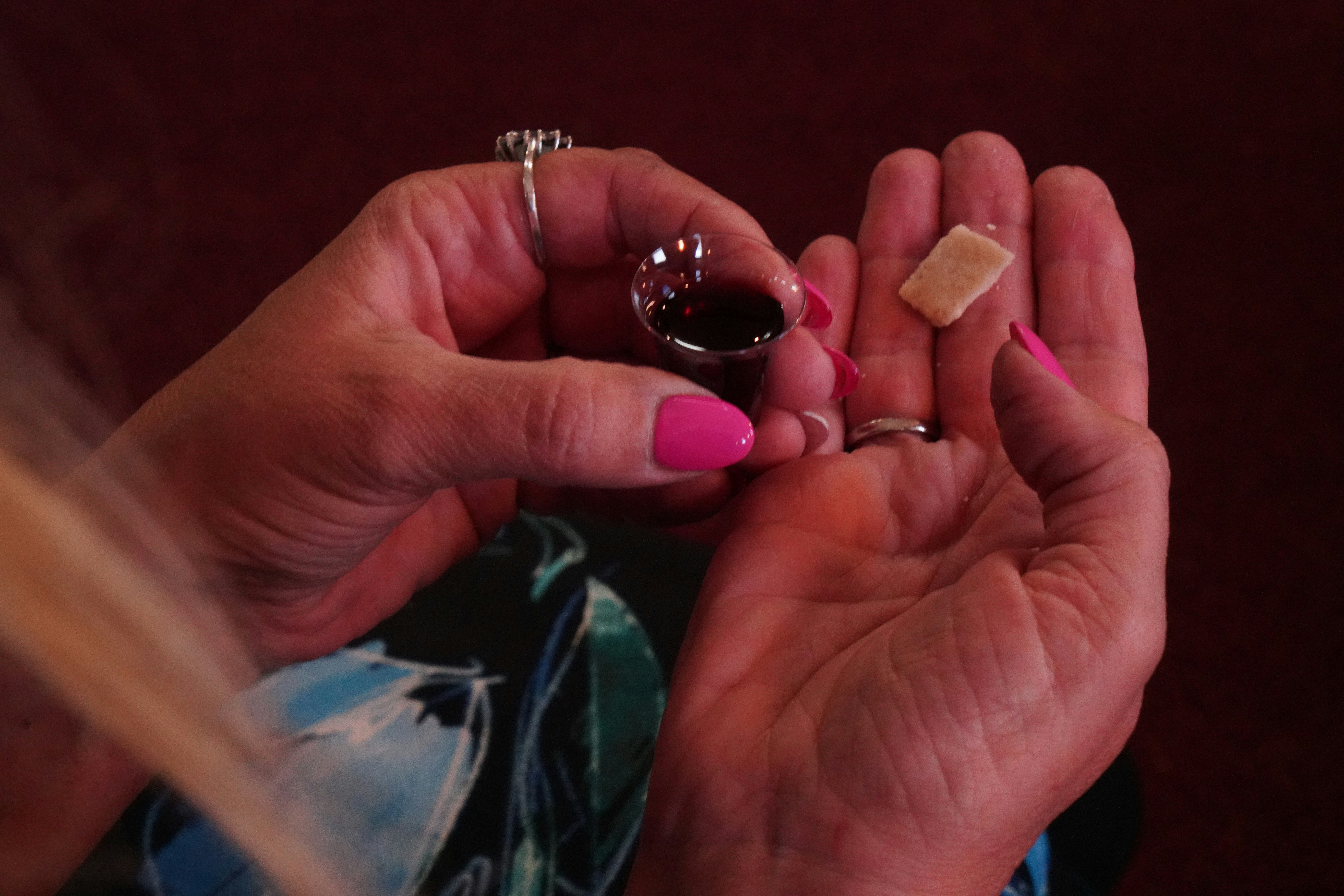
Photo by Bobbie Wallace on Unsplash

Maundy Thursday is a day to ponder Christ’s Last Supper with His disciples. It is a day to remember Christ’s arrest and his betrayal at the hands of His disciples. It is a day to anticipate His brutal treatment and hideous crucifixion on the cross that we will remember tomorrow.

Maundy Thursday is a day to slow down and consider the sacrifice Jesus Christ made for each of us. The horrors He endured for us on “Good Friday” should weigh heavily on our hearts and minds today, tomorrow, and Saturday as we dare not let the joy of Easter Sunday creep into our thoughts yet.

I did not want to blog today. I did not want to rant and rave. I did not want to call out my fellow Americans for blindly following Donald Trump. I did not want to get all worked up and end up with a headache or high blood pressure or a stomach ulcer.

So that’s not what I’m going to blog about today. Instead, I am writing about some of my very deep concerns and try to put the pieces together of how in the world America got to this place of distrust and disagreement.

I never anticipated that writing my little blog this is supposed to be about my writing, my reading, and my love of studying history was going to consume all my time in 2025 or that a US President’s abuse of power would come to be all I can even think about.

I never thought I would be able to truly understand what happened in Germany in the 1930s, but I now have a crystal-clear understanding. It only takes an extreme level of evil in a handful of people and the brainwashing of enough of the population.

It comes on slowly.

Each thing that is said or done sounds bad when you see that one thing in isolation.

You convince yourself that good people will prevail.

Something else is said or done, and you start to realize that “good people” are believing the lies.

You eventually realize that too many of  the “good people” and “good Christians” in particular aren’t who you thought they were.

You realize that too many of the white people in America have a deep-seated prejudice against all the non-white people.

You realize that the white people in America who fly the Confederate flag in their yard or put a Confederate flag sticker on their pick-up truck aren’t just stuck in the past. They aren’t just showing their pride that one of their ancestors fought on the wrong side in the American Civil War. No. They hate black people. They don’t just hate black people… they wish them harm. If this is not how they really feel, they need to realize that’s the impression they are giving to black people and people who think racial prejudices are a bad thing.

You realize that too many of the professing Christians have completely pushed aside the teachings of Jesus and have put a political leader above Christ and the good of the whole. You start hearing them say they truly believe that Trump was chosen and sent by God to save our country.

They hijack the American flag as theirs and theirs alone, along with the color red which used to be my favorite color. Now I’m afraid to wear red for fear someone will assume I’m a Republican.

You realize you cannot reason with the people who support the President of the United States. You cannot have a civil conversation with them. You can find no common ground with them because their world view is something you can’t comprehend.

This is not only tearing our country apart. It is tearing families apart.

“As a lifelong Presbyterian, I was taught that one should always strive to agreeably disagree”… to respect others’ points of view… to be able to calmly discuss our differences. Although we may not convince the other person to see things our way and they may not convince me to see things their way, the two of us should respect each other and in the end agree that we see things differently but we will still be friends.

The prejudices and hate were already there, but it became common during the 2016 presidential campaign that family gatherings for holidays or family birthdays and anniversaries are strained to the point that such gatherings only leave people with a sense of dread because they know there is always at least one person in the family who feels compelled to bring up politics at the table even though they know everyone in the group does not agree with them.

It seems to always be the family member with the most extreme right-wing opinions that will bring it up. They don’t bring it up for discussion. They bring it up to start an argument… an argument no one wins… and eventually everyone goes home and either dreads the next time they have to be together or vows they will just cut themselves off from the relatives they disagree with. It is impossible to find common ground anymore.

One thing we were taught in school about the American Civil War was that it often pitted “brother against brother.” Those words never made any sense to me because I couldn’t imagine being at such deep odds with my brother that we would be on opposing sides in a civil war. How can siblings raised by the same parents under the same roof be at odds over basic tenets of their faith and the basic tenets of the US Constitution?

I can’t believe my country has turned into a nightmare of a place where authoritarian fear-mongering reigns and the US Constitution is trampled every day and no one seems able to stop it.

I can’t believe I live in an America where people defending the US Constitution are openly belittled, made fun of, and shouted down on live TV by people who are willing to defend a US President to the death because their allegiance is to one man and not the US Constitution. I can’t believe it, but I see it every day.

Our “founding fathers” (and founding mothers, who get no credit!) warned us about totalitarianism, kings, and wannabe-kings, but after 249 years we didn’t think it could happen here.

I don’t recognize my country anymore.

As I commented to a blogger friend earlier this week, “I’m at the point now that I watch the world going on around me and on TV as if it’s 2024 and I wonder how they can ignore what is happening in real life. It reminds me of the feeling that one has when a parent dies and as you drive to the funeral home you want to roll down the car window and scream, “Don’t you know my ________ just died? How can you be going around business as usual as if nothing horrible has happened?”

My faith is in God. I’m not afraid to die because I know where my soul is going to spend eternity. I look forward to eternity! It is everything between now and then that I dread.

On the bright side, at least I don’t have to spend Easter with relatives with whom I disagree on politics and religion.

Janet

How publishing a cookbook helped me as a writer

Since my main interests in writing are historical fiction and history, it would seem that publishing a cookbook has nothing to do with either one of those or my pursuit of a career as a writer. I beg to differ.

If one wants practice in proofreading, I recommend they proofread a cookbook. At least two typos got past my sister and me in the proofreading stages. Proofreading a cookbook is a humbling experience. It should serve me well in my next short stories and books.

The Aunts (A U N T S) in the Kitchen: Southern Family Recipes, by Janet and Marie Morrison
The Aunts in the Kitchen: Southern Family Recipes, by Janet Morrison and Marie Morrison

Proofreading a cookbook is part paying extreme detail to numbers and part writing directions in a concise yet thorough way. It means trying to put yourself in the shoes of someone making the recipe for the first time – or even a novice cook or baker.

Are the instructions not only correct in sequence of method but also clear enough to give the cook the best chance to follow the directions with ease instead of confusion and frustration? Are the recipes presented in a way to give the cook the best chance to be pleased with the final product?

Proofreading is tedious work and it is always a good idea to have a second set of eyes. In fact, if my sister and I had not worked together proofreading the 289 recipes in our cookbook, half the errors we found probably would have slipped past us.

A few words about the software I use

Is there a book in you that is begging to come out? Do you think self-publishing is not within your reach? That is where I was two years ago. I never expected to be able to format a book in a form acceptable for Amazon or any other self-publication platform.

The Atticus.io app has enabled me to publish two local history books (Harrisburg, Did You Know? Cabarrus History, Books 1 and 2); two short stories (“Slip Sliding Away” and “Ghost of the Battle of Guilford Courthouse: An American Revolutionary War Ghost Story”); and a cookbook (The Aunts in the Kitchen: Southern Family Recipes) since last November!

BookBrush.com has made it possible for me to design the book covers for each of those books. I am not computer savvy, in the big scheme of things; however, I have been able to accomplish all this self-publishing in a little less than one year.

In addition, I have created memes for Facebook and bookmarks related to my books on BookBrush.com. That is just a fraction of what one can do through BookBrush.com tools.

Disclaimer: I am receiving no compensation in any form whatsoever for mentioning Atticus.io or BookBrush.com. I just want other writers who are considering going the self-publishing route to know about these tools I have used. What they have made possible for me has been life-changing.

The formatting and book design tools are not without challenges. There are learning curves with both but, if I can do it, anyone can do it.

The Atticus.io support team is extraordinary. Hands down, they are the best tech support group of people I have ever worked with. They have job security as long as I am self-publishing books!

Both BookBrush.com and Atticus.io have free workshops to help you understand how to use their various features.

Self-publishing is an education, and I have found it to be a beneficial introduction into the publishing world. It remains to be seen if any of my current projects (historical short stories, a devotional book, and historical novels) will be self- or traditionally-published.

Regardless of which path my current and future writing projects take, my self-publishing experience will serve me well. That definitely includes proofreading!

The rewards

So far, I have learned that by the time I paid for:

  • website redesign;
  • maintaining a website and blog;
  • the right to use Atticus.io and BookBrush.com;
  • printing bookmarks designed on BookBrush.com
  • printing and shipping costs for author copies;
  • books about the craft of writing;
  • online writing courses;
  • etc…

it can be difficult to break even financially.

I consider the two short stories I have self-published to be ways to get my name out there as an historical fiction writer. It all falls under the adage: “To make money, you have to spend money.” I offer one of my short stories as a gift to everyone who subscribes to my e-newsletter.

It is not easy to get established as a writer. It has been a winding road and at times a daunting endeavor; however, my reward already is to see my name as the author on the spine of several books.

If I accomplish nothing else, I am happy that someday my heirs will know that I had a dream to write and I persevered to realize that dream.

Since my last blog post

Some weeks I can’t remember what I’ve done since my last blog post. It isn’t until I look back over my to-do list and find items checked off as completed that I realize I am making steady progress in my writing.

I did research for a short story I’m writing; typed notes from The Author Estate Handbook, by M.L. Ronn and added to the list of the things I need to take care of before I update my will; researched Fort Dobbs State Historic Site near Statesville, NC, Shallow Ford on the Yadkin River, and Bethabara State Historic Site for the novel I am writing; and planned a trip to visit several sites pertinent to that novel.

I watched a BookBrush.com free presentation on Zoom about book marketing on Pinterest. It was a real eye-opener. Good news/bad news: Now I have a thousand new tasks to add to my to-do list.

Until my next blog post

If you want to write a book, do it!

I hope you have at least one good book to read this week. I have more than I can find time to read!

Make time for your friends and family.

Don’t forget to visit https://www.janetmorrisonbooks.com and subscribe to my e-newsletter.

Remember the innocent people of Ukraine and the Middle East. It is the innocent citizens who are so often caught in the middle and pay the ultimate price for the actions of dictators and terrorists.

Janet

I just wanted a proof copy of Harrisburg, Did You Know? Book 2

This should have been a very short blog post. Two or three paragraphs should have covered the story. Actually, if that had been the case, I would have chosen a different topic for the post. I hadn’t planned to blog about this today.

When I started writing my blog more than 10 years ago, I set out to chronicle my journey as a reader and a writer. It’s been a bumpy ride and there have been detours, successes, and obstacles. I’ve tried to share my ups and downs.

Just three weeks ago in my February 6 blog post, What does a month in the life of a would-be author look like?, I described a particularly trying month I’d experienced. The things I ranted about in that post eventually all worked out.

Today’s post is about last week’s stress. Last week’s stress has lapped right over into this week. I’d like to think there’s light at the end of this tunnel, but after what I’ve been through, it’s hard to be optimistic.

Photo by Brett Jordan on Unsplash

Today’s post falls in the category of “you can’t make this stuff up.”

Here’s the timeline as tracked on Amazon.com:

February 19

Having submitted the formatted copy of Harrisburg, Did You Know? Cabarrus History, Book 2 to Amazon for publication, I ordered a proof copy. After having some technical difficulties with several photographs in the book, I especially wanted to be sure they were going to be oriented correctly in the printed book.

I also ordered two paperback copies of Slip Sliding Away: A Southern Historical Short Story, but those two books had to be purchased as a separate order.

Amazon chose to combine the orders and deliver (or attempt to deliver) the three books to me via the United States Postal System, otherwise known as “carrier facility.”

February 21

9:11 pm      Order left carrier facility, Concord, NC.

This is when I had a feeling that things had gone awry. Since Amazon does not print books at its facility in Concord, NC, which is about 12 miles from my house, I wondered why Concord was the first point of transit. The first point of transit should have been Amazon – not the US Postal Service. My books are usually printed either of Columbia, South Carolina or Indianapolis, Indiana.

February 22

Unspecified time   Carrier picked up package in Columbia, SC (about 90 miles south of me.)

8:18 a.m.     Package arrived at Amazon facility, Concord, NC (about 15 miles north of me.) [This is great! Maybe my proof copy and the short stories will arrive today or tomorrow at the latest! Life is good!]

February 23

6:18 a.m.     Package arrived at carrier facility, Walkertown, NC (about 80 miles north of me.) [What?]

6:32 p.m.    Package arrived at carrier facility, Harrisburg, NC (Post office is five miles from me. I live on a Harrisburg mail route.) [I’m not sure how it traveled 75 miles in 14 minutes, but okay. Whatever.]

7:47 p.m.    Package arrived at carrier facility, Greensboro, NC (about 85 miles northeast of me.) [Wait a minute! Something’s not right.]

But I don’t want a refund. I want my books!

You know you’re in trouble when Amazon tells you on Thursday that you can request a refund if your package doesn’t arrive by Tuesday.

A refund won’t do me any good. I need to receive the proof copy before I can give Amazon the go ahead to start selling it. More importantly, I can’t order author copies to supply Second Look Books in Harrisburg until the book “goes live” on Amazon. Then, it takes about four weeks for me to receive the author copies, and my “Meet & Greet” at Second Look Books is scheduled for April 15.

February 24

5:19 a.m.     Package left Amazon facility, Concord, NC (about 15 miles northeast of me.)

9:21 a.m.     Package arrived at USPS distribution center, Charlotte, NC (about 18 miles west of me.)

February 25

3:15 a.m.     After spending 18 hours at the USPS distribution center in Charlotte, the package left.

3:20 a.m.     Five minutes later, it left again. (I’m not making any of this up!)

7:07 a.m.     After traveling about 15 miles, package arrived nearly four hours later at the USPS in Harrisburg, NC.

7:18 a.m.     Package is out for delivery “by 8 p.m. tonight.”

3:20 p.m.    Package arrives at my house! According to the back page, the books were printed in Columbia, SC on February 20, 2023. There was only one 2×4-inch gaping hole in the package right over the cover of the Harrisburg book. These books have seen parts of North Carolina I’ve never seen. As far as I know, I’ve never been to Walkertown. I looked it up. It’s between Winston-Salem and Virginia.

Alas, I had the books in my hands.

I quickly turned to page 465 in the Harrisburg book to make sure Carl Higgins’ B-26 bomber was shown correctly; but, no! In the image, the plane is heading straight up instead of to the left.

Various subheadings in the book appear at the bottom of one page instead of at the top of the next page, although I painstakingly made sure that none of the subheadings were at the bottom of a page when I submitted the formatted manuscript to Amazon. Likewise, all images were oriented in the correct manner when they left my computer.

And did I mention that the cover is dark brown instead of red?

Photo by Taylor Deas-Melesh on Unsplash

I discovered, though, that the errors (except for the color of the cover) were my fault due to my lack of technical knowledge. If I’d been more in tune with general computer technology, I would have realized that I had created a problem… all the problems in the way the book was printed… except for the brown cover on the red book.

I still hold Amazon and the USPS responsible for shipping my book all over North and South Carolina for nearly a week. The best I can figure, the USPS transported it around 425 miles to get it 90 miles from Columbia, SC to Harrisburg, NC. If I could have received it five days ago, I’d probably have all the problems worked out in the formatting by now and would still be on schedule for publication.

Instead of giving Amazon the go ahead on March 1 to publish my book, I’m now working to correct errors. Then, I’ll submit the revised version. Then, with a great sense of foreboding, I’ll pay to get ANOTHER proof copy of the Harrisburg book. And I’ll wait who know how long for it to arrive. Then, if it is in good order, I’ll order author copies. Then, I’ll wait four weeks for them to arrive. Will they arrive in time for the “Meet & Greet” at Second Look Books on April 15th?

If I were a betting person, I wouldn’t bet on it.

Since my last blog post

Besides following the day-to-day saga of the trip the proof copy of my book has been on, I did some yard work. It’s been unseasonably warm here in North Carolina. I was surprised to see two black snakes on Wednesday. I’ve never seen a snake in February (or March!) before. It’s unusual to see one in April.

My email provider is a company called Windstream. There are many things I’d like to say about Windstream, but I won’t. Suffice it to say that on Saturday night, just five hours after I received the awful proof copy of my Harrisburg Book 2, Windstream downloaded into my inbox the last 4,449 emails I had already received. As we say in the South, “Bless their hearts!” Again, you can’t make this stuff up.

Until my next blog post

I hope you have a good book to read. I plan to write about the books I read in February.

If you’re looking for a good historical short story, just visit https://www.janetmorrisonbooks.com and subscribe to my newsletter. You’ll be rewarded with a free e-copy of a short story I had fun writing, “Slip Sliding Away: A Southern Historical Short Story.”

Also, hurry and subscribe before March 1, in order to receive my first newsletter!

I hope to have a corrected copy of Harrisburg, Book 2 completed, submitted to Amazon, and have a new proof copy of it in my hands by the time I blog again on March 6. I can only hope.

Thank you for reading my blog!

Don’t forget the brave people of Ukraine who have been under unwarranted attack by Putin for a year.

Janet

Reflections on America’s Thanksgiving Day

There are many things that make the United States of America a special place. One of those is the Thanksgiving holiday we celebrated last Thursday.

Thanksgiving Day is a wonderful concept. It’s a holiday most workers get to enjoy as businesses close for the day. It’s a day set aside to reflect on the things you’re thankful for. It’s a day to gather with friends and relatives. It’s a day on which many of us eat more than we should.

Photo by Diliara Garifullina on Unsplash

It’s a day most of us think back on the Thanksgiving Days in the past. We remember loved ones who are no longer here. We remember the aromas in the kitchens of our childhoods.

Even in the chaos that sometimes accompanies large family gatherings on Thanksgiving Day, most of us are prompted to take a moment to think about our blessings.

Life is hard. Things – good and bad – happen. Illness and loss set us back, change our plans, and sometimes change the trajectory of our lives. The life we envisioned isn’t how things turned out.

One of the things I was thankful for on Thanksgiving Day last Thursday was the opportunity life has given me to pursue whatever interests I’ve had. Illness derailed my professional life when I was a young adult, but God has continued to open doors for me. I’ve learned from every experience.

There’s an old adage that says “you can’t teach an old dog new tricks,” but I’m living proof that you can.

I’ve heard it’s good for one’s brain to learn new skills. My brain must be about to explode. I’ve really been stretching its limits lately.

Photo by Diliara Garifullina on Unsplash

Since my blog post last week, I created a cover for a paperback nonfiction book. And it’s not just any old cover. The back cover sports a QR Code I created for my website! Not bad for this 69-year-old non-techy person.

Those of us fortunate to reach that age need to keep reinventing ourselves for as long as physical and mental health and our life circumstances permit. It’s easy to take those things for granted until they aren’t there.

Since my last blog post

I continued to work toward the publication of Harrisburg, Did You Know? Cabarrus History, Book 1. I continued to format and proofread Harrisburg, Did You Know? Cabarrus History, Book 2.

I revisited a short story I wrote several months ago. It’s beneficial to let a piece of writing rest for a while and then read it with fresh eyes and tweak it where it can be improved. I hope to publish a collection of short stories in 2023.

Until my next blog post

I hope you have a good book to read. If I finish reading a book in November, I’ll blog about it next Monday. Writing and learning technology left little time for reading this month.

Remember the brave, freezing people of Ukraine.

Photo by Blake Dunn on Unsplash

Janet

Giving God the Right of Way

I plan. I make lists. I find great satisfaction in checking off the items I complete on my to-do list. There are some problems with this.

First, I always think I can accomplish more in a day than I can. This leads to frustration and feelings of guilt.

Second, I don’t allow for “down days.” Even if I didn’t have chronic fatigue syndrome and fibromyalgia, having a rigid daily to-do list would be foolish.

Third, and most importantly, I tend to leave God out of the process.

If you followed my blog this summer, you know I’ve gone through some upheaval with the novel I’m writing. I started writing it more than a decade ago. I honestly don’t know when I started it. It languished on my computer for the last several years.

In July, I decided it was “no or never.” I hired a professional editor to critique the first 50 pages of my 303-page manuscript. The feedback I got from her was constructive and attention-grabbing. At the same time, it was disheartening yet exactly what I needed to hear.

A failed plan

That detailed critique prompted me to stop procrastinating and start focusing my attention and energy on learning the skills I needed to learn so I could finally finish that novel. I made a plan. I made a daily (Monday through Saturday) to-do list for what to study and what to practice or write each day. I thought by not working on my book on Sundays I was doing the Christian thing. I would give myself Sundays off and, thereby, do what was pleasing to God. That worked fairly well for a couple of weeks.

But guess what happened. I became a slave to my plan. It was my plan. I thought I had been clever to create this plan with its one-day-a-week set aside not to work on my writing. By doing so, I thought I was “keeping the Sabbath.”

It was my plan, but it was wearing me out.

Photo credit: Glenn Carstens Peters on unsplash.com

I fell behind on August 16. I’d assigned myself too much reading, too much writing, and way too much nuts-and-bolts work on my novel regarding details about my characters.

I’d set myself up for failure.

By pushing myself to do everything on my list, I threw myself into a chronic fatigue syndrome relapse for the next three weeks; however, I read something on August 17 that got my attention. It was the third chapter in Seven Things That Steal Your Joy: Overcoming the Obstacles to Your Happiness, by Joyce Meyer.

Led by the Spirit

Ms. Meyer wrote the book in 2004. I’d bought it as a used book many years later and kept meaning to read it. I read the first chapter on August 15 and the second chapter on August 16. It was “on my list” to read the third chapter on August 17.

Little did I know that God had a reason for leading me to Chapter Three on August 17. I don’t believe in happenstance when it comes to such things. The title of that chapter is “Joy Keeper: Be Led of the Spirit.” By “Spirit,” Ms. Meyer is referring to the Holy Spirit.

The Holy Spirit is our Helper, if we are just open to It. From the first sentence in Chapter Three (“One of the most dynamic ways to keep our joy is to allow the Holy Spirit to lead us in the way we should go.”) to the last sentence in the chapter (“God will write His laws on your heart, then you won’t need reminders to keep your joy.”), that chapter was exactly what I needed to read in the emotional and physical place I was in on August 17.

It didn’t take me long to realize that my six days-a-week reading and writing plan – as detailed and as carefully- and methodically-planned as it was – lacked one thing. It lacked the most important thing. It lacked God. I spent hours working out a plan that I thought would lead me to a point next February when I’d have all this knowledge in my head and be ready to rewrite my novel’s outline and then start rewriting the manuscript.

But aside from setting aside the Sabbath to not work on my novel or my writing skills, I’d left God and the Holy Spirit out of my grandiose plan. I shredded my plan.

What’s next?

Don’t get me wrong – I still believe in having a plan, but what’s new is that I want to start each day by seeking God’s will for me that day. He may want me to tackle the next item on my novel “to-do” list, or He might have a better “to-do” list for me for that day.

I still believe God wants me to write. He might want me to write the novel I’ve had in my head and on paper for 10+ years. He might have an entirely different novel in His plan for me. He might have something else altogether in store for me.

Ms. Meyer wrote in the third chapter of her book, “If you keep your plan before the Lord, you must be ready to let Him change anything at any time. If you do this, your path will always be right and prosperous.”

She also wrote, “… and we will never find joy if we think we have to know everything before we take our first step in the direction He is leading us.”

Today is the last class in the “Eight Weeks to Writing a Commercially Successful Novel” online course I started on September 6, so it’s time for me to create a new plan.

This time, though, I’ll try to be reasonable, and I’ll try to remember to seek God’s will every morning and be ready to ditch my plan for His plan.

Since my last blog post

I’ve always been a pack rat. I keep things “because I might need it someday.” I’ve transitioned into, “I’m never going to need this.” Last week I concentrated on my file cabinets. That alone dates me. I’ve purged file folders of all descriptions.

I don’t need the paperwork for the car insurance I had in 1995. I don’t need most of the recipes I kept in the 1980s. I don’t have the energy to do much cooking. Plus, I’m trying to eat healthier in 2021 than I did in 1981. The list goes on.

This is a work in progress, but it feels good to let go of some things.

Until my next blog post

I hope you have a good book to read or productive time if you’re writing one.

Whatever season you’re transitioning into where you live, try to enjoy the gift each day is. This is a challenge for me. You know I don’t like cold weather.

Thank you for taking time out of your day to read my blog post.

I’ll leave you with this short sentence from the third chapter of Joyce Meyer’s book: “To walk in the presence of God, we must give the Holy Spirit the right of way.”  I love that!

Until my next blog post – which I have planned for next Monday – I hope you and I both give the Holy Spirit the right of way.

And wait on tiptoe to see what happens.

Janet

Books Unite Us. Censorship Divides Us.

Banned Books Week began yesterday in the United States. The American Library Association shines a spotlight on challenged books for one week every September. It’s important for us to pause and consider which books have been challenged and the reasons for those challenges.

My sister holds a Master’s degree in Library Science and was a school media specialist for 30 years. Therefore, I’ve had a front row seat to the book challenges she faced during her tenure in middle and high schools. I know her stance against banning books and, now that I’m a writer, I have a clearer view of how I feel about the topic.

Censorship is a dangerous weapon against a free society. I don’t know about you, but I don’t want someone else deciding what I should or shouldn’t read – or more importantly – what I can and cannot read.

What Banned Books Week isn’t

Age appropriateness is one thing, but that’s not what Banned Books Week is about. It’s about various segments of the population thinking they have the right to dictate what the rest of us can and cannot read.

 My April 26, 2021 blog post, Censorship and Reader Sensitivities, relates to today’s topic.

This year’s theme

The theme for this year’s Banned Book Week in the United States is “Books Unite Us. Censorship Divides Us.” What a great theme!

American Library Association’s Theme Announcement for 2021 Banned Books Week

In the above article, Betsy Gomez wrote: “With a central image showing two hands sharing a book, the 2021 theme is intended to be inclusive and emphasizes the ways in which books and information bring people together, help individuals see themselves in the stories of others, and aid the development of empathy and understanding for people from other backgrounds.”

The following books were the most often challenged books this year as of April, including the reasons they were challenged, according to BannedBooksWeek.org:

  1. “George by Alex Gino. Challenged, banned, and restricted for LGBTQIA+ content, conflicting with a religious viewpoint, and not reflecting “the values of our community.”
  • Stamped: Racism, Antiracism, and You by Ibram X. Kendi and Jason Reynolds. Banned and challenged because of the author’s public statements and because of claims that the book contains “selective storytelling incidents” and does not encompass racism against all people.
  • All American Boys by Jason Reynolds and Brendan Kiely. Banned and challenged for profanity, drug use, and alcoholism and because it was thought to promote antipolice views, contain divisive topics, and be “too much of a sensitive matter right now.”
  • Speak by Laurie Halse Anderson. Banned, challenged, and restricted because it was thought to contain a political viewpoint, it was claimed to be biased against male students, and it included rape and profanity.
  • The Absolutely True Diary of a Part-Time Indian by Sherman Alexie. Banned and challenged for profanity, sexual references, and allegations of sexual misconduct on the part of the author.
  • Something Happened in Our Town: A Child’s Story about Racial Injustice by Marianne Celano, Marietta Collins, and Ann Hazzard, illustrated by Jennifer Zivoin. Challenged for “divisive language” and because it was thought to promote antipolice views.
  • To Kill a Mockingbird by Harper Lee. Banned and challenged for racial slurs and their negative effect on students, featuring a “white savior” character, and its perception of the Black experience.
  • Of Mice and Men by John Steinbeck. Banned and challenged for racial slurs and racist stereotypes and their negative effect on students.
  • The Bluest Eye by Toni Morrison. Banned and challenged because it was considered sexually explicit and depicts child sexual abuse.
  1. The Hate U Give by Angie Thomas. Challenged for profanity, and because it was thought to promote an antipolice message.”

Bringing this right up to two weeks ago

Just a couple of weeks ago there were protests in York, Pennsylvania over a school board’s banned books policy. I believe the policy sets a bad precedent. It’s encouraging that many students and parents protested the policy. Please read the article from the York Daily Record from September 13, 2021: Central York board maintains ban on Black and Hispanic books (ydr.com)

The incident in York, PA begs the question: Do you know what your local school board’s policy is on book challenges/banning?

I went online to see what my local school board’s policy was and didn’t find anything specific about book challenges. Therefore, I believe it falls under the general procedure for any complaints. That protocol is teacher/school personnel, principal, school/parent relations specialist, superintendent, and finally, the board of education.

An interesting dichotomy

There’s an interesting dichotomy about challenging books: Making the list is probably the best free publicity a book can receive. Just tell me I shouldn’t do something, and human nature tells me to do it. The same holds true for challenged books. Just tell people they shouldn’t read a particular book, and then watch it fly off the bookstore and library shelves!

Since my last blog post

Last week’s online class was about writing in deep point-of-view. This is something I’m working on in my novel-in-progress. This week’s class was very informative. I’ve edited the first chapter in my manuscript and employed deep point-of-view.

I learned last week that white-tail deer like to eat hydrangeas, geraniums, lily-of-the-valley, periwinkle, and green poplar leaves. At least they waited until the end of summer to strip the hydrangeas of their blossoms and leaves!

Until my next blog post

Ready or not, October is coming on Friday. October is National Book Month and National Reading Group Month.

There’s a touch of autumn in the air. I’m already all bundled up even indoors. My fingers are like icicles as I type these words. If you have followed my blog for a while, you know it’s not my favorite season. I have Seasonal Affective Disorder, so it will take extra effort for me to be upbeat in the next five or six months. For my blogger friends in Australia, may I come and visit you for a few months?

Janet

Things I Learned from How the Word is Passed – Part I

My skill doesn’t lie in reviewing books. Most of the books I read, however, do make me think. Many of them prompt me to question the way I’ve seen the world all my life. To my mind, that’s a sign of a great book.

I promised myself to lighten up on my reading in July. In a way, I did. I didn’t read as many books as I usually do in a month’s time. I didn’t lighten up on the content of what I read. The books I read in July were all “heavy” in topic and were not the kind of books you want to read while on vacation at the beach or in the mountains. At least, I don’t. Since I wasn’t going anywhere in July, these books suited me just fine.

Three of the books I read in July had to do with race. I read a book about the caste system in America, and I read a book about the Confederate monuments and how they’ve brought out the worst in some of us. (See my August 2, 2021 blog post, _2 Books about Racial Injustice.)

I read a book about how various venues present either an honest or a skewed image of the history of Black Americans and how many white Americans treated or interacted with them. All three books were thought-provoking to say the least.

How the Word is Passed: A Reckoning with the History of Slavery Across America, by Clint Smith

What a book! I found myself taking copious notes, which slowed down my reading considerably. There were so many little gems of insight in the book, I couldn’t stop taking notes.

The author allotted individual chapters to how the story of slavery is told at Monticello Plantation, the Whitney Plantation, Angola Prison, Blandford Cemetery, Galveston Island, New York City, and Gorée Island.

How the Word is Passed: A Reckoning with the History of Slavery Across America, by Clint Smith

Before starting to read the book, I didn’t know how it was organized. The way each chapter was written about how the story of slavery is told at these various locations was powerful.

Today’s blog post will cover some of the things I learned about Monticello Plantation and the Whitney Plantation. I’ll save Angola Prison, Blandford Cemetery, and New York City for my next blog post. Galveston Island, Goree Island, and the Epilogue will highlighted in my August 29, 2021 blog post.

Monticello Plantation

Tours available and displays at Thomas Jefferson’s home, Monticello, have changed dramatically since the house and grounds were opened for tours in 1923. In the beginning, the tour guides were Black men dressed as house slaves. They had to play a role. Today, tour guides do their own research, plan their remarks, and shadow other guides. There are several tours. One is about slavery on the plantation.

The author was struck by the fact that his tour guide referred to Jefferson’s slaves as “human beings.” To say Jefferson gifted his children and grandchildren with human beings doesn’t sound as palatable to our ears as saying he gifted them with slaves. The tour guide went out of his way to impress upon visitors that the slaves were human beings.

Although Jefferson wrote the Declaration of Independence (“all men are created equal”), he owned 400 or so slaves over his lifetime and even until death. He wrote eloquently about equality but, as a politician, could not speak out against slavery. When it got down to it, Jefferson didn’t consider his slaves as being human beings.

That leads us to the matter of his relationship with Sally Hemings. There is now a Sally Hemings Exhibit at Monticello. It has received a range of reactions from visitors. I suppose I knew this at one time but I’d forgotten that Sally Hemings and Jefferson’s wife, Martha, were half-sisters.

The Whitney Plantation

I hadn’t heard of the Whitney Plantation in Wallace, Louisiana, an hour west of New Orleans. It’s off the beaten path and not the kind of place one just happens upon and decides to visit. How is the story of slavery told (or, the word passed) at Whitney Plantation? In a rather shocking way.

There are 55 ceramic dark heads of black men on metal stakes.

In 1804, slaves in Haiti rebelled and defeated the French. They founded the first “Black-led republic in the world.” After this defeat, Napoleon Bonaparte sold the Louisiana Territory to the United States (while Thomas Jefferson was president) for $15 million (= four cents per acre.) If not for the success of the revolt in Haiti, Napoleon probably wouldn’t have sold Louisiana to the United States!

In 1811, there was a slave uprising in Louisiana. Within 48 hours the armed (knives, machetes, muskets) rebellion was put down. It had been led by a mixed-race slave driver, Charles Deslondes. He was captured and to say they made an example of him would be a gross understatement. To quote from the book, “His hands were chopped off, the bones of his legs were shattered with bullets, and he was burned over a bale of hay. Many of the rebels were slaughtered on-site, their heads cut off and posted on stakes that lined the levee, a warning to other enslaved people that this was the price to pay for rebellion.”

How is it that I’ve never heard or read about this?

John Cummings purchased Whitney Plantation in 1999 and invested almost $10 million in it over the next 20 years. He donated it in 2019. It is now a non-profit.

There is high poverty in the area, which is 90% Black. The area is known as “Cancer Alley” due to the high incidence of cancer caused by the petroleum plants nearby. As quoted in the book, Rev. Dr. William J. Barber II said of the area, “ʻThe same land that held people captive through slavery is now holding people captive through this environmental injustice and devastation.”

At Whitney, they utilize the late-1930s Federal Writers’ Project to help them tell the stories of slaves using their own words. According to the book, “The voices and stories of enslaved people are the foundation of how visitors experience the Whitney.” The author’s point about this was that through the Federal Writers’ Project, former slaves got to tell their stories in their own words. The author theorizes that by allowing such former slaves as Frederick Douglass and Harriet Tubman to tell their stories, they consciously not only denied most average or common slaves (the ones who did not escape) the chance to tell their stories but also thereby made sure those slaves who did not escape would be looked down upon as not trying “hard enough.”

This is part of the insidiousness of white supremacy – to shine a light on the exceptions and place “blame on those who cannot, in the most brutal circumstances, attain superhuman heights. It does this instead of blaming the system, the people who built it, the people who maintained it.”

There is a Wall of Honor at Whitney with the names, country of origin, and date or year of slaves at the plantation.

Sexual violence is also addressed at Whitney. The rape of female slaves by white owners was about power. The owners knew the female slaves were powerless to refuse their advances. To really understand slavery, the sexual violence against women must be included in the equation.

The trade in slaves’ bodies is also addressed in this chapter. Medical schools like Harvard, and the Universities of Maryland, Pennsylvania, and Virginia often bought Black corpses on the black market for research.

Did you know all this about Whitney Plantation? I didn’t. And to think, I considered skipping that chapter because I’d never heard of that plantation!

Since my last blog post

I had a rollercoaster week with my novel. In studying point-of-view, I wrestled with which one to use. In my draft of the novel, I was apparently head jumping as I changed the story’s point-of-view character occasionally at scene or chapter breaks. I thought that was acceptable, but not when you’re writing in third person intimate.

I considered rewriting the book in first-person, but that would be a real challenge for several reasons. I spent hours studying various points-of-view and the rules governing each. I find these rules maddening. I took a walk to clear my brain overload because I thought some fresh air and exercise would result in mental clarity. Then, I took a second walk. Sometimes this works, but sometimes it doesn’t. I went back through my manuscript scene-by-scene and determined how every scene could be changed into Sarah’s point-of-view or which parts could be modified to be part of the trial. I concluded third person intimate is still going to work best for this novel.

In the process of digging deeper into point-of-view, I stumbled upon several articles and YouTube videos about the Rashomon Effect. I realized I’m already using it in my trial scenes, and now I know what it’s called.

On Tuesday evening I watched and listened to an interview with author James Tate Hill. Mr. Hill lost his vision as a teen. In addition to his just-released memoir, Blind Man’s Bluff, Mr.Hill has written a novel, Academy Gothic, which was awarded the Nilsen Literary Prize for a First Novel. It always gives my writing a boost to hear an author speak or be interviewed. This interview was online and was hosted by Flyleaf Books in Chapel Hill, NC.

I’m slowly working my way through Breathing Life into Your Characters: How to Give Your Characters Emotional and Psychological Depth, by Rachel Ballon. I purchased it years ago and should have read it and taken it to heart then. I’m glad I rediscovered it. It’s really putting me through the paces and will help my writing on many levels. It has a 4.5 out of 5 stars rating on Amazon. I don’t know why it doesn’t have a 5 out of 5.

Until my next blog post

If you can get your hands on a copy of How the Word is Passed: A Reckoning with the History of Slavery Across America, by Clint Smith this week, please do so. I can’t imagine you will regret reading it.

I hope you have How the Word is Passed or another good book to read.

Janet

Taking Stock of Historical Fiction

I changed my topic for today’s blog post several times. In fact, I had it pretty much written and ready to go last Monday. Everything changed on Tuesday morning, when I checked for comments on my blog.

Last Tuesday, one of my blog readers who is Jewish left a heartfelt comment about what I had written about Pam Jenoff’s historical novel, The Woman with the Blue Star, in my July 12, 2021 blog post, 4 Other Books I Read in June 2021.

That reader has more intimate knowledge of the Holocaust than I have and, through an acquaintance who lived in the Krakow sewers, says that the premise of Ms. Jenoff’s book is impossible. I read Ms. Jenoff’s novel as a work of fiction, knowing the story was not true. I didn’t think about the possibility that some readers would be offended by the premise of the book. Prior to reading the novel, I wasn’t aware that some of the Jews in Poland had to hide for their lives in the nasty city sewers. For Ms. Jenoff’s bringing that fact to my attention, I am grateful.

This comment and my response to it served is a reminder about historical fiction – and it’s important to me as a fan of the genre and also a writer of it.

The Woman with the Blue Star, by Pam Jenoff

In fairness to Pam Jenoff, I heard her interviewed about her process in writing this novel. She did extensive research. It is a fact that some Jews took refuge in the sewers in Poland. There were many anti-Semitic people in Poland, but there were also sympathetic Poles who risked their lives to try to save Jews.

I heard Ms. Jenoff interviewed about this novel some weeks ago. I wish I’d taken some notes, so I could share them with you and with the reader who contacted me last week.


Admitting my own bias

I have lived my entire life in North Carolina. Two older ladies were friends of my family. By older, I mean older. Sisters, they were born in 1883 and 1888. Their father fought for the South in the American Civil War. Those sisters drilled it into me that it was “the War Between the States” and not “the Civil War.” That statement was always followed quickly with, “There was nothin’ civil about it.”

That really made an impression on me and even recently I’ve referred to the American Civil War as “the War Between the States.” I’ve written it that way in various things I’ve written and self-published.

I now see my bias. In the future, I will refer to it as “the American Civil War” or “the US Civil War.” It was a war between the Confederate States of America and the United States of America. For me to call it anything else is to twist history and reveal my bias.

I think it was Oprah Winfrey who said, “When you know better, you do better.” Those are words I try to live by. I hope I never get too old to learn new things and new ways to look at things.


The unwritten pact between fiction author and reader

A reader of historical fiction should always keep in mind that they’re reading fiction. Fiction is made up. It’s a story created in the author’s mind; however, there is an unwritten pact between the author and the reader. There should be enough factual information – whether in event or time and place – that the reader can trust that the story is plausible.

It is incumbent upon the writer of historical fiction to do due diligence in research. I heard author Sharyn McCrumb speak a few years ago about her research and writing methodology. As an aspiring historical fiction writer, I was impressed with all she said.

One thing Ms. McCrumb said, though, stood out and remains in the back of my head. I think about it as I’m doing my research, and I think about it every time I hear someone say they don’t read historical fiction. They often go on to say they only read history books.

Ms. McCrumb’s statement that stood out to me that evening was that (and I paraphrase) some historical fiction is better researched than some history books.


History books and their bias

We only need to stop and think about some of the history textbooks we had 50 or 60 years ago. (I can’t speak for the content of current school curriculum history textbooks.) Aside from the recitation of dates of birth and death of persons of alleged import and the dates of battles and the like, much of the way history was presented to students depended upon the author’s point-of-view. Textbooks are usually written from the winner’s perception.

For example, the textbooks I had as a student presented the white settlers’ “conquering” of the frontier as a positive thing. No time was spent trying to view the 1600s to the present through the eyes of a Native American. If the Cherokee Trail of Tears was even mentioned, it was only in passing.

Some Southerners still maintain that the American Civil War was fought over “states’ rights.” (Many of those same people still refer to that war as “the War of Northern Aggression.”)  I have relatives who still maintain that as the truth and will argue me down that it had nothing to do with slavery. Some people learned certain things about the Civil War and no facts today will change their minds.

If we are to be true students of history, I believe we should read both sides of the story. Both sides are tainted by the personal experience of the writer but, by the same token, both sides of the story probably contain some truth.

The antebellum American South has been romanticized to the hilt by such novels as Gone With the Wind. Confederate generals have been portrayed as dashing and religious Southern gentleman who fought for the honor of hearth and home. In some cases, that’s who they were. But they were basically fighting to maintain the status quo. Even if they didn’t own slaves, they didn’t have any quarrel with the institution of slavery. The economy was built upon it. What would happen if there were no slaves? They couldn’t imagine such a world.

Renowned historical novelist James Alexander Thom wrote a book called The Art and Craft of Writing Historical Fiction. In it, he wrote the following: “History contains many errors because each person sees the same incident differently or remembers it differently. History textbooks are biased depending on the agenda of the writer, the publisher, the state, the school board.”


What James Alexander Thom wrote about historical fiction

The Art and Craft of Writing Historical Fiction, by James Alexander Thom

Here are four quotes from The Art and Craft of Writing Historical Fiction, by James Alexander Thom:

But fiction is not the opposite of truth. Fiction means ‘created by imagination.’ And there is plenty of evidence everywhere in literature and art that imagination can get as close to truth as studious fact-finding can.”

“Most early American white men thought women should be seen but not heard. As a historical novelist, you might wish to make your hero ‘politically correct’ by today’s standards, but if you do that, you’ll be lying to your readers.”

To be really good historical novelists, though (and that’s what I want us to be), we have to take our obligation to historical truth just as seriously as the historians do theirs. But we don’t have to bear the burden of being the authority on every factual detail. Our disclaimer is right there on the cover: a novel.”

But here’s the key: Whether your historical story is ancient or recent history, what you want to do is re-create it in full – live, colorful, smelly, noisy, savory, painful, repugnant, scary, all the ways it actually was – and then set the reader down smack in the midst of it.”

I’ve referred to James Alexander Thom in a number of my blog posts over the years. One of them was my February 12, 2019 blog post, Two for Tuesday: Two Books that Helped Me Fall in Love with Reading.


Until my next blog post

Time will tell what my blog will be about next Monday. I hope you’ll come back next week to find out.

I’ll continue to read and write historical fiction. Mr. Thom says good historical novelists are respected by historians. That’s what I aspire to be.

Let me know what you like or don’t like about my blog. I’m especially trying to reach people who like reading historical fiction and have an interest in Early American history. I also enjoy exploring current events and discussing them with people from around the world. It amazes me every week to see that people from around the world have read my blog. In that respect alone, I think blogging and the internet are wondrous avenues for the sharing of ideas.

You never know. A comment you make about one of my blog posts might stop me in my tracks and force me to dig a little deeper into a subject or even admit I’ve been wrong.

Thank you for reading my blog. All comments, opinions, criticisms, and corrections are welcome.

Janet

What’s Juneteenth and Why Did I Just Hear About It?

I had planned to blog about this being the 234th anniversary of the ratification of the United States Constitution today, but some of my #OnThisDay blog posts have not gone over very well. 

U.S. President Joe Biden signed Juneteenth into law as a federal holiday last week. It was celebrated on Saturday, June 19 as an official holiday for the first time. This seemed like a more timely topic than the ratification of the United States Constitution.


When I heard of Juneteenth

I’m not sure, but I think last year was the first I’d heard of Juneteenth. Or maybe it was mentioned on a news broadcast a year or two before that. The first time I heard of it is immaterial. My point is that I was approximately 65 years old when I first heard of the celebration, and that is inexcusable.

In order to understand the significance of Juneteenth, one must know about the Emancipation Proclamation.


What the Emancipation Proclamation Did and Didn’t Do

U.S. President Abraham Lincoln issued the Emancipation Proclamation on January 1, 1863. In part, it declared “that all persons held as slaves” within the rebellious states “are, and henceforward shall be free.”

Word of the freeing of the slaves spread slowly. Communication was much different in 1863 than in 2021. Plus, the Confederate States of America did not recognize Abraham Lincoln as their president.

The Emancipation Proclamation was limited in ways that are often glossed over. It only applied to the states that had seceded from the United States. That meant that slavery was still legal in the border states. Southern secessionist states that had come under Northern control by January 1, 1863, were also exempt. Additionally, the freedom of the slaves depended upon the eventual military victory of the United States over the Confederacy.

The Emancipation Proclamation gave the Northern troops and citizens an added incentive for victory over the South. As Northern troops advanced, the freedom of slaves expanded. The Proclamation also made it possible for black men to join the United States Army and Navy.


What is Juneteenth?

I’m ill-equipped to explain Juneteenth, but this is what I’ve learned so far…

Federal troops reached Galveston, Texas on June 19, 1865, and made it known to slaves there that President Lincoln had declared them free on January 1, 1863 – some two-and-a-half years earlier.

Since June 19, 1866, June 19 has been celebrated as Freedom Day, Emancipation Day, Juneteenth Independence Day, and Juneteenth by black Americans. Most of their white counterparts, though, remained ignorant of the date’s significance until very recent history.

I don’t recall the mention of June 19, 1865 or Juneteenth in any history text book I ever had in elementary school, high school, or college.

Why is that?

The answer is simple. History books have always been written by white men. (I started to say “white people,” but “white men” seemed more accurate. I don’t remember ever having a history textbook written by a woman.)

That’s why the American populous has not been taught about the accomplishments of black Americans. It’s why it is now necessary for us to have Black History Month in February.


Where do we go from here?

Photo credit: Logan Weaver on unsplash.com

As long as black and brown Americans are by in large excluded from the decision-making process (such as voter suppression) and are elected to public office in miniscule numbers compared to their proportion of the population, the entire population will suffer. We’ll continue to just learn the history of white America. We’ll all suffer because the talents and ideas of black and brown Americans will be excluded from the workings of government and business.

It’s not enough not to be a racist. We must strive to be anti-racists. And beyond that, those of us who are white need to take anti-racism a step further. We need to be allies. That means when we’re in a situation where someone says something derogatory about people of another race, it is incumbent upon us to speak up against such talk. We need to have the courage to speak up for our fellow human beings who are being maligned.

Our silence is not only complacency, it signals our agreement, compliance, and acquiescence.

Our silence will convict us.

Instead of making snide remarks or having malevolent thoughts about the new Juneteenth holiday, let’s embrace it and learn from it.


Since my last blog post

Our almost-13-year-old rescue dog is hanging in there. The week before last, he spent four days in the hospital due to erratic glucose levels. He’s a diabetic. We’re starting to understand how sick he can become in just a matter of minutes.


Until my next blog post

I hope you have a good book to read. Among other things, I’m reading The Girls in the Stilt House, a debut novel by Kelly Mustian. She really has a talent for painting pictures with words.

Those of you living in the northern hemisphere, I hope you have a pleasant summer. Those of you living in the southern hemisphere, I don’t envy you. You know I’m not fond of cold weather.

Wherever you live, make the most of this week. I intend to get back to work on my historical novel.

Janet