Books Read in January 2022

I had the pleasure of reading a variety of books in January. Each one was interesting in its own way.

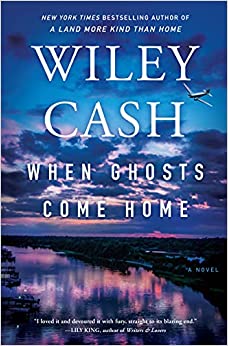
In my December 6, 2021 blog post, Books Read in November 2021, I made less-than-glowing remarks about Wiley Cash’s When Ghosts Come Home. I’m rectifying the situation today.

When Ghosts Come Home, by Wiley Cash

When Ghosts Come Home, by Wiley Cash

I owed it to myself and Wiley Cash to give this novel a second chance. I checked out the large print edition of the book from the public library in January and started reading it again. I’m so glad I did!

I think part of my problem in November was that I read the first chapter or two and didn’t get back to it for a week or so. Since the third chapter was about a new set of characters with no obvious connection to the characters in the first couple of chapters, the book sort of fell apart for me. I figured out the connection a little later, but by then I’d lost interest in the story.

Getting back to this novel in January was a real treat. I was able to give it enough attention in longer blocks of time to get into the storyline, make the connections, and care what happened to the characters.

I had to find out why Rodney Bellamy was at the airstrip that night. I had to find out what happened to Janelle’s kid brother, Jay. I had to know if Winston’s daughter, Colleen, was going to get her life back together after losing her baby. I had to find out how Winston, the county sheriff on the coast of North Carolina, got all the crimes and problems sorted out. I had to find out what part FBI Agent Tom Gross played in all this.

Determined to tie all the loose ends together, the end of the book kept me reading until 3:00 a.m. I’m back on track now with Wiley Cash and look forward to his next novel.

There is an element of racial tension woven throughout When Ghosts Come Home. The following is a very telling quote from the book. Ed Bellamy is referring to the white Marines he served alongside in Vietnam.

“But I knew something else my white buddies didn’t know: I knew what it meant to be hunted…. I still know what it means to be hunted. All these years later, we’re still being hunted.”

I’ve read all his earlier novels: A Land More Kind Than Home, The Dark Road to Mercy, and The Last Ballad.

I read A Land More Kind Than Home in 2015 before I started commenting other than mentioning the titles on my blog about the books I was reading.

In February 2016, I read The Dark Road to Mercy. Here’s the link to the blog post in which I commented on it: Some books I read in February

I commented on The Last Ballad in my blog post on November 6, 2017: Some Good New Books.


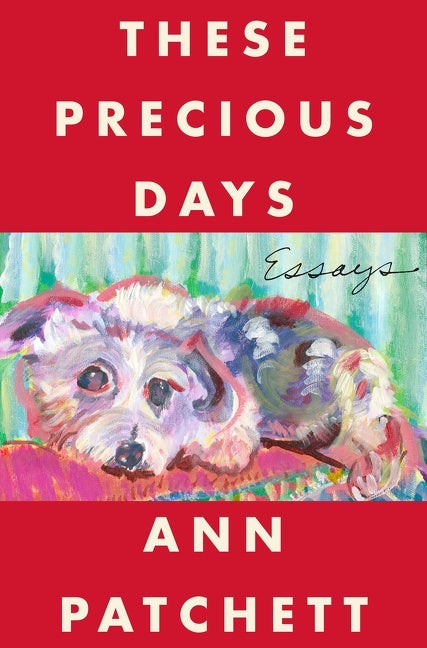
These Precious Days, by Ann Patchett

These Precious Days: Essays, by Ann Patchett

I was surprised when I looked back through my blog posts to find that this is the fifth Ann Patchett book I’ve read. I’ll give you the links to those earlier four blog posts in case you’d like to read what I had to say about her other books.

To refresh my memory and yours about the Ann Patchett books I’ve read, here are my nutshell descriptions and the links to the blog posts in which I wrote about them:

(1) The Getaway Car is a book in which Ms. Patchett humorously tells what she has learned about the craft and art of writing. What I read in February 2017

(2) State of Wonder is a novel set in Brazil. It involves a pharmaceutical firm in Minnesota and the jungle along the Amazon River. Some Great September Reads

(3) The Dutch House is about a dysfunctional family in which the mother leaves and never returns. There are many layers to this story and the house itself is as important as any character. I highly recommend you listen to the CD of this book which is read by Tom Hanks. I stretched my reading horizons in November

(4) Bel Canto is a novel based on the 1996 hostage situation at the home of an ambassador in Peru. Eight Books I Read in March 2020

(5) Commonwealth was a novel that didn’t grab my interest and I didn’t listen to all of it. It involved drunks at a christening party. I couldn’t identify with that. Books Read in May 2020

Ann Patchett is an essayist in addition to being a novelist. These formats take two different writing skills. She’s a master of both. I enjoyed listening to These Precious Days, which is a collection of essays. She reveals some of her past in an entertaining way and with humor. If you’re an Ann Patchett fan, you’ll love this book.

I connected with her on several levels in this book. We’re both writers, although she’s light years ahead of me. We both knit – or do so rarely and not as well as those knitting experts in Scotland. Neither of us have children to dote on or depend upon to help care for us in our dotage.

It is a book about friends and family and those ties that bind us and help us along through life’s ups and downs. It was one of those books that left me wanting more when it ended.


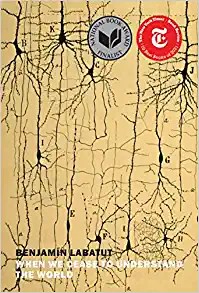
When We Cease to Understand the World, by Benjamin Labatut; translated from Spanish into English by Adrian Nathan West

When We Cease to Understand the World, by Benjamin Labatut

My cousin, Jerome Williams, recommended this book. I failed to have it on my to-be-read list, although it was shortlisted for the 2021 National Book Award for Translated Literature. The author, Benjamin Labatut, is Chilean.

This novel reads like a nonfiction book. In it, Señor Labatut writes about various scientists and mathematicians who have had to wrestle with the moral ramifications of their discoveries. In some cases, their discoveries were meant for good but have been used as weapons of mass destruction and untold suffering. Some of these men lost their minds or were mentally tormented by the ways in which their discoveries were used.

There are unexpected twists and turns as years and decades pass, and we’re left to wonder what great wonders and what horrific demented uses of those great wonders lie in the future.

Thanks for the recommendation, Jerome. You have good taste in literature.


The Silk Roads: A New History of the World, by Peter Frankopan

As I’ve mentioned before, this book isn’t a fast read. It’s a history book and it packs a tremendous amount of information and insight into its more than 600 pages. Trying to read the regular print edition was taxing on my eyes, so I got on the waitlist for the Kindle edition. I rose to the top of the list early in January and was eager to pick up where I’d left off in November.

Other books also reached the top of the library waitlists, though, and I was distracted. The Silk Road isn’t the kind of book you can read in snippets. I’ll keep reading it, probably throughout 2022.


Since my last blog post

I’ve been researching the Great Wagon Road and some of old trails associated with it. In case you’re interested in learning more about the Great Wagon Road, I recommend that you look at the PiedmontTrails.com website (https://piedmonttrails.com/) and look for Piedmont Trails on YouTube. Carol, who spearheads the Great Wagon Road Project, has lots of information that she freely shares. The Great Wagon Road Project is documenting the 800-mile wagon road that went from Pennsylvania to Augusta, Georgia in the 1700s and early 1800s.

I’m doing this research in conjunction with the historical novels I’m attempting to write. I had planned to start writing the rough draft of Book One with the working title The Heirloom, but there’s a technical issue with my computer regarding margins. I hesitate to start the rough draft until I can get my margins set at a reasonable setting. I’ve never had this problem before.

Until my next blog post

I hope you have a good book to read and a hobby to enjoy.

Stay safe and well.

Janet
My Recent Discovery of OpenLibrary.org

I love how things seem to just happen. Things I couldn’t anticipate because I didn’t know they existed. Serendipity.

OpenLibrary.org

Photo credit: Emil Widlund on unsplash.com

In the process of looking for an out-of-print genealogy book a couple of weeks ago, I quite by chance saw a reference to OpenLibrary.org. I’d never heard of it, so I typed in into a search engine to investigate it. What a treasure!

The website’s self-description reads as follows: “Open Library is an initiative of the Internet Archives, 501(c)(3) non-profit, building a digital library of Internet sites and other cultural artifacts in digital form. Other projects include the Wayback Machine, archive.org and archive-it.org.

I haven’t taken the time to explore archive-it.org, archive.org, or the Wayback Machine, but I learned from the video overview that the Wayback Machine gives you a way to go back in time and see what a particular website looked like years ago.

After signing up with my email address and a password, I gained free access to 4 million books, including that out-of-print genealogy book! It wasn’t available from Amazon.com and it wasn’t even available from my go-to used books website, abe.com. (The Advanced Book Exchange rarely lets me down.)

On OpenLibrary.org, I was able to access the entire genealogy book and do all the research I needed to do in just a couple of hours. It didn’t cost me a penny. I remember a time not so long ago when being able to do that from the comfort of my home – or from anywhere else, for that matter – was the stuff of science fiction.

If you can’t find the book you’re looking for on OpenLibrary.org, they even have a way for you to sponsor a book, and then it will be available to you and everyone else.

I’m getting no financial or other benefit from blogging about OpenLibrary.org. I just wanted to share with you a free resource that might help you.

Since my last blog post

Photo credit: NisonCo PR and SEO on unsplash.com

I watched a free 90-minute webinar on Tuesday about Amazon Optimization by Geoff Affleck. It was aimed at self-publishing authors. I don’t know yet how I’ll get my novel series published, but I took lots of notes for future reference if I go that route. Also, I picked up some pointers that I can do to my Amazon Author page now.

The Heirloom

I read every chance I got last week, and I worked on my scenic plot outline for Book One in my series (possibly titled, The Heirloom) every day except Sunday. I try not to work on the Sabbath. The word count for the scenic plot outline stood at more than 12,000 as of Saturday night. I’m enjoying my research on the Great Wagon Road and some of the trails that crossed or veered off of it.

Thank you, Beverley in the British Virgin Islands – and a blogger friend of mine – for firmly encouraging me to stop reading so much and make time for my writing. I’m happier now and have more direction in my life.

My sister and I continue to work on photo albums together while we listen to a book, listen to music, or watch TV.

Until my next blog post

I hope you have a good book to read. I continue to have more books than I can get to, but I’m dedicated now to writing six days a week.

Stay warm. Stay safe. Stay healthy.

Janet
#OnThisDay (Tomorrow): Robert Burns’ Birthday

Robert Burns was born on January 25, 1759 in Ayrshire, Scotland.

A friend of mine from Campbeltown, Scotland, asked me if I liked to read the poems of Robert Burns. I had to admit that I couldn’t understand most of them.

Although written in English, and I’m an English speaker, the English Robert Burns used in the second half of the eighteenth century in Scotland was a far cry from the English I use and speak as an American in 2022.

I love to hear the soft, lilting tongue of Lowland Scots spoken. It’s lovely. It’s, no doubt, the way my Morrison ancestors spoke, for they were lowlanders and not Gaelic-speaking highlanders.

It’s lovely to hear a Scottish accent, whether highlander or lowlander; however, the heavier the accent, the harder it is to understand some words. In addition to that, the Scots have words for things that we don’t use in America.

When it comes to reading something written in Scots, some words just don’t translate well to my ears. That brings me back to Robert Burns.


Photo credit: Gary Ellis on unsplash.com

“Auld Lang Syne”

The most famous poem associated with by Robert Burns is, no doubt, the one that’s sung on New Year’s Eve. The words of “Auld Lang Syne.” The Scottish pronunciation is ‘o:l(d) lan’ səin. I must admit, this doesn’t help me at all. My source was quick to point out that we should note that Syne is pronounced like an s and not like a z. The rough translation is Long, long ago; or old long time; or good old time.

It seems that it’s an ancient song and in 1788 Robert Burns was the first person to write down the words. That was when he submitted the words to the Scots Musical Museum.

Did you know the song has four verses? Here they are in Scots, followed in more understandable English, thanks for the Scotland.org website The History and Words of Auld Lang Syne | Scotland.org.

Should auld acquaintance be forgot,

And never brought to mind?

Should auld acquaintance be forgot,

And auld lang syne.

Chorus

For auld lang syne, my jo,

For auld lang syne,

We’ll tak a cup o’ kindness yet,

For auld lang syne.

And surely ye’ll be your pint-stowp!

And surely I’ll be mine!

And we’ll tak a cup o’ kindness yet,

For auld lang syne.

Chorus

We twa hae run about the braes

And pu’d the gowans fine;

But we’ve wander’d mony a weary foot

Sin auld lang syne

Chorus

We twa hae paidl’d i’ the burn,

Frae mornin’ sun till dine;

But seas between us braid hae roar’d

Sin auld lang syne.

Chorus

And there’s a hand, my trusty fiere!

And gie’s a hand o’ thine!

And we’ll tak a right guid willy waught

For auld lang syne.

Chorus


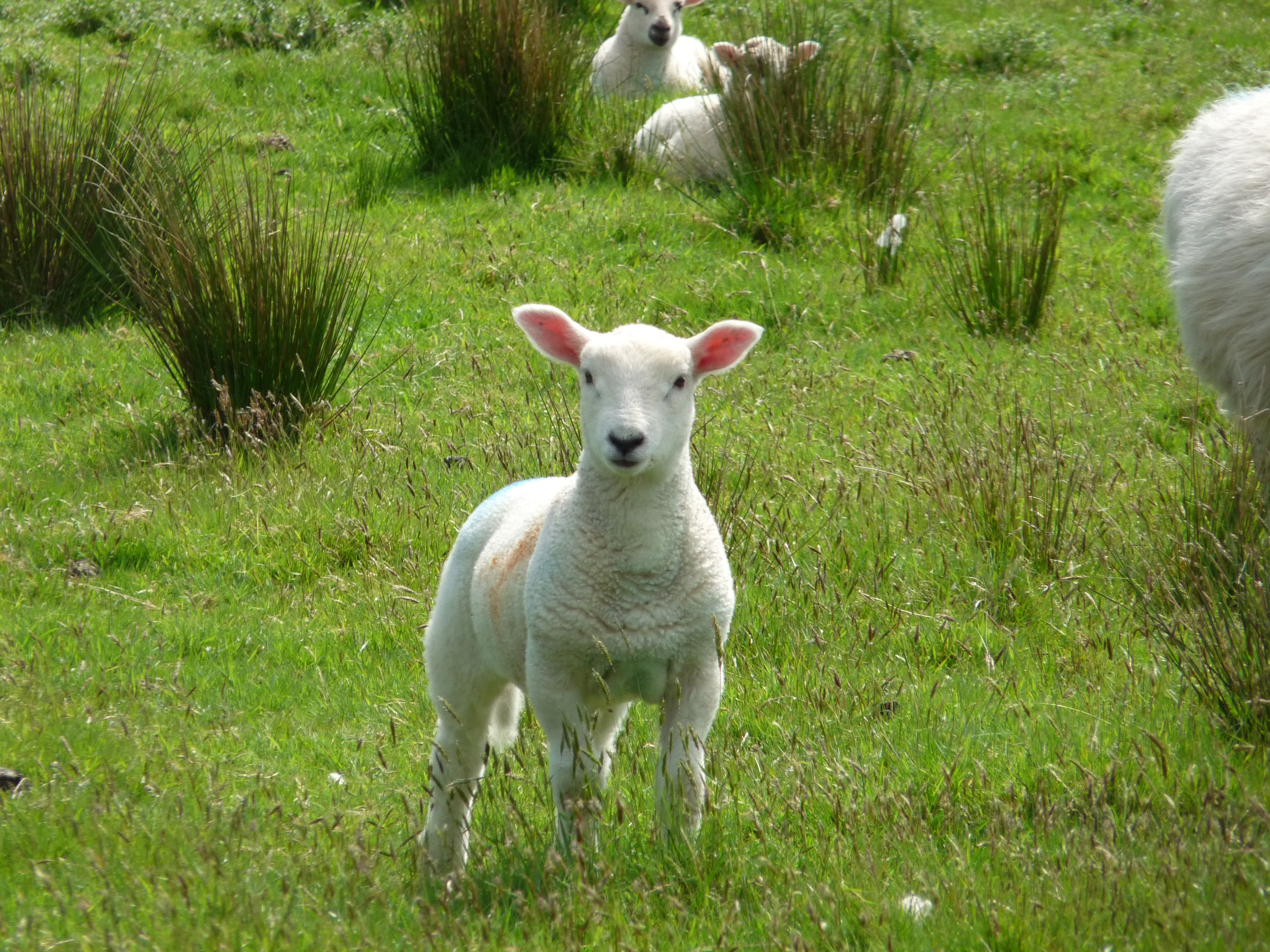
Scottish Lamb. Photo credit: Gibbon Fitzgibbon on unsplash.com

A modern translation of “Auld Lang Syne”:

Should old acquaintance be forgot,

And never brought to mind?

Should old acquaintance be forgot,

And long, long ago.

Chorus

And for long, long ago, my dear

For long, long ago,

We’ll take a cup of kindness yet,

For long, long ago.

And surely you’ll buy your pint-jug!

And surely I’ll buy mine!

And we’ll take a cup of kindness yet,

For long, long ago.

Chorus

We two have run about the hills

And pulled the daisies fine;

But we’ve wandered manys the weary foot

Since long, long ago.

Chorus

We two have paddled in the stream,

From morning sun till dine;

But seas between us broad have roared

Since long, long ago.

Chorus

And there’s a hand, my trusty friend!

And give us a hand of yours!

And we’ll take a deep draught of good-will

For long, long ago.

Chorus


Oh, My Love is Like a Red, Red Rose

Photo credit: Serafima Lazarenko

“Oh, My Love is Like a Red, Red Rose” is my favorite Robert Burns poem – partly because it’s more understandable than most of his – and because the sentiment is beautiful. Here are the words:

O my Luve is like a red, red rose

That’s newly sprung in June;

O my Luve is like the melody

That’s sweetly played in tune.

So fair art thou, my bonnie lass,

So deep in luve am I;

And I will luve thee still, my dear,

Till a’ the seas gang dry.

Till a’ the seas gang dry, my dear,

And the rocks melt wi’ the sun;

I will love thee still my dear,

While the sands o’ life shall run.

And fare thee weel, my only luve!

And fare thee weel awhile!

And I will come again, my luve,

Though it were ten thousand mile.

You can find it sung by various artists on YouTube.


Happy 263rd Birthday, Robert Burns

Scottish Bagpiper. Photo credit: Lynda Hinton on unsplash.com

It’s a tradition that many Scottish organizations, such as the Robert Burns Society, celebrate the bard’s birthday with a fancy dinner. This involves a bagpiper “piping in” the traditional Scottish dish, haggis. I’ve never been to one of those dinners.

When I visited Scotland, I was determined to have as many Scottish experiences as possible. I ate haggis. Now I can say, “I’m a haggis eater,” which you’re supposed to say with a deep voice and much gusto.

I’ve eaten haggis. I don’t have to do that again, if you get my drift.

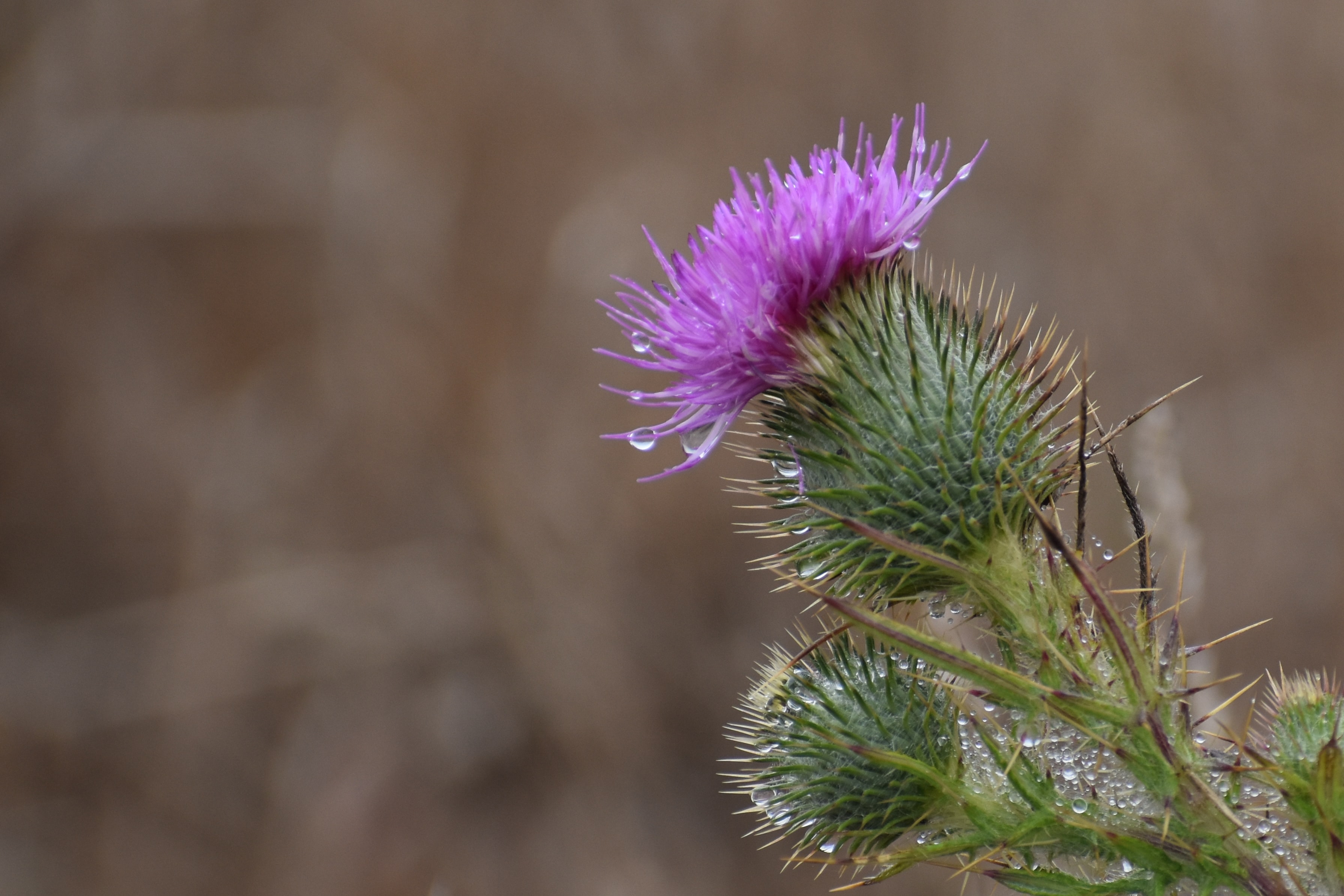
Thistle. Photo credit: Elisa Stone on unsplash.com

Since my last blog post

A blogger friend of mine, Francisco Bravo Cabrera, is a man of many talents. He paints, he writes poetry, he makes music, he puts together extraordinary art history videos, and he shares his talents on his blog. Here’s the link to one of his recent posts: https://paintinginvalencia.wordpress.com/2022/01/16/jazzart-phase-iii/

Since I blogged last Monday, I learned that he has launched a new endeavor by joining Fine Art America. Here’s a link to Francis’ Fine Art America page where you can view and purchase examples of his digital art on a vast variety of items ranging from wall canvas to notecards:  Francisco Bravo Cabrera Art | Fine Art America. Best of luck with this new opportunity, Francis!

I started writing the scenic plot outline for what I want to be “Book One” in my planned novel series. The scene-by-scene “outline” now stands at more than 3,700 words. I’m considering the working title, The Heirloom. The manuscript I’ve been blogging about for years with the working title of either The Doubloon or The Spanish Coin will be “Book Two.”

My blog post last week was “liked” and commented on by an honest-to-gosh published novelist, D. Wallace Peach. Her comment made my day and encouraged me that I’m on the right track with novel structure. Thank you, Diana!

My decluttering project at home continues. I went through bags, drawers, and boxes of old craft supplies. It felt good to discard dried-up fabric paint, craft glue, and sundry supplies I know I’ll never use. Usable items I’m no longer interested in or motivated to use will be donated to several people and a re-sell organization. The process freed up a drawer in a chest of drawers, making room for more things I probably should throw away or donate.

I worked on my next three blog posts.

I also did some reading. I gave When Ghosts Come Home, by Wiley Cash, another chance and loved it. More on that in my February 7, 2022 blog post.

Oh – and I actually got to spend some time on genealogy, one of my most rewarding hobbies.

In spite of some health concerns within my family, the Covid-19 pandemic, natural disasters, and the threat of war in eastern Europe, I had a good week. For me, 2022 is getting off to a productive start.


Until my next blog post

I hope you have a good book to read and a hobby to enjoy.

Stay safe and well, and let me know what you’ve been doing.

Janet
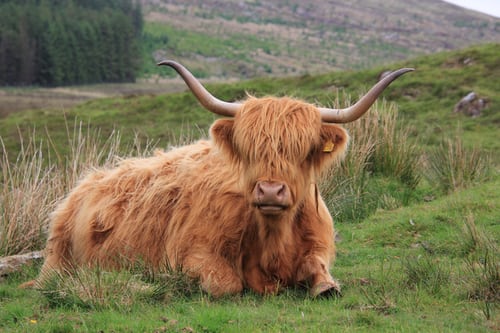
Highland “Coo.” Photo credit: James Toose on unsplash.com

How I’m Ending 2021

I struggled over a topic for today’s blog post. I looked back to see what I blogged about in my year-end blog posts since 2016. It was interesting to read about where my thoughts were the last week of December over the last five years.

Photo credit: Guneet Jassal on unsplash.com

December 2016

I made up a reading challenge for 2017.

Photo by Ed Robertson on Unsplash

December 2017

I reported that I’d checked off only 12 of the 19 items on my self-inflicted reading challenge. The title of the post was “Pros and Cons of Reading Challenges.” I found several of each.

December 2018

Here’s the link to my last blog post in 2018, 15 Books that Entertained, Educated, or Changed Me in 2018. I couldn’t believe it had been more than three years since I read some of those books. Some were still fresh in my mind.

December 2019

I was feeling self-reflective as 2019 came to a close. My last post that year was Contentment and Peace in 2020. I thought if I got my to-be-read book list under control, found my niche as a blogger, got my novel on the road to publication, and made time for hobbies, I would find peace and contentment in 2020.

December 2020

At the end of 2020, I decided to look back over the year and answer the question Did I Find Contentment and Peace in 2020?. Of the four prerequisites I listed in the previous paragraph, I didn’t accomplish any.

In all fairness, I didn’t anticipate breaking my leg in January 2020. I didn’t anticipate not being able to put any weight on my right leg for 13 weeks after the break. I didn’t anticipate having a pulmonary embolism in February 2020. I didn’t anticipate the Covid-19 pandemic hitting with full force in March 2020. I didn’t anticipate the death of my lifelong best friend in July 2020.

It was a rough year for every one of us. Interestingly enough, though, in my last blog post of 2020, I concluded that I was fairly content and at peace.

Looking ahead to 2022

As 2021 draws to a close, I don’t have any New Year’s Resolutions to break in 2022. I don’t have a magic number of books I want to read next year or an arbitrary set of categories in which I want to read.

Too many people got sick this year, and too many of them died. It looks like 2022 might bring more of the same.

I think I’ll just keep doing the best I can every day. I’m tired. How about you?

Since my last blog post

I would be remiss if I didn’t mention a mistake I made in last week’s blog post, “Responses to “Am I a Sun or Just Another Star?” I misspelled Rebecca Cuningham’s last name. I put two n’s in it instead of just one. I apologize to Rebecca and to any readers who had trouble finding her online due to my error. Check out her blog at fakeflamenco.com. Rebecca spent a semester studying abroad in Toledo. We’ll all look forward to her memoir, Supergringa in Spain.

My sister and I had a nice and quiet Christmas Day. Due to the uptick in Covid-19 cases, we decided to go back to participating in worship services via Facebook, even though we’re fully-vaccinated and boosted. We both have underlying conditions that increase our risk of serious illness if we catch the virus.

I’ve done a lot of reading, but I don’t think I can finish reading the 900-page Go Tell the Bees That I Am Gone, by Diana Gabaldon. My eyes are giving out!

#reading #books
Photo by Aaron Burden on Unsplash

Until my next blog post

I plan to do the best I can each day. I want to read when I feel like it, write when I can, and stop eating so many Christmas cookies.

I hope you have a good book to read.

Janet

Responses to “Am I a Sun or Just Another Star?”

I considered writing about the Louisiana Purchase today. You know, that 828,000 square miles (or 2,140,000 kilometers) of central and northwestern present-day United States of America purchased from France in 1803 during the Thomas Jefferson Administration? It’s a fascinating topic, but I decided to set it aside in favor of writing a follow-up to last week’s blog post, “Am I a Sun or Just Another Star?”

Was that a collective sigh of relief I heard from the blogosphere?

In answer to last week’s question, I admitted I’m just another star in the blogosphere, and I’m okay with that. Of the 40,320,000 blog posts published every week, I would be delusional to think my one measly post stood out in the crowd.

I wrote that blog experts tell people like me that we have to find our niche. Often times it seems those experts are pushing me to find something to write about that no one else is writing about. The advice that always stops me in my tracks is the ever-popular: Your blog must solve someone’s problems.

I have enough trouble solving my own problems without taking on someone else’s. Perhaps if I had a product to sell or stellar advice to offer on a particular subject, my blog could solve someone’s problem. That’s not going to happen.

At the end of last week’s post, I asked for feedback about my blog. I wanted to know what you like and what you don’t like about my blog, so I could make adjustments to make my blog more appealing. I thank each one of you who took the time to leave a comment.

In a nutshell, people seem to like my blog topics just the way they are. “Whew!” No one had the courage to tell me to stop writing about my long-suffering novel. And no one said my “OnThisDay” posts need to bite the dust. I usually get lots of “likes” when I blog about the books I’ve read, so I think that first-of-the-month topic is safe, too.

Photo credit: neonbrand-3gznpblimwc-unsplash

Here are some of the people who gave me feedback last week:

Jo (stillrestlessjo.com blog)

Jo, an Englishwoman living in Portugal wrote the following: “Something that captures my interest, and holds it, and isn’t trying to sell me something. You pretty much succeeded, Janet. Good luck with the book.” Jo’s photos from Portugal are fascinating. I’ll never get there in person, so her pictures bring the southern coast of that country to me.

Randall Anderson

Randall from the state of Georgia wrote that each blog he follows reflects the individual blogger, and that’s what he likes about blogs. Randall specifically commented that he enjoys my blog posts about the books I read because he can compare notes on the ones he’s read and sometimes discovers something he wants to read.

Francisco Bravo Cabrera (paintinginvalencia.wordpress.com)

Francisco in Valencia, Spain is one of my loyal readers. He offers encouragement every week as I aspire to be a novelist. His blog brings art history and music to me that have greatly broadened my horizons. He recently redesigned his blog. He never ceases to amaze me with his talent as a painter, a poet, and his ability to enhance his blog with music and graphics. Francis and I have a bit of a mutual admiration society going on. He flatters me by saying he’s amazed at how many books I read and says I write about them and about history in a way that he envies. The truth of the matter is, every one of his blog posts amazes me.

Laleh Chini (lalehchini.com)

Laleh, a native of Iran who lives in Canada, is another loyal follower of my blog. She encourages me to keep writing, and I’m encouraged by the several books she has written and published in the last few years. The stories she shares from her native Iran often remind me of the parables of Jesus. Her stories remind me that human beings are very much the same all over the world, regardless of nationality or religion. Laleh is a fantastic storyteller and freely shares her talent on her blog.

Neil Scheinin (yeahanotherblogger.com)

And then there’s Neil Scheinin. His blog always brings a smile to my face. He describes his blog as “an award-free/tag-free/challenge-free/etc.-free blog,” and I love that. (I’m tempted to steal that description, Neil!) Neil goes with the flow. His laid-back, self-deprecating style draws me in every time. The last time I checked, his December 7, 2021 blog post had 141 “likes.” Just for comparison, I do cartwheels (well, I would if I could) when I get more than 10 likes.) In his response to my blog post last week, Neil rightly pointed out that WordPress gives bloggers a wonderful platform for expressing ourselves and he added that it has brought to his attention that there are many good writers out there.

S.J. Schwaidelson wifelyperson.blogspot.com AND sjschwaidelson.com

S.J. Schwaidelson took more than a few minutes to write a sincere and thoughtful response to my blog post last week. She’s a New York native who has made her home in Minnesota for many years. She’s a novelist, current events blogger, and playwright. She shared with me the three main things she’s learned from her two blogs. Yes, you heard me right: she writes two very different blogs. She started her first blog after her husband, Ziggy’s death: wifelyperson.blogspot.com. After her third novel was published, she launched her new blog about being an author. You can find it through sjschwaidelson.com.

Rebecca Cuningham (fakeflamenco.com)

Rebecca Cuningham and I have recently found some common interests and started following each other’s blogs. Rebecca writes from Wisconsin. Her blog brings to life her many interests and talents. She shares her vast knowledge of history, her travel experiences, her humor, and life in Wisconsin – all through her descriptions and photographs. Rebecca sets the bar high for me when it comes to writing about history. She’s fluent in English and Spanish and, like Francis Cabrera, she blogs in both languages.

Trish Deveneau (trishdeveneau.com)

Trish Deveneau is a retired teacher, writer of creative nonfiction, blogger, and once-again resident of New York. Her comment last week was so well thought out and beautifully written that I not only will share it here, but I also printed it and taped it to the top of my computer screen. She wrote: “I enjoy blogs that are written from the heart as well as the head, that make me think about things in a new way or expose me to ideas that I haven’t yet bumped into. And of course, I am looking for prose that makes me sit up and take notice!” Please visit Trish’s blog. She writes from her heart and from her head and will expose you to ideas you probably haven’t bumped into yet.

Shelly DS (growingwithspawn.com)

Shelly dropped by my blog yesterday for the first time. I love hearing from new readers! Shelly’s words of wisdom in her comment included the following: “focus on our own niches than to be trying to conquer the universe… that’s the best way to add value!” Absolutely, Shelly! Your comment reminded me of the old saying, “Bloom where you’re planted.” Every blogger needs to do his or her own thing and have fun with it.

Photo by Kaitlyn Baker on Unsplash

As for me…

Blogging is a creative outlet for me, but it comes with a responsibility. It takes a reader a few minutes to read a blog post. Everyone’s time is limited and valuable, so I appreciate every time my blog is read.

I’m fortunate to have some loyal blog readers. I count them as friends. I value their time, their “likes,” and their comments. A bonus this past week was hearing from several new people. I feel like I’m constantly adding to my circle of blogging friends.

Knowing I have readers and friends throughout the United States and around the world makes the pandemic, conflicts, and other crises of life in 2021 a little easier to take.

By the way, I didn’t try to put true links to the blogs of my referenced respondents because I was afraid I’d mess someone’s link up. I hope I’ve included enough information that you can find each of their blogs by using a search engine.

Since my last blog post

In addition to reading the comments my blog received and responding to each of them, I also found time to read and write. A lot of my public library waitlisted books came in. One of them is Diana Gabaldon’s latest novel, Go Tell the Bees That I Am Gone. It’s 900 pages and I have three weeks to read it – along with a stack of other books. Wish me luck!

I dived into the writings of K.M. Weiland and suddenly some elements of novel structure fell into place for me. It was truly one of those “aha” moments and it felt like a weight was lifted off my back. I didn’t add to my word count this week, but what I finally learned about novel structure was priceless. I’d read all that structure stuff many times before, but last week I was finally able to visualize my manuscript in that framework and that made a world of difference.

Between breaking a 10-year-old crown while eating pizza, having to get it replaced, learning that an acquaintance has Covid-19 and is on a ventilator in ICU, running out of my medicine that keeps my Seasonal Affective Disorder under control, and finding out that our dog’s heart is three times its normal size, it’s been a trying week; however, all I need to do is to think of the thousands of people who were left homeless by tornadoes in Kentucky and five other states last week, and I realize how blessed I am.

Life goes on for me. Tomorrow is promised to no one, but today I continue to live my life and enjoy the benefits it gives me. I have a roof over my head and access to more food than I should or need to eat. I live in a place of relative peace and quiet. All those blessings probably put me in the top one percent of all the people in the world. I truly don’t know how fortunate I am.

Until my next blog post

I hope you have at least one good book to read. I have so many to choose from that it makes selecting just one difficult. Hence, I usually have several books going at the same time. (Thank you, free public library systems!)

Note: Tomorrow is National Short Story Day in the United States. Support your local library and short story writer by reading a short story. With some hard work and a bit of luck, maybe I’ll have a collection of short stories to offer you next year when Short Story Day rolls around.

If you’re of the Christian faith, I hope you have a very meaningful Christmas Day on Saturday.

Janet

P.S. When I previewed this post to see how it would look on a tablet or smaller mobile device, it looked terrible. There were no margins! I hope that’s not the way it will look published!

#OnThisDay: Articles of Confederation, 1777

It’s been four weeks since my last #OnThisDay blog post. Today’s might not be the most exciting topic for you, but I think it’s important for Americans to be reminded about the early days of our democracy. The historian in me just can’t help myself.

The Articles of Confederation document was the forerunner of the U.S. Constitution.

Photo credit: Anthony Garand on unsplash.com (Preamble of the US Constitution)

On November 15, 1777, the Continental Congress adopted the Articles of Confederation. It was that document that established the name of our country as the United States of America. It served as the defacto constitution of the nation throughout the Revolutionary War.

I reread the Articles of Confederation last week. It had been quite a while since I’d read the document.

Still stinging from oppressive British rule, the frames of the Articles of Confederation were hesitant to create a strong federal government. Much power was retained by the individual states. States’ rights have been a bone of contention throughout the history of the U.S. and still is today. It seems like every week the legislature of at least one state in the union is testing the waters and “pushing the envelope” to see just how far they can go without being reined in by the U.S. Supreme Court. The major issues today that fall in that category are abortion rights, gun rights, and Covid-19 vaccination mandates.

There were weaknesses in the Articles of Confederation. The document did not give the U.S. the authority to issue a national currency. Hence, the various states printed their own money. It makes my head spin to think what our country would be like today if that hadn’t been corrected.

Another weakness in the document was the absence of authority of the national government to levy taxes. Some people probably think things should have stayed that way, but just think how many things we would not have today if not for federal taxes. The “common treasury” was to be supported by the states, with each state contributing an amount based on the value of the land in that state.

Of all the language in the document, the wording in Article III stood out for me. Specifically, the words, “firm league of friendship.” That phrase sounds quaint to our 21st century ears.

Article III states the following: “The said states hereby severally enter into a firm league of friendship with each other, for their common defence [sic], the security of their Liberties, and their mutual and general welfare, binding themselves to assist each other, against all force offered to, or attacks made upon them or any of them, on account of religion, sovereignty, trade, or any other pretence [sic] whatever.”

Article IV went on to state that citizens of any state had the freedom to travel to and from any other state. Of course, slaves were not considered citizens, so they were not afforded that right.

Just as details of how a democratic government operates today takes a long time and much gnashing of teeth, so it was with the Articles of Confederation. The debate leading up to the adoption of the document lasted 16 months.

The Articles of Confederation served the United States of America until March 4, 1789, when it was replaced by the U.S. Constitution. The Constitution is a living, breathing document. It is continually up for interpretation and has been amended 27 times. No doubt, it will be amended many more times.


Since my last blog post

We had spectacular autumn weather last week in North Carolina! Wednesday was a crystal clear, unseasonably warm day. I took a break from raking dead, brown leaves to walk around our yard with my cell. I couldn’t stop taking pictures as I happened on one gorgeous tree after another.

I concluded that I live in paradise. I started with one of my favorite trees. It’s a maple that my father and I found as a sprout in our woods in the fall of 1965. It wasn’t much taller than I was, but it was decked out in beautiful orange leaves. The maples in our yard were yellow in the fall, and I wanted an orange one.

Daddy marked the location of the sprout and returned later to dig it up. We planted it in front of our house, and there it proudly stands today, much taller than the house. This fall, it’s orange at top and the rest of it is yellow.

Maple Tree

I’m blessed to once again live in that house. We’re blessed with a wonderful variety of trees, including pine, cedar, maple, hickory, several varieties of oak, holly, mulberry, poplar, ash, dogwood, sweet gum, persimmon, and black walnut.

Hickory Tree
Dogwood Tree
Cedar Tree
Oak Leaves
Sweet Gum Tree Leaves trying to decide whether to turn red or yellow

Dealing with the leaves in the fall after the red, yellows, golds, and oranges have faded and the spent leaves have dropped to the ground is quite a chore. I tend to dread autumn because of the multitude of leaves that must be raked, blown, carried off, or mulched with the tractor, but this year I’ve chosen to enjoy the riot of color in our yard every day. It won’t last much longer.

This tree is pretty, but I don’t know what it is! Can anyone help me?

When not outside, I worked on my novel. I’m putting into practice some of the things I recently learned in the online writing course I’ve mentioned in earlier blog posts. It feels good to be revising, editing, and improving my novel.

Don’t give up on me, y’all!


Until my next blog post

I hope you have a good book to read.

I hope you have everything you need.

Janet

What Would Make You Happy?

On the heels of reading seven books in June, I took a step back in July and “only” read five books. I’d let the pressure of reading books so I could blog about them get too much of a hold on my life. That’s why I planned to not read as much in July. That didn’t work out very well, but I did start taking a closer look at the types of books I was reading and wanted or needed to read.

If you read my August blog posts, you know there wasn’t a fluffy beach read in the bunch. In fact, there wasn’t a novel in the five, and they were all about serious and sobering topics.

Photo credit: John Mark Smith on unsplash.com

September and October came along and most of my reading was dictated by the writing course I was taking. For two months, I read what I had to read or needed to read. It didn’t leave any time to read what I wanted to read, although I did start reading The Silk Roads: A New History of the World, by Peter Frankopan. It’s not a book that can be read quickly.

Reading is important for a writer; however, writing needs to be more of a focus for me now. I’ve procrastinated and let reading take too much of my time the last couple of years. I don’t regret reading any of the books I read, but I’ll never finish writing my novel at this rate!

What would make me happy?

About six weeks ago, I took time to discern what will make me happy. The things I came up with were (1) to work on my book; (2) to work on my genealogy; and (3) to get back to sewing and quilting. I haven’t sewn in going on two years now. I hope I can remember how to turn on the sewing machine. I have tubs of fabric that need to be turned into gifts or quilts and other household items.

The fourth item on my list is to get back to playing the mountain dulcimer. I should play it every day. I haven’t touched it in months. I hope my muscle memory kicks in when I take it out of its case today. I’m not very good at it. The reasons for that are (1) I’m not musically-talented and (2) I don’t put much time into it.

The Gifts of Imperfection, by Dr. Brene Brown

I recently reread The Gifts of Imperfection, by Brené Brown. It reminded me not to be so hard on myself and not to worry about what other people think of me. I listened to her book, Rising Strong, and it inspired me to be brave. That’s what finally prompted me to hire a professional editor to critique the first 50 pages of my novel. (See my July 12, 2021 blog post, 4 Other Books I Read in June 2021 and my July 26, 2021 blog post, How My First 50 Pages Stood up for Critique.)

Rising Strong, by Dr. Brene Brown

I’d been working on today’s blog post early in July, when I read Barbara Strickland’s July 11 blog post: Limit the Limits – Barbara Strickland – Author & Blogger (brstrickland.com. After reading an article in LinkedIn, Barbara blogged about a methodical way to figure out what your dreams are.

Her post sort of dovetailed with what I was writing four months ago that ended up being postponed until today. She looked at her list of dreams from a view of practicality. I didn’t have to consciously do that when I made my list because it’s not my nature to dream about doing or having things I can’t afford or don’t have the health to do.

Taking stock on this milestone year

I graduated from high school 50 years ago. There. I’ve said it. Do the math. Yes, I’m 68 years old.

Photo credit: Zoltan Tasi on unsplash.com

There’s something jolting about admitting I graduated from high school 50 years ago. I don’t know what it is about those anniversary years that end in a zero. I was not prompted to take stock of my life last year, 49 years after my graduation.

Our 50-year high school reunion was planned for last month but had to be postponed until sometime next year due to the Covid-19 pandemic. 

I was in a class of 191. At least 33 of my classmates have died. Talk about a sobering thought! More than one of those were special, lifelong friends of mine.

Assessing my blog topics

Once in a while, I need to take a step back and evaluate my life – how I’m spending my time, what I’m accomplishing, what I’m doing to benefit others, and what I’m doing to improve myself. This is one of those times, so please bear with me.

This is supposed to be my writing blog. My reading is important and integral to my writing; however, since the Covid-19 pandemic started, I haven’t written much about my journey as a writer until this summer when I decided to get the first 50 pages of my novel manuscript critiqued by an editor.

A blog is supposed to serve a purpose. It’s supposed to benefit the reader. I hope my continued journey as a writer will serve as fodder for my future blog posts and those posts will enlighten or entertain you in some way. Otherwise, you don’t have any reason to keep reading my blog.

No pressure there!

Photo credit: Daniel Thomas on unsplash.com

There are many things I enjoy about blogging. Over the years, I’ve developed friendly relationships with a few readers. They live all around the world. Many of them have opened my eyes to things I didn’t know. They’ve helped me understand different perspectives. They have enriched my life. I will never meet them except via the internet.

People in 20 countries visited my blog the last week in October. Since I started my blog, people in 144 countries and territories have looked at it. That is surprising, gratifying, and a bit scary.

I never know what’s going to strike a chord with readers. When I have a reader from China or some countries in Africa, it especially catches my attention and I feel a heightened sense of responsibility.

I appreciate your taking time to read my blog. I’ll try not to let you down.


Since my last blog post

Here in North Carolina, we raced right through autumn last week and jumped into winter. There was snow in the higher mountains in the state and our county had a freeze warning. It just doesn’t seem quite right to have a freeze warning before having a frost warning, but that’s life in North Carolina.

Photo credit: Janet Morrison

I’m still decluttering my home in hopes of making space for more creativity and less stress.


Until my next blog post

Have you assessed your life lately? What would make you happy? What’s missing in your life? What are you waiting for?

I hope you have at least one good book to read.

I hope you’re happy and have everything you need.

Janet

Giving God the Right of Way

I plan. I make lists. I find great satisfaction in checking off the items I complete on my to-do list. There are some problems with this.

First, I always think I can accomplish more in a day than I can. This leads to frustration and feelings of guilt.

Second, I don’t allow for “down days.” Even if I didn’t have chronic fatigue syndrome and fibromyalgia, having a rigid daily to-do list would be foolish.

Third, and most importantly, I tend to leave God out of the process.

If you followed my blog this summer, you know I’ve gone through some upheaval with the novel I’m writing. I started writing it more than a decade ago. I honestly don’t know when I started it. It languished on my computer for the last several years.

In July, I decided it was “no or never.” I hired a professional editor to critique the first 50 pages of my 303-page manuscript. The feedback I got from her was constructive and attention-grabbing. At the same time, it was disheartening yet exactly what I needed to hear.

A failed plan

That detailed critique prompted me to stop procrastinating and start focusing my attention and energy on learning the skills I needed to learn so I could finally finish that novel. I made a plan. I made a daily (Monday through Saturday) to-do list for what to study and what to practice or write each day. I thought by not working on my book on Sundays I was doing the Christian thing. I would give myself Sundays off and, thereby, do what was pleasing to God. That worked fairly well for a couple of weeks.

But guess what happened. I became a slave to my plan. It was my plan. I thought I had been clever to create this plan with its one-day-a-week set aside not to work on my writing. By doing so, I thought I was “keeping the Sabbath.”

It was my plan, but it was wearing me out.

Photo credit: Glenn Carstens Peters on unsplash.com

I fell behind on August 16. I’d assigned myself too much reading, too much writing, and way too much nuts-and-bolts work on my novel regarding details about my characters.

I’d set myself up for failure.

By pushing myself to do everything on my list, I threw myself into a chronic fatigue syndrome relapse for the next three weeks; however, I read something on August 17 that got my attention. It was the third chapter in Seven Things That Steal Your Joy: Overcoming the Obstacles to Your Happiness, by Joyce Meyer.

Led by the Spirit

Ms. Meyer wrote the book in 2004. I’d bought it as a used book many years later and kept meaning to read it. I read the first chapter on August 15 and the second chapter on August 16. It was “on my list” to read the third chapter on August 17.

Little did I know that God had a reason for leading me to Chapter Three on August 17. I don’t believe in happenstance when it comes to such things. The title of that chapter is “Joy Keeper: Be Led of the Spirit.” By “Spirit,” Ms. Meyer is referring to the Holy Spirit.

The Holy Spirit is our Helper, if we are just open to It. From the first sentence in Chapter Three (“One of the most dynamic ways to keep our joy is to allow the Holy Spirit to lead us in the way we should go.”) to the last sentence in the chapter (“God will write His laws on your heart, then you won’t need reminders to keep your joy.”), that chapter was exactly what I needed to read in the emotional and physical place I was in on August 17.

It didn’t take me long to realize that my six days-a-week reading and writing plan – as detailed and as carefully- and methodically-planned as it was – lacked one thing. It lacked the most important thing. It lacked God. I spent hours working out a plan that I thought would lead me to a point next February when I’d have all this knowledge in my head and be ready to rewrite my novel’s outline and then start rewriting the manuscript.

But aside from setting aside the Sabbath to not work on my novel or my writing skills, I’d left God and the Holy Spirit out of my grandiose plan. I shredded my plan.

What’s next?

Don’t get me wrong – I still believe in having a plan, but what’s new is that I want to start each day by seeking God’s will for me that day. He may want me to tackle the next item on my novel “to-do” list, or He might have a better “to-do” list for me for that day.

I still believe God wants me to write. He might want me to write the novel I’ve had in my head and on paper for 10+ years. He might have an entirely different novel in His plan for me. He might have something else altogether in store for me.

Ms. Meyer wrote in the third chapter of her book, “If you keep your plan before the Lord, you must be ready to let Him change anything at any time. If you do this, your path will always be right and prosperous.”

She also wrote, “… and we will never find joy if we think we have to know everything before we take our first step in the direction He is leading us.”

Today is the last class in the “Eight Weeks to Writing a Commercially Successful Novel” online course I started on September 6, so it’s time for me to create a new plan.

This time, though, I’ll try to be reasonable, and I’ll try to remember to seek God’s will every morning and be ready to ditch my plan for His plan.

Since my last blog post

I’ve always been a pack rat. I keep things “because I might need it someday.” I’ve transitioned into, “I’m never going to need this.” Last week I concentrated on my file cabinets. That alone dates me. I’ve purged file folders of all descriptions.

I don’t need the paperwork for the car insurance I had in 1995. I don’t need most of the recipes I kept in the 1980s. I don’t have the energy to do much cooking. Plus, I’m trying to eat healthier in 2021 than I did in 1981. The list goes on.

This is a work in progress, but it feels good to let go of some things.

Until my next blog post

I hope you have a good book to read or productive time if you’re writing one.

Whatever season you’re transitioning into where you live, try to enjoy the gift each day is. This is a challenge for me. You know I don’t like cold weather.

Thank you for taking time out of your day to read my blog post.

I’ll leave you with this short sentence from the third chapter of Joyce Meyer’s book: “To walk in the presence of God, we must give the Holy Spirit the right of way.”  I love that!

Until my next blog post – which I have planned for next Monday – I hope you and I both give the Holy Spirit the right of way.

And wait on tiptoe to see what happens.

Janet

Myths and Legends Day

Myths and Legends Day is an internationally-celebrated day on October 11 every year. Who knew? I’d never heard of it until this year.

I found it on a list of days.

This week seems to have more than its share of such days. Tomorrow wins the special day contest. It’s Cookbook Launch Day, Free Thought Day, and Old Farmers Day. My favorite thing to celebrate tomorrow, though, is International Moment of Frustration Scream Day.

International Moment of Frustration Scream Day

I think most of us could really get into International Moment of Frustration Scream Day during this pandemic. If I were a betting person, I’d bet money that there are some healthcare workers and teachers who could show us how to do it.

I wanted to scream when I learned that the local legend in Lancaster County, South Carolina around which I had written the first draft of a novel was just that. A legend. It makes for a wonderful story, but as with many yarns spun for 250 years, it’s just not true. At least, it’s not provable.

Nevertheless, I took a bit or that legend and something I saw years ago on a segment of the PBS TV series, “History Detectives,” and I’ve spun my own unique story. The working title is The Doubloon or The Spanish Coin and, if you and I live long enough, we’ll get to see it in print. Authors use the abbreviation WIP for Work in Progress. My novel is definitely a WIP.

Back to Myths and Legends Day

That brings me back to Myths and Legends Day. Look online and you can hardly find anything about it. Several websites actually use the same photograph to illustrate the day: children dressed as their favorite characters such as Superman, Robinhood, and several I can’t identify. It does sound like something fun for elementary students to celebrate and might even encourage some of them to read.

Paul Revere

One legend that came to my attention recently is the famous “midnight ride of Paul Revere.” It’s a wonderful story, and it’s true. The problem is, it’s not the whole story.

On the night of April 18, 1775, Paul Revere rode horseback through the northern Boston area to warn the Americans about the movement of British troops. I hate to burst your bubble, but he did not ride through the countryside shouting, “The British are coming! The British are coming!” I know. That’s what I’ve thought all my life, too.

Henry Wadsworth Longfellow’s poem, “Paul Revere’s Ride” has been memorized by many a school student. Paul Revere took on a superhuman aura. He did make that ride, and I don’t mean to take anything away from him; however, he’s not the only person to make such a dangerous journey.

William Dawes

William Dawes was also sent to ride that night to Lexington, Massachusetts to warn Samuel Adams and John Hancock that they were soon to be arrested. Also, his task was to alert the Minutemen that the British troops were on the move. Revere got to Lexington a half hour before Dawes. It’s thought that Revere had the faster horse. Also, Dawes was thrown by his horse as he and Revere headed on to Concord, Massachusetts, his horse escaped, and Dawes had to walk back to Lexington.

Samuel Prescott

Paul Revere recruited Samuel Prescott of Concord to meet him along the way since he was more familiar with the Concord area. He supposedly guided Revere through the darkness. When Revere, Dawes, and Prescott were met by British officers on the way to Concord, they split up and Prescott was the only one that made it all the way to Concord. Revere was captured.

Israel Bissell

Then, there was Israel Bissell. He rode 345 miles on the Old Post Road from Watertown, Massachusetts to Philadelphia to warn militia companies of British troop movements. He covered that amazing feat in four days and six hours. The horse he started out with died near Worchester, Massachusetts.

You think all that’s astounding and possibly news to you? Just wait.

What about Sybil Ludington?

I wish I’d been told about Sybil Ludington when I was in school! Her journey was more than two years after that of the above four men, but she rode 40 miles (twice as far as Paul Revere) to alert the residents of Danbury, Connecticut that the British were approaching. She was all of 16 years old.

She made her roundtrip journey between 9:00 p.m. on April 26, 1777 and dawn the next morning. Unfortunately, the British had already torched Danbury. That doesn’t take anything away from her efforts, though. She was later commended by George Washington and this statue of her atop her horse is in Carmel, New York.

Statue of Sybil Ludington in Carmel, New York

“Remember the ladies” ~ Abigail Adams

I’m reminded of Abigail Adams’ often quoted excerpt from her March 31, 1776 letter to her husband, John Adams, as he was away at a meeting of the Continental Congress in Philadelphia helping to work out the details of the American Revolution:

 “I long to hear that you have declared an independency. And, by the way, in the new code of laws which I suppose it will be necessary for you to make, I desire you would remember the ladies and be more generous and favorable to them than your ancestors. Do not put such unlimited power into the hands of the husbands. Remember, all men would be tyrants if they could. If particular care and attention is not paid to the ladies, we are determined to foment a rebellion, and will not hold ourselves bound by any laws in which we have no voice or representation.”

Yes, indeed. Remember the ladies!

Since my last blog post

My reading list so far this month might raise some eyebrows and get me some attention from the police. In conjunction with the novel I’m writing, this month I’ve read a variety of forensics books.

Until my next blog post

Note: I drew heavily in my post today from the following website: https://www.constitutionfacts.com/us-declaration-of-independence/the-five-riders/. That’s where I also found the photo of the Sybil Ludington statue.

Don’t forget to celebrate International Moment of Frustration Scream Day tomorrow!

Janet

Books Read & Analyzed in September 2021

I dedicated the month of September to read books about the art and craft of writing. It’s slower than reading novels – that’s for sure!

At least, that was my plan. I had it all mapped out, down to how many pages I’d read each day. Then, that online writing course I’m taking began on September 6, and my plans went out the window.

Studying historical novels and historical mystery novels dominated my reading time in September. Weekly online course assignments included analyzing various elements of novels in our chosen genre. My genre is historical fiction, with an element of mystery in my first novel – the manuscript I’m currently working on. At least, I hope this turns out to be my first novel.

Today’s blog post might appeal more to writers than readers but, since it’s definitely part of my journey as a writer, I feel compelled to share it with you.

I evaluated one book I’ve read and five books I haven’t read. I was looking for such things as scene length, chapter length, sensory detail, point-of-view, tense, noun and verb strength, microtension, high moment, amount of narrative, amount of dialogue, and the action-reaction-processing cycle.

Until taking this “8 Weeks to Writing a Commercially Successful” online course by C.S. Lakin, I’d never tried to analyze the elements of a novel. I just read for enjoyment. I look forward to reading for enjoyment again someday, for I find analyzing novels a bit of a drag.

Even though today’s blog post takes a much different approach than my usual first blog of a month about the books I read the previous month, I hope you’ll bear with me a few minutes. My remarks about each of the following books might pique your interest, even if you’re not interested in the elements considered in the writing of a novel.

The War Nurse, by Tracey Enerson Wood

The War Nurse, by Tracey Enerson Wood

Published this year, I found The War Nurse to be an excellent example of historical fiction for me to evaluate. I’d read Tracey Enerson Wood’s first novel, The Engineer’s Wife, and liked it. The War Nurse is full of rich prose. She uses strong verbs and vivid adjectives. Writing like that has to be learned. It is hard work. I want to write like that. I wish I’d had time to read the entire book instead of skimming through it to look for specific writing techniques and elements.

The Kitchen House, by Kathleen Grissom

The Kitchen House, by Kathleen Grissom

This book was published in 2010. I read it in 2017. (See what I said about it and other books in my February 3, 2017 blog post, What I read in January 2017.) It was a novel that stayed with me for a long time and it’s one that still clearly comes to mind when I think back on historical novels I’ve especially enjoyed. I checked it out of the library last month just so I could analyze it in relation to my class assignments.

Like in The War Nurse, I found an Author’s Note, Acknowledgments, Book Club Questions, and “A Conversation with Kathleen Grissom” at the end of The Kitchen House. I think these are items that fans of historical fiction like to see – and expect to see.

Historical fiction readers like for Author’s Notes to tell them which characters and events in a novel are real and which ones are a creation of the author’s skill. I find myself reading the Author’s Note at the back of novels before I read the actual novel.

The Historians, by Cecilia Ekbäck

The Historians, by Cecilia Ekback

This is a 2021-published historical mystery. I didn’t get to read much of the book. I made note of how the book was organized and some of the features it included, such as a map of the setting, a preface, and “Cast of Characters.” All these were in the front of the book before the story itself began.

I found the list of 44 characters intimidating. I would never be able to keep up with so many people. The 19 or so introductory pages included sections like “Lapland, January 1943,” “Stockholm, February 1, 1943,” and “Blackäsen Mountain, March 31, 1943.”

The book is 431 pages plus a four-page “Author’s Note and Historical Background,” and a list of nine “Sources” in the back of the book.

Scenes varied from two to eight-and-a-half pages. Some paragraphs were half a page long. The story is told in an unbroken pattern of “Laura” chapters, “Jens” chapters, and “Blackäsen Mountain” chapters and ends with “Lapland, June 1943.”

The settings in this book are a refreshing change from all the World War II novels of recent years that have almost exclusively been set in France, Poland, or Germany.

I regret I didn’t have time to actually read this book; however, I was overwhelmed by the pages and pages of introductory material. One would have to be keenly interested in the settings and time period in order to read those 19 pages before getting to the story.

It was an eye-opening exercise related to the writing course I’m taking to analyze the elements of this historical mystery. This was the first recently-published historical mystery I analyzed.

An Irish Hostage, by Charles Todd

An Irish Hostage, by Charles Todd

Charles Todd is the pen name for a mother-son writing duo. An Irish Hostage is the 12th novel in their Bess Crawford Mysteries. I haven’t read any of them. This is their 2021 novel, so I chose it to analyze.

Like The Historians, this is an historical mystery. Although I didn’t have time to read much of it, this novel appealed to me more than the other book. That’s just personal preference, and not a criticism of Cecilia Ekbäck’s book.

It’s written in first-person past tense and is set in Somerset, June 1919.

The opening narrative paragraphs set a pleasant tone with such phrases as, “the long windows open to a surprisingly mild spring evening, and a bit of a breeze pleasantly lifting the lilac curtains just a little.” But then the mood suddenly turns with, “The only thing that spoiled this charming scene were the expressions on our faces.”

Of course, the novel being categorized as “historical mystery,” the reader should already know the tide is going to turn.

I found the style of writing to be more to my liking than the “heavier” Ekbäck book. Chapters ranged in length from around four or five pages to about 20 pages.

There is a page of acknowledgments and a two-sentence “About the Author” page at the end of the book.

The House on Vesper Sands, by Paraic O’Donnell

The House on Vesper Sands, by Paraic O’Donnell

This is another 2021 historical mystery. It’s set in February through June of 1893. It begins with “I. Requiem Æternam” and the five succeeding sections also have Latin names. That technique in itself gives the reader a hint about the mood of the book.

The opening paragraph introduces Esther Tull feeling “the first gentleness of the snow.” In the second paragraph, Esther extends “a gloved hand to the railing…. The pain was returning, but it was not yet more than she could bear….”

Interesting wording there. The inclusion of the word “yet,” adds a level of intrigue for the reader. Every word matters in a novel – or should.

This novel is mostly narrative, with scenes averaging six or seven pages. There’s an Afterword and Acknowledgments on page 401.

Murder on Black Swan Lane, by Andrea Penrose

Murder on Black Swan Lane, by Andrea Penrose

When I searched for best-selling historical mysteries, I noticed Andrea Penrose’s name coming up repeatedly in the top 50 or top 100. I borrowed her 2017 novel, Murder on Black Swan Lane from the library. It’s set in Regency London, which appears to be Ms. Penrose’s favorite era and location.

I’m not a fan of prologues, but hers was just four pages and I wanted to get a feel for her writing style. Her rich language using strong verbs and spot-on adjectives drew me in. For example, the prologue opened with, “A flicker of weak light skittered over the stone floor, followed by the soft scrapes of steps and the whispered whoosh, whoosh of mist-dampened wool.”

The book’s 27 chapters range from nine to 16 pages in length, based on the seven I counted. They’re followed by a two-page “Author’s Note” and then the prologue and first chapter of her book, Murder at Half Moon Gate.

The biography on the inside of the back cover reveals that “Andrea Penrose is a pseudonym for an author who has also written as Cara Elliott for Grand Central and Andrea Pickens for NAL.” Perhaps you’ve read one of her books under those other names. I haven’t.

I look forward to reading or at least perusing more of Andrea Penrose’s books. The rich language skills she has are something I’d like to emulate.

Since my last blog post

I completed the fourth week of my eight-week writing course, and have been busy editing my novel manuscript. Trying to work in all I’ve learned in the last month isn’t easy. I’m into the third chapter now. There will be many more revisions in my future. I enjoy the process of fiddling with words.

I’ve also worked on the notes from my local history research. I still hope to get those notes in book form eventually.

Until my next blog post

I hope you have a good book to read. I just finished reading Making Good Habits, Breaking Bad Habits, by Joyce Meyer. It was a nice diversion from all the books and scenes I analyzed for my class.

Making Good Habits, Breaking Bad Habits, by Joyce Meyer

Now that the deer have devoured the leaves on the hydrangeas and other plants and shrubs in our yard, this week they started eating the azaleas. Now they’ve gone too far!

It’s officially autumn in North Carolina. There are spots of leaf color here and there here in the southern piedmont. Many leaves seem to just be dying and falling off. Of course, it won’t be peak fall leaf season here for several weeks. There’s a hint of fall in the air at night and in the mornings, but our daytime temperatures are still mainly in the low- to mid-80s.

It’s warmer than it was last week when I mentioned being cold. None of my southern hemisphere readers took the bait last week when I volunteered to go down under and visit for a few months. I guess they’re enjoying spring now. I will be, too, in six months!

Janet