One Decision Changed the Course of History

Perhaps you need to be of a certain age to recognize the name of Hyman G. Rickover. Or perhaps you are not aware that he was born in Russia on this date in the year 1900.

His parents made the decision to leave Russia and settle their family in Chicago in 1906. When I read that, it struck me how just one decision made by an individual or a couple can change the course of history.

Statue of Liberty Photo by tom coe on Unsplash

Rickover graduated from the US. Naval Academy. He went on to work his way up through the ranks to head the Naval Reactors Branch of the U.S. Atomic Energy Commission and head of the U.S. Navy’s Nuclear Power Division. He was instrumental in the design and construction of the USS Nautilus, the world’s first nuclear-powered submarine.

He was known as a blunt man who sometimes butted heads with political leaders. Nevertheless, he went down in history as “Father of the Nuclear Navy.” The Soviet Union was unable to match the nuclear power held by the US military during the Cold War, and Admiral Rickover’s contributions and service were very much credited with that standing.

Admiral Rickover served in the United States Navy for 63 years, retiring in 1982.

Imagine how world history might have taken a different turn in the 1950s and beyond if Rickover’s parents had decided to stay in Russia in 1906.


Some reflections

After thinking about how one decision can change or set the path for the rest of our lives, as it did for Hyman G. Rickover and his parents, I thought about the decision made by my ancestors.

What about the day in the mid-1700s when my Morrison great-great-great-great-grandparents decided to leave Scotland and sail to America?

What about the day they decided to purchase land in the wilderness of North Carolina and set out down the Great Wagon Road from Pennsylvania?

What about the day my father applied for a job at Martin Aircraft in Middle River, Maryland and uproot his young family at the start of World War II?

What about the day he and Mama decided to move back to North Carolina as soon as the war was over?

What about the day Grandpa Morrison decided how to divide his farm among his three sons. His decision about what land to give his youngest son determined where I grew up and once again live today!

If my father had inherited the land Grandpa left to Uncle Gene, my parent’s house would have been destroyed by a tornado in the 1940s.

If my father had inherited that part of the farm instead of Uncle Gene, he would have rebuilt that house after the tornado just as Uncle Gene and Aunt Louise did. In that case, I would now be faced with the imminent construction of an 1,100-house development literally in my back yard. Thanks to Grandpa’s decision, I will live around the corner from that massive development and will, for the time being, still enjoy the beauty, tranquility, and wildlife of the woods behind my house.

Decisions.

And those are just examples from my Morrisons. My life and world view have been molded by the thousands of decisions made by all my ancestors. The same is true for you. Have you ever stopped to think about that?

Sometimes we agonize over a decision, and sometimes we make a choice on a whim. We usually have no idea how our decisions will affect those who come after us. We can make their lives easier or more difficult. We all just do the best we can with the information we have at the time.

Try not to judge your ancestors, and grant yourself forgiveness and grace for the choices you wish you hadn’t made. You did the best you could at the time. Like your ancestors, you did not have a crystal ball to see into the future.


Hurricane Helene Update

At the request of NC Gov. Josh Stein, FEMA’s Transitional Shelter Assistance program extended coverage of temporary housing in rental units/motels until May 26, 2025, for people who lost their homes in September in western NC due to Hurricane Helene. The coverage had been scheduled to end on January 18. With sub-zero temperatures and windchills in the negative double digits for days, people being turned out of temporary rental housing would have been another disaster for those individuals and families. Temporary housing assistance will not automatically be extended for everyone. Each case is periodically reviewed.

President Trump visited the Asheville area on Friday and talked about water in California, making Canada the 51st state, and what a good-looking guy Franklin Graham is. When he managed to focus on where he was, he said several times that he would be going out “to the site,” which sounds like the disaster was limited to one location. It actually covers hundreds of square miles of pockets of destruction in a challenging terrain.

Trump also said that NC had been treated “very unfairly” by FEMA, but the mayor of Asheville said she wasn’t sure what he was basing that remark on. Trump said he wants to overhaul FEMA or perhaps get rid of it. He left the impression that FEMA hasn’t done anything to help western NC since Hurricane Helene. He wants money to go through “us” (did he mean him? He said, “through us”) directly to the states and not through FEMA. He also talked about putting a litmus test on states before they could get federal disaster funds.

(I’m sure FEMA is not perfect, but to claim the agency has failed NC just is not true. There is confusion over what FEMA’s role is in a disaster. It will be interesting to see how disasters in the future are addressed if FEMA is overhauled or dismantled. There’s always room for improvement.)

As of Friday, 183 roads in North Carolina are still closed due to Hurricane Helene, including Interstate 40 near the Tennessee line. There is no estimate for when the Blue Ridge Parkway in North Carolina will be fully reopened.

In these remaining 183 cases, it’s not just a matter of resurfacing a road, some cases involve reconstructing entire roadbeds (many on the side of mountains), reconstruction of infrastructure, and reconstruction of bridges. County roads, state highways, and Interstates 26 and 40 have been affected.


Until my next blog post

Thank you for taking the time to read my blog.

I hope you are reading a good book. I just finished reading The Frozen River, by Ariel Lawhon, and I highly recommend it to anyone who enjoys historical fiction.

What decision(s) have you and your ancestors made that you realize now had long-range and perhaps unanticipated ramifications?

Remember the people of Ukraine, western North Carolina, and Los Angeles County.

Janet

Inauguration Day and Martin Luther King, Jr. Holiday

Sometimes what I want to say in a blog post flows smoothly from my brain, through my fingers, and onto the keyboard. Other times, I struggle. I have struggled with today’s post. I have lost track of how many edits and rewrites I’ve done over the last couple of weeks.

Photo of a pair of hands typing on a laptop computer keyboard
Photo by Kaitlyn Baker on Unsplash

Today’s post is a bit long, but please bear with me and read it to the end.

A blog isn’t a monologue. A blog is meant to be a conversation. It is a way for the blogger and the reader to connect.

Common Ground

You and I might not agree on some things. We might not agree on many things. I hope we agree on the most important things. When we disagree, I hope we can find that common ground.

I assume we all love our families, we want the next generation to have a happy and peaceful life, we want the best for all people, we want the best for whatever country we live in, we want a roof over our heads and enough food to keep us healthy, and we want to find and fulfill our purpose.

Photo of a blue metal cargo container with the words Common Ground printed on the side in white letters
Photo by Hill Country Camera on Unsplash

I assume we all want to know the truth. Lies being spread at lightning speed across the internet and social media platforms serve no constructive purpose. Lies told by either side of the political spectrum or by foreign entities undermine the common good and the very fabric of our society.

Hail to the Chief

I have watched every US Presidential Inauguration since 1961 except the one in 2017 and today’s. I was in the second grade when John F. Kennedy was inaugurated in 1961. Tim Jenkins’ mother brought a small black-and-white portable TV to our classroom so we could watch the festivities.

I was too young to grasp or understand President Kennedy’s speech, but I still remember being in awe to see Presidents Kennedy and Eisenhower wearing top hats! Those hats told my seven-year-old brain that I was seeing something very important take place. The images that day made a lasting impression on me!

In case you don’t know what a top hat is, here’s the best free image of one that I could find to include in my blog post. The statue has nothing to do with Presidents Eisenhower or Kennedy. It is merely to illustrate the top hats like they wore for the 1961 Presidential Inauguration.

Black-and-white photo of the statue of a man wearing a top hat
Photo by Remy Gieling on Unsplash

It’s time to have a difficult conversation.

The person I voted for didn’t always get elected, but I accepted the results of every election. I wasn’t afraid that any of those US Presidents would do irreparable damage to our democracy until the 2016 election.

I respect the Office of the United States President; however, I do not automatically respect the person who holds the office. Mr. Trump has shown us what he is.

I do not think a person who treats people with disrespect, who goes out of his way to spread untruths, who brags about sexually assaulting women, who has paid off a porn star with whom he had an affair, and who makes fun of disabled people should have been under consideration for US President.

I do not think a person who belittled John McCain’s more than five years as a prisoner of war in North Vietnam and said, “I like people who weren’t captured,” who tried to overturn the results of the 2020 election, who wants to be a dictator today (but “only for one day,” so he says), who admires and praises dictators, who said there were “good people on both sides” in Charlottesville should have been under consideration for US President.

I do not think a person  who encouraged his supporters to go to the US Capitol on January 6, 2021 to protest the verification of the November 2020 election, who sat idly by for hours before telling the rioters to go home, who was convicted of 34 felonies should have been under consideration for US President.

I do not think a person and who appears to base most decisions either on revenge or how he and his friends can benefit financially should have been under consideration for US President.

Photo of a scattered pile of various political party campaign buttons
Photo by Marek Studzinski on Unsplash

It grieves me that this is the best the Republican Party – “the party of family values” — could do, but it grieves me exponentially more that this is the best half the voters could do in November. They might be disappointed tomorrow when the price of eggs doesn’t plummet. That seemed to be what the majority of voters based their choice for US President on.

The most baffling part for me is that some Christians seem to believe that Donald Trump is almost the second coming of Christ. When I hear him talk and see his actions, I do not hear or see anything that remotely reflects the teachings of Jesus Christ.

I have tried to understand why anyone would vote for Donald Trump over a black woman who has seven years of experience as a District Attorney, has six years of experience as a state attorney general, has four years of experience as a US Senator, has four years of experience as US Vice-President, and speaks in complete sentences.

I’m left to assume that there were three qualities that she could not overcome: She is black, she is a woman, and she speaks in complete sentences. Her opponent has no such resume, although his companies have filed for bankruptcy six times. 

Surely, that’s not it

I must have misread the American people. Surely, they did not vote for Donald Trump just because he is white, male, and rarely speaks in complete sentences. Surely, they voted for him in spite of his deeply flawed character. But why? I sincerely want to understand what happened in November.

I thought enough people would remember the chaos of 2017-2021 and not want that again. I thought enough people would want our country to take the high road and vote for decency. I thought enough people would conclude that democracy is more precious than the economy and that only by everyone having a shot at the proverbial American Dream can our economy thrive.

I was wrong. It all started to make more sense this weekend when I saw people more concerned over losing Tiktok than they are over the risk of losing our democracy.

Photo of a hand holding a cell phone. The Tiktok symbol is on the cell phone's screen.
Photo by Olivier Bergeron on Unsplash

A Glimpse at the future

Brace yourself for the Executive Orders and Congressional actions that will, no doubt, commence today. Pay attention! Stop saying, “I don’t watch the news because it’s too depressing.”

We were given some teasers yesterday about ten Executive Orders planned for issuance today. If you like pollution, you’ll be happy.

Are you aware of what happened on January 3, 2025? A bill (H.R. 191) was introduced in the House of Representatives to repeal the Inflation Reduction Act of 2022. You can follow its progress and see who sponsored and co-sponsored it at https://www.congress.gov/bill/119th-congress/house-bill/191/all-info.)

Just so you know… it was the Inflation Reduction Act of 2022 that enabled Medicare to negotiate the price of drugs in an incremental way over the next years. Did you think in November that you were voting to repeal the law that capped the price of insulin for seniors at $35 per month?

And Virginia Foxx, the US Representative from North Carolina’s 5th Congressional District, has been rewarded for being a staunch Trump supporter. She is the new Chair of the US House Rules Committee.

If you don’t know her by name, you’ll recognize her as the 81-year-old woman in many of Donald Trump’s photo ops. She’s the one who told a reporter to “Shut up!” when the reporter asked Representative Mike Johnson a question about the part he might have played in the attempt to overturn the 2020 election.

Virginia Foxx voted not to certify the 2020 election. She called the 1998 murder of Matthew Shepherd “a hoax.” Her spokesperson, Aaron Groer, said in 2009, “Virginia’s not here to become a Washington insider or part of the good ol’ boy network,” but apparently in 2025 she’s been accepted.  

The House Rules Committee used to be known as “the Speaker’s Committee” because for a long time the Speaker of the House served as its chair. It is the House Rules Committee that controls which bills reach the chamber floor for consideration.

Nine of its members are from the majority party and four are from the minority party. It seems like the deck is stacked against whichever party is in the minority

The Martin Luther King, Jr. Holiday

It is unfortunate that this Inauguration Day coincides with the official Martin Luther King, Jr. Holiday. Nothing should overshadow the accomplishments of Dr. King today. His life and values are in stark contrast with those of the man being inaugurated as the US President today.

Photo of The Rev. Dr. Martin Luther King, Jr.
The Rev. Dr. Martin Luther King, Jr.
Photo by Unseen Histories on Unsplash

Dr. King preached and worked for societal change and reform through non-violent means, while the man being inaugurated today encouraged rioters on January 6, 2021, and continues to encourage division and violence through his rhetoric.


Until my next blog post and thereafter

I know you might decide that you can no longer follow my blog due to today’s post. I’ll hate to see you go, but please understand that I feel strongly about the fragility of our democracy, and I believe that God expects me to use my platform – small as it is – to speak out. My parents taught me through their words and their example “to stand on my own two feet.”

I have ancestors who fought in the American Revolutionary War. I owe it to them and to my great-nieces and their future children to stand up for our democracy.

I will continue to pray that our democracy will be recognizable in 2029 and beyond. For the sakes of my future great-great-nieces and great-great-nephews, I pray that my gut inclinations turn out to be very, very wrong.

You know where I stand. It’s your turn, if you want to join in this difficult conversation. Let’s see what conclusions we can draw together.

Support investigative journalists. True journalists are not the enemy of the people even though Donald Trump has called them that. True journalists stand in the gap between politicians and citizens.

Remember the people of Ukraine, western North Carolina, and Los Angeles County.

Janet

#OnThisDay: 4th Anniversary of the Attempted Coup

What happened in Washington, DC four years ago today is too important for me to overlook for this blog.

          Just like September 11, 2001 is forever etched in my mind, so too is January 6, 2021. There are some things you just cannot unsee.

          On September 11, 2001 I stood in front of my TV in horror as I watched the second plane crash into the World Trade Center. On January 6, 2021 I stood (yes, stood!) in front of my TV in horror as I watched insurrectionists storm the US Capitol at the encouragement of Donald Trump.

          Until 2021, the meeting of the US Congress to certify the electoral votes in the recent presidential election was a mundane, rubber-stamp kind of meeting. Most citizens weren’t even aware that such a meeting took place. It usually received no more than a brief mention on TV news broadcasts.

Photo by Andra C Taylor Jr on Unsplash

          Until 2021.

          I will never forget the images of the rioters storming the US Capitol, bashing in windows, attacking police officers, calling for the hanging of Vice President Mike Pence, breaking into offices to break and steal whatever they could, and eventually breaking into the chambers of the House of Representatives to pillage.

          All that at the invitation and encouragement of a sitting US president who could not accept defeat at the ballot box and refused for several hours to call for the rioters to stop.

          What a disgrace!

          I fully expect the certifying of the 2024 presidential election results to go smoothly and peacefully today. Joe Biden won in 2020. It is a sad truth that Donald Trump won in 2024. I accept the 2024 election results, although my heart cannot accept the fact that half the country wanted a man with such a void of moral character to once again occupy the White House.

Photo by Brendan Beale on Unsplash

Hurricane Helene Update:

          Three months ago, I naively thought as time passed my Hurricane Helene Updates in my weekly blog posts would decrease in length. I knew recovery would take years, but I misjudged how many stories of recovery I would continue to read about and want to share with you.

          Some updates are daunting, but others shine a light on the undaunted spirit of humanity. In 2025, I will continue to share with you not only how our government agencies but also individual human beings rise to the occasion in the aftermath of disasters.

          Today is the 147th anniversary of the birth of American poet Carl Sandburg, so I’ll take this opportunity to catch you up on what happened to the grounds at his home in Flat Rock, NC during Hurricane Helene in September. The Carl Sandburg Home National Historic Site is closed indefinitely except for a hiking trail which reopened on December 23. The trail from the main parking lot to the home sustained severe erosion and damage during the storm. It is my understanding that the house itself is okay, but it will remain closed until the park’s main sewer line and other infrastructure repairs and rebuilding can take place. There is no estimated reopening date for the home. The site averages 150,000 visitors annually.

          From a post I saw on Facebook on Thursday: “Boone, NC officials have confirmed that 62 members of the Pennsylvania Amish community have completed the construction of 12 tiny homes in western North Carolina in under 48 hours. The total cost of the project was over $300,000, all of which was donated by the Amish community.” It snowed in Boone on Friday, and much of the mountainous part of NC was under a winter storm warning yesterday and all day today. All this week will be very cold.

          As of December 25, Brother Wolf Animal Rescue https://www.bwar.org/had moved into its temporary location, and as of December 30 the 501(c)3 organization which has save more than 100,000 animals since 2007, had raised 91% of the $1.5 million it hoped to raise by the end of 2024 to fund the first phase of rebuilding its facility in a new location in Asheville. Its old facility was completely wiped out in the September flood.

          The 21st Century Packhorse Librarian reported the following for the last three months of 2024:  738 brand new books were donated from the Amazon wish list and “thousands upon thousands” of gently-used books were donated and distributed to the homes that needed them most. The work continues! https://981theriver.com/news/228822-woman-brings-free-books-to-appalachia-as-modern-packhorse-librarian/

          As of Friday, 185 roads in NC, including a portion of I-40 near the Tennessee line, remained closed due to the damage wreaked by Hurricane Helene.

          Most of the Blue Ridge Parkway remains closed, with no estimate of when it will be fully reopened.

          Three inches of rain in parts of the mountains last week caused additional flooding and the washing away of several temporary bridges.

          The NC Department of Transportation will use a federal grant to launch a pilot program to strategically place “drones-in-a-box” in preparation for future natural disasters. The drones will be remotely launched after a storm to assess damages and to deliver such emergency supplies as insulin. The program will begin in Lumberton, NC, which is in the eastern part of the state and prone to flooding from Atlantic hurricanes.

Until my next blog post

If you visited my blog today expecting to find out which books I read in December, please come back next week for that information.

I hope you have a good book to read.

Hold your family close.

Remember the people of Ukraine and western North Carolina.

Janet

That’s a lot of Tea! Plus, a Hurricane Helene Update

Today is the 251st anniversary of the Boston Tea Party. If you’re like me, you will be surprised to read just how much tea ended up in Boston Harbor on December 16, 1773.

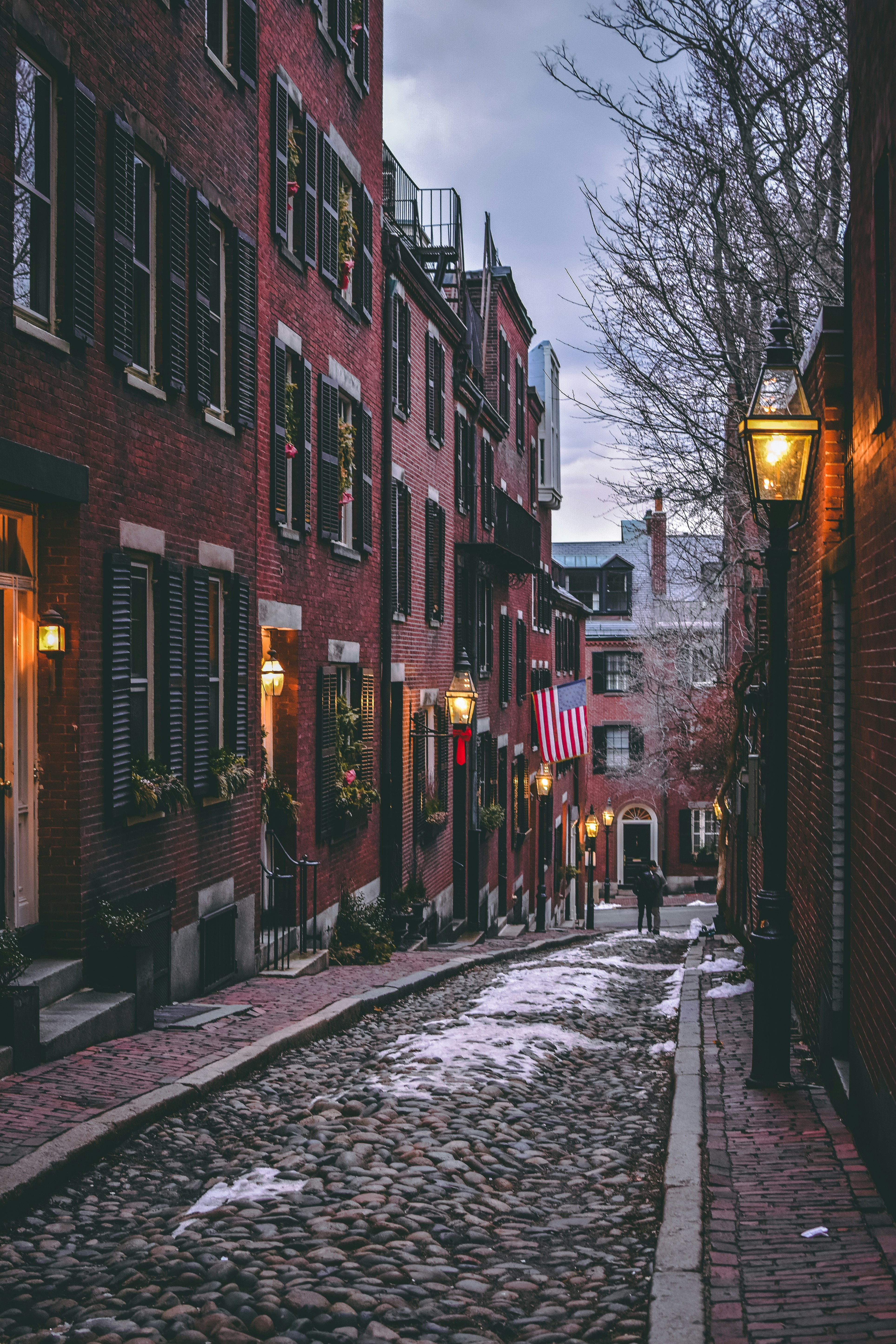
Photo of Acorn Street in Boston with brick sidewalks and cobblestone narrow street
Photo by Tiffany Chan on Unsplash

A little background

Great Britain was in debt in the 1760s, so Parliament passed a succession of acts to inflict taxes on the American colonists to generate money for the British coffers.

Photo of the tower on a castle with the Union Jack flying on a flagpole at the top.
Photo by Andrik Langfield on Unsplash

My ancestors in Scotland had been subjected to the Hearth Tax in the 1690s, so they were no strangers to the lengths Parliament would take to ring money out of its subjects. (In the 1690s in Scotland a person had to pay a tax “if smoke rose from their chimney.” Hence, it was called the Hearth Tax.) Forgive me if I’m not completely objective in writing about the Boston Tea Party.

The Stamp Act in 1765 began what became a domino effect until by the early 1770s the colonists were in an uproar over “taxation without representation.” Britain maintained that the taxes were fair exchange for the mother country’s fighting wars such as the French and Indian War to protect the colonists. (Actually, I think they were fighting to keep control over the thirteen colonies, but I digress.)

The “Boston Massacre” occurred on March 5, 1770 because residents did not appreciate the presence of British soldiers on their streets.

In other words, one thing led to another.

Fast forward to December 1773

On December 15, 1773, Dartmouth, a ship operated by the East India Company (a British company) was moored in Boston Harbor. It was known that the ship was laden with tea from China. Brits and British immigrants loved (and still love!) their tea. They were drinking more than one million pounds of tea every year, so the Tea Tax was a lucrative money-maker for Great Britain.

The colonists were no dummies. They started smuggling tea in from The Netherlands. In fact, did you know that John Hancock and Samuel Adams were in on it? (I don’t remember ever being taught that in school.)

Things were going well until the price of Dutch tea increased to the point that it was no cheaper than the tea being brought in by Great Britain with the tax included in the equation.

It was not just out of the goodness of their hearts or their dislike for taxation without representation that John Hancock and Samuel Adams objected to the tax on tea.

John Hancock had inherited his uncle’s shipping business. Samuel Adams was a provocateur. As a leader in the Sons of Liberty organization, he was more than a rabble-rouser; he was a serious political theorist. It was people like Adams who encouraged moderates to resist the British taxes. One source I read indicated that Adams might have helped plan the Boston Tea Party.

The Sons of Liberty protested the arrival of the East India Company’s ship, Dartmouth. It was soon joined by ships Beaver and Eleanor at Griffin’s Wharf in Boston Harbor. The tea they carried was from China, but the shipping costs and taxes would go to Great Britain.

A meeting was held at the Old South Meeting House where a vote decided that the ships would not be unloaded and the cargo would not be stored, sold, or used. When Governor Thomas Hutchison ordered the tea tariff to be paid and the tea to be unloaded, local residents refused to comply.

On the night of December 16, 1773, men disguised as Native Americans boarded the three ships and threw 342 chests of tea into the water. (My apologies to the Native Americans. It’s sad that more than once in the American Revolution the white guys chose to disguise themselves as Indians. It happened right here in Cabarrus County in 1771.)

Meanwhile, back in Boston… the men hacked into the chests to ensure the tea would mix with the water once thrown overboard. It took more than 100 men almost three hours to do the deed. More than 90,000 pounds of tea was dumped in Boston Harbor that night!

The moral of the story: Tariffs don’t always turn out the way politicians think they will. Just sayin’.

Hurricane Helene Update

Just to give you an idea about the recovery situation 81 days after the storm hit western NC…

Roads: Interstate 40 is still closed near the TN line. As of Friday, of the 1,329 roads that were closed in September due to Hurricane Helene, 189 remain closed. That’s down from 270 from a week ago!

Blue Ridge Parkway: There is still no estimated date for all the parkway in NC to be reopened.

Housing: Temporary housing from FEMA continues to arrive so displaced people can move out of hotels. The Amish continue to build tiny houses for the people who cannot yet move back into their homes. Individuals and companies have donated RVs and campers for the people needing housing. With more than 125,000 homes damaged or destroyed, the recovery will take years.

Books: The 21st Century Packhorse Librarian continues to collect new books to give away to the children and adults who lost all their books in the storm. Look for her on Facebook and Instagram. Here’s a good article about the founder, Kristin Turner: https://981theriver.com/news/228822-woman-brings-free-books-to-appalachia-as-modern-packhorse-librarian/.

Lake Lure: The US Army Corps of Engineers, AshBritt Environmental, and local contractors continue to remove debris from the lake. A Colonel with the Army Corps of Engineers indicated on Saturday that their work will take more than six additional months. More than 17,143 cubic yards of debris have been removed from the lake, over 15,900 cubic yards of debris have been removed from the right-of-way, and more than 9,680 tons of sediment and silt have been removed from the town of Lake Lure. When all storm debris has been removed from the lake, sediment removal will begin.

Old Orchard Creek General Store: After being severely damaged by the flood, the Old Orchard Creek General Store reopened on Saturday! It is a landmark in the small town of Lansing in Ashe County, NC. Look for their website, and find them on Facebook and Instagram.

Help of all kinds has poured into western North Carolina from all over the United States. Thank you!

Until my next blog post

I hope you have a good book to read.

If you haven’t already done so, please visit https://www.janetmorrisonbooks.com and subscribe to my weekly email newsletter. You’ll receive a free downloadable copy of my historical short story, “Slip Sliding Away.”

Treasure your time with friends and family.

Remember the people of Ukraine and western North Carolina.

Janet
#OnThisDay: Battle of Great Bridge, Virginia, 1775 & a Hurricane Helene Update

There are so many battles and skirmishes that were fought during the American Revolution that most of us have never heard of!

The blowing up of the King’s shipment of munitions in present-day Cabarrus County, North Carolina in May 1771 comes to mind. But that event has been blogged about here in Mays of the past and will, no doubt, show up on my blog in future May posts.

The little-known battle I blog about today is the Battle of Great Bridge which took place 249 years ago today in Virginia.

I’d never heard of it until I happened upon it in The American Book of Days, Fourth Edition, by Stephen G. Christianson. The day that reference book was weeded from the public library’s collection and sold for almost nothing was a profitable day for me. I have relied on this book for many of my #OnThisDay blog post ideas. I still question the wisdom of the library staff deciding this was not a useful book, but the public’s loss was my gain. But I digress.

Let’s move on now to the importance of the Battle of Great Bridge and some information about the free black man who displayed heroics in the battle.

A little backstory

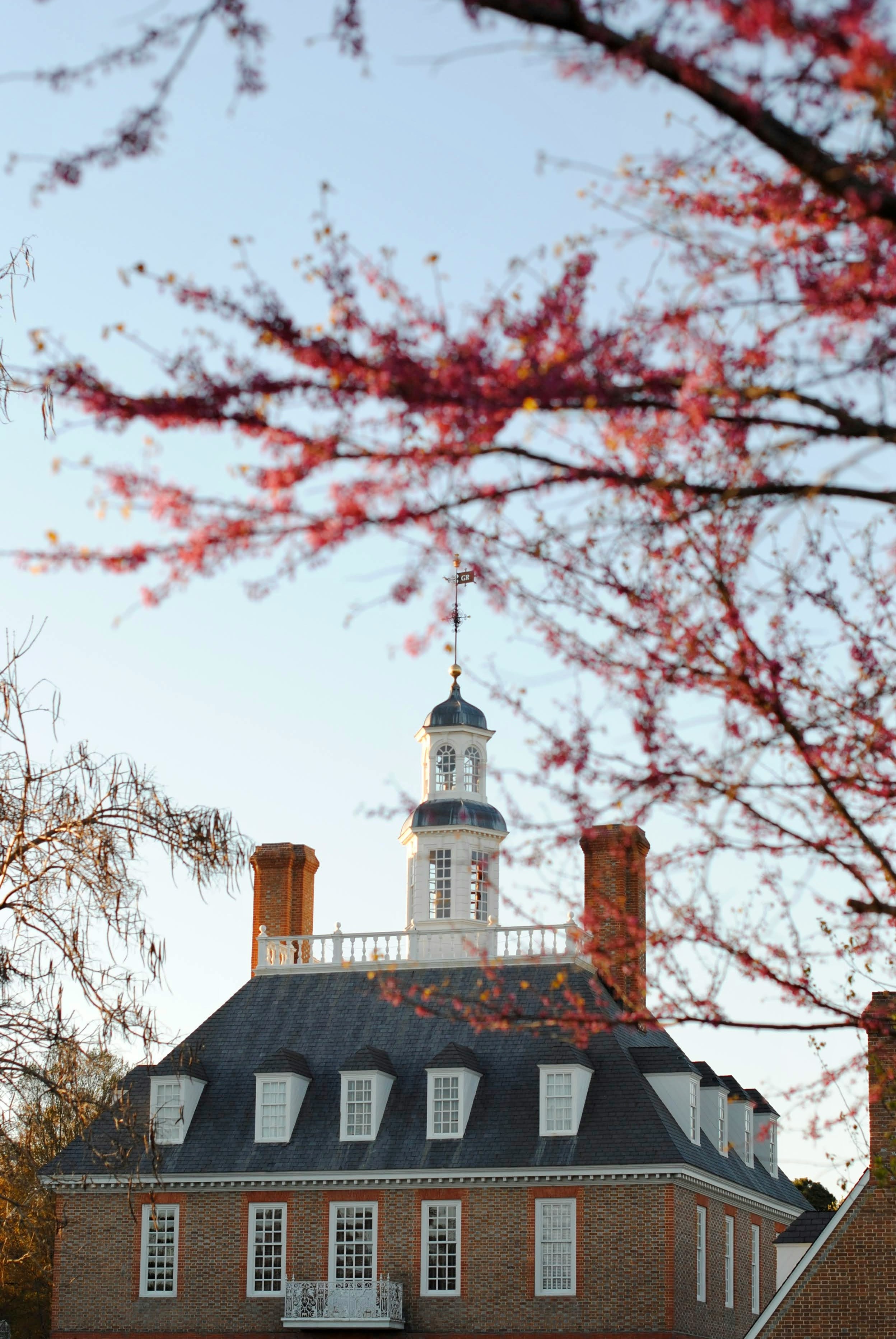
Governor’s Palace in Williamsburg, Virginia Photo by Michaela Murphy on Unsplash

Fearing a rebellion, Virginia’s Royal Governor, John Murray, the Earl of Dunmore, ordered the seizure of the gunpowder stored in Williamsburg. Word spread quickly and militias converged on the town. Lord Dunmore fled to Norfolk.

Great Bridge spanned the Elizabeth River, was the primary approach to Norfolk, and was surrounded by the Great Dismal Swamp. The swamp greatly limited accessibility to Norfolk.

Lord Dunmore ordered the construction of a stockade on the north side of the Great Bridge. Patriots grouped on the south side. Skirmishes ensued for days leading up to the battle.

Battle of Great Bridge

Although the Battle of Great Bridge lasted only a half hour on December 9, 1775, it was the first Patriot victory in the Revolutionary War.

It is said that this battle forced Lord Dunmore to leave Virginia along with his soldiers.

Four days after the battle, the Virginia Convention adopted a statement of independence.

Photo from a reenactment (obviously!) by British soldiers

Waves of British soldiers bore down on the Patriots. According to the website of the battle’s museum, https://gbbattlefield.org/learn-the-history, the patriots were joined by reinforcements and ordered to hold their fire until the British were within 50 yards.

Billy Flora

The website states, “It is historically significant to note that the last among the Patriots to retreat was Billy Flora, a free black man. Before retreating into the Patriot breastwork, he ran back to take up a plank of the bridge amid a shower of musket balls to slow the British advance.”

The significance of the Battle of Great Bridge

The museum’s website also states, “In winning the battle of Great Bridge on December 9, 1775, the Patriots effectively denied the British Norfolk, the finest seaport between New York and Charleston.”

How different the war might have unfolded if the British had captured the port at Norfolk!

Hurricane Helene Update on Western North Carolina

Just to give you an idea about the recovery situation 74 days after the storm hit western NC…

Roads: Interstate 40 is still closed near the TN line. As of Friday, of the 1,329 roads that were closed in September due to Hurricane Helene, 270 remain closed. In fact, that’s four more than indicated in last week’s NC Department of Transportation report. (Perhaps I miscalculated the total last week.)

Blue Ridge Parkway: There is still no estimated date for all the parkway in NC to be reopened.

A fresh fir Christmas Wreath from Avery County, NC: I was going to repeat the information I shared last week about a Christmas tree farm in western North Carolina, in case you missed my last blog post. I wanted you to have a chance to order a wreath or a tabletop Christmas tree from the Avery Family’s Trinity Tree Company in Newland, NC. HOWEVER… I have some great news! They have received so many orders they’ve had to shut down their online store! I’m so glad to get to end this week’s Hurricane Helene update on a good note!

The wreath my sister and I ordered was delivered nine days ago. It’s beautiful and smells great!

Here’s our wreath…

Our fir Christmas wreath from the Avery Family’s Trinity Tree Company, Newland, NC

(If you wish to still support the Avery Family as they are just two months into their years of recovering the family farm and business since they lost 60,000 trees to the hurricane, you can “order” a virtual tree or make a recovery gift on their website: https://www.averychristmastrees.com/. It takes about 15 years to grow a Christmas tree, so it will be long time before this family farm is back on its feet.

Since my last blog post

I continue to work on the devotional book and the historical novel I’m writing. I’m still adjusting to trying to post something on Instagram every day but Sundays. The world of social media is challenging and consumes more of my time than I’d like.

Photo of the Instagram icon image
Photo by Alexander Shatov on Unsplash

Until my next blog post

Read something uplighting or enlightening every chance you get. Support your local public library and your local independent bookstore, if you’re fortunate enough to have either one.

Subscribe to my weekly email newsletter at https://www.janetmorrisonbooks.com.

Treasure your time with friends and family.

Remember the people of Ukraine and western North Carolina.

Janet

The Wreck of the Packet Home off the Outer Banks in 1837 & a Hurricane Helene Update

With seven weeks remaining in the 2024 Atlantic hurricane season, today I’m writing about a hurricane in 1837.

An update about the status of Hurricane Helene cleanup in western North Carolina is also included in today’s post, since I live in that state.

The October 8, 1837 Hurricane in North Carolina

While planning my trip to the Outer Banks of North Carolina last May, I read about some of the shipwrecks that justify the Outer Banks’ moniker, The Graveyard of the Atlantic. In the process, I learned about one of the great hurricanes of the 19th century.

One of the ships that met a watery grave off the Outer Banks was a side-wheeled steam packet named Home.

The ship, on her third voyage from New York City to Charleston, South Carolina, was fast but no match for a hurricane. In fact, it was designed for river sailing and never should have been in the Atlantic Ocean – much less in the vicinity of where the warm waters of the Gulf Stream and the cold waters of the Labrador Stream collide off the Outer Banks.

She would have been an elegant river vessel but was sorely lacking in design features needed for sailing the Atlantic.

Hurricanes were not usually named in 1837 like they are today, but the one that took out the Home was called “Racer’s Storm.” It became known as “Racer’s Storm” because it damaged the HMS Racer in the Caribbean.

“Racer’s Storm” or “Racer’s Hurricane” formed in the Caribbean Sea around September 25, 1837, striking Jamaica and Cuba before entering the Gulf of Mexico. It dumped torrential rain along the northeastern coast of Mexico. Next, the coast of the then Republic of Texas was left in shambles. Buildings all along the Gulf of Mexico coast were ravaged. It traveled across southern Georgia and emerged on that state’s Atlantic coast.

I have read that heavy rains and winds destroyed sugar and cotton crops throughout the southeastern states and high winds were reported as far inland as eastern Tennessee.

Reports indicate that there were three lifeboats and only two life preservers onboard the Home. It sprang a leak on the night of October 8. By morning, virtually all passengers were ordered to help the crew bail water. Captain Carleton White tried in vain to get the vessel to slightly more safety on the Sound side of the barrier island, but the 220-foot ship was overwhelmed and torn to pieces.

Ninety people perished in the shipwreck and 30 survived. Among the survivors was Captain White.

Captain White was one of eight or ten people who clung to the vessel’s forecastle and made it safely to shore on that piece of the packet.

“Racer’s Storm” lasted so long (at least 15 days) and wreaked havoc over such a wide area that it became the benchmark for hurricanes in the 1800s.

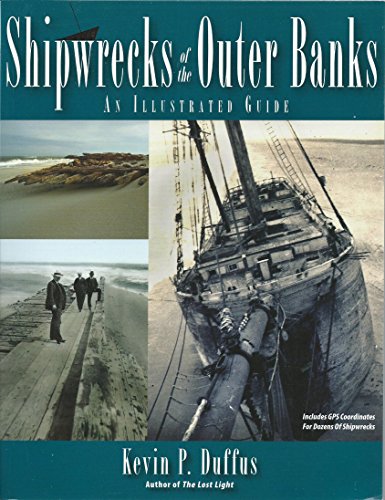
According to Shipwrecks of the Outer Banks: An Illustrated Guide, by Kevin P. Duffus, “As a result of the Home disaster, Congress passed legislation which required an equal number of life preservers for each person on board a U.S. flag vessel.”

Shipwrecks of the Outer Banks: An Illustrated Guide, by Kevin P. Duffus

Another source of information about this event is https://www.aoml.noaa.gov/hurricane_blog/180th-anniversary-of-racers-hurricane/.


Hurricane Helene Cleanup Update on Western North Carolina

Ways to Support Children and An Independent Bookstore in Brevard, NC as it tries to help children affected by the hurricane: Highland Books in Brevard, North Carolina has reopened. This independent bookstore depends on the fall tourist season and holiday shopping, but this year there will be no autumn tourists due to all the flooding and damage caused by Hurricane Helene in Transylvania County. (No, I’m not making that up. That’s the name of the county.)

Leslie Logemann, the owner hopes to have enough business not to have to let any of her staff go. Highland Books was kind enough to sell my vintage postcard book, The Blue Ridge Mountains of North Carolina when it was published in 2015, so there’s a special place in my heart for the shop. I follow Highland Books on Instagram and saw this the other day: 

“HALLOWEEN BOOK DRIVE  If you are able, we hope you’ll consider helping us make Halloween a little brighter for a local child who has been impacted by Hurricane Helene.

Visit our website (or stop by the store), choose any Halloween (or other) book to donate, and we’ll give you 20% OFF. Use code HALLOWEEN & mention it’s for donation.

THANK YOU for considering!
Offer valid through 10/25/24.”

If this particular event pulls at your heartstrings, here’s the website through which you can place an online order: https://www.highlandbooksonline.com/.

Also, through October 31, any order of $25 or more ships FREE, in case you want to do some early Christmas shopping or just want to support an independent bookstore in western North Carolina!

Additional Updates on the ground…

Current weather conditions: Wind Advisory issued from 2:00 this morning until noon today for Avery, Buncombe, Burke Mountains, McDowell Mountains, Mitchell, Rutherford Mountains, and Yancey counties.

Although some politicians and “news” organizations have reported to the contrary… as of last Wednesday, October 8, FEMA had spent $60 million in NC resulting from Hurricane Helene. FEMA had helped 126,000 people in the state and provided temporary housing for 2,500 people. FEMA, the NC National Guard, and the 82nd Airborne Division of the US Army are still on the ground and in the air aiding western North Carolina.

Electricity: With the help of 21,000 storm restoration personnel from across the US and Canada, as of Friday, Duke Energy had restored power to more than 2.6 million homes and businesses in NC and SC. However, much infrastructure restoration work remains to be done in the mountains. You can visit at https://www.duke-energy.com/info/carolinas-restoration for updates. With temperatures dipping below freezing this week, the situation is becoming more dire.

Water system in Asheville: As of 1 a.m. last Thursday, the North Fork’s 36-inch bypass line to the water distribution system was connected. Full service restoration is still weeks away. The EPA and engineering firms are helping Water Resources work toward clearing up the highly murky water in North Fork’s reservoir, according to the Asheville Fire Department Facebook page.

A mobile post office has been set up in Marshall, NC because the post office there was destroyed by the flood.

Mountain Mule Packer Ranch: The mules and their handlers returned home in the piedmont of NC for the weekend for some much-needed rest, but they will return to the mountains to continue their volunteer service of taking supplies into areas still inaccessible by motor vehicle.

Public School Systems: I checked on 10 school systems in western NC yesterday. Two reopened on October 8, several are reopening sometime this week; however, the systems in a few counties are still in dire straits. Just to give you an idea about the recovery situation 19 days after Hurricane Helene hit western NC…

All students have been accounted for in Avery County. Once water and electricity have been completely restored, authorities will announce reopening. With so many roads and bridges washed away, school bus service will be a challenge for a long time.

Ashe County Schools remain closed at least through this week. Updates will be made as possible. Bus routes are being planned in coordination with the NC Department of Transportation.

Although 44 of the 45 schools in Buncombe County now have power, on 13 schools have water.

Schools in Watauga County are still closed this week. Weekly updates will be issued as progress is made.

Colleges and universities:

Appalachian State University in Boone: The campus reopened for students to return as of 5:00 p.m. on Friday. Classes will resume in all but Rankin Hall on October 16.

Asheville-Buncombe Technical Community College: Closed until at least October 28.

Blue Ridge Community College: Reopening today.

Lees-McRae College: Classes will be conducted online through November 4.

Mars Hill University: Classes resume today.

Montreat College: Online classes begin today. Return to campus tentatively set for October 21.

The University of North Carolina at Asheville – Instruction and coursework will resume online on October 28 and will remain online for the remainder of fall semester.

Warren Wilson College: “Class will resume October 21 online. Our plan is to be in-person starting on October 28, if water service is restored. The City of Asheville Water Resources has announced that progress is being made. Therefore, we are optimistic but cautious.”

The Orchard at Altapass: “Due to ongoing road conditions, lack of water, and power in many areas, and the fact that Helene was hungry for all of our apples, we will remain closed to the public for the remainder of the season.”

IV Bag Manufacturer: Baxter International makes 60% of the IV bags used in the United States at its plant in Marion, NC. Hospitals are beginning to ration IV bags because that manufacturing plant is still closed due to damage from Hurricane Helene.

Fundraising Concert

North Carolina natives Eric Church and Luke Coombs announced an October 26 “Concert for Carolina” at Bank of America Stadium in Charlotte to raise funds for various organizations in western NC, including Manna Food Bank in Asheville. I mentioned it in my blog last Monday, What I Read Last Month & a Hurricane Helene Update. With headliners including James Taylor, Keith Urban, and Sheryl Crow, the concert is, of course, sold out, but check the website (https://www.concertforcarolina.com/) for future announcements about an auction and a raffle.

Until my next blog post

I hope you have a good book to read, a roof over your head, clean water to drink, and electricity.

Remember the people of Ukraine.

Janet

#OnThisDay: Lewis & Clark Expedition Completed, 1806

I wish more emphasis had been put on Lewis & Clark’s Corps of Discovery when I was in school. Living in North Carolina, it just wasn’t taught much. I suppose in the Midwest and Great Plains states it was and is taught in detail.

Today marks the 218th anniversary of the conclusion of Meriwether Lewis and William Clark’s grand trek into the great unknown in search of the Northwest Passage.

I learned more about the Lewis & Clark Expedition from watching Ken Burns’ documentary film than I learned in school. Ken Burns has a gift for weaving story, quotes, and geographic images together in a comprehensive telling of particular times or events in American history.

The When and the Why

US President Thomas Jefferson is remembered for his curiosity. Since the 1400s, explorers had dreamed of finding Northwest Passage – a waterway across North America from the Atlantic to the Pacific. President Jefferson wanted the Pacific coast of North America to be found, and he was convinced that a group of explorers would find it if they could just cross the Mississippi River and follow the Missouri River across the lands included in the Louisiana Purchase.

Meriwether Lewis and William Clark led the group that was assembled to explore the region. It was a vast unknown to the European settlers. What the Corps of Discovery did was comparable to the space exploration of our time, except Lewis & Clark did not have computers to guide them. They really didn’t know what the terrain and weather would be like once they ventured very far beyond St. Louis.

In the spring of 1804, at the direction of President Jefferson, this band of intrepid explorers set out on a journey of unknown time and distance. (I guess it is sort of like the two astronauts who are going to be on the International Space Station for eight months instead of the originally planned eight days.)

How does one pack for such an adventure? What thoughts went through their minds as they headed west, not knowing if or when they would see their families again?

The Preparation

For starters, I will point out that the Corps of Discovery was made up of Lewis, Clark, and nearly four dozen men. As I recall, in school we were led to believe that it was just Messrs. Lewis and Clark and that they were joined by a Native American young woman, Sacagawea, somewhere along the way.

They spent the winter of 1803-1804 on the Illinois side of the Mississippi River in a collection of huts they built. It was called Camp Debois. Among the supplies they gathered in preparation for their journey were nearly two tons of flour, nearly two tons of salt pork, 50 pounds of coffee, and 100 gallons of whiskey.

Information was gathered from fur traders, and the men were drilled, for this was comparable to a military mission and a chain of command was integral if the expedition had any chance of being successful.

The How

They started out in a keelboat with two large canoes. Lewis was accompanied by a Newfoundland dog named Seaman who reportedly caught squirrels, beaver, and an antelope. They had been told they would encounter numerous nations of “savages” who would not welcome white men. The message they carried was that all the land within sight in all directions belonged to the United States of America.

Seaman proved his worth not only as hunting squirrels for the men to eat, but also as a guard dog. There were instances when Seaman scared off an angry buffalo and even kept grisly bears at bay.

On November 15, 1805, Lewis and Clark reached the Pacific Ocean at the mouth of the Columbia River in present-day Washington. That was one year, six months, and one days after they began their journey.

What they did not find

They did not find a waterway connecting the Atlantic and the Pacific.

What they found

Photo by Markus Spiske on Unsplash

What they found was the Great Plains, the majestic Rocky Mountains, unknown plants and animals, and native peoples who were curious about them and not hostile as had been expected.

Photo by Aida L on Unsplash

They found the kindness of strangers.

Photo by Boston Public Library on Unsplash

They found a native woman named Sacagawea who would guide them and save their very lives.

They found a vast and wondrous land that none of them could have imagined.

Photo of the flat Great Plains landscape with an angry black cloud looming with a bolt of lightning striking the ground
Photo by Greg Johnson on Unsplash

They found a vast land of unlimited promise.

Photo by Jamie Pilgrim on Unsplash

The documentation they brought to President Jefferson

President Jefferson sent Lewis & Clark and their crew off with explicit instructions as to record keeping. Jefferson even devised a complicated code matrix they were to use if they needed to try to send secret messages back to Washington.

They were to record in great detail the geography; animals; soil; crops; natural plants; minerals; and human inhabitants and their languages, populations, food, clothing, religions, and their interest in commerce.

Journals were kept, along with meticulous records of what they saw that would be of scientific and future exploration benefit.

The completion of the expedition

The Corps of Discovery returned to St. Louis at noon on September 23, 1806. Lewis immediately wrote a long letter to President Jefferson informing him of their return and that they had indeed reached the Pacific Ocean, although not by water the entire way. Included in the letter was the news that instead of taking half a day to cross the western Continental Divide, it had involved crossing 60 miles of treacherous snow-covered mountains.

Since my last blog post

I had the privilege of telling the 37 members of the Leadership Cabarrus Class of 2025 about the history of Harrisburg last Tuesday. Organized by Rowan-Cabarrus Community College, it was an interesting group of people from various walks of life who are relative newcomers to Cabarrus County. I was allotted 20 minutes to give them the highlights of Harrisburg’s rich history.

I’m not much of a public speaker, but I went through my two local history books, Harrisburg, Did You Know? Cabarrus History, Books 1 and 2 and made notes from some of the highlights I thought would be of interest to the group. It was a congenial group and I enjoyed the experience. It had been a couple of years since I had spoken to a large group of people.

Until my next blog post

As always, I hope you have a good book to read.

Make time for friends and family.

Don’t forget the people of Ukraine, as another harsh winter is approaching.

Janet

#OnThisDay: U.S. Civil Rights Act of 1957

When I think of the Civil Rights Act, I think of the one in 1964, but it was in 1957 that the first major civil rights bill was passed by Congress since the Reconstruction Era following the American Civil War.

The Civil Rights Act of 1957 went into effect 67 years ago today on September 9, 1957.

Photo of black and white Americans marching with protest signs demanding voting rights and an end to police brutality
Photo by Unseen Histories on Unsplash

What it did, in a nutshell

It made it a federal crime to try to prevent someone from voting.

It created the Civil Rights Commission in the Executive Branch of the U.S. Government.

It created the Civil Rights Division of the U.S. Department of Justice.

What led up to this Act

In 1954, the United States Supreme Court ruled in Brown v. Board of Education that racial segregation was illegal in public schools. Change was slow to come.

Nine black students volunteered to desegregate the all-white Central High School in Little Rock, Arkansas. They were met with the National Guard, which had been called out by Governor Orval Faubus, and an angry mob. Two weeks later the nine students, who became known as the Little Rock Nine, tried again to gain entrance to the school. They were able to enter the school but had to be removed for their safety.

U.S. President Dwight D. Eisenhower ordered federal troop to escort the nine students to and from class at the school. The publicity of the troubles at Little Rock helped bring the issue of racial desegregation and voting rights to a head.

President Eisenhower pressured Congress to enact civil rights legislation. The result was the Civil Rights Act of 1957.

The wheels of justice turn slowly

We all know that deep-rooted cultural and racial prejudices are slow to change. It would be the late 1960s before true racial desegregation would be accomplished across the United States. For example, the county in which I live in North Carolina instituted voluntary school desegregation in 1965. The following school year, it was mandatory.

And it was, no doubt, that long before all black citizens felt safe to go their polling places to cast their ballots. I can’t help but think some of them do not yet feel completely safe.

And in 2024, a presidential election year, there are still threats – spoken and unspoken — and insidious state laws making it more difficult for citizens to vote when we should be making it easier. The false accusations of voter fraud have resulted in many state legislatures enacting numerous new restrictions to allegedly fix a problem that does not exist.


Until my next blog post

I hope you’re reading a good book!

Make time for friends and family.

Don’t forget the people of Ukraine.

Janet

#OnThisDay: 19th Amendment to U.S. Constitution, 1920

The 19th Amendment: The right of citizens of the United States to vote shall not be denied or abridged by the United States or by any State on account of sex.

Congress shall have power to enforce this article by appropriate legislation.

It was 104 years ago today that women in the United States finally got the right to vote. The year 1920 might seem like ancient history to some of you, but I always think of it in terms of my mother having her eighth birthday that autumn.

Early- to mid-1800s

Women getting the right to vote came after a long, hard fight. In the early- and mid-1800s, women advocated for the abolition of slavery. Their speeches evolved into words in support of women’s suffrage. Two such women, Elizabeth Cady Stanton and Lucretia Mott, organized a women’s suffrage convention in Seneca Falls, New York in 1848.

Sojourner Truth and Sarah Redmond, two former slaves – who could not vote because of their race and their gender – organized women’s suffrage conventions. Slowly, it was becoming more of a public issue of discussion.

Post American Civil War/Reconstruction Era

The State of Michigan allowed women to vote in school board elections after the Civil War.

With the passage of Reconstruction Era U.S Constitutional Amendments granting black men the right to vote came contentious political and public discourse because it brought to the forefront that women still could not vote. As a result of their disfavor with women still not being granted the right to vote, Susan B. Anthony and Elizabeth Cady Stanton left the American Equal Rights Association (AERA), which they had founded in 1866, and formed the National Woman Suffrage Association (NWSA) in 1869. Later that year, women who thought it more plausible to push for women’s suffrage by getting it adopted state-by-state formed the American Women Suffrage Association.

The Territory of Wyoming (it was not yet a state) granted women full voting rights in 1869. The Territory of Utah followed Wyoming in 1870, but Congress took that right away in 1887.

Photo of an "I Voted" sticker on a woman's finger
Photo by Joshua Sukoff on Unsplash

Virginia Minor of Missouri, after being denied the right to vote in 1872, took her complaint to the U.S. Supreme Court. Minor maintained that the 14th Amendment gave her the right to vote because it stated that “no State shall make or enforce any law which shall abridge the privileges or immunities of citizens of the United States.”

In a classic example of the high court going by the “letter of the law” instead of taking a more pragmatic stance, the Court, in its majority decision in Minor v Happersett, said that the right to vote was not a necessary privilege of citizenship because it was not a right included when the U.S. Constitution was ratified in 1788.

The “bottom line” of this decision was that states did indeed have the authority to deny women the right to vote. Let that sink in for a few minutes.

Late 1800s

In 1878 and again in 1887, there were efforts in Congress to introduce a women’s suffrage amendment, but they failed.

The AERA and NWSA merged in 1890, but some of the leaders worked to exclude black women from participating in events. In 1896, the black women formed the National Association of Colored Women to advocate for women’s voting rights along with other issues that were important to women of color.

Photo of a woman putting her ballot in the voting box
Photo by Unseen Histories on Unsplash

In 1896, the Constitution of the State of Utah once again gave female citizens the right to vote.

1910s

By 1916, 11 western states had granted women the right to vote, but petitions to Congress and litigation in federal courts repeatedly came up short. In the election in Montana that year, Jeannette Rankin was elected to Congress. She was the first women elected to the U.S. House of Representatives.

The joint resolution to propose a women’s suffrage amendment (See the 1878 and 1887 references above) was reintroduced in the U.S. House of Representatives in 1917 – thirty years after it had last been shot down. Proponents of states’ rights argued that the passage of such an Amendment would interfere with each state’s authority to dictate the composition of its electorate and that it would also disrupt the traditional family. Some lawmakers opposed it because they feared it would give black women the right to vote.

(Does anything about the states’ rights argument sound familiar? The current U.S. Supreme Court in 2023 conveniently decided to give states the authority to pass laws about women’s health.)

Photo of turn of the 20th century women
Photo by Library of Congress on Unsplash

The opposition was narrowly defeated as a two-thirds majority voted to pass the proposed Amendment on January 10, 1918. The Senate debated the joint resolution for months with many of the same arguments that had been overcome in the House. President Woodrow Wilson spoke in favor of the Amendment on October 31, 1918, citing the contributions women had made on the home front during World War I.

The following day, the resolution was defeated in the Senate. It failed again in the Senate on February 10, 1919. But President Wilson called a special session of Congress in May 1919. The House passed the 19th Amendment on May 21, 1919, and it was approved by the Senate on June 4, 1919.

During World War I, some of the views of gender roles in the country began to change as women took on many of the jobs that had earlier been considered men’s work. The 19th Amendment was proposed in Congress in June 1919.

August 26, 1920

It took 14 months for a three-fourths majority of states to accept the 19th Amendment. It was ratified on August 18, 1920 and on August 26, 1920, U.S. Secretary of State Bainbridge Colby certified that the Amendment had been ratified.

Photo of "I Voted" stickers
Photo by Element5 Digital on Unsplash

Obstacles such as poll taxes and literacy tests continued to prevent many black women and other females of color from voting until the 24th Amendment was ratified in 1964 and enforced by the Voting Rights Act in 1965.

Since my last blog post

I’ve been reading several books, pushing myself to do some yard work, and watching some online videos about the craft of writing. I’m motivated to get back to work on my novel!

Until my next blog post

I hope you have a good book to read.

Don’t take your family for granted.

Remember the people of Ukraine.

Janet

This Week in History: 1945

I could not get excited about writing about the August 12, 1898 US annexation of Hawaii for today’s blog post. (I could get excited about Hawaii’s statehood, which happened in my childhood, but its annexation as a territory? Not so much.)

I couldn’t muster the energy to do enough research to write 500 or 1,000 words about the annexation of Hawaii, and I doubted if my blog readers were interested enough to read about it. (If I’m wrong, feel free to look it up.)

In the big scheme of things, the events of the week of August 6-15, 1945 were more momentous than what happened about Hawaii in 1898.

It occurred to me that the 79th anniversaries of the bombing of Hiroshima on August 6, the bombing of Nagasaki on August 9, and the surrender of Japan on August 15, 1945 have barely been mentioned in the United States this week.

The famous bomb dome in Hiroshima. Photo by Griffin Quinn on Unsplash

I watch some programming on a TV station in Tokyo. The news and other programming are available via the public TV system here in metro Charlotte. The dates of the atomic bombs are marked in Japan with solemn government-sponsored gatherings and, no doubt, by many private gatherings and individuals.

The horror is remembered by the Japanese people, but the overriding theme of the coverage I have seen over the last week is peace. The Japanese people know first-hand the horrors of nuclear war, and they are adamant that such weapons should never be used again.

Nagasaki Atomic Bomb Museum Photo by Roméo A. on Unsplash

The dropping of those atomic bombs were horrific events in which hundreds of thousands of innocent people were killed, maimed, severely burned, orphaned, or doomed for various health maladies for the rest of their lives.

It has been said that those bombs resulted in the almost immediate surrender of Japan, thus ending World War II and ultimately saving more lives than they took. I guess we will never know the truth of that reasoning and justification.

I imagine the people who are old enough to remember the events of that week – whether they live in Japan, the United States, or other countries involved in the war in the Pacific Theater — are puzzled over the fact that the world is taking little notice of this week’s 79th anniversaries.

Photo by Sunguk Kim on Unsplash

I suppose there will come a time when September 11 will be just another day in the United States. The Americans who were young children or who were born after September 11, 2001, cannot possibly think of that day the way it is forever etched in my memory.

Life goes on. Events are forgotten. To those of us born after 1945, that year seems like ancient history. That’s just human nature. I was born in the United States in 1953, so I grew up with no concept of what life was like during World War II. But that does not excuse me if I don’t stop and think about the events of 79 years ago.

I owe it to my parents, my aunts and uncles, and even my oldest first cousins – all of whom are dead – to remember the sacrifices they made during World War II, their military service, their work to help build military planes, and their courage to hold things together on the home front – all while not knowing when or how the war would end and not knowing which of their loved ones or friends would not come home.

Since my blog post last Monday

I am feeling better than when I penned my August 5 blog post. I was discouraged by an illness which has taken much from me. However, I have been bolstered by the outpouring of concern I have received from many of my readers. Each day has been better than the one before. I’ve even been able to listen to an entire novel and enjoy it!

Thank you for your support and encouraging words. I always come out of these slumps and return to my “normal,” but each time I experience a relapse I can’t help but wonder if I will come out of it.

Since my last blog post

I hope you got a chance to read my reblogging on Friday of a blog post about Elizabeth Graffreau’s new book, Simple Pleasures: Haiku from the Place Just Right. It was my first attempt at reblogging.

Until my next blog post

Take a few minutes to think about the events of this week in 1945. Let’s continue to give diplomacy and peace a chance.

Peace Memorial Park in Hiroshima Photo by sabari nathan on Unsplash

I hope you have a good book to read. I am easing back into reading this month, for which I am grateful.

Remember the people of Ukraine.

Janet