
Plessy v. Ferguson is one of those landmark U.S. Supreme Court cases we would like to forget. Put it behind us. Consider it ancient history from the 19th century.
Not so fast.
We have something to learn from Plessy v. Ferguson today, 130 years after the ruling.
Background
To refresh your memory from history or political science class, Homer Plessy was a man of mixed race. That meant, under the law in the United States, he was considered Black. Though reportedly seven-eighths white, he was not permitted to ride in a “whites-only” railroad car in New Orleans. The Louisiana State Legislature had passed a Separate Car Act in 1890. That law required separation train cars for white and Black passengers.
In 1891, a group of Black men in New Orleans formed “Citizens’ Committee to Test the Constitutionality of the Separate Car Law.” Bolstered by a May 15, 1892 ruling by the Louisiana State Supreme Court in favor of the Pullman Company, the Committee decided to test the law in interstate travel. On June 7, 1892, Mr. Plessy purposely took a seat in a whites-only rail car on the East Louisiana Railroad to test the law.
What happened to Mr. Plessy
Mr. Plessy was arrested for boarding a “whites-only” train car. His defenders in court argued that the Separate Car Act of 1890 violated the 13th and 14th Amendments to the U.S. Constitution.
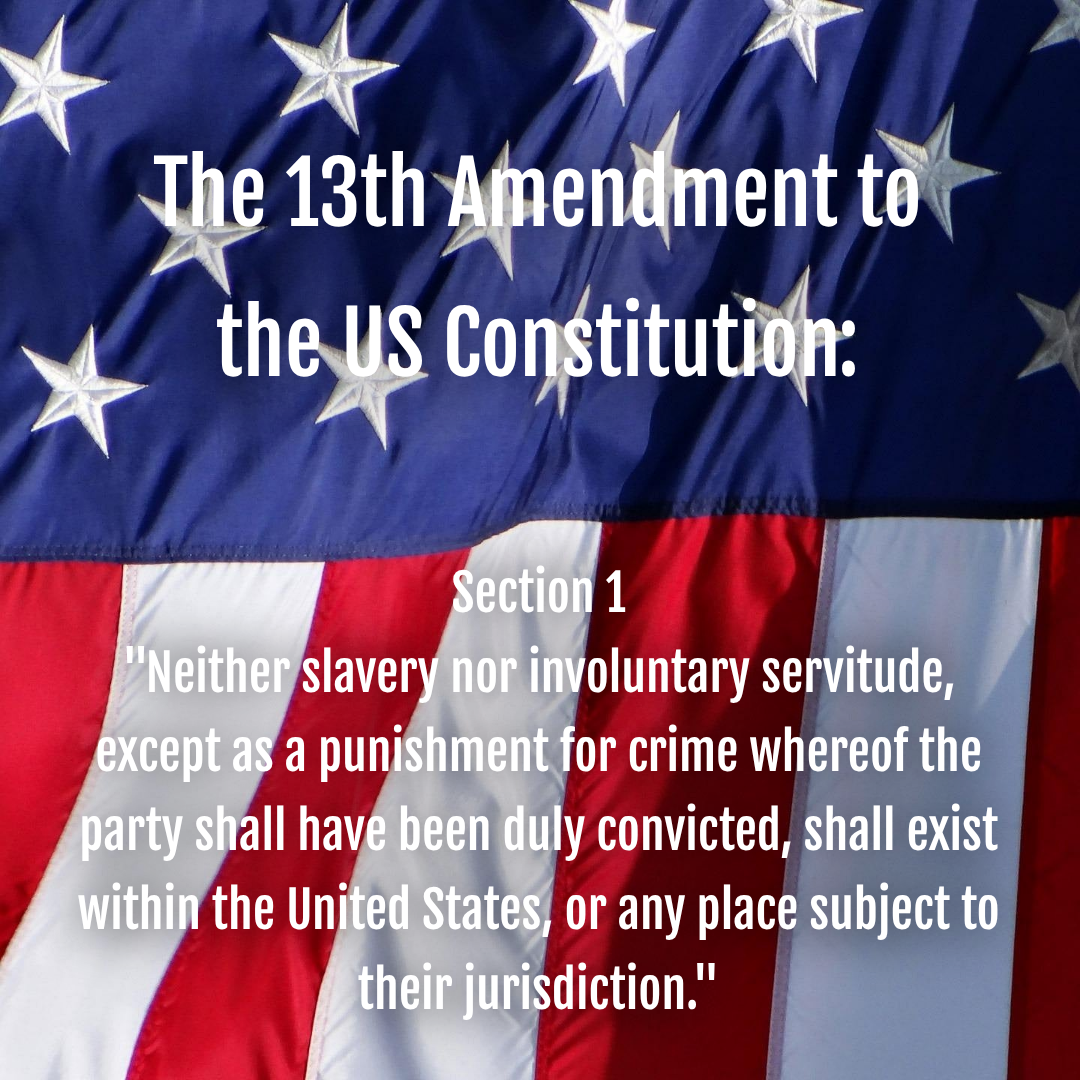
to the U.S. Constitution
When Mr. Plessy’s case went to District Court, the judge was John H. Ferguson. Judge Ferguson denied a request to dismiss the case and then ruled that the Louisiana Separate Car Act of 1890 was constitutional because the State had the authority to regular public accommodations.
The Louisiana Supreme Court upheld the lower court’s decision, and Mr. Plessy took his case to the U.S. Supreme Court. Surely, that august body would see that the Louisiana law was unjust, discriminatory, and unconstitutional.
After all, the 13th Amendment had abolished slavery in the United States in 1865, and Section 1 of the 14th Amendment, which was ratified in 1866, not only extended citizenship to former slaves but also state, “No State shall make or enforce any law which shall abridge the privileges or immunities of citizens of the United States; nor shall any State deprive any person of life, liberty, or property, without due process of law; nor deny to any person within its jurisdiction the equal protection of the laws.”
Mr. Plessy and his lawyers maintained that the Separate Car Act on 1890 was unconstitutional under the last phrase in Section 1 of the 14th Amendment.
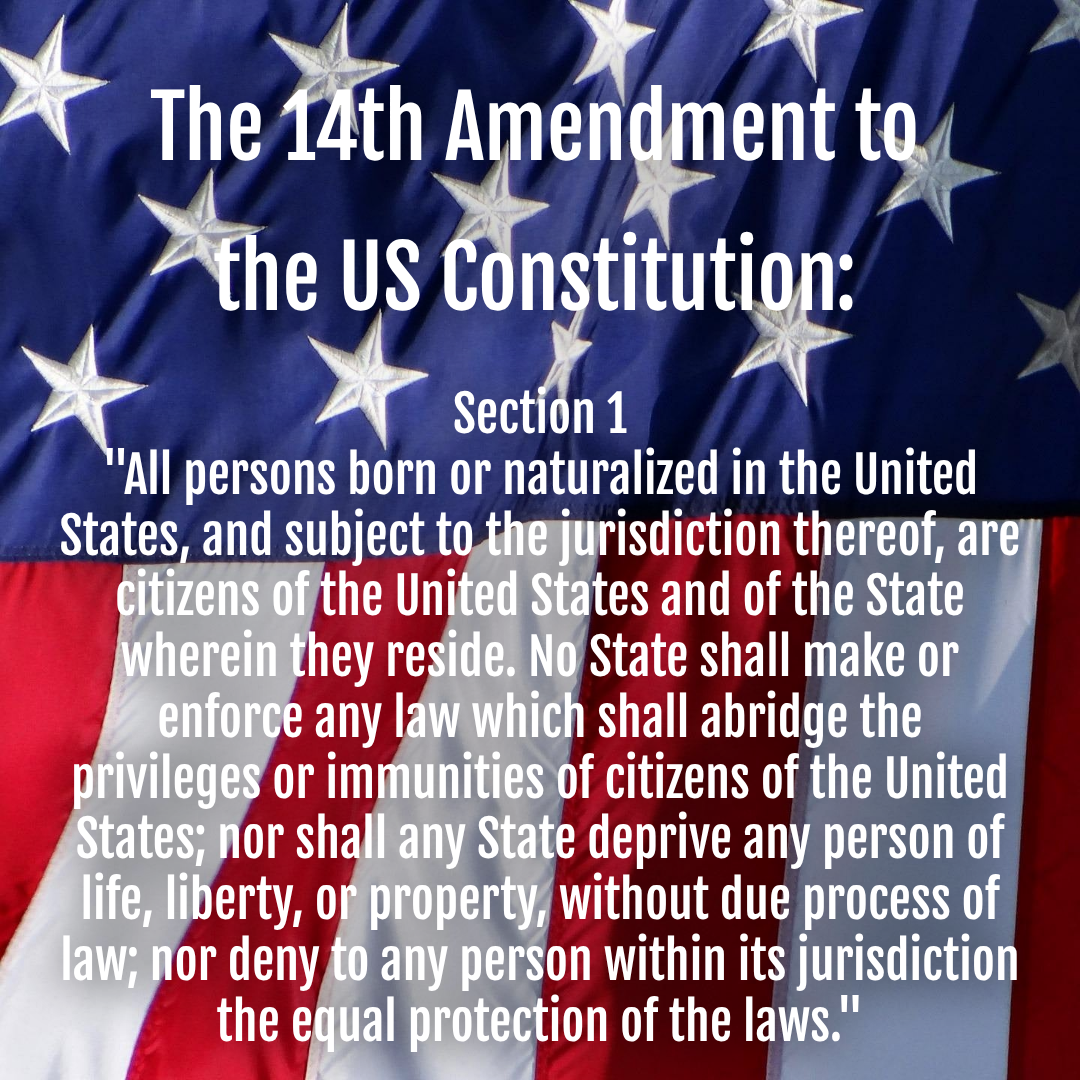
to the U.S. Constitution
The ruling
In a 7-1 decision, the U.S. Supreme Court ruled on May 18, 1896, that the State law in Louisiana was constitutional because it provided “separation but equal” accommodations for white and Black passengers.
That famous “separate but equal” wording is what took the United States down a terrible road of discrimination for the next 70 years.
It paved the way for “Jim Crow” laws. It made racial segregation in public education, in public conveyances, restaurants, lodging, etc. lawful.
The “separate but equal” doctrine stood until the Brown v. Board of Education U.S. Supreme Court case in 1954 and the Civil Rights Acts in the 1960s. (The Brown v. Board of Education ruling, ironically, was handed done in a 9-0 decision on May 17, 1954, just one day shy of the anniversary of the Plessy v. Ferguson decision.)
We all know now that “separate but equal” was never equal; it was just separate. That doctrine became the umbrella and shield for untold acts of discrimination and violence until the late 1960s.
Who cast the dissenting vote?
Associate Justice John Marshall Harlan was the lone dissenter in the Plessy v. Ferguson ruling. Although he came from a slave-holding family in Kentucky, Justice Harlan often cast the dissenting vote in civil rights cases that went before the U.S. Supreme Court. He sat on the Court from 1877 until 1911.
Lessons to be learned from Plessy v. Ferguson in 2026
If I had penned this blog post a couple of years ago, it probably would have ended there. Just a nice little history lesson. Just the facts of the case and the final ruling.
But I’m writing this in mid-May 2026, and that 1896 U.S. Supreme Court case has taken on a whole new significance.
As in 1896, in 2026 we have a U.S. Supreme Court majority who tend to be constitutional textualists or literalists, meaning they usually view the Constitution and laws as the people at the time of a law’s enactment would have interpreted it and not necessarily taking into account the spirit of the law.
In my six years of studying political science in college, I was taught to study the time and letter of the law but to look for the spirit of the law.
I offer a current example of how some people now want to interpret the 14th Amendment as applying only to the people who had been slaves prior to and during the American Civil War. They argue that the 14th Amendment does not grant citizenship to everyone who just happens to be born in the United States. They don’t want the 14th Amendment to apply to the children of undocumented immigrants. Trust me. We have not heard the last of that argument.
Just a couple of weeks ago, the U.S. Supreme Court essentially dismantled the Voting Rights Act of 1965. As a result, state legislators are falling all over each other to redraw Congressional District boundaries. They feel emboldened to eliminate majority Black or Democrat districts before this November’s mid-term elections.
This is history repeating itself. The hurried gerrymandering and shifting of Congression District lines in 2026 is in many ways a mirror image of the Jim Crow laws of the late 1800s.
Why is it that we don’t learn from history? Or perhaps a more accurate question is “Why do we only learn how to repeat the harmful things from our history?”
The Roberts court is taking us down a road of easier corruption in politics (Citizens United v. Federal Election Commission, 2010), less accountability for the U.S. President (Trump v. United States, 2024), and an attempted erasure of all the progress our country made in racial relations and equality in the 60 years following the Voting Rights Act of 1965 (Louisiana v. Callais, April 29, 2026).
The racial discrimination the U.S. Supreme Court is fomenting by its Louisiana v. Callais decision a couple of weeks ago is far-reaching and should send chills done the spine of every American.
The lesson for us to learn from the last 16 years of U.S. Supreme court decisions, un-checked Presidential powers, and a U.S. Congress that acts more like a lap dog than a co-equal branch of the federal government is that our rights and the “guarantees” we have in our laws and U.S. Constitution are no more secure than the paper they are written on.
Every week I learn that more protected federal lands set aside generations ago for wildlife and the preservation of the natural world are being trashed by our own elected officials. It’s being done quietly, of course, because they don’t want us to know. If they were proud of what they’re doing, they’d be making grand announcements.
I assumed the East Wing of the White House would be there forever. I assumed national parks and wildlife refuges were permanently protected.
The U.S. Constitution is a living and breathing document. It will always be up for discussion, debate, and amending. That’s the beauty of it, but it also makes it fragile and vulnerable to the whims of Presidents and others who wish to test it.

Democracy is more fragile than I realized.
Janet
The government should be afraid of its citizens, not the other way around.

 Janet's Writing Blog
I remembered the case, but not the salient detail. Looks exactly what the Supreme Court is doing that today. I thought it was Trump, but it has also been the Supreme Court that has been the Southern States best friend in the last few years. They want to undo years of progress in Civil Rights. Can separate but equal be far behind?
LikeLiked by 1 person
A great reminder, Janet. I noted this on another blog recently, but it feels like the current administration is hell-bent on making things worse for everyone. I’m not sure what the endgame is, but by the time they’re done, there won’t be anything left, just ash and regret.
LikeLiked by 1 person
Like you, I had forgotten some of the details. The more I delved into it for this blog post, the more I realized history is repeating itself. I am horrified at what is happening in the Southern States and Missouri and Ohio with redistricting. I naively thought the South had changed. I thought we had come a long way from the segregation days of my childhood. It is frightening to see that our state legislatures are just as racist as ever. Of course, in most of the South, the legislatures are dominated by Republicans, so I don’t know why I’m surprised by the way things are going. What the state legislatures and the U.S. Supreme Court are doing is chilling, all while the TACO regime rewrites history.
LikeLike
Thank you for reading my blog and taking time to write a comment, Richard. The Trump regime is hell-bent on destroying our democracy as well as our environment — which I’m blogging about tomorrow. The more I delved into Plessy v. Ferguson, the more chilling I found the parallels between 1896 and 2026.
LikeLiked by 1 person
I am comparatively proud of Virginians at the moment. We have tried to do the right thing with no help from our State Supreme Court or the US Supreme Court. I am guessing they are in the sway of Donald Trump or they think that Separate but Equal was a good idea! I can’t decide which is worse!
LikeLiked by 1 person
It’s been a very rude (and painful) realization of just how fragile our democracy is.
LikeLiked by 1 person
I never in a million years thought our democracy could be destroyed in such a short time, if at all.
LikeLiked by 1 person
Pat, I have thought of you as I’ve followed the news out of Virginia. I hope the people will prevail in spite of your State Supreme Court and the U.S. Supreme Court. Since the white politicians and their wealthy donors send their children to private schools, I don’t know why they are hell-bent on destroying our public schools. I don’t doubt for a minute that they have “separate but equal” in their plans.
LikeLike
I’m right there with you, Liz. It is excruciating.
LikeLiked by 1 person
I agree. They have taken a buzz saw to our democracy.
LikeLiked by 1 person
And gotten away with it.
LikeLiked by 1 person
They certainly have! And now they’ll get to split $1.7 billion in taxpayers’ money to reward them for their trouble. The proverbial icing on the cake.
LikeLiked by 1 person
Without accountability, there is no deterrence for the future. I’m starting to think that a two-party system of governance is no longer working, although what would be the alternative, I do not know.
LikeLiked by 1 person
Thank you for your clear thinking and for posting this.
LikeLiked by 1 person
It’s absolutely chilling what is happening in the country now. Fragile is the right word for our democracy.
LikeLiked by 1 person
I’m with you on that, Liz. The current two-party system is not working, but I can’t imagine a viable third party working any better. I don’t know what the answer is.
LikeLiked by 1 person
Thank you.
LikeLiked by 1 person
It really is chilling. I did not expect our country to be in their shape in my 70s.
LikeLike
There must be other democratic government model in other parts of the world? A third party isn’t the answer.
LikeLiked by 1 person
I never thought we’d need to ditch our form of government and try to find a better one. I am getting depressed tonight as I watch every candidate endorsed by Trump win in the primaries in the various states. What is the matter with people? Do the majority of Americans hate America so much that they will do Trump’s bidding at the ballot box? I can’t figure it out. This does not bode well for November 3. The primaries today are showing a frightening trend. That, combined with the rampant redistricting to guarantee more Republican seats in the House, have me worried about the mid-terms.
LikeLiked by 1 person
I’ve been worried about the midterms, and I get more worried by the day.
LikeLiked by 1 person
Me, too, Liz. There for a while I thought the Democrats surely couldn’t mess this up, but the Trumpers have limitless funds to defeat us. Former Gov. Roy Cooper is running for Thom Tillis’ seat in the Senate. He was a very popular two-term governor, but the Republicans plan to spend $100 million to defeat him in November. It will be hard for Cooper’s grassroots campaign to defeat that kind of money. Cooper is a really good guy. I don’t know of any whisper of a scandal related to him. He’s a Presbyterian and is an honest person as far as I know. Sorely needed in the U.S. Senate, but money is money is money and $100 million will fund a massive smear campaign against him.
LikeLiked by 1 person
If money buys elections, our electoral system is broken.
LikeLiked by 1 person
I think it permanently broken the day the Citizens United verdict was announced.
LikeLiked by 1 person
Oh, I agree. Once again, the Supreme Court betrayed the American people.
LikeLiked by 1 person
They’re making a habit of it.
LikeLiked by 1 person
At this point, betraying the American people appears to be their raison d’être. When I read HCR’s letter this morning about LBJ’s Great Society, I felt like crying.
LikeLiked by 1 person
That’s the truth — the 1960s held so much promise.
LikeLiked by 1 person
I miss that promise.
LikeLiked by 1 person
We were so naive to believe the future was going to be better.
LikeLiked by 1 person
We were young. I don’t think young people today are naive. They’ve seen too much.
LikeLiked by 1 person
You might be right about that.
LikeLiked by 1 person